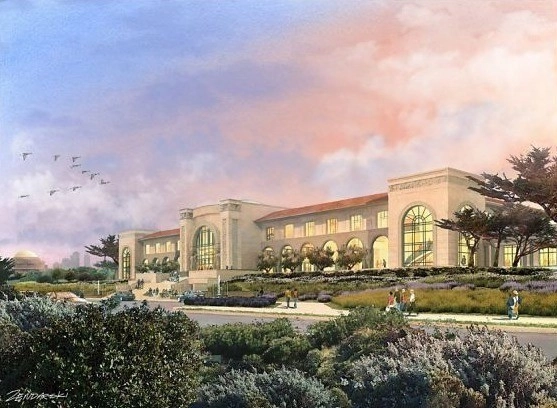
The building itself will be designed by MAD Architects, chosen "because of its innovative approach to design and the firm’s philosophy of connecting urban spaces to natural landscapes." In this case, that landscape will be designed by Studio Gang, who will also add a bridge to Northerly Island, an area which they have worked on turning into an ecologically diverse urban park.
Did you know Millenium Park in Chicago, Illinois was actually a desolate industrial wasteland until the turn of the century? The 24.5 acre public park, host to a state-of-the-art collection of architecture, landscape design, and art, is now a popular destination for residents and tourists alike -- all thanks to an unprecedented public-private partnership pioneered by former Mayor Richard Daley. To learn more about how Daley made Millenium Park a reality, with the help of famous designers like Frank Gehry, check out the video above.
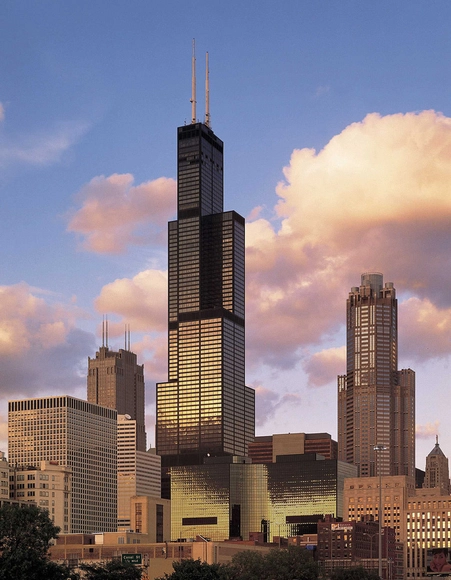
Lightning doesn't strike twice in the same place - or so goes the saying. But if you've ever watched a skyscraper in a storm, you probably know that this saying isn't exactly true. What might be a little more rare is lightning striking three places at once, but thanks to this amazing timelapse video by Craig Shimala we now know that this too is possible, as the lightning rods on Chicago's Willis Tower, Trump Tower and John Hancock Center are all hit simultaneously (keep an eye out at the 36-second mark, and see the still image after the break). Perhaps the most amazing thing of all is that this is the second time Shimala has recorded this exact occurrence - you can also see his video from 2010 after the break.
Today, Chicago Mayor Rahm Emanuel will announce plans for a new international architecture exhibition in his city which hopes to rival the reach and influence of the Venice Architecture Biennale. The first Chicago Architecture Biennial is planned to be held in late 2015, and will be co-curated by Director of the Graham Foundation Sarah Herda, and Joseph Grima, former editor-in-chief of Domus Magazine and co-curator of the 2012 Istanbul Design Biennial.
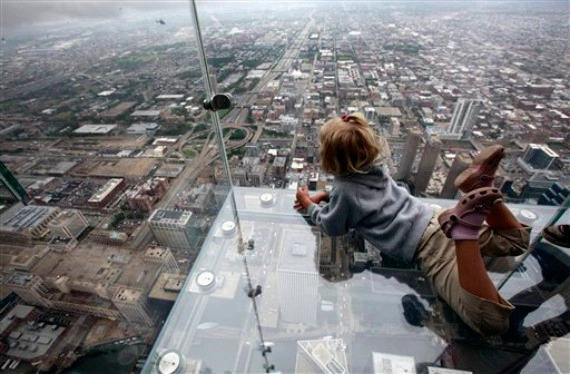
The Willis Tower's Glass Balcony. Image Courtesy of Jared Newman, DesignCrave.com
Imagine standing on a glass platform with Chicago 1300 feet directly below. Suddenly, the glass holding you begins to crack. This actually happened to Alejandro Garibay at the Willis Tower (formerly the Sears Tower) just last week. Luckily, Garibay wasn't hurt, but the occurrence begs the question: how safe is glass - the most common material used in skyscrapers nowadays - really? Karrie Jacobs At Fast Company - Design, asked materials experts to find out "The Truth Behind Building With Glass."
With no casualties, last week's fire at the Glasgow School of Art, which caused significant damage to parts of the building and gutted Charles Rennie Mackintosh's canonical library room, will be remembered as a tragic event that robbed us of one of the best examples of Art Nouveau of its time. The intention of the Glasgow School of Art is to restore the building in the hope that in generations to come, the fire will be all but forgotten, a strategy which has been largely well received by the profession.
However, in the case of other fires things have not gone so smoothly: for millennia, fire has played a big role in determining the course of architectural history - by destroying precious artifacts, but often also by allowing something new to rise from the ashes. Read on after the break as we count down the top 10 fires that changed the course of architectural history.
Shoreland, once a prominent destination built for the stars in 1926, stood derelict for years at risk of being erased from Chicago’s built history. This all changed the moment Jeanne Gang of Studio Gang Architects seized an opportunity to restore the monumental building into a highly sought after residential tower.
Provided by our friends at Spirit of Space, the video above takes you through the meticulous process and unique transformation of this historic landmark, highlighting insight by Gang herself and David Gwinn of Silliman Group.
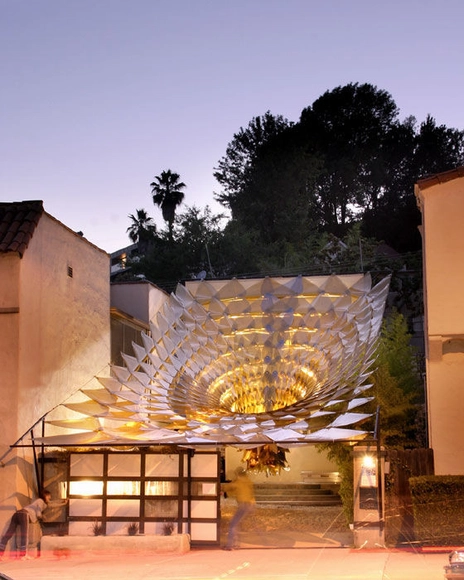
Maximilian’s Schell; Los Angeles, California, US / Benjamin Ball and Gaston Nogues
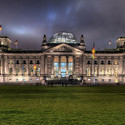
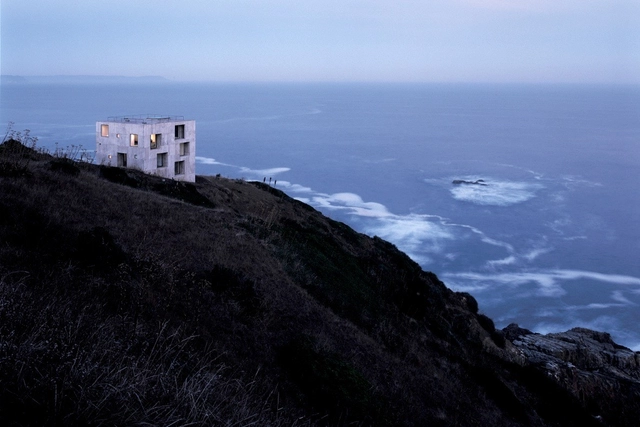
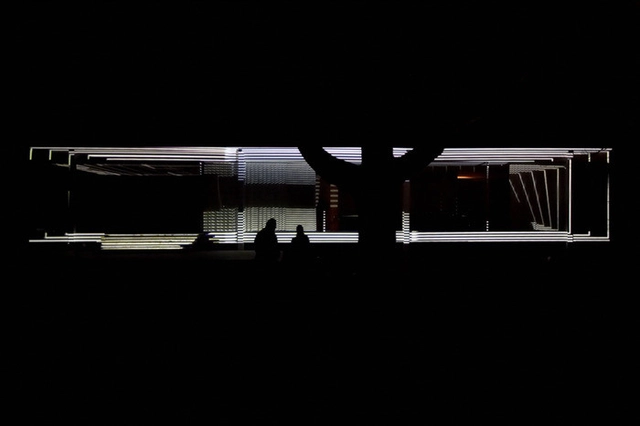
Four projects have been shortlisted for the inauguralMies Crown Hall Americas Prize (MCHAP) for Emerging Architecture. Announced by the College of Architecture at Illinois Institute of Technology (IIT) and its Dean Wiel Arets, the prestigious prize aims to recognize an emerging practice with the most outstanding built work in the Americas. The winner, which will be announced in May, will be awarded a $25,000 prize and an IIT research professorship that will focus on rethinking the metropolis.
Spanning the Americas from Chile to Canada, the shortlisted projects are...
Jeanne Gang, founder of Studio Gang, will be hosting a public lecture at the Reva and David Logan Center for the Arts on Monday, April 28, 2014. The lecture, named 'What Mammals Want', will start at 5:15pm and seating is first-come, first-served.
Originally posted under the title "Well-Oiled Machine" on Metropolis Magazine, this fascinating article by Ian Volner profiles the international behemoth that is SOM, exploring how the practice has remained so prominent - and relevant - after 78 years, and what it is that stylistically unites a practice spread across five continents with more than 10,000 buildings to their name.
Frank Lloyd Wright called them the “Three Blind Mies.” Louis Skidmore, Nathaniel Owings, and John O. Merrill were the architectural troika whose namesake firm—founded in Chicago in the mid-1930s—became something like the Julia Child of postwar design, delivering European sophistication to middle America at midcentury. Through hundreds of buildings in cities all across the country (and, later, around the world) the office turned the stringent aesthetic of German master builder Ludwig Mies van der Rohe into an architectural metonym for big business. Whether you look at rows of sleek glass skyscrapers and see grace and economy, or only the “thousand blind windows” of Allen Ginsberg’s monstrous “Moloch,” it’s no stretch to say that you have Skidmore, Owings & Merrill (SOM) to thank for them.
The Chicago Architectural Club has named Christopher Marcinkoski and Andrew Moddrell of PORT Architecture + Urbanism and Grant Gibson of CAMES/gibson winners of this year’s Emerging Visions. Since its inauguration in 1998, the portfolio competition has sought to recognize significant endeavors by young architects, designers and new practices in Chicago. Works designed by the recipients will be on display at the 2014 AIA National Convention in Chicago. More information, here.
William McDonough + Partners has been selected to design Method’s first U.S. manufacturing facility on a brownfield site in Chicago’s historic Pullman community. The company, known for producing environmentally conscious cleaning products, commissioned McDonough to design an ultra clean, LEED Platinum facility constructed from Cradle to Cradle Certified materials and powered entirely by renewable energy.
The Chicago Architectural Club, with the support of AIA Chicago and the Graham Foundation, today announced the launch of the 2014 Emerging Visions portfolio competition. This competition seeks to provide a forum for young designers to be recognized and to share their visions, inventions and ideas. The award promotes significant architectural endeavors by young architects, designers and new practices yet to be acknowledged.