Courtesy of UC Regents. Rendering by Diller Scofidio + Renfro
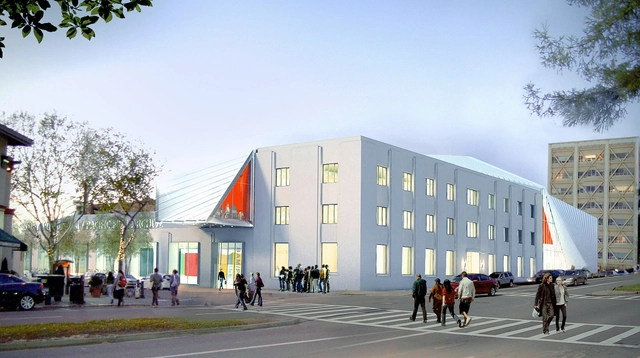
As construction continues on its new home across from the UC Berkeley campus, the Berkeley Art Museum/Pacific Film Archive (BAM/PFA) is finalizing plans for its first exhibition - Architecture of Life - in this location. The curvilinear structure, designed by Diller Scofidio + Renfrowith EHDD as executive architect, fuses old and new, outfitting what was the UC Berkeley printing plant with modern exhibition space, offices, and theaters to make it a focal point in Berkeley's downtown arts district.
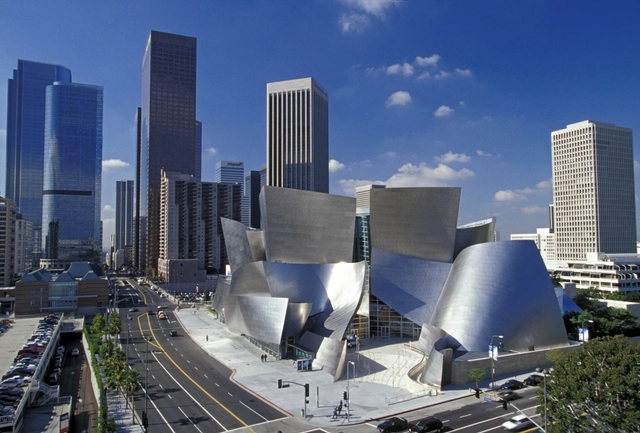
Earlier today, Facebook founder and CEO Mark Zuckerberg posted an announcement onto his own Facebook page that the company had moved into its brand new, 430,000-square foot Frank Gehry-designed headquarters. In the post, Zuckerberg offers a photo of the building from above, showing off its 9 acre green roof, with a promise of interior images - of what is essentially the building's giant, single room - "once we’re fully unpacked."
That interior, big enough for 2,800 of Facebook employees plus room for growth, also played host to some of Instagram's most popular photographers to preview the space - see a selection of their images after the break.
An overlooked strip mall at the corner of Sunset and Crescent Heights boulevards will soon be replaced by a mixed-use, walkable community designed by Frank Gehry. Known to be the “gateway to the Sunset Strip,” the West Hollywood site will be comprised of 249 apartments, restaurants, retail storefronts and a central plaza - all within "an environmentally sensitive building that complements and contributes to the historic architecture in the neighborhood.”
“Frank Gehry’s deep understanding of the property, its history and the context will elevate the project to the iconic and timeless status that it deserves,” said Townscape partner and project developer Tyler Siegel.
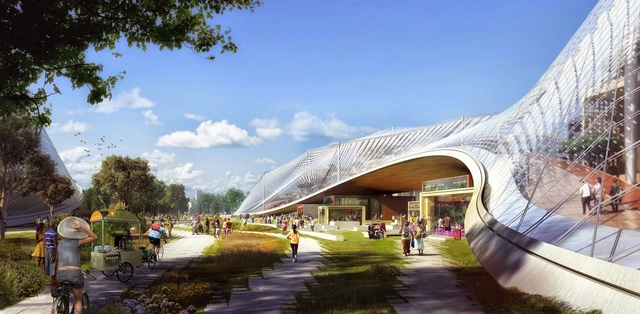
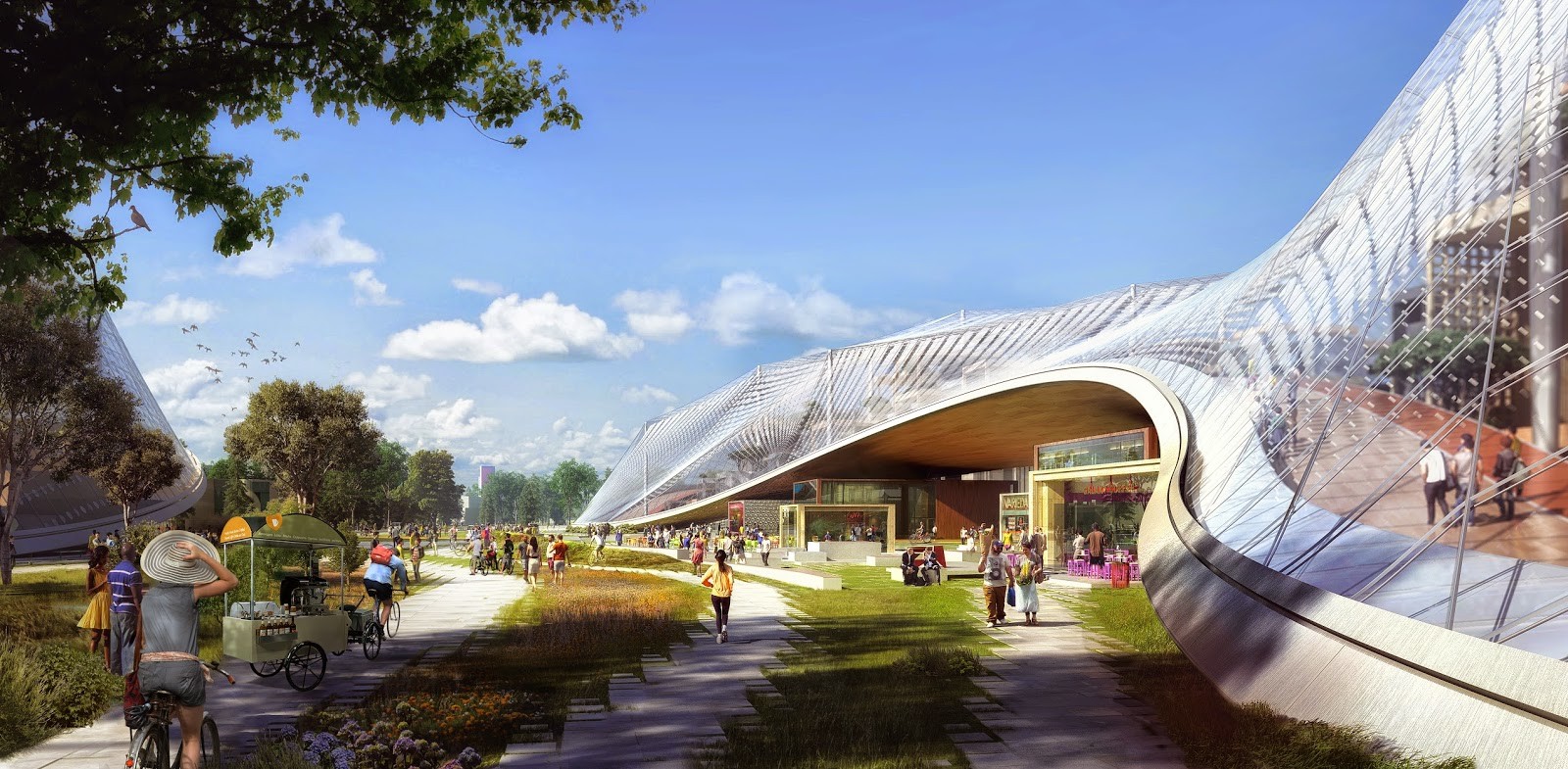
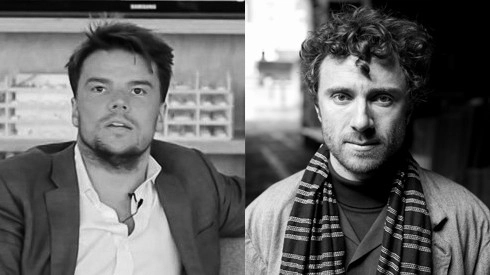
Images have been unveiled of BIG and Heatherwick Studio’s design for Google’s Mountain View headquarters. The plan, submitted to city council today, proposes to redevelop and expand the company’s home office with a series of lightweight canopy-like structures organized within a flexible landscape of bicycle paths and commercial opportunities for local companies.
"It's the first time we'll design and build offices from scratch and we hope these plans by Bjarke Ingels at BIG and Thomas Heatherwick at Heatherwick Studio will lead to a better way of working,” says Google. “The idea is simple. Instead of constructing immoveable concrete buildings, we’ll create lightweight block-like structures which can be moved around easily as we invest in new product areas… Large translucent canopies will cover each site, controlling the climate inside yet letting in light and air. With trees, landscaping, cafes, and bike paths weaving through these structures, we aim to blur the distinction between our buildings and nature.”
A video about the design and a statement from Bjarke Ingels and Thomas Heatherwick, after the break.
The City of Mountain View is expected to receive a massive proposal from the city’s largest employer; reports confirm that Google has enlisted Bjarke Ingels Group (BIG) and Heatherwick Studio to design its new California headquarters. With the few details released, it is unclear if the proposal plans to update the company’s existing 3.1 million-square-foot Googleplex or replace it. However, as the New York Times reports, the proposal will boast a “series of canopy-like buildings” on a campus organized around bicycle and pedestrian paths.
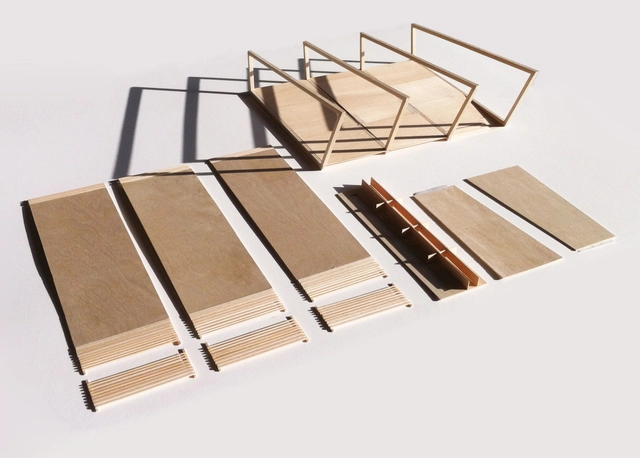
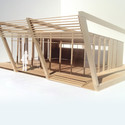
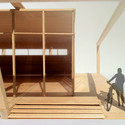
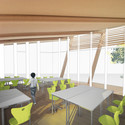
"A Kit of Parts" addresses what Studio Jantzen identifies as the four main shortcomings of mobile classrooms currently on the market: flexibility, sustainability, cost effectiveness, and creative construction. Read more about the project and view selected images after the break.
"The beauty of [architecture] is the payoff. That building has created a better place for people to live and a better lifestyle for people." A mixed use building that brings together craft beer, street tacos and modern housing, California developer Jonathan Segal's "The Northparker" has helped transform the once blighted area Northpark into one of San Diego's most up-and-coming neighborhoods. Breadtruck Films shares just how a single building created community and changed a city in the video above.
Jon Jerde, FAIA, founder of The Jerde Partnership, has died at 75. The California-based American architect has left his mark in more than 100 urban places worldwide, many of which embody Jerde’s signature ideas of the multi-level mall. Placing high priority on outdoor walking and gathering areas, Jerde’s reimagining of the shopping mall experience in the 1970s put him on the map. "He blew open the shopping mall and transformed it into a lively urban environment which attracts people, lots of people," Richard Weinstein, the former dean of UCLA's school architecture and urban planning, once said.
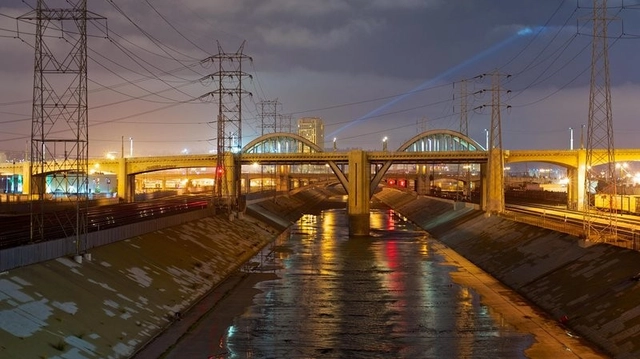
With many of the world’s cities combating drought, it is apparent that channeling water away from populated areas with no intended use is not sustainable. Cities are depending on their “precious rain water” more than ever and, as Arid Lands Institute co-founder Hadley Arnold says, "the ace in our species pocket is the ability to innovate.” We need to “build cities like sponges,” starting with permeable hardscape, drought-tolerant landscaping and smarter plumbing. See what NPR has to say about issue of water treatment and Los Angeles, here.
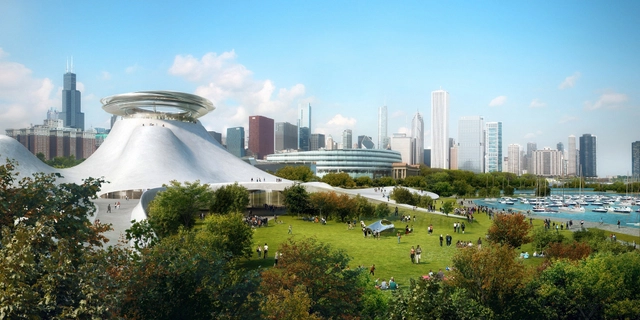
Concerns regarding the environmental sensitivity of George Lucas’ proposed Lucas Museum of Narrative Art in Chicago has caused the project to halt, and may even prevent it from being realized. According to a suit filed against the museum by the Friends of the Parks, environmentalists believe that the “mountainous” lakefront proposal, designed by MAD Architects, will disrupt the site’s ecosystem.
As reported by the Los Angeles Times, Lucas’ hasn’t given up on Chicago yet. However, considering that Lucas wants to see the museum built within his lifetime, the 70-year-old Star Wars director is starting to reconsider a University of Southern California (USC) campus site in Los Angeles.
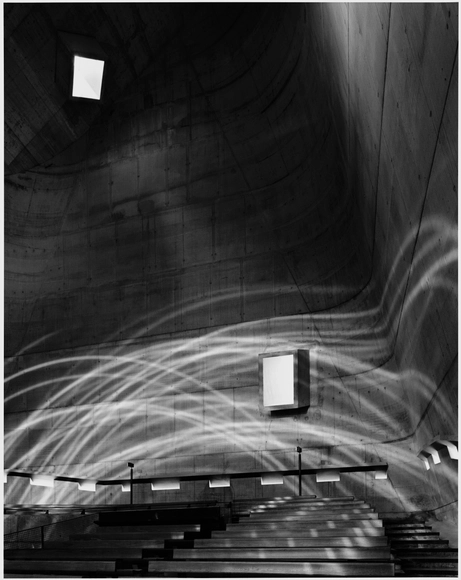
In the wake of her selection as the recipient of the Julius Shulman Institute Excellence in Photography Award for 2015, Hélène Binet's work will be exhibited at the Woodbury University Hollywood (WUHO) Gallery in Los Angeles, California. The exhibition, entitled Hélène Binet: Fragments of Light, will be open from February 28, 2015 to March 29, 2015, showcasing the highlights of the artist's career as a renowned architectural photographer. The exhibition will be initiated with an opening reception and award ceremony on February 28, 2015 to honor Binet for her achievements.
64 North, HNTB Engineering, Bionic Landscape Architecture and sculptor Ned Kahn have been chosen by the City of Palo Alto to realized a new bicycle and pedestrian bridge over the 14-lane Highway 101 at Adobe Creek. Their winning proposal, “Confluence” will connect residential and commercial areas in south Palo Alto to the Baylands Nature Preserve and the regional Bay Trail network.
Read on for more information and a video about the design.
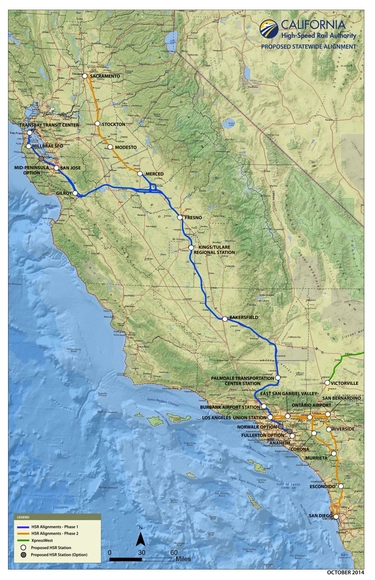
Proposed Statewide Alignment Map. Image Courtesy of Rail LA
California has broke ground on America’s first high-speed rail line in Fresno, six years after voters first approved an almost $10 billion bond act to fund the project. However, along with celebrations comes skepticism; according to an NPR report, fears of the project’s failure have risen due to the rail line only having a fifth of its funding and that its nearly three-hour journey will still take longer than a flight connecting Los Angeles to San Francisco. Despite this, supporters are optimistic that the line will be up and running by 2030. The state will be relying on private investment and revenue from the state’s greenhouse-gas fees to secure the remaining $55 billion needed to complete the $68 billion project.
We all know that in architecture, few things are truly original. Architects take inspiration from all around them, often taking ideas from the designs of others to reinterpret them in their own work. However, it's more rare that a single architectural element can be borrowed to define the style of an entire region. As uncovered in this article, originally published by Curbed as "Le Corbusier's Forgotten Design: SoCal's Iconic Butterfly Roof," this is exactly what happened to Le Corbusier, who - despite only completing one building in the US - still had a significant impact on the appearance of the West Coast.
Atop thousands of homes in the warm western regions of the United States are roofs that turn the traditional housetop silhouette on its head. Two panels meet in the middle of the roofline and slope upward and outward, like butterfly wings in mid-flap. This similarity gave the "butterfly roof" its name, and it is a distinct feature of post-war American residential and commercial architecture. In Hawaii, Southern California, and other sun-drenched places, the butterfly roofs made way for high windows that let in natural light. Homes topped with butterfly roofs seemed larger and more inviting.
Credit for the butterfly roof design often goes to architect William Krisel. He began building single-family homes with butterfly rooflines for the Alexander Construction Company, a father-son development team, in Palm Springs, California, in 1957. The Alexander Construction Company, mostly using Krisel's designs, built over 2,500 tract homes in the desert. These homes, and their roofs, shaped the desert community, and soon other architects and developers began building them, too—the popularity of Krisel's Palm Springs work led to commissions building over 30,000 homes in the Southland from San Diego to the San Fernando Valley.
The final exterior scaffolding has been removed from Diller Scofidio + Renfro’s “The Broad” in downtown Los Angeles, revealing its distinctive honeycomb-like “veil.” Comprised of 2,500 fiberglass reinforced concrete panels and 650 tons of steel, the structural exoskeleton “drapes” over the building’s interior “vault,” lifting at its south and north corners to provide two street-level entrances. At its side, the veil is torn by a central “oculus” that provides a direct visual connection between the museum and Grand Avenue.
“The Broad will be porous and absorptive, channeling light into its public spaces and galleries. The veil will play a role in the urbanization of Grand Avenue by activating two-way views that connect the museum and the street,” described Liz Diller.
The first week of December marked the beginning of the LA Philharmonic’s in/SIGHT concert series. The multimedia series will incorporate video images playing in sync with the performance, creating an immersive new way to experience the music for concert-goers. The first of these performances was the collaborative work of conductor Esa-pekka Salonen and artist Refik Anadol in an audio-visual rendition of Edgard Varèse’s Amériques. Using audio analysis and Kinect motion capture software to record Salonen’s movements while conducting, Anadol has created a stunning set of moving images that capture the very spirit of Varèse’s work. Learn more about this fascinating project, after the break.
Ehrlich Architects, a Los Angeles-based practice dedicated to the philosophy of Multicultural Modernism, has been selected to receive the American Institute of Architects (AIA) 2015 AIA Architecture Firm Award. The award celebrates Ehrlich Architects' 35 years of practice, which, as the AIA notes, has become renowned for “fluidly melding classic California Modernist style with multicultural and vernacular design elements by including marginalized design languages and traditions.”
The firm, originally founded by Steven Ehrlich in 1979 after working with the Peace Corps in Africa, is now led by four diverse partners: Ehrlich, alongside Takashi Yanai, Patricia Rhee, and Mathew Chaney. You can preview some of their most notable projects and watch an interview with Ehrlich, after the break.
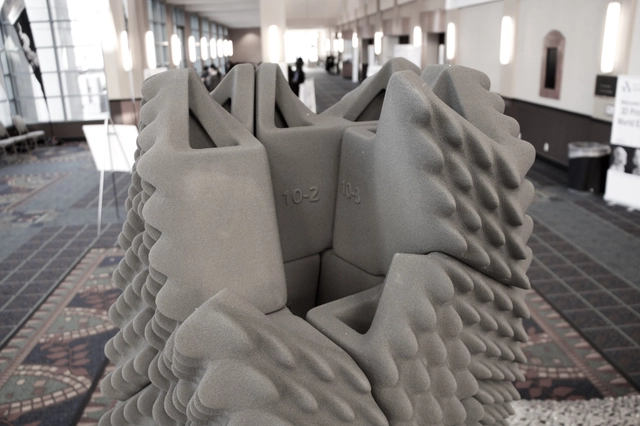
A team of California-based designers have invented an earthquake-proof column built of 3D printed sand, assembled without bricks and mortar to withstand the harshest seismic activity. The 'Quake Column' is comprised of a pre-determined formation of stackable hollow bricks which combine to create a twisting structure, optimized for intense vibrations in zones of earthquake activity. Created by design firm Emerging Objects, the column's sand-based composition is one of many in a series of experimental structures devised by the team using new materials for 3D Printing, including salt, nylon, and chocolate. The column can be easily assembled and disassembled for use in temporary and permanent structures, and was designed purposefully with a simple assembly procedure for novice builders.
Find out how the Quake Column works after the break














.jpg?1420225628&format=webp&width=640&height=580)