The viability of 3D Printing in architecture – has, at the very least – seen a seismic shift over the past few years. Usually relegated to prototypes or conceptual models, 3D Printed building designs are increasingly being actualised as physical projects. In 2013, WinSun, a Chinese company – was able to print 10 houses in a 24-hour period, becoming one of the first companies to achieve this feat using 3D Printing technology. More recently, in 2018, a family in France became the first in the world to live in a 3D Printed house. The city of Dubai is also seeking to have a quarter of its buildings be 3D Printed by 2025. These examples display the upwards category of this technology, and how it is very likely, as the years go by, this automation of building fabrication is even more integrated into the construction process than it is right now.
New York Wheel, Staten Island. Image Courtesy of Perkins Eastman
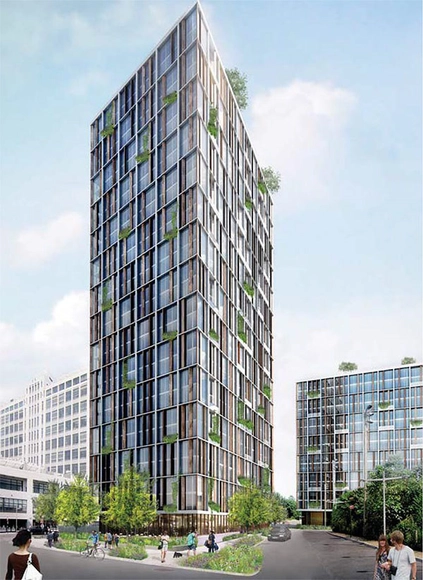
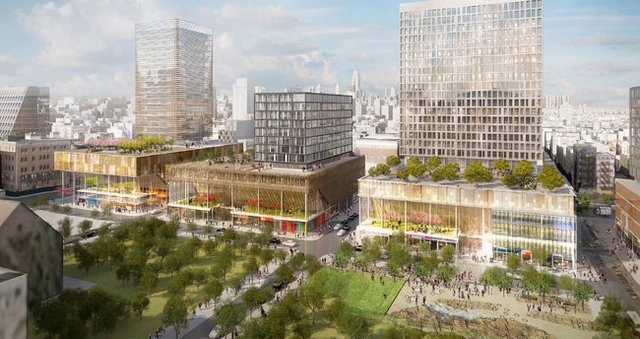
The New York City Department of Housing Preservation and Development (HPD) has released a Request for Proposals (RFP) seeking plans to build 100 percent affordable housing in Stapleton on the North Shore of Staten Island. The City-owned site provides over 100,000 square feet of land for affordable housing, community amenities and other improvements as part of the island's mixed-use development.
The City of Los Angeles has launched a $100,000 housing design challenge for low-rise developments. The competition asks architects and landscape architects to imagine "appealing and sustainable" models of low-rise, multi-unit housing. Organized by the Mayor’s Office and Chief Design Officer Christopher Hawthorne, the initiative aims to create new paths to home-ownership and housing affordability in Los Angeles.
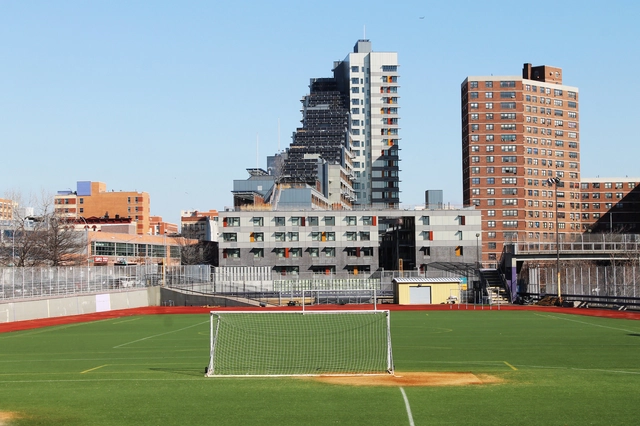
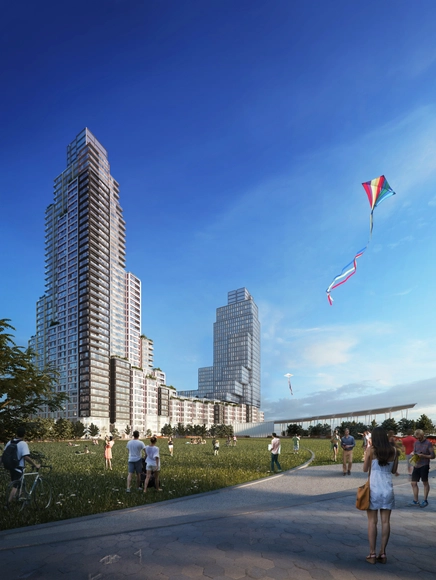
ODA-Designed Hunter’s Point South, the newest development by TF Cornerstone, and the largest affordable housing project in NYC has launched its housing lottery. The master-planned, mixed-use and mixed-income community, park, school, and playground, situated along the East River in Long Island City, Queens, the first of its kind to hit the market since COVID-19, brings 1,194 rental units and a new park to Long Island City waterfront.
According to the United Nation’s “The World’s Cities in 2018”, it is estimated that, “by 2030, urban areas are projected to house 60 percent of people globally and one in every three people will live in cities with at least half a million inhabitants.” Also, between 2018 and 2030, it is estimated that the number of cities with 500,000 inhabitants or more is expected to grow by 23 percent in Asia. China, as the largest economy in Asia, with a GDP (PPP) of $25.27 trillion, is expanding rapidly, both economically and demographically.
With more and more migrant workers coming into the bigger cities in China, it has become increasingly difficult for workers to find an affordable place to live. Some people decide to move away from urban centers and bear with the lengthy commute time, while others are seeking creative design solutions to transform their home into a tiny, functional space to meet their daily needs.
London cityscape with building construction sites in background. Image via Shutterstock/ By Ttatty
The UK government has released a document that proposes reforms in the planning system, such as speeding up the process of approvals for development. Entitled Planning for the Future, the report suggests “to streamline and modernize the planning process, bring a new focus to design and sustainability, improve the system of developer contributions to infrastructure, and ensure more land is available for development where it is needed”.
Aerial View of Barcelona. Image via Shutterstock/ By marchello74
City officials in Barcelona have found an incentive to help increase the city’s available rental housing units. Authorities are threatening to forcefully buy empty properties to create more affordable housing if landlords don’t manage to fill their vacant rental assets within a certain time frame.
OMA / Jason Long and Y.A. Studio have been selected to design an 150 unit affordable housing project in San Francisco's historic Haight Ashbury neighborhood. Dubbed 730 Stanyan, the project aims to provide a high-quality living environment for families and seniors. The housing will be situated at the entry to Golden Gate Park and aspires to address the city’s desperate need for permanent housing options.
Morris + Company’s affordable rental housing development has just been given planning permission by a virtual committee. Located in Barking and Dagenham, the modern 56 high-quality affordable rental homes are designed for “residents ranging from single occupants to couples and families”.
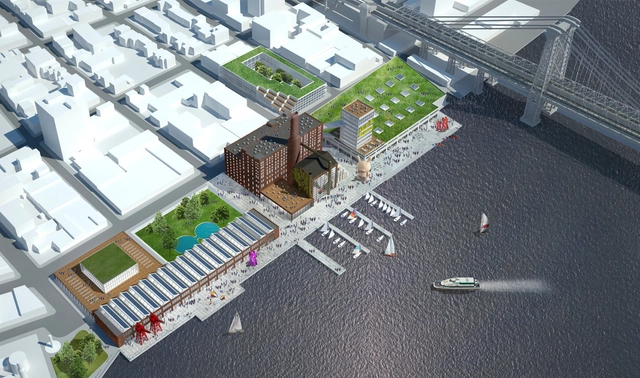
PAU or Practice for Architecture and Urbanism, a multi-disciplinary design and planning firm founded by Vishaan Chakrabarti, created a revitalization plan for Sunnyside Yard in western Queens, New York. Envisioning a more equitable and sustainable future, the 180-acre human-centered carbon-neutral master plan reflects the community’s needs.
The challenges associated with the provision of adequate and affordable housing around the world demand that architects respond with original solutions that challenge traditional building forms, typologies and methods of delivery.
PLANE–SITE brought together the architects of four inventive housing projects. These projects represent a diversity of approaches to similar housing challenges across radically different global contexts. From the redensification of European urban centers to the rapid urbanization of the tropical Asian megacity, these radical housing models challenged existing paradigms in order to advance resident well-being as their principle design concern. In contrast to Schumacher’s divisive speech, the panel illustrated projects that were deliberately designed to promote community life and social interaction between residents – and in some cases also with other citizens in spaces that blur the line between public and private.
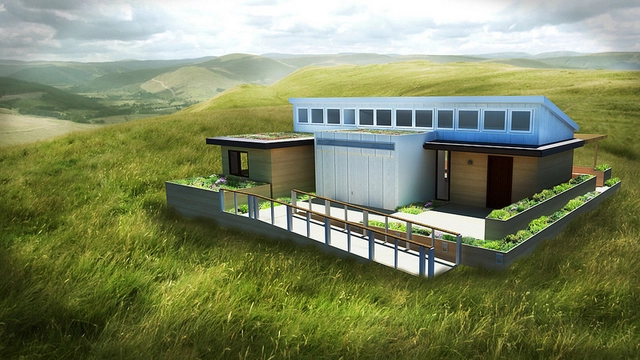
Brooks + Scarpa and Plant Prefab have developed a new toolkit to address housing shortages. Scalable as an infill solution, the Nest toolkit can be configured in multiple ways using site types and typical lot sizes, or a combination of them. The toolkit was made to address LA’s shortage of supportive housing for the homeless and provide flexibility to meet the needs of a particular site, neighborhood, and bed count.
The New York City Department of Housing Preservation and Development (HPD) and the American Institute of Architects New York Chapter (AIANY) have selected five New York City-based firms that will advance to the final stage of the Big Ideas for Small Lots NYC design competition. Launched in February 2019, the competition invited architects and designers to submit proposals that developed high-quality affordable housing on small, irregular lots across the city.
https://www.archdaily.com/917122/5-winning-ideas-to-fill-new-york-citys-most-challenging-sitesNiall Patrick Walsh
Dutch design practice NL Architects and Cologne-based STUDYO have designed a terraced affordable housing complex in Frankfurt. The project is part of the new Hilgenfeld development district in the Nidda valley area of Germany. Called Terrace House, the project was made to encourage shared responsibility while celebrating social gatherings and recreational space. The heart of the project is a communal garden and a terrace of jigsaw balconies.
Danish architectural firm COBE has designed a new mixed-use affordable housing development in downtown Toronto. Working with architectsAlliance, the team has designed three buildings that contain over 760 market rental units, 30% of which are affordable. Sited in one of the fastest growing areas of Canada, the new community project is designed to achieve LEED Gold certification. The development aims to combine spaces for recreation, living and working.
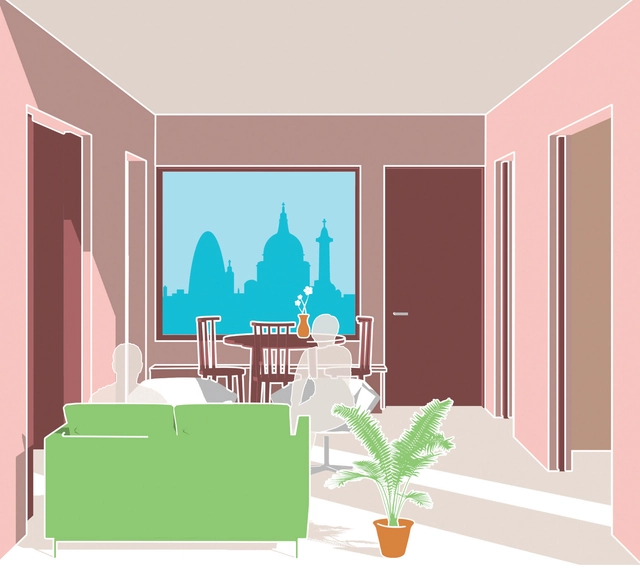
Skyrocketing prices of London housing have become so unbearable that many have turned to less-than-ideal compromises. Large homes can be found but come with commutes of hours; places are still available in the city, but only for those with sky-high paychecks. Unable to balance their needs, people are resorting to workarounds that disrupt the existing urban fabric and dissatisfy all involved. Surely we can do better.
Microsoft has unveiled plans to commit $500 million to advance affordable housing solutions across the city of Seattle, Washington. The money, to be distributed as loans and grants, will kick-start new solutions to the city’s housing crisis, where income increases have lagged behind rising housing prices.
The investment breaks down as $225 million committed to subsidize middle-income housing construction in six targeted cities, $250 million to support low-income housing across the King County region, and $25 million to philanthropic grants to address homelessness in the greater Seattle region. The tech giant has targeted the region in close proximity to the site of its Redmond headquarters expansion, expected to accommodate 8,000 new employees.
https://www.archdaily.com/909841/microsoft-is-investing-500-dollars-million-in-seattle-affordable-housingNiall Patrick Walsh
Disruptive Design is a three-part design competition that seeks to address the challenges associated with designing and building affordable, owner-occupied housing.
Architects, designers, students, and those invested in urban development are invited to submit their speculative ideas for an owner-occupied housing development incorporating a flexible architectural solution that encourages wealth-building through homeownership and entrepreneurship. The competition will conclude with an occupant/buyer-ready prototype of the winning design.
THE CHALLENGE
The desire for affordable housing is present in both the gentrifying and underserved Chicago neighborhoods. In gentrifying areas, land values rise with desirability; in underserved areas, depreciated property and land values produce an appraisal