The 2022 United Nations Conference of the Parties, more commonly referred to as COP27, was held between November 6 and November 18, 2022, in Sharm El Sheikh, Egypt. The conference included more than 90 heads of state and an estimated 35,000 representatives, or delegates, from 190 countries. Aimed at encouraging and guiding countries to take effective action against climate change, the next edition of these conferences, COP28, is already scheduled from 30 November to 12 December 2023, in the United Arab Emirates. The CEO of the Abu Dhabi National Oil Co, an oil company chief who also oversees renewable energy efforts in the Emirates, was appointed to preside over the negotiations and talks, which led to a wave of criticism from environmental activists.
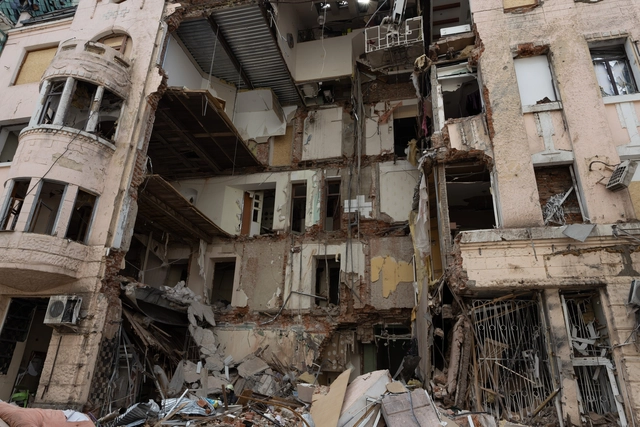
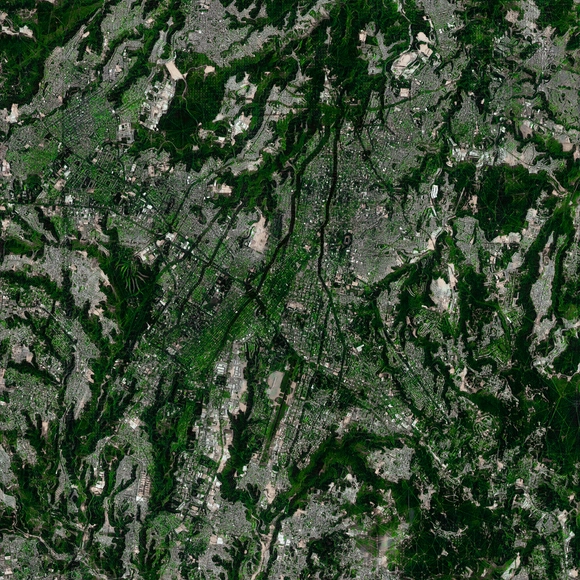
Kharkiv, Kharkiv oblast, Ukraine. Image via Shutterstock
Norman Foster Foundation and Arup office in Berlin schemed a master plan for Kharkiv, Ukraine, to guide future urban regulations and prepare professionals for the city's reconstruction. In collaboration with a local advisory board, the outline is defined by a series of pilot projects to develop aspects such as heritage, infrastructure, and rivers. The initiative follows a request from the Kharkiv Mayor to the Foster Foundation through the United Nations Economic Commission for Europe, weeks after the Ukraine War started in February 2022.
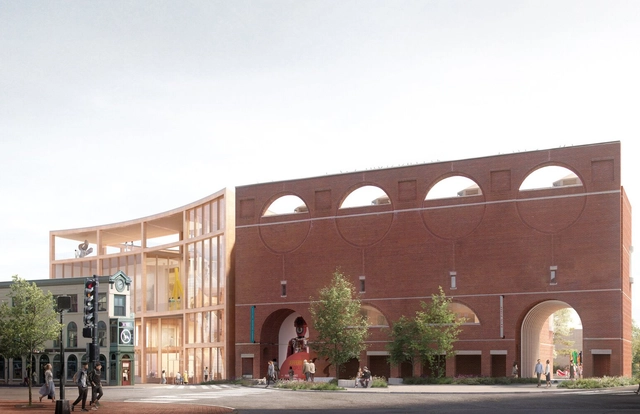
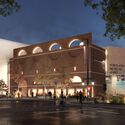
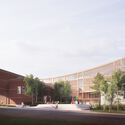
Four teams have been declared the finalists in the competition to design the Portland Museum of Art campus expansion located in Portland, Maine. The finalist teams are led by Adjaye Associates, Lever Architecture, MVRDV and Toshiko Mori Architect + Johnston Marklee + Preston Scott Cohen. The project includes a 60,000 square feet expansion in the form of a six or seven-story structure planned to accommodate an increase in the number of visits and a growing collection of art. The museum is now asking for public feedback on the designs, as the projects are on view at PMA until December 11th.
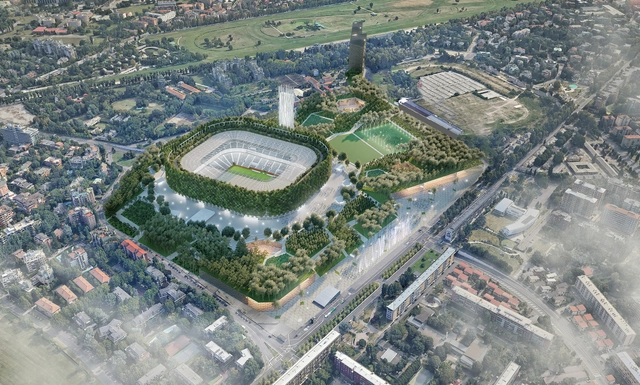
Stefano Boeri Architetti, together with a multidisciplinary team including ARUP, Fabio Novembre, and Balich Wonder Studio, has unveiled the design for the new Milan Stadium, named the International Forest Stadium. The project, located in the San Siro area of the city, was presented to the public on the occasion of the competition announced in 2019 by the Inter and Milan teams. The stadium is envisioned as an integral part of the “Sport and leisure district” system, an extensive masterplan measuring over 800 hectares, planned to transform the San Siro district into a center for excellence in the context of European sports.
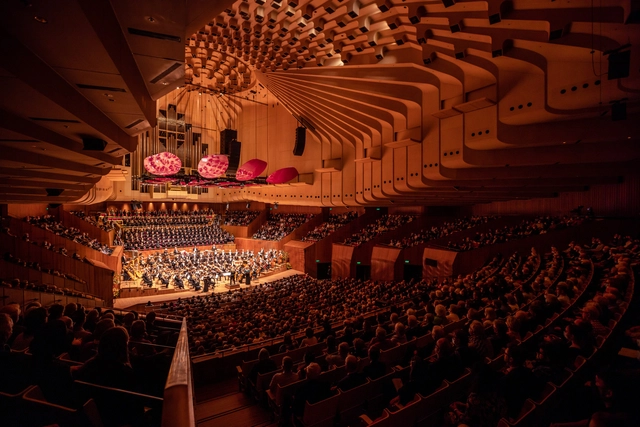
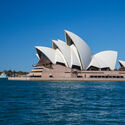
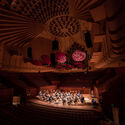
The Sydney Opera House has reopened its largest performance space, the Concert Hall. Since the venue closed for renovations in February 2020, the space has undergone extensive renovations to improve the acoustic performance, enhance access for people with mobility needs, and upgrade the staging systems. The renovation process respects the original interiors, while better equipping the hall to present a wide range of performances. This is the largest and final project in the Opera House’s Decade of Renewal, a 10-year program of renovation works totaling almost $300 million to upgrade the World Heritage-listed monument ahead of its 50th anniversary in 2023.
Nature has continually played muse to architects. Colors and forms from the natural world find themselves embedded in artificial edifices. Buildings are also shaped by patterns of the wind and sun, topography, and vegetation. While architecture is informed by the effects of nature, buildings have been proposed as inert objects that remain static in a biologically evolving world. Anthropocentric concrete “jungles” are devoid of life, separating humans from natural environments and causing imbalances that have manifested as pandemics. What would cities look like if there were no boundaries between humans and ecosystems?
UN-Habitat and blue tech firm OCEANIX unveiled the design of the world’s first prototype for a sustainable floating city, to be hosted by Busan. The project is intended to provide a scalable framework of development for coastal cities facing land shortages and rising sea levels. With a population of 3.4 million people, Busan is the second-largest city in the Republic of Korea and, at the same time, one of the most important maritime cities, making it a suitable environment for deploying the floating city prototype.
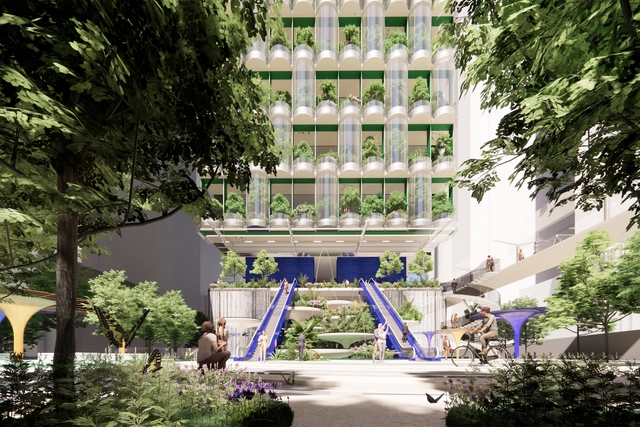
Arup reveals the competition-winning design for a 230m tall net-zero commercial tower in Hong Kong that embodies the city's aspirations to reach carbon neutrality by 2050. Taikoo Green Ribbon blends technology and nature to create an urban ecosystem sustaining a new generation of workplaces. Featuring a façade of curved PVs, hanging gardens, algae walls and various renewable energy sources, the project is a high-performance building slated to achieve carbon neutrality in less than a decade after construction.
Bjarke Ingels Group revealed the design for a tech campus in Bratislava, an urban village of interconnected buildings organized around a central courtyard that would foster a creative ecosystem for cybersecurity and AI innovation. Created in collaboration with Inflow, Pantograph, BuroHappold, and ARUP, the project features an undulating photovoltaic roof that unifies the twelve individual structures while defining the architectural silhouette on the backdrop of the Carpathian Mountains.
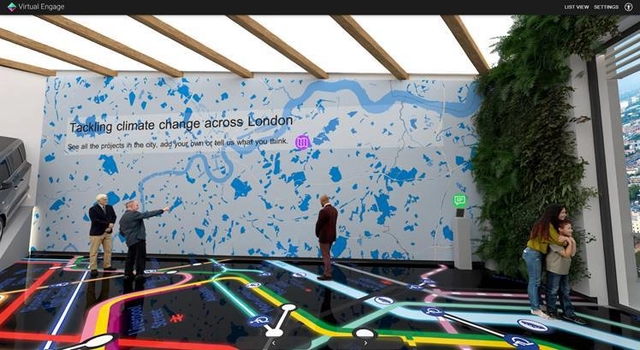
This week, the C40 global network of cities and engineering and sustainability firm Arup launched a virtual exhibition showcasing examples of climate initiatives and resiliency strategies from 11 cities committed to addressing climate change. Given that cities account for more than 70% of global carbon emissions, the Global Cities Climate Action Exhibition aims to highlight the role of cities in reaching climate targets through local policies and urban development plans, achieving tangible emission reductions and increasing social equity.
Courtesy of OMA New York, Photography by Jason O’Rear
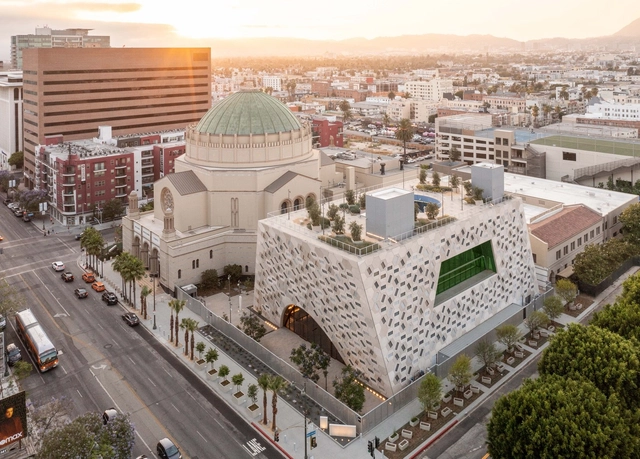
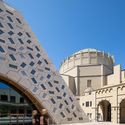
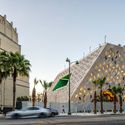
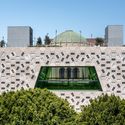
OMA / Shohei Shigematsu has completed its Audrey Irmas Pavilion at Wilshire Boulevard Temple, the firm’s first commission from a religious institution and first cultural building in California. Expected to open in January 2022, “the new 55,000 square foot Pavilion is a response to the Wilshire Boulevard Temple’s vision for its campus to create a much-needed space to convene”.
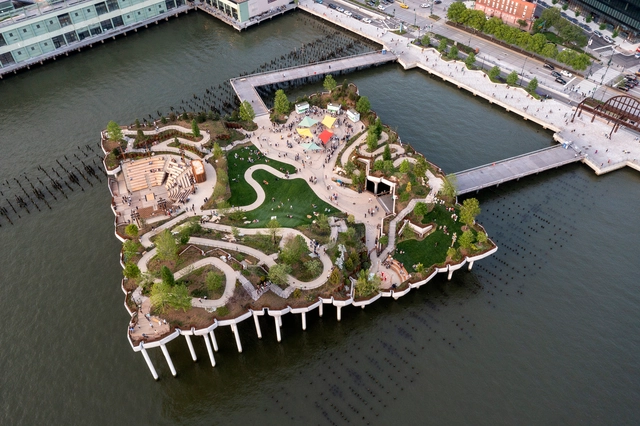
Designed by Heatherwick Studio, together with landscape architecture firm MNLA, the long-awaited Little Island project is New York’s newest major public space, showcasing a richly-planted piece of topography above the Hudson River. The design featuring a public park and performance venues reinvents the pier typology into an undulating artificial landscape. After surpassing many hurdles, the eight years in the making project is now open to the public, and the bold design is set to become an icon in New York.
Recent years have seen an increased acknowledgement of the collective endeavour that is architecture and a better valuing of the different professions that participate in the design process. Within every extraordinary building, structural engineering plays an essential role in delivering the architectural vision. The article highlights the past and present contributions of engineering to the built environment, personalities that have stood in the shadow of architects delivering their design intent, and the collaboration between engineers and architects today.
Courtesy of Steelblue for the City of Sacramento / Perkins&Will
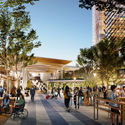
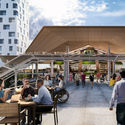
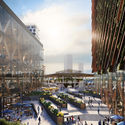
Global architecture firm Perkins&Will, in collaboration with ARUP, Grimshaw Architects, EPS , AIM Consulting, and the City of Sacramento, have transformed the city's historic train station into a self-reliant and regenerative transportation hub, making it one of the most sustainable public areas in California. The design team worked alongside the local community to create a people-centric 31-acre master plan that reflects what the community envisions for a public train station and gateway to the city of Sacramento.
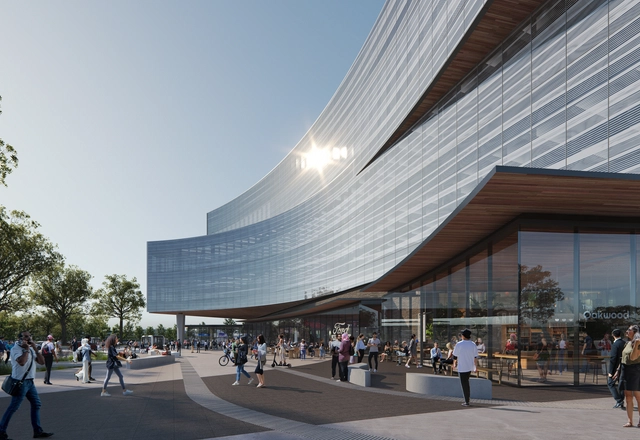
Snøhetta has unveiled a new Central Campus Building for Ford Motor Company, part of the transformation of its Research & Engineering (R&E) Campus in Dearborn, Michigan. As the result of a 3-year research and planning process, the project was created in collaboration with IBI Group as the Architect of Record, Ghafari as the Engineer of Record, and Arup leading sustainability and engineering.
Courtesy of OUTCOMIST, Diller Scofidio + Renfro, PLP Architecture, CRA - Carlo Ratti Associati and Arup
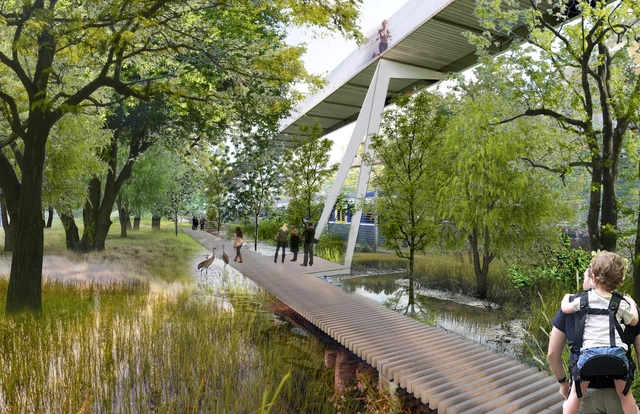
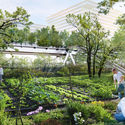
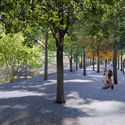
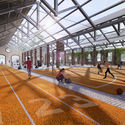
Led by OUTCOMIST, an international design team including Diller Scofidio + Renfro, PLP Architecture, CRA - Carlo Ratti Associati, and Arup won the competition to revitalize the Porta Romana Railway Area, transforming the industrial site into a diverse green neighborhood in Milan. Rehabilitating a disused railway yard into a connective tissue that links the southeast area of the city to the center, the development will generate a rich biodiverse public space, including a large urban park.
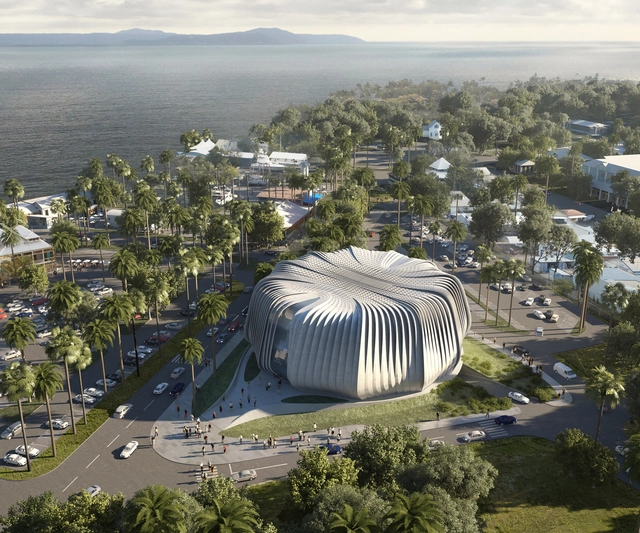
Courtesy of Contreras Earl Architecture / SAN architectural illustration
Contreras Earl Architecture has revealed its design for the world-first coral ark. Located at the gateway to the Great Barrier Reef in Port Douglas, North Queensland, Australia, the conservation facility “aims to secure the long-term future and biodiversity of corals worldwide which are under severe threat due to climate change”.