Axel de Stampa has shared with us his awesome series of architecture gifs, Architecture Animée (Animated Architecture), which turn architecture from SANAA, Herzog and de Meuron, MAD Architects and more into amazing, zany gifs. See all nine after the break!
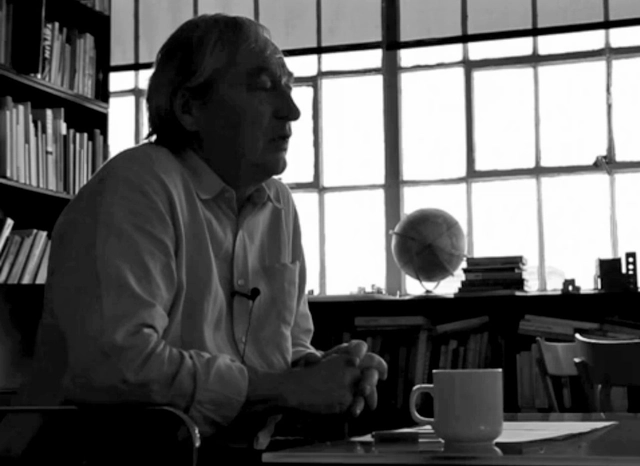
In Kengo Kuma’s work you may see influences of light, transparency and materiality. But when visiting the Woodbury School of Architecture in San Diego, Kengo Kuma shared a few of his not so apparent influences, from Frank Lloyd Wright and Louis Kahn to jazz music. Make sure to view “Knowing Kuma” to see the architect’s definition of architecture, materials and more.
Have you ever wondered where your information goes when you save it to "The Cloud"? The answer is within giant data centers. According to reports, Facebook and Google's data centers resemble something from Science Fiction, while some could come straight from a Bond flick. In a new short film named Internet Machine, Filmmaker and Visual artist Timo Arnall takes us where few have been granted access, showing the world what "The Cloud" really is - a massive architectural space with extreme energy demands. To experience the power surging and hear the deafening hum of a data center, check out the trailer above.
Le Corbusier donned signature glasses; Frank Gehry designed footwear; early twentieth-century architect Adolf Loos even wrote "Why A Man Should Be Well-Dressed." Now Zaha Hadid is making her way into swimwear. But are the nuances of fashion too much for architects to dip their feet into? Read the full article at the Telegraph.
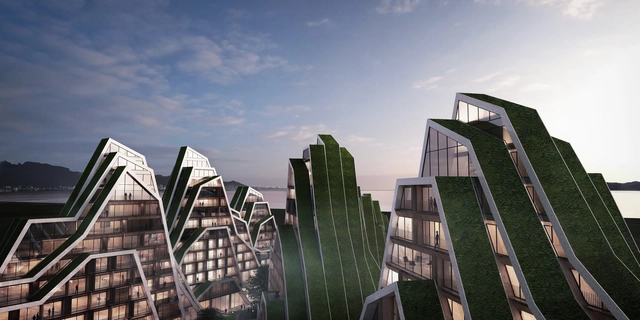
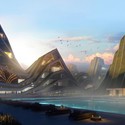
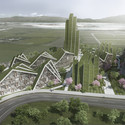
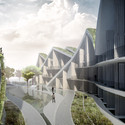
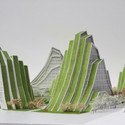
Bjarke Ingels Group has unveiled their latest - and certainly greenest - "mountainous" housing project (for previous examples, see: Mountain Dwelling and 8 House). Although still in progress, Hualien Residences, a beach resort housing complex in Taiwan, will consist of green "landscape stripes" that resemble mountains themselves. The project, which incorporates walking paths, underground jogging paths, and an observation point, has already been recognized as a finalist in the 2014 MIPIM awards for its use of design to encourage healthy, active lifestyles for the complex's primarily older residents.
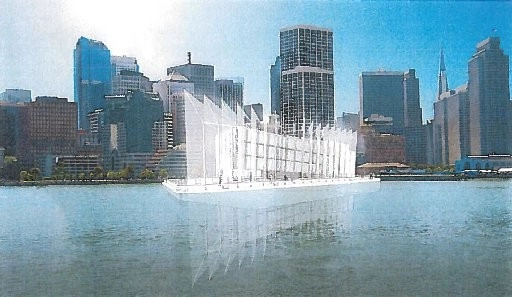
A mysterious construction project in the San Francisco Bay has been making waves for the past couple of weeks. Moored off Treasure Island, locals apparently refer to it as 'the secret project' - and, until now, that's about as much as was known about it.
Despite months of rumors and complete radio silence from Google, spokespeople have finally released a statement on the project, stating: "Google Barge … A floating data center? A wild party boat? A barge housing the last remaining dinosaur? Sadly, none of the above. Although it’s still early days and things may change, we’re exploring using the barge as an interactive space where people can learn about new technology."
While it's a shame about the dinosaur, Google's expansion into technology retail is possibly even more intriguing, as it's entirely new turf for the company: retail design.
More info and an artist's rendering of what the barge could look like, after the break...
https://www.archdaily.com/446791/barge-of-shipping-containers-to-become-google-glass-showroomKatherine Allen
Tourists in India dutifully make the rounds, visiting the spectacular temples, palaces, and forts the country has to offer. But, even when they're practically under their feet, people often forget about stepwells, the massive subterranean (up to ten stories) structures that dot the Indian landscape.
As this video explains, stepwells, first constructed around 300 CE, were born out of a need to dependably collect and store water. They boast highly complex circulation and ornamentation, and over the years have evolved to function also as community centres and temples. But, as architecture journalist Victoria Lautman has pointed out, with the spread of industrialisation and drought (not to mention widespread demolition), stepwells are slowly becoming derelict.
https://www.archdaily.com/433046/is-there-a-future-for-india-s-stepwellsKatherine Allen
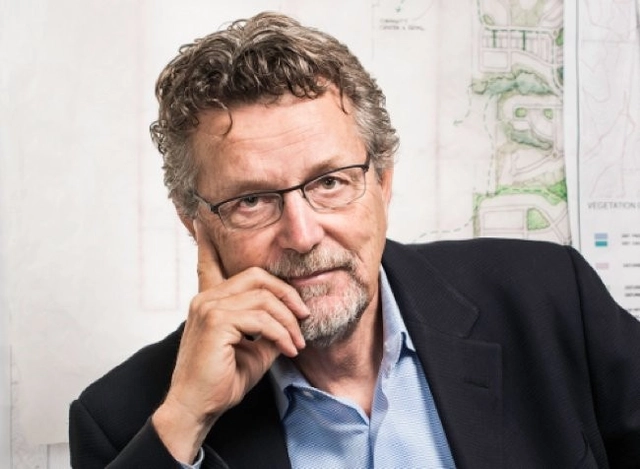
In this article, originally published in Metropolis Magazine's Point of View blog as "The Real Problem with China's Ghost Towns" , author Peter Calthorpe explains the problems of these cities, predicts their grim future, and explores how the thoughtful planning behind the city of Chenggong could provide a more sustainable alternative.
We’ve all seen the reports on “ghost town” developments in China, showing acres of empty high-rise apartments and vacant shopping malls. These barren towns seem particularly ironic in a country planning to move 250 million people from the countryside to cities in the next 20 years. But this massive, unprecedented demand has been distorted by a number of factors unique to China. Flawed financial incentives for cities and developers, along with the poor phasing of services, amenities, and jobs create most of the problems. In addition, China’s emerging middle class is very comfortable (perhaps too comfortable) investing in real estate, so people often buy apartments in incomplete communities but don't move in, expecting that values will rise, or that they will live there someday. The result is a string of large, empty developments that remain speculative investments rather than real homes and communities. [See-through buildings are the worry now, but the real problems may come when they are full.]
While it’s hard to get data on vacancy levels in China, there are certainly many anecdotal examples across the country. An all-too-typical example is Chenggong, the new town planned for 1.5 million just outside of Kunming in the west. This freshly minted city boasts the growing Yunnan University, currently with 170,000 students and faculty; a new government center; and an emerging light industrial area. Under construction are the city’s new high-speed rail station and two metro lines connecting the historic city center.
The problem with articles like “China’s Great Uprooting: Moving 250 Million Into Cities”, recently featured in The New York Times, is that they contribute to a misleading and simplistic narrative about China’s economic development, casting it as a story of “good” versus “evil”.
This was recently highlighted by a critique authored by the NYU Stern Urbanization Project in which The New York Times article in question was called out for being overly sensational and reductive in how it covered China’s policies concerning internal migration from the countryside to urban areas.
Toshiko Horiuchi MacAdam is known for her massive, colorful architectural sculptures/playgrounds. The most famous example of her work is the expansive net-structure inside the "Woods of Net" Pavilion at the Hakone Open Air Museum in Japan - which Horiuchi MacAdam knitted, entirely by hand, over the span of a year.
We took a moment to speak with Ms. Horiuchi MacAdam about the Pavilion and her other works, how they bridge the worlds of art and architecture, and how they irresistibly invite the world to play. You can read our interview, and see more images of her fascinating work, after the break...
In an article published by The Wall Street Journal called For Creative Cities, the Sky Has Its Limit, Richard Florida discusses the development of urban environments and their relative successes. As human migrations are trending towards big cities, the design and appropriation of space within these cities is increasingly important. Florida cites that trends indicate that by 2050 cities will make up 70% of the global population. With so many people, elevate density within cities will be unavoidable, but what Florida emphasizes is that it isn’t just density that makes a vibrant and thriving city. Citing Shanghai and New York City as examples of dense urban environments, Florida explains the differences in their relative architectural and urban developments and the prosperity that follows. The fundamental difference? The prevalence of mixed-use neighborhoods in New York City that overpower the innovation of strictly financial districts of either New York or Shanghai.
There is no other comic saga more influenced by architecture than Batman. Gotham, and the fictional architects that built the city, have been main characters since the first plots. Writer and architect Jimmy Stamp describes in these essay the fascinating architectural references and metaphors that have filled Batman stories for the last 60 years.
Batman, Gotham City, and an Overzealous Architecture Historian With a Working Knowledge of Explosives
By Jimmy Stamp
New York, Dubai, Tokyo, Moscow, Gotham. Every city in every atlas—real and fictional— has a unique character shaped by history and geography. More than a mere sense of place derived from architecture and planning, cities have a feeling that pervades the consciousness of those who live there until themselves become a a piece of the urban fabric, a fractional embodiment of the city itself. Perhaps more than any other person—real or fictional—Batman is integrally linked to his city, the city he has sworn to protect. In every sense of the word, he is a true avatar of Gotham. And Gotham City itself is an avatar, not only of the dreams of its fictional architects, but of our collective urban paranoia.
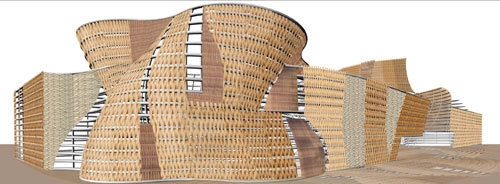
The SpainPavilion will have a steel structure and a wicker cover. Spanish handcrafters will weave out different patterns by using different colors of wicker, said Benedetta Tagliabue, designer of the pavilion. The wicker will be covered by a special material that is water-proof. It will also keep the pavilion at a comfortable temperature, said Tagliabue.