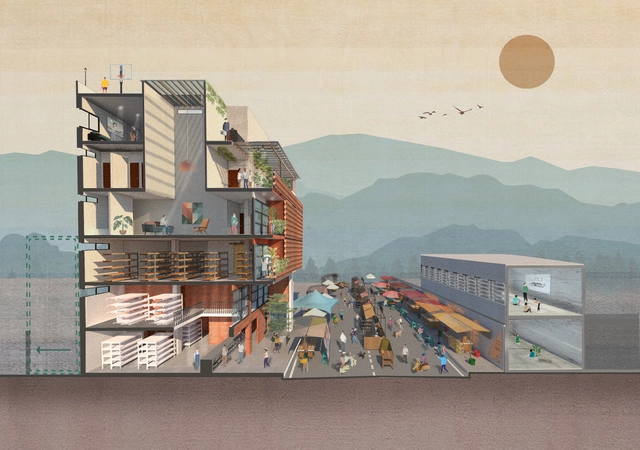
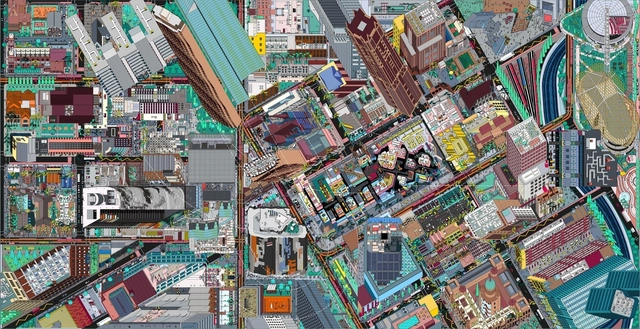
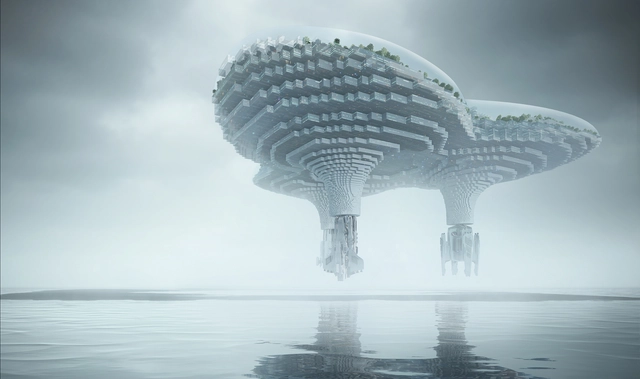
ArchDaily is continuing a six-year-long tradition of celebrating the best architecture drawings of the year. The 2020 edition highlights a carefully-curated collection of architectural drawings and visualizations with a wide variety of techniques and representations, all orientated towards a common goal of sharing ideas, visions, and designs.
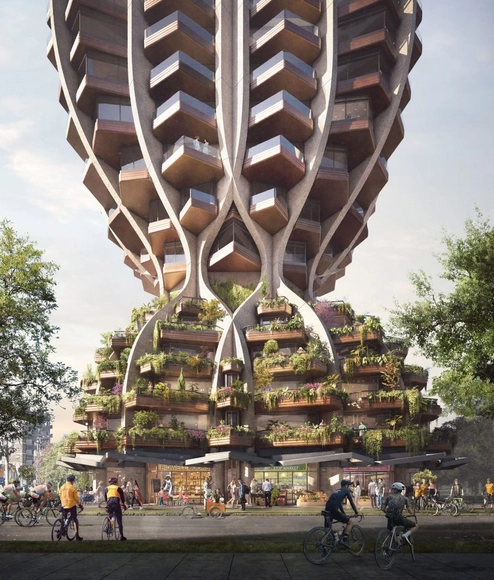
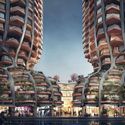
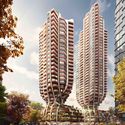
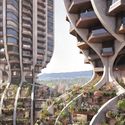
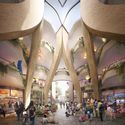
Heatherwick Studio has shared plans for a pair of residential towers in Vancouver, Canada. The "curvaceous" skyscrapers were designed for Kingswood Properties and Bosa Properties in the city's West End neighborhood. Inspired by tree-like forms, the towers aspire to create a "new level of global design excellence" that emerges from a ground level plaza. The two towers would rise between 30 and 34 stories tall in height, and would feature views across the city and Vancouver Harbor.
In our increasingly urbanized world, everything and everyone has adopted a lifestyle of nomadism. New environmental and social constraints have forced people to have a constant "on-the-go" behavior, so much so that almost everything has acquired wheels, even the buildings. But with the rise of debates like "is humankind being replaced by robots?" and "is technology taking over?", urban mobility has helped give access to housing, healthcare, and education in places with extreme difficult conditions.
To shed the light on globally-thriving mobile activities, the France-based Institut pour Ville en Mouvement, or City on the Move Institute, is an organization that has been addressing the challenges posed by urban mobility and contributing to the emergence of innovative solutions. In a series of short Youtube clips, the organization invited experts in the fields of architecture, urban planning, and technology to share their insights on the future of urban mobility.
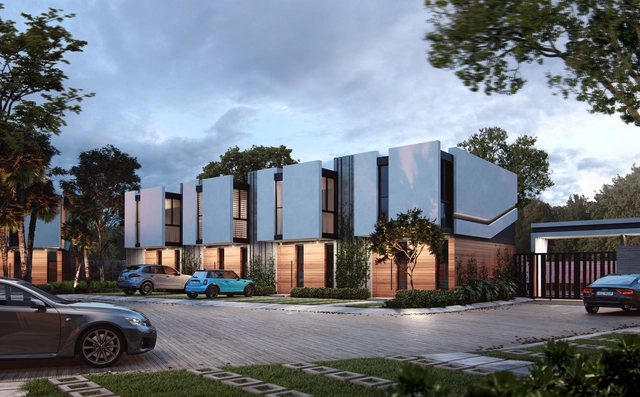
Architecture practice Bey Arquitectura has shared details of the firm's Punta Cana Bey Garden project in the Dominican Republic. The 28 loft-type villas were designed to connect with the surrounding natural context and support the implementation of renewable energy. Located in the heart of Bávaro, the project is sited near shopping malls, restaurants, schools, the Punta Cana Airport and the beach.
Sonnenklang / Christoph Hesse Architects. Image Courtesy of Christoph Hesse Architects
Vladimir Belogolovsky speaks with Christoph Hesse over Skype between New York and his office in Korbach, Germany to discuss his pioneering projects and why working in the countryside is relevant.
It’s a given that the coronavirus pandemic has had wide-ranging impacts on construction projects large and small over the past 10 months. So, what about the construction of new buildings that share the defining characteristic of being superlatively tall?
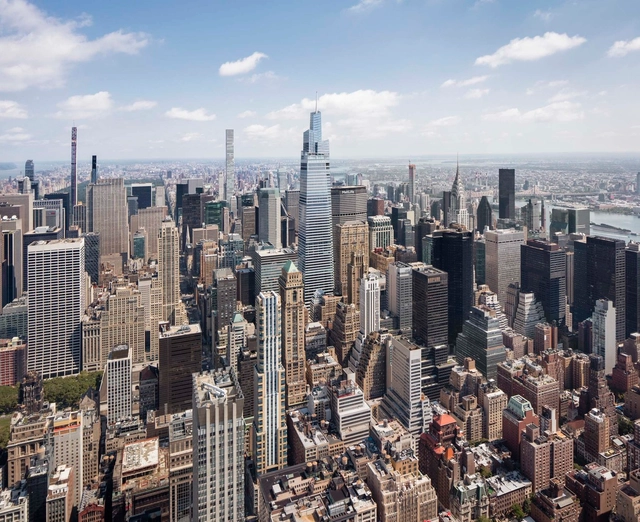
As detailed in an annual report published earlier this month by the Chicago-headquartered Council on Tall Buildings and Urban Habitat (CTBUH), newly completed skyscrapers experienced a global decline of 20 percent in 2020 compared to the previous year due, both directly and indirectly, to the COVID-19 crisis.
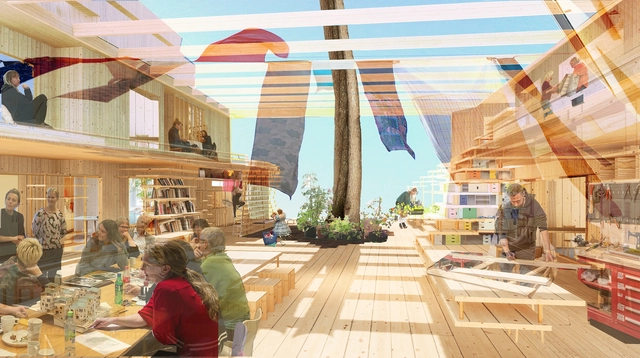
The Nordic Pavilion at the 17th International ArchitectureExhibition of the Venice Biennale will be transformed into an experimental cohousing project by architects Helen & Hard, supported by a curatorial team from the National Museum of Norway. Responding to the theme of How will we live together? the intervention “will present a framework for designing and building communities based on participation and sharing”.
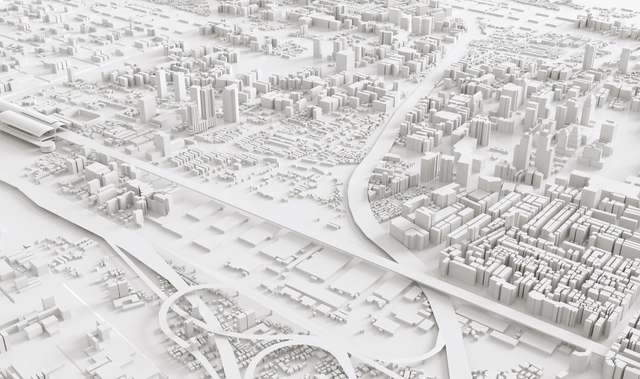
Imagine having a blank canvas on which to master-plan a brand new city; drawing its roads, homes, commerces, and public spaces on a fresh slate and crafting its unique urban identity. Every urban planner has fantasized about designing a city from scratch and luckily for some, this dream is morphing into concrete opportunities.
Over the last two decades, new, master-planned cities have emerged from the ground up at an unprecedented scale, the majority of which have been created in Asia, the Middle East, Africa, and Latin America, with currently over 150 new cities in the making. This new type of urban development has shown to be particularly seductive in emerging markets, where they are sold as key parts of the strategy to leapfrog from agriculture and resource-based systems to knowledge economies by attracting foreign capital and boosting economic growth.
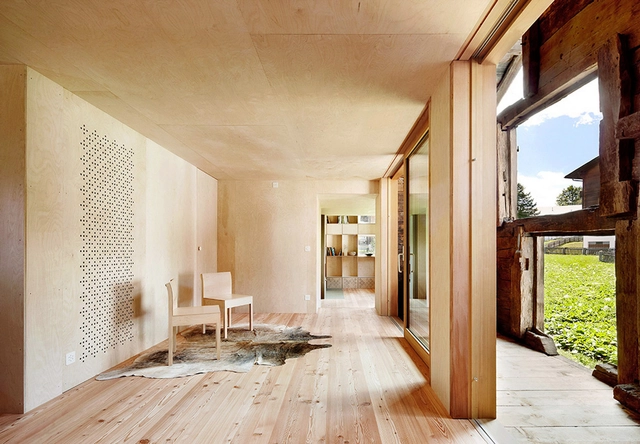
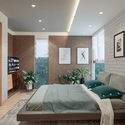
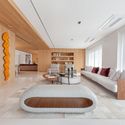
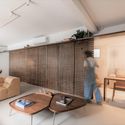
Wood in architecture, when properly managed, is often associated with sustainability but also with a sense of comfort and coziness. Well-designed joinery can provide versatility and uniqueness to interior design, among so many other benefits.
https://www.archdaily.com/955092/defining-spaces-with-wood-joinery-in-brazilian-apartmentsEquipe ArchDaily Brasil
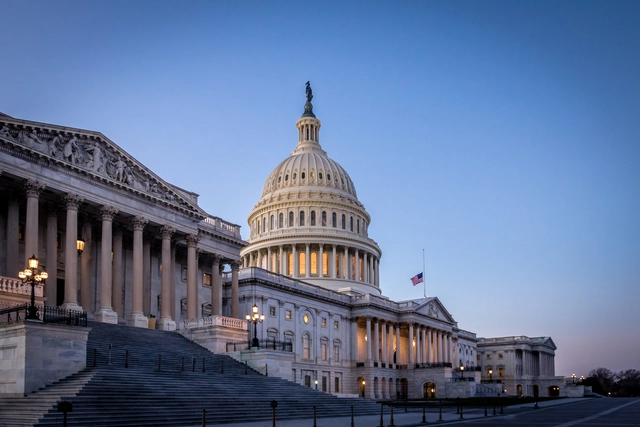
As we are entering 2021 after a year of anxiety and uncertainties, what are your expectation for our future? The UN75 survey reports that most people around the world hold greater optimism for the future: “Globally, many more respondents believe people will be better off in 2045 than today (49%) compared to those who believe people will be worse off (32%).”
For most people, calling a place “sacred” designates it as an important location, one usually associated with spirituality. It might be the setting for religious rituals (the sacred space of a church, synagogue, or mosque), a spot where some event described as “miraculous” has occurred (such as the reported sighting of the Virgin Mary in Lourdes, France, which became a pilgrimage site), or a place which held the body of deity (think of the Church of the Holy Sepulchre in Jerusalem, built upon what is believed the be the tomb of Jesus Christ).
https://www.archdaily.com/955561/assault-on-a-sacred-placeMichael J. Crosbie
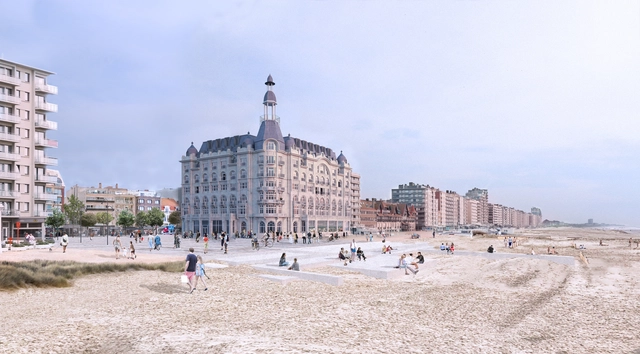
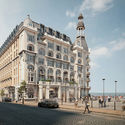
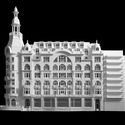
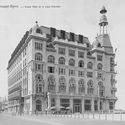
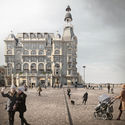
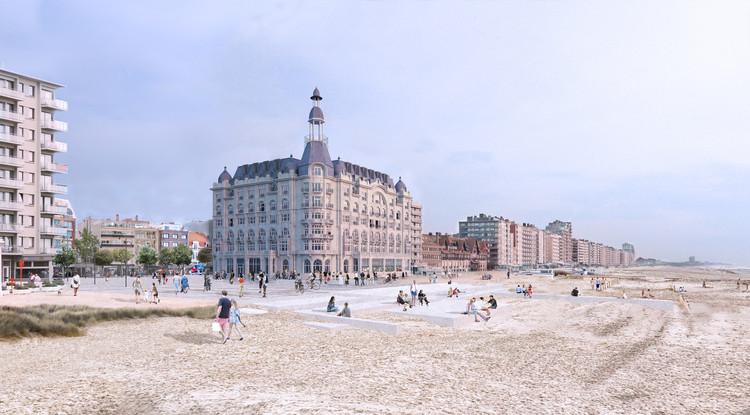
David Chipperfield Architects has unveiled his restoration plans for the Grand Hotel in Nieuwpoort, Belgium. Started in 2019, the project converts the structure into a residential building, while seeking to reinstate its landmark status. Becoming “The Grand residential building”, the architecture will also take on an extension that underlines a “sensitive understanding of heritage value and entails reinterpretation and invention as well as restoration”.
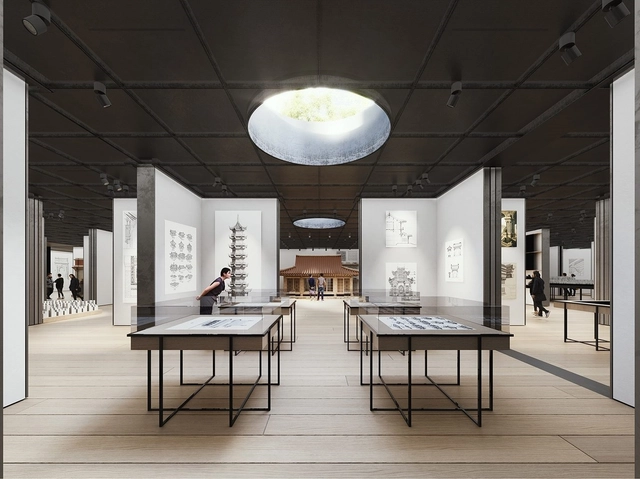
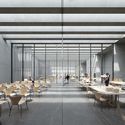
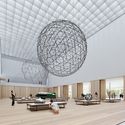
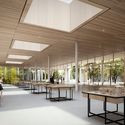
Architecture and urban planning studio STL Architects has created a design concept for the Korean Museum of Urbanism and Architecture in Sejong, South Korea. The team's minimalist approach features open, airy interiors and rectilinear building volumes located within the National Museum Complex Master Plan. The design aims to re-address the idea of Human Ecology by exploring ways to intensify the relationship between humans and their natural, social, and built environments.
Almost 6 months ago, on August 4th, 2020, the city of Beirut was shaken by one of the biggest non-nuclear blasts in history. Leaving the northern side of the capital in ruins, the explosion damaged around 40,000 buildings. New contemporary structures completed recently by local international architects are now facing reconstruction dilemmas, raising existential questions such as: How should reconstruction efforts of “new” damaged buildings look like? Should architects rebuild them as they were before the blast, erasing what has happened or should they leave scars and portray new realities?
In order to explore ideas and highlight different perspectives, ArchDaily had the chance to sit with three architects whose buildings were impacted by the blast. Bernard Khoury, Paul Kaloustian, and Lina Ghotmeh talked about their projects and their vision of the reconstruction of Beirut with ArchDaily's Managing Editor, Christele Harrouk, alongside Architectural Photographer Laurian Ghinitoiu, who documented in a featured photo series the extent of the destruction.
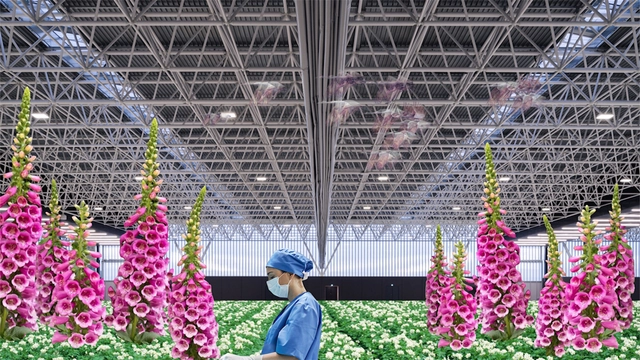
A new film by OMA / Reinier de Graaf titled “The Hospital of the Future” has been released as a part of the exhibition, Twelve Cautionary Urban Tales at Matadero Madrid Centre for Contemporary Creation. Dubbed a “visual manifesto”, the 12-minute short film questions the long-standing conventions in the field of healthcare architecture in terms of the methodology behind how hospitals are built and also why they are built in certain ways. Through an exploration of the role that disease has played in shaping cities, the film offers a lens into the future of what we might expect for healthcare design, especially as we emerge from the COVID-19 pandemic.
The new Piccadilly Hotel in the United Kingdom by FCBStudios has received planning approval from the Manchester City Council. Designed for Pestana’s Cristiano Ronaldo CR7 brand, the hotel is sited at the corner of Piccadilly and Newton Street with a lounge bar and rooftop terrace. The scheme reuses a Grade II listed building with an 11-story new build to mark the gateway to the Northern Quarter and city center.
Since immemorial time, humans have constructed their shelter and homes using wood. Gradually these structures grew more complex, but wood has continued to play a fundamental role in architecture and construction. Today, especially due to growing concerns about climate change and carbon emissions, wood has been regaining significance as an important building material for the future, if used consciously and sustainably. Wood’s structural performance capabilities make it appropriate for a broad range of applications—from the light-duty repetitive framing common in low and mid-rise structures to the larger and heavier, often hybrid systems, used to build arenas, offices, universities and other buildings where long spans and tall walls are required.











.jpg?1611288061 "The Line project in Saudi Arabia. Image © NEOM")










.jpg?1611093603&format=webp&width=640&height=580)
.jpg?1611093772 "© Laurian Ghinitoiu")
.jpg?1611093604 "© Laurian Ghinitoiu")
.jpg?1611093961 "© Laurian Ghinitoiu")
.jpg?1611093888 "© Laurian Ghinitoiu")
.jpg?1611093603)
.jpg?1609277051&format=webp&width=640&height=580)
.jpg?1609277115 "Courtesy of FCBStudios")

.jpg?1609276989 "Courtesy of FCBStudios")
.jpg?1609277252 "Courtesy of FCBStudios")
.jpg?1609277051)