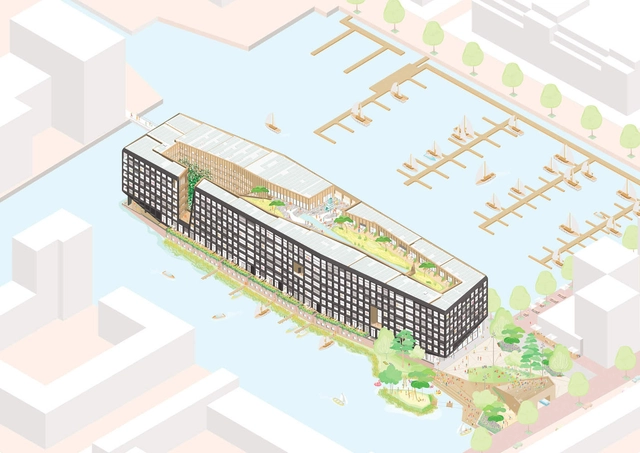
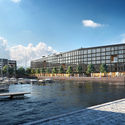
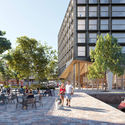
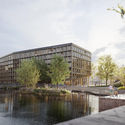
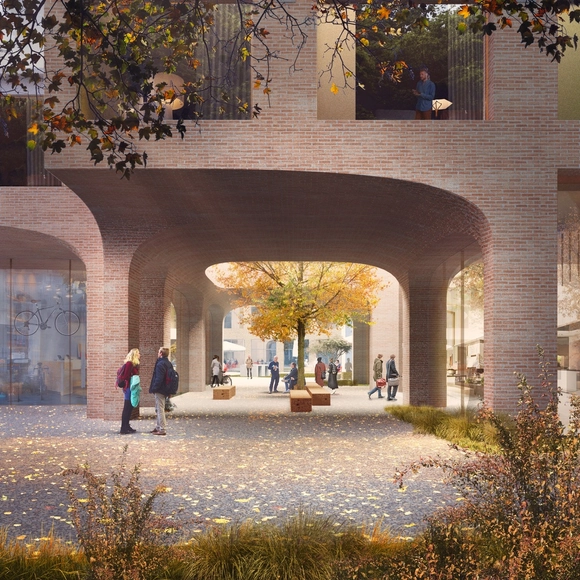
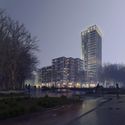
Landscape and architecture studios Felixx and Orange Architects have designed a new housing development in the heart of IJburg, Amsterdam. Rising atop an artificial island, the project is organized around the surrounding marina to provide family housing. The new residential building will include commercial and social programming, as well as new areas for the public realm.
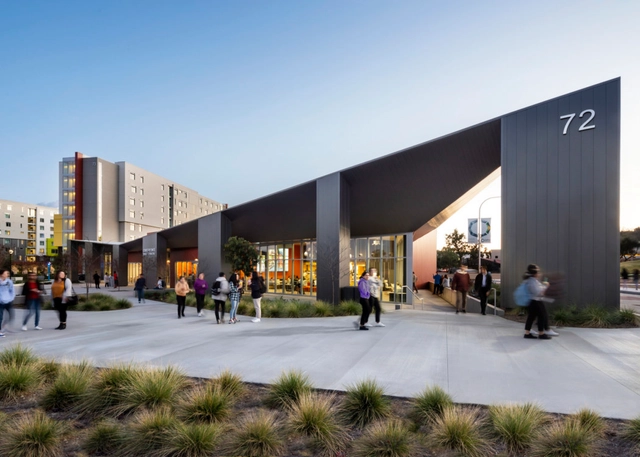
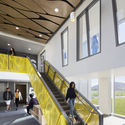
Dining Commons at Cal Poly, designed by EYRC Architects. Student Housing by HMC. Image Courtesy of HMC Architects
Beautiful design is grounded in functional, accessible and healthy environments. For designers Mariné Maroukian, Kristina Singiser, and Adeleh Nejati at HMC Architects, equity and wellness go hand-in-hand. Each of these three women are leaders in their community and in practice, championing new ways to address local needs and create positive impact.
Powerhouse Company has won the competition to transform the Alo-location and neighborhood in Groningen, a city in the Netherlands. They teamed up with Houben/Van Mierlo, Vector-i and landscape architect DELVA to create the proposal. Dubbed HOLT, the project was developed with MWPO, Nijestee and Nijhuis Bouw. The plan for a new green and healthy neighborhood looks to the future of healthy living in the city.
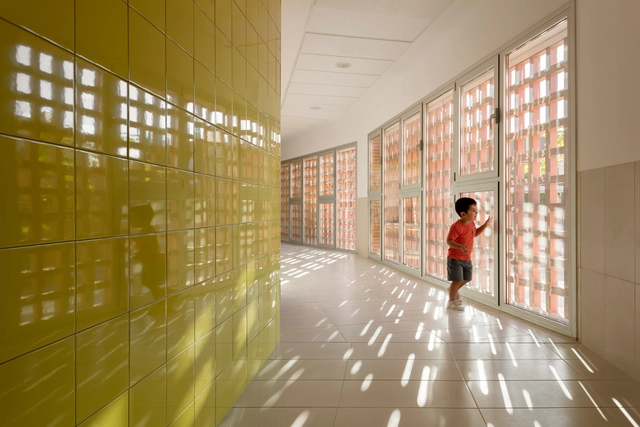
The ongoing pandemic has been a disruption to the everyday routines of billions around the world, as due to being confined to their households, the separation between work and rest has become extremely blurry, with people forced to rethink and reconfigure the layout of their personal spaces. Conversations have abounded on how to create flexible working spaces in a home environment, and if offices themselves are an outdated model that we should leave behind. A missing part of that conversation, however, is the impact that the pandemic has had on children, specifically primary-school level children, on their education - as inequalities are emphasized, some children learning with slow internet connection speeds, or struggling to have the space required to adequately complete educational activities.
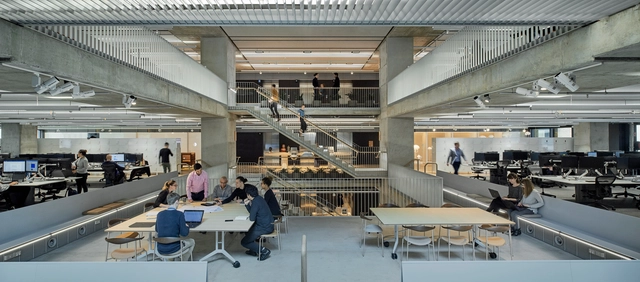
If your profession involves going into the office every day, then you’re probably familiar with this age-old question- is the office too hot, or is it too cold? While some colleagues may claim that the workplace feels like a sauna, you might see others who survive the daily grind hidden away under a blanket with a personal space heater keeping them company. The never-ending debate about the perfect temperature might only scratch the surface of many questions that designers and engineers have aimed to solve about the workplace, and they’re probably the aspects that you don’t consider on a daily basis. What about lighting- has a meeting room ever felt too bright, or too dimly lit that you felt uncomfortable?
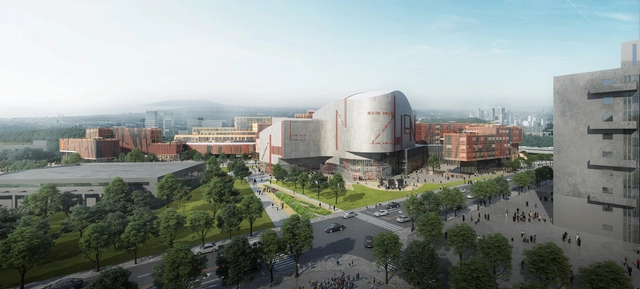
Miralles Tagliabue EMBT, directed by Benedetta Tagliabue, has won the international competition to design the Shenzhen Conservatory of Music, one of the city's 10 new era cultural buildings. Characterized by the dialogue generated with its surroundings, the complex integrates music and art in nature with a proposal of organic and sustainable architecture.
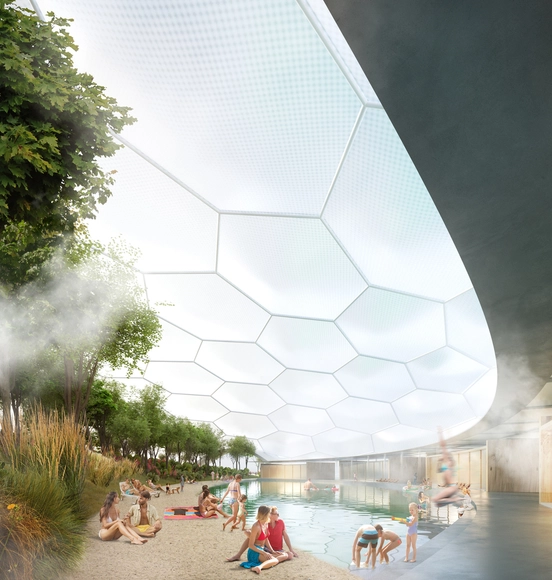
A trans-disciplinary team led by CRA-Carlo Ratti Associati has designed a series of islands for the Helsinki Energy Challenge. Titled Hot Heart, the project is based on an archipelago of heat-storing basins that will also serve as a hub for recreational activities. The “islands” will be home to tropical forests and ecosystems from around the world, bringing additional public space and a new educational attraction to the Finnish capital.
As income inequality has widened in recent years, the role of philanthropy has been called into question. Is charitable giving by wealthy individuals and powerful corporations always a positive force, or is that connection to wealth and power an inevitable compromise? Whose agenda does philanthropic giving really benefit, the grantees or the granters? These are complicated questions. But truly enlightened giving is a transformative force. It can not only fund worthy causes but if properly timed can sow the seeds of social change.
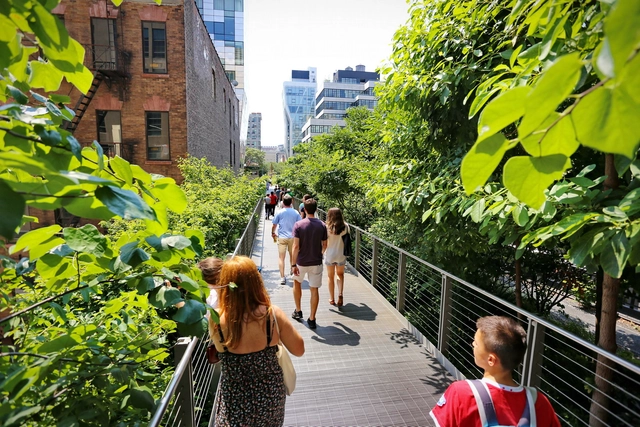
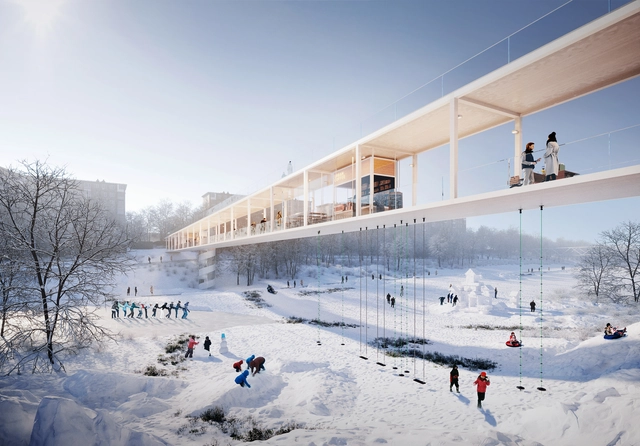
Citymakers and Karres en Brands have tied for first place in the competition to reimagine Saratov's City Center in Russia. From Park Pobedy, Ostrov Zeleny and Pokrovskie Peski Island to the development of the former Saratov Tsentralny airport and Glebuchev Ovrag, the teams will design a series of new spaces throughout the city.
Courtesy of International Architecture Design Competition for the Shenzhen Maritime Museum
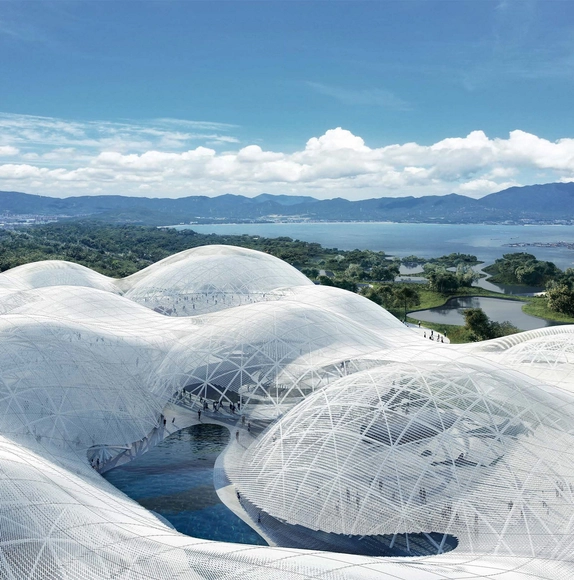
The proposal designed by SANAA, “The Cloud on the Ocean” was just selected as the winning entry of the International Architecture Design Competition for the Shenzhen Maritime Museum. Led by Kazuyo Sejima and Ryue Nishizawa, SANAA imagined an intervention emerging between mountains and sea, combining the local cultures, site features, and maritime elements.
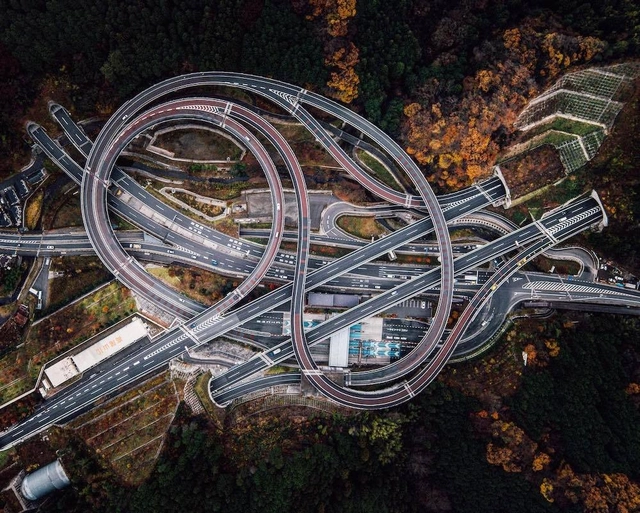
Sagamihara, Japan. Drone photo by Rob Antill (@digitalanthill) and Ben Steensls (@randomoperator)
We live in a tangled web of flows – of capital, information, technology, images, structures, in constant momentum dominating all aspects of our lives. The large-scale road infrastructures shown here are products of this powerful desire for movement, which for many years was also synonymous with development, as portrayed by the famous Goethean character Faust in his endless quest for a (false) sense of progress.
From these tangles of concrete and steel, at multiple levels and in different directions, emerges a geometrically organized chaos that tears the urban fabrics in a relentless effort to prioritize the flows with the fewest obstacles and the highest capacity possible.
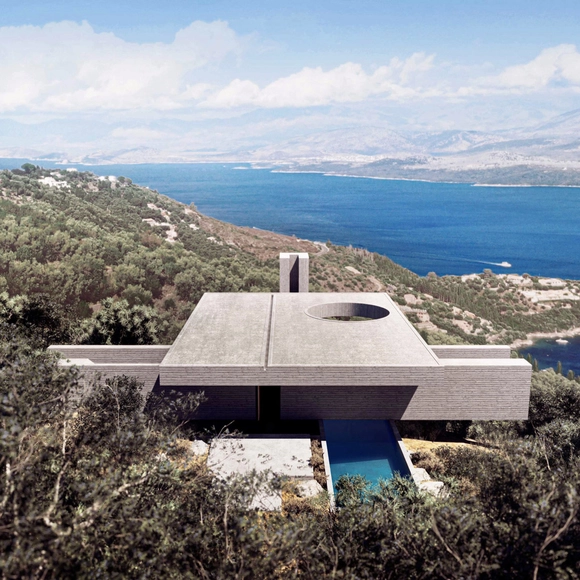
Focusing on the different typologies of houses, this week’s curated selection of Best Unbuilt Architecture highlights conceptual projects submitted by the ArchDaily Community. From urban developments to tiny homes, this article explores the topic of residential architecture and presents approaches from all over the world.
Featuring a cabin amidst the verdant forested region of northern Iran, a development in Georgia that offers an 80% recreational space to 20% housing ratio, and a project in Paris that re-questions our urban reality, and rethinks traditional forms of housing, this roundup tackles a multitude of scales. In addition, it underlines a collection of beach houses in Greece, Italy, Argentina, and Latvia each responding to a different landscape and topography. Other ideas underlined include the renovation of existing developments in Moscow, a residential-led transformation of a former factory in Manchester, and a family of blocks grouped around an elevated communal garden in the Netherlands.
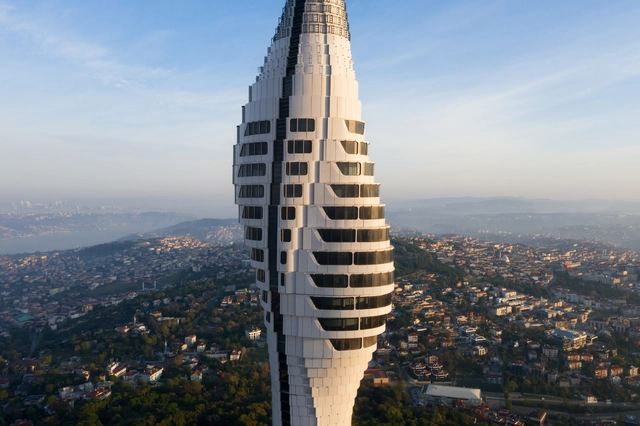
Melike Altınışık Architects - MAA has just revealed more details and interior images of Istanbul's futuristic 369 meter-tall TV and Radio Tower. Photographed by London-based architectural photography studio NAARO, the new landmark structure has started its main telecommunication functions in November 2020. It is expected to open its doors to public use in late spring 2021.
California Institute of Technology Quantum Laboratory. Image Courtesy of Brooks + Scarpa
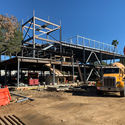
Architecture and design practice Brooks + Scarpa have created a new 25,000 square foot research and development facility under construction in Pasadena, California. The project is designed for scientists and engineers seeking to develop future quantum technologies. In turn, the experimental and theoretical quantum science and technology lab will be an incubator in the emerging field of quantum engineering and quantum computing.
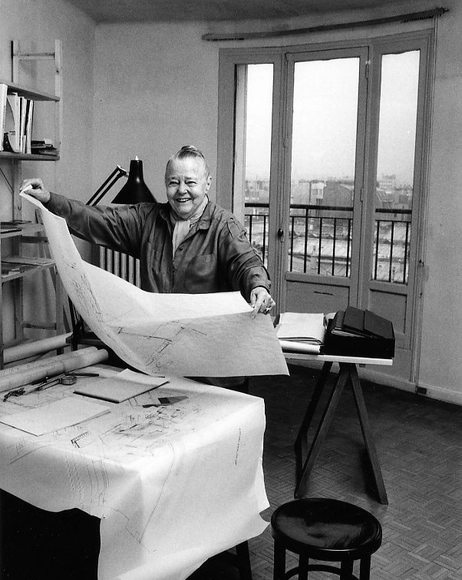
American 19th-century sanitation engineer George E. Waring, Jr. was a miasmaist. He believed in the miasma theory, which holds that toxic vapors traveled through damp soil, rotted vegetation, and pools of standing water. These toxic vapors were understood to emanate from the Earth and interact with the atmosphere and cause disease in American cities.
According to Catherine Seavitt Nordenson, ASLA, a professor of landscape architecture at the Bernard & Anne Spitzer School of Architecture at the City College of New York, Waring was a “marginal figure,” but he had interesting ideas about how to “modify the climate to improve health.” In a virtual lecture hosted by the Harvard Graduate School of Design, Seavitt Nordenson said Waring was incorrect about the mechanisms for spreading disease —he didn’t understand the concept of vectors, like mosquitoes— but his drainage and sanitation solutions were “surprisingly successful.” A year into the coronavirus pandemic, it’s worth revisiting Waring’s ideas about the connections between the Earth, atmosphere, disease — and the maintenance of public spaces.
https://www.archdaily.com/958954/the-miasma-theory-was-wrong-but-led-to-smart-sanitationJared Green
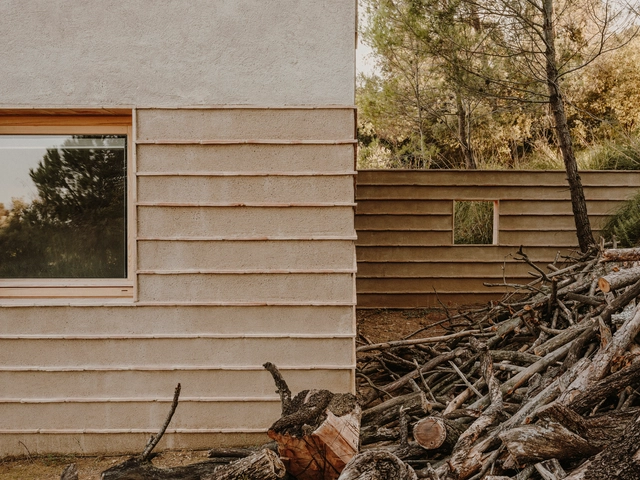
Along with concerns about our environment, new movements, words, concepts, and terms related to these issues constantly emerge, which require us to always remain up to date. The word sustainability itself faced some resistance until it was incorporated into common vocabulary and used widely in the most diverse contexts. Currently, much discussion surrounds the terms circular economy, resilience, the 4 Rs, urban mining, and others. In addition, there are some sustainability-related movements that have been incorporated from activism in other fields, showing the fluidity of such issues. One such initiative is the 0 kilometer materials movement, which has been featured in manifestos and some projects, albeit timidly, in recent times.
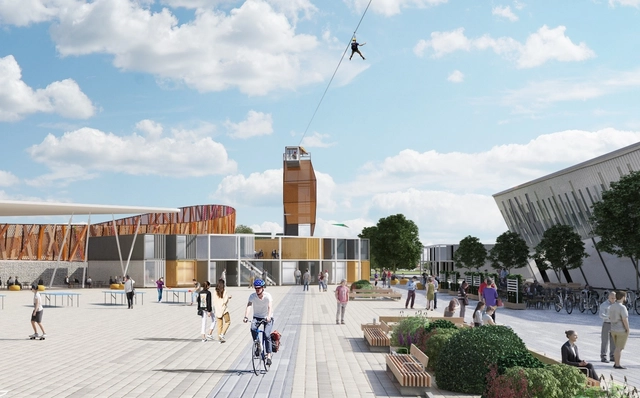
Scott Brownrigg has created a new masterplan for the International Sports Village (ISV) at Cardiff Bay. Working on the larger development since 2012, the firm is approaching the ISV masterplan by combining programs. The project will include a 333-metre velodrome with a clubhouse, spectator stand and bike storage, together with a new zip wire tower, a large bike shop, food, drink and retail space, additional car parking and space for new sport and leisure attractions.














.jpg?1616624818 "Karres en Brands . Image Courtesy of Strelka KB")