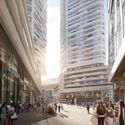
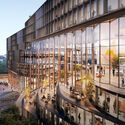
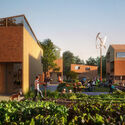
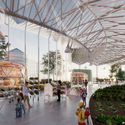
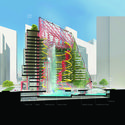
CRA-Carlo Ratti Associati has merged architecture with urban agriculture in the firm's newly-unveiled Jian Mu Tower in Shenzhen, China. The 218-meter high building incorporates a large-scale vertical hydroponic farm across its entire facade, producing vegetation that can feed up to 40,000 people per year. The 51-storey tower will also include housing offices, a supermarket, and a food court with inner gardens for recreation and social gatherings.
Videos
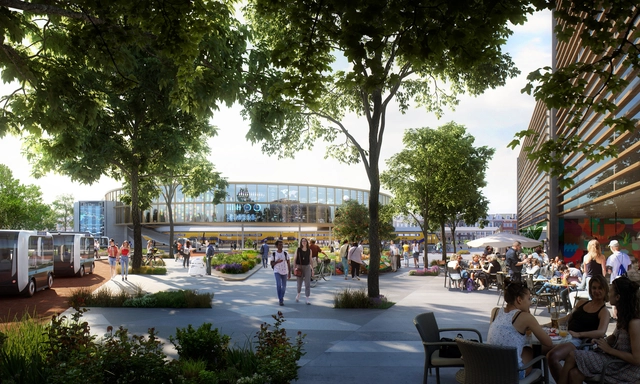
Brainport Smart District Master Plan. Image Courtesy of UNSense
UNStudio has recently published a report exploring the broader scope of community building and placemaking in the post-pandemic urban environment. Through examples from their practice, UNStudio highlights various design strategies currently incorporated in architecture and urban planning that cater to the universal and crucial need to connect socially. In addition, the practice stresses the importance of “ third spaces” and human-scale connectivity, as well as the blending of digital and physical spaces of interaction.
A building stands out along the maritime walkway in Palma, Mallorca's capital. Designed by José Ferragut Pou and completed in 1960, the building was a poster child for the modern architectural movement sweeping the globe at that time. Today, like many of its brethren, it stands in abandoned disrepair.
Lluís Bort is the Spanish architect and photographer behind "Empty Architecture," a photographic compilation of abandoned buildings from throughout the island of Mallorca, Spain.
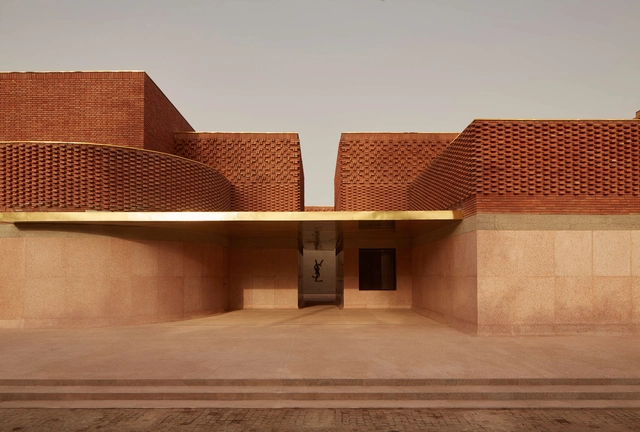
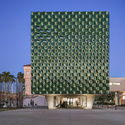
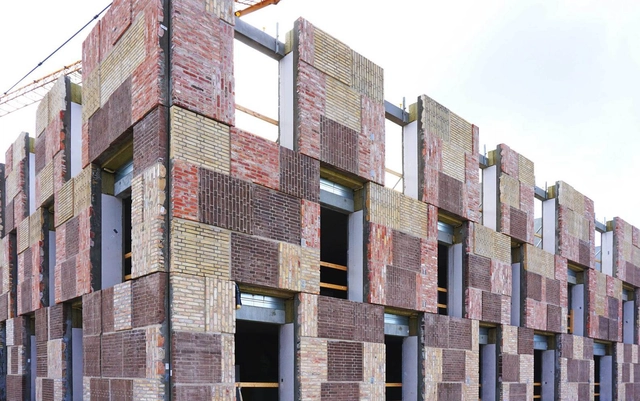
Few materials are as timeless, durable and beautiful as terracotta. With a range of inherent properties, terracotta is being specified to redefine building envelopes. Used for its many colors and textures, as well as its flexibility, this ceramic can be constructed as cladding, rain screens and a variety of components. Dating back to the Babylonians, terracotta has been used throughout history, and it continues to be a material selected for diverse building types around the world.
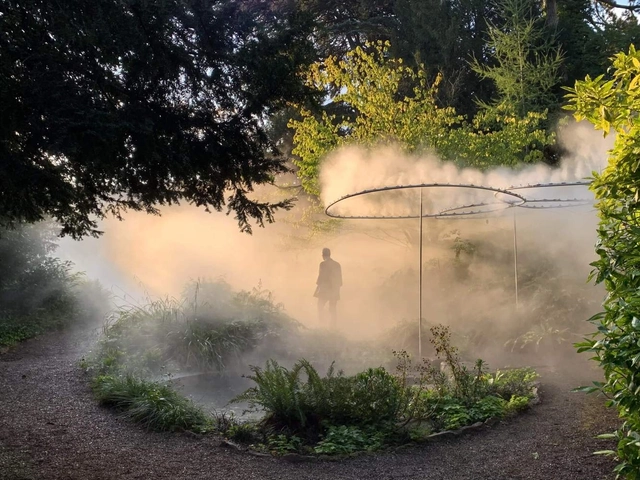
Design consultancy office AUTHOS and Swiss multidisciplinary Interactive Designer Stella Speziali have collaborated to create a unique spatial intervention at the Zurich Design Biennale 2021. Titled NEBULOSUS, the installation uses mist and augmented reality as an immersive and intangible 'structure' that changes the spatial boundary of Zurich's botanical garden and creates and explorative experience for visitors.
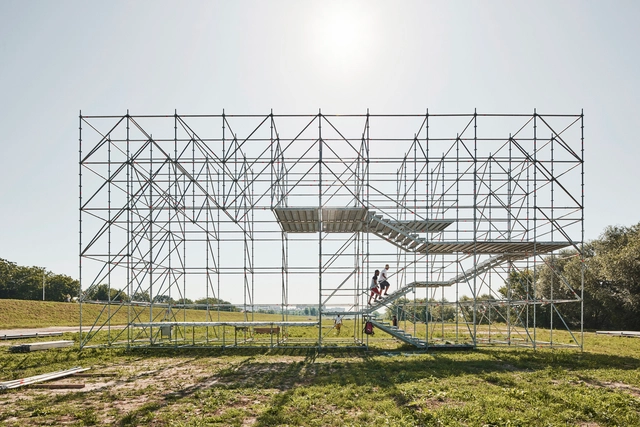
Beyond "experience tourism" and light entertainment, temporary architecture is a fertile ground for testing ideas, examining places, popularizing new concepts and technologies. Taking a wide array of forms, from disaster relief projects and utilitarian structures to design experiments, architectural statements and playful installations, transient structures showcase alternative visions for the built environment, opening up new possibilities and questioning established norms. As temporary architecture now seems at odds with sustainability imperatives, the following discusses the value of temporary architecture as a vehicle of experimentation, advancing design and engaging communities.
August 5th is National Health Day in Brazil. Our readers have already expressed their opinion on how psychology is essential to build healthy and pleasant spaces to live in, and for this reason, we decided to explore the impacts of the spatial experience on each person's well-being, improving quality of life and reducing mental stress. In other words, architecture not only contributes to physical health through ergonomics but also affects our emotional comfort.
https://www.archdaily.com/967003/architecture-and-health-how-spaces-can-impact-our-emotional-well-beingEquipe ArchDaily Brasil
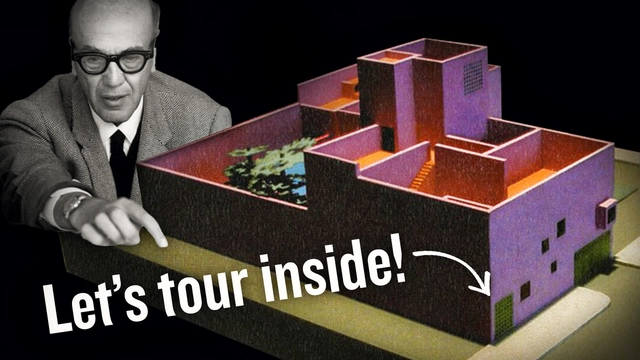
In 1984, the Menil Museum in Houston, Texas, commissioned the Mexican architect Luis Barragan to build a 3,000-square feet guest house to be located across the street from the famous Rothko Chapel. The architect came back with a design for a dazzling purple, pink, and orange 8,000-square feet mansion that looked to be more at home in Mexico City than a Houston residential suburban lot. So, due to the ensuing conflict between client and architect, the house would never get built, only displayed as an exhibition within the Menil’s galleries.
“Local” is a word that is broadly used to describe something particular about a place that makes it different from somewhere else. Across the globe, the “local-ness” of our cities is what makes them unique- in the way that people live, work, socialize, and especially in the way that they plan and construct cities and infrastructure. To someone living in a suburb, the way that they move from place to place might be through a car, while someone who lives in a dense metropolis might use a subway or bus system as part of their everyday lives.
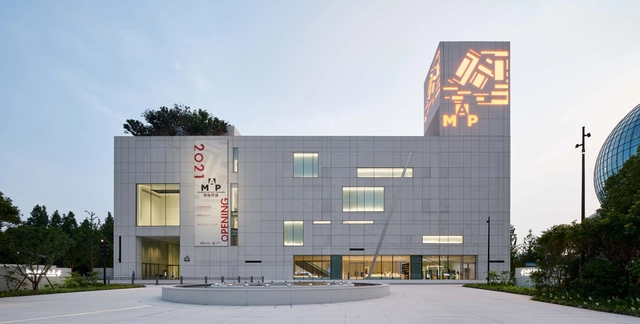
Atelier Jean Nouvel's monumental granite-clad museum in Shanghai's Pudong district is now complete and open to visitors. Labeled as a "domain" by the architecture firm, the Museum of Art Pudong covers an expansive plot of almost 40,000 sqm on the outer banks of the Huangpu River, and offers visitors a culture-driven space surrounded by the river and an undulating landscape of tall trees.
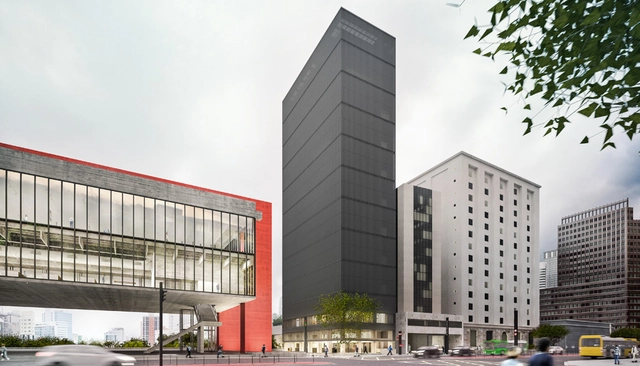
The Museum of Art of São Paulo - MASP will soon expand its facilities to include an annex next to the iconic project by Lina Bo Bardi. The 14-story Dumont-Adams building, which has been inactive for decades, has 7800 square meters and will be renovated to house exhibition wings, a café, a restaurant, and a restoration laboratory.
https://www.archdaily.com/967425/masp-to-receive-a-14-story-annex-on-paulista-avenue-designed-by-metro-arquitetosEquipe ArchDaily Brasil
Titled "The Available City", the fourth edition of the Chicago Architecture Bienniale will be open to the public on September 17th, 2021. This year, the event presents an unprecedented biennale model that experiments with an array of site-specific projects and programs displayed across the Chicago, "reframing what a biennial can do, be, and explore for a city". Over 80 projects from 18 different countries will respond to an urban design framework and bring ideas for community-centered, collective spaces through architectural elements, engaging programming, and enhanced community experiences.
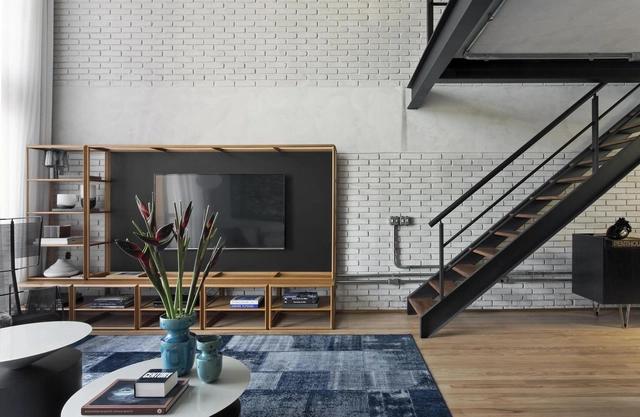
We are about to start living in a completely wireless world, but in the meantime, many people are looking for alternatives to hide wires creating a more organized and clean space. Therefore, we have provided some tips for those who want to disguise TV cables and cords from other devices to make the environment more comfortable.
https://www.archdaily.com/967139/how-to-hide-tv-wiresEquipe ArchDaily Brasil
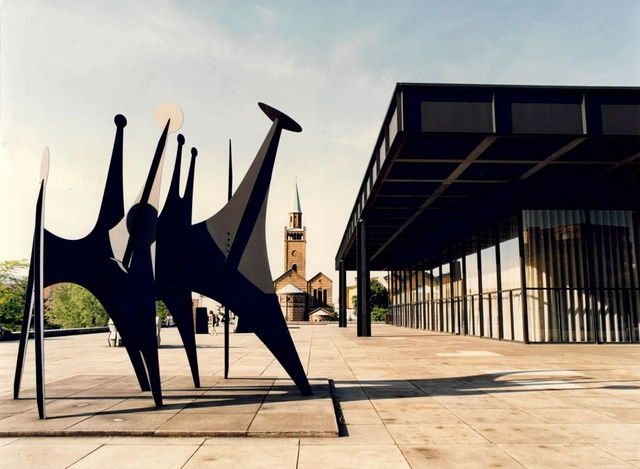
Minimal / Maximal is a solo exhibition of Alexander Calder’s opening this Sunday at the newly reopened Neue Nationalgalerie in Berlin.. Image Courtesy of Staatliche Museen zu Berlin, Nationalgalerie / Reinhard Friedrich
After being closed for six and a half years for a renovation by David Chipperfield Architects, the Berlin museum reopened Sunday, August 22.
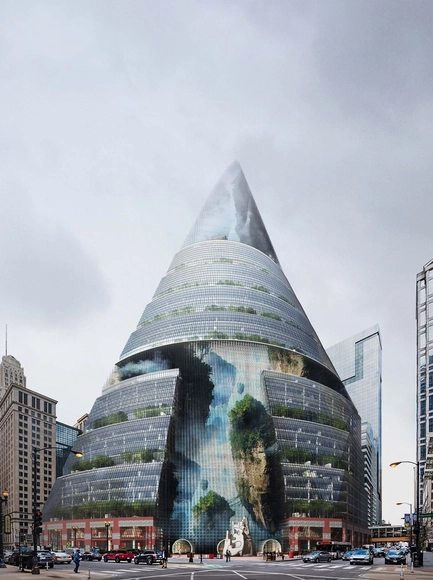
Thompson Scraper. Image Courtesy of Thompson Center Design Competition
The Chicago Architecture Center and Chicago Architecture Club have announced the seven finalists of the Thompson Center Design Competition, which called for new and innovative visions for the Illinois Thompson Center designed by Helmut Jahn in 1984. The winning design proposal will be announced during the opening of the September 14 pop-up exhibition of finalists work at the Chicago Architecture Center, and will run through October.
Questioning the new now, especially with the new challenges of Covid-19, around the world, cities are advocating for structural change and collective action. Berlin questions, an annual, multi-day conference and a platform for transdisciplinary dialogue, in its 2021 edition “Metropolis: The New Now”, tackled the immediate present, creating a place for debate. Dedicated to local solutions to global challenges, the event took on a hybrid format, at various locations in Berlin and online, resembling the world we live in.
ArchDaily had the chance to meet up with Lesley Lokko, architect, academic, and novelist at Berlin Questions, to discuss her talk “Africa as the lab for the future”, her visions for the future of architecture education and the future of big cities on a social, cultural and urban level.
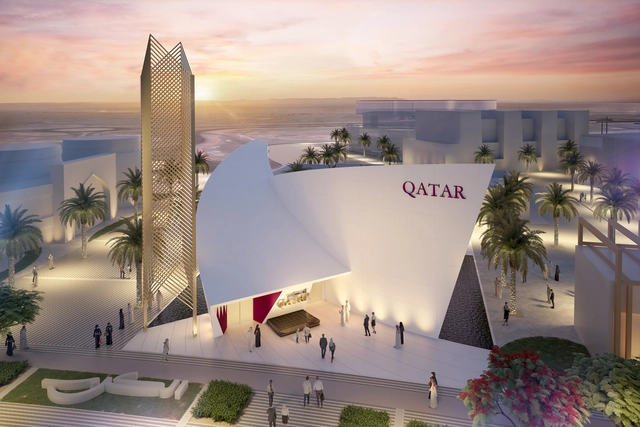
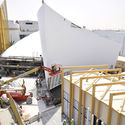
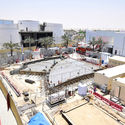
Spanish architect and engineer Santiago Calatrava has unveiled the design of the QatarPavilion at Expo 2020 in Dubai, UAE. The design is inspired by the four elements represented on the Coat of Arms of Qatar and will include two main galleries and exhibition spaces, providing visitors with engaging, inclusive, and interactive environments.


.jpg?1630396129&format=webp&width=640&height=580)
.jpg?1630396086 "Courtesy of CRA - Carlo Ratti Associati")
.jpg?1630396078 "Courtesy of CRA - Carlo Ratti Associati")
.jpg?1630396021 "Courtesy of CRA - Carlo Ratti Associati")
.jpg?1630396025 "Courtesy of CRA - Carlo Ratti Associati")
.jpg?1630396129)