UNStudio and b720 Arquitectos, in collaboration with engineering firm Esteyco, were selected to deliver the integral remodeling for Madrid-Chamartín Clara Campoamor Station and its urban integration. Among the proposals submitted by the world's leading architecture firms, the winning design was chosen for its integral program of efficiency, sustainability, and inclusivity. As "Europe's largest urban regeneration project," the railway hub will extend 2.3 million square meters to become an international benchmark in the Spanish Capital.
Mexico City is undoubtedly one of the most exciting and effervescent cities on the cultural and architectural scene in recent decades. Various authors have positioned it inside and outside the country through projects that make up a meeting platform for the creative community. LAGO/ALGO is part of the list of those resilient spaces that emerged from the pandemic, with the need to reimagine our current context by rethinking how we relate to the public and private space having the iconic Chapultepec Forest as a stage, an 810-hectare urban park that is divided into four sections which harbor some of the most important tourist sites in Mexico.
In Childhood’s End, Arthur C. Clarke’s mid-20th century science fiction classic, a character wonders if the flattened inhabitants experiencing a far-off planet’s tremendous gravitational force are aware of the third dimension. In recent years, this hypothetical has found parallels in our growing digital universe, where we are continually drawn to our flat screens to confirm our relevance, connect with like-minded individuals, or create dating profiles. With attention spans riveted by endless digital content, walking down the street has become a delicate dance of avoiding people staring obliviously at their phones—those who, calling to mind Ada Louise Huxtable’s famous question, “Kicked a Building Lately?,” might walk right into one.
Climate change has been one of the most pressing topics of this year, and for a good reason. Its effects are visible not only in natural habitats but also in urban environments. The construction industry has an important role to play in this dynamic. Throughout the year, events such as COP27 emphasized the importance of striving to achieve net carbon zero and the challenges faced by developing countries affected by increasingly devastating natural disasters. Possible directions for development include actions at varying stages and scales, from optimizing green spaces for urban heat control to employing local and innovative building materials to minimize the carbon footprint or passing laws that help create more sustainable urban and natural environments.
This article represents a roundup of articles published on ArchDaily during the course of 2022 with themes related to climate change and architecture’s potential to make a difference. It breaks down the topic into four main questions: What Are Cities Doing to Mitigate Urban Heat? How to Tackle Rising Sea Levels? What Was COP27 and Why Does It Matter? Can Building Materials Play a Role in Achieving These Goals? The last section presents an overview of new legislation approved during 2022 as a way of understanding how state and local governments are imposing this need for change.
Reports show that authorities have begun dismantling Stadium 974 after it hosted seven matches during FIFA World Cup, with six group games and one Round of 16 knockout matches. It was also the only stadium built for the World Cup without air conditioning, so it only hosted evening matches. According to the BBC, construction workers moved on the site on 9 December to “take the stadium out of tournament mode.” The structure was designed to be the first FIFA-compliant stadium that can be fully dismantled and re-purposed after the tournament ends. While Qatar called this a “beacon of sustainability,” experts warn that the real sustainability of the scheme depends on several factors, including when and where the stadium will be reused.
In collaboration with architecture and engineering consultancy Sweco and landscape architects Tredje Natur, Zaha Hadid Architects was selected to deliver the new Aarhus football stadium in Denmark. Dubbed the "Arena of the Forest," the stadium will be embedded within the city's Marselisborg forest, offering public and ticketed spaces all year round while revealing glimpses of the surrounding landscape. Scheduled for opening in 2026, the complex will cover 69,912 square meters, including the Aarhus arena and the renovation of the adjacent 'Stadionhallerne' building completed in 1918 by architect Axel Høgh-Hansen.
Throughout 2022 we brought different ideas for homes, from methods that do not require previous experience and with accessible materials to more elaborate projects that demand a complete renovation of the space. Many people want to bring a new atmosphere into their own homes at the end of the year. That is why we have put together some tips with the simplest executions and others that help you create the necessary transformation for your home.
As much as walls, ceilings, and furniture pieces define the character and perception of an architectural project, doors play a critical role in building that style. Among all the doors used in houses, the front door is the first tangible element that homeowners and visitors will encounter, acting as the pivotal point where architecture greets the user. After all, first impressions are always important; and the entrance door is certainly one that can set the tone for the rest of the interior. However, choosing the right front door for a contemporary house can be difficult, especially with so many design possibilities. Therefore, before making that decision, it is crucial to know what those possibilities are – and how these can transform the front door into a design statement.
In 2013 ArchDaily published the article “Can We Please Stop Drawing Trees on Top of Skyscrapers,” - its author was frustrated by rampant greenwashing. If you wanted it to look sustainable, you’d just have to put a tree on it. Plants have always been an effective marketing tactic to appeal to the environmentally conscious, but as soon as they are photoshopped in, they are often discarded at the first whiff of value engineering. Given the voluminous flurry of vigorous commentary and debate following that publication (2013, 2016, 2016) it is clear there is something that persists, perhaps a widely felt instinct that in truth, our urban “landscapes” are unsustainable, and often unlivable. Our cities not only take advantage of the ecosystem services of far-off forests and groundwater to support our carbon production, air pollution, and water wastage, exhausting arable land to feed our increasingly urban populations but simultaneously create urban areas devoid of life that increase our carbon footprints and negatively impact human health and well-being.
https://www.archdaily.com/993515/building-calories-moving-beyond-greenwashing-to-investigate-the-value-of-living-with-plantsAndreas Theodoridis, Christina Ciardullo & Anna Dyson
It is a great privilege to amplify the voice of architects and other built environment professionals. It is also an enormous challenge as it requires a lot of investigation and time from our content team. However, the effort is gratifying. It puts us in contact with some of the most prominent talents in our field who have been discussing subjects such as cities, metaverse, community, environment, democracy, sustainability, building technology and interiors, to mention just a few.
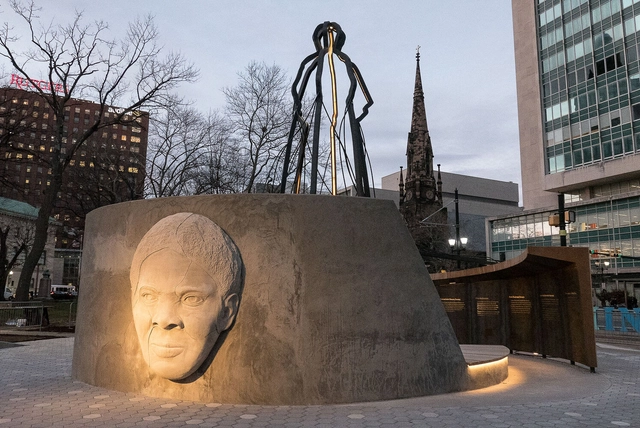
Kalita Humphreys Theater Restored, view from Katy Trail . Image Courtesy of Diller Scofidio + Renfro
Diller Scofidio + Renfro, in collaboration with Dallas Theater Center, unveiled the design proposal for the Kalita Humphreys Theater master plan, centered around one of Frank Lloyd Wright’s lesser-known buildings. Over the years, neglect and additions have compromised the building’s integrity. The project aims to restore the mid-century theater to its original state by applying a multifaceted approach. According to the architects, this includes surgical extraction, selective reconstruction, preservation, and a faithful reinterpretation of Wright’s design intent. The master plan also aims to transform the surrounding public green space into an active and attractive park connected to Turtle Creek and Katy Trail, some of the most visited destinations in Dallas.
Videos
Visualization by Atelier Monolit. Image Courtesy of ATHR Gallery
The new cultural destination Wadi AlFann, Valley of the Arts in AlUla desert, Saudi Arabia, unveiled its first permanent large-scale installations by some of the world's most compelling contemporary artists. Agnes Denes, Ahmed Mater, James Turrell, Manal AlDowayan, and Michael Heizer will be the first five to be completed and unveiled by 2024, starting a program of commissions with more renowned artists to be announced.
The site, a vast valley spanning approximately 39 square kilometers with a millennial legacy, aims to become the new global cultural destination for contemporary art, contemplating another 15-20 artworks by 2035. The plan builds upon the success of two editions of the international art exhibitionDesert XAlUla, in 2020 and most recently the 2022 edition, featuring work by Ayman Zedani, Jim Denevan, and Zeinab Al Hashemi.
La torre de usos múltiples más alta de Decentraland con la plataforma de observación más alta del metaverso. Image via Crystal City
Felipe Escudero, founder, and principal of Quito-based Estudio Felipe Escudero (EFE), has unveiled Crystal City, his latest metaverse design for LEDY, one of the discipline's leading developers, and Decent Amusements, the district manager. In addition to a high-rise observation deck, an ice-covered marketplace, and a packed snow gallery, this new metaverse destination will feature Decentraland's tallest multi-purpose tower, Crystal Tower.
We have never stopped exploring the manifestation of traditional Chinese architectural language in modern architecture, starting with the effort of a modern volume with a traditional paradigm roof. This inheritance and expression are based on the context, which is divided into two categories: "Adoption" and "Ablation". The reinterpretation of traditions from "Form," "Sense," and "Model" is "Adoption." Ablation is a constructive compromise with the environment that respects the original rural or urban texture and appearance. It is based on old forms and building techniques, enhanced with modern design approaches and techniques. It improves conditions either by erasing them in some situations or by disappearing and integrating into them. Contemporary architecture is both the tradition of the future and the tradition of the past. The "classics" are continuously being extended by architects using new techniques
“Seneca Village was an important community. It was 40 acres, two-thirds African American, and had a church and school,” explained Sara Zewde, ASLA, founder of Studio Zewde and assistant professor at the Harvard Graduate School of Design, during a session at the ASLA 2022 Conference on Landscape Architecture in San Francisco.
The 225 residents of Seneca Village were displaced by the New York City government in the mid 1800s to make way for Central Park, which is considered one of the masterpieces of landscape architect Frederick Law Olmsted and architect Calvert Vaux.
25 practices, sole practitioners, and startups from 5 continents and 18 countries have been chosen as part of the 2023 New Practices, the latest edition of the global annual survey by ArchDaily. Ongoing since 2020, the review detects and showcases those who are taking architecture in its new direction under unstable times and demanding challenges.
ArchDaily's New Practices has invited not only designers to apply but those practicing within the broadest definition of architecture and its exercise to share their innovative, fresh, and forward-thinking mission with us. As a result, the 2023 edition features designers, landscape architects, researchers, curators, activists, writers, and three ground-breaking startups—the modular construction U-Build, Urban Beta with their Beta Port building system, and the "Google Doc of Space Design" Rayon—thus joining previously highlighted firms: AEC-industry-oriented management software Monograph, energy transition startup Baupal, online design platform and marketplace CANOA, and 3D-printed housing company ICON.
Architecture office RSHP has unveiled the design for the Shenzhen - Hong Kong Innovation Integrated Service Centre, a 45-storey tower in the Futian Free Trade Zone in south Shenzhen. The building features an integrated floating podium which provides spaces for retail, cultural events, and green roof gardens. It also connects to the existing metro station and articulates the street-level plaza. The design results from a negotiation between two distinct briefs asking for a tower and a mixed-use podium on neighboring plots. RSHP’s proposal was to merge the briefs by integrating the podium into the south side of the tower, thus creating a distinct identity and creating a better relationship with the surrounding public space.