On Wednesday, June 5, SOM and Arquine will host a panel discussion on architecture and engineering collaborations to celebrate the final week of "SOM: Art + Engineering + Architecture," an exhibition presented at the historic Colegio de San Ildefonso in Mexico City. The exhibition is presented in collaboration with MEXTRÓPOLI, an architecture and urbanism festival organized by Arquine.
"SOM: Art + Engineering + Architecture" is an exhibition opening at the Antiguo Colegio de San Ildefonso in Mexico City. Presented in collaboration with MEXTRÓPOLI, the global architecture and urbanism festival organized by Arquine magazine, the exhibition offers a comprehensive overview of SOM's structural engineering practice, its integration with architectural design, and the firm's long tradition of collaboration with the visual arts.
https://www.archdaily.com/1120731/som-presents-exhibition-in-mexico-city-art-plus-engineering-plus-architectureArchDaily Team
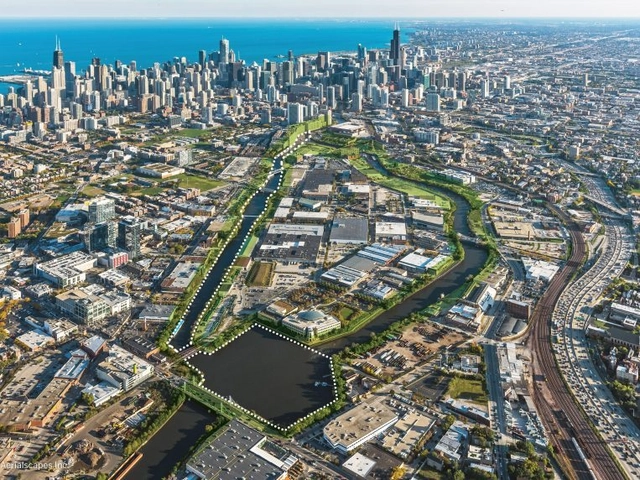
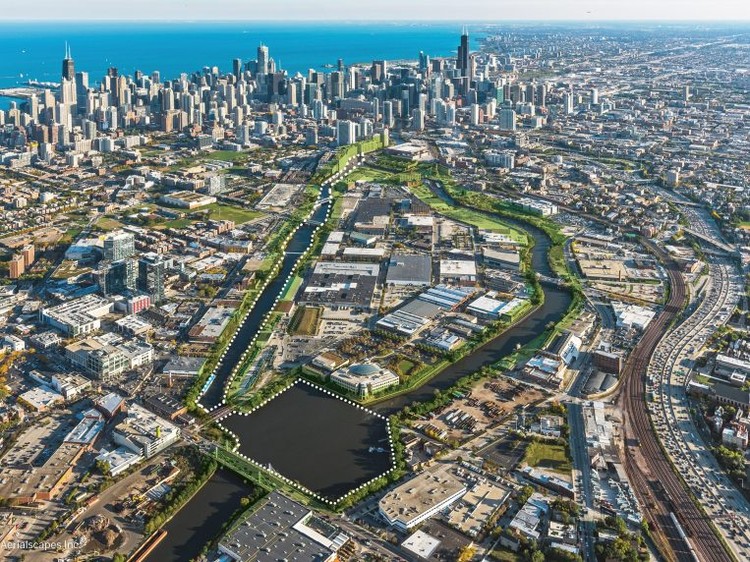
SOM has revealed their design for the world’s first floating eco-park along the Chicago River. Called Wild Mile Chicago, the project is sited between Chicago and North avenues along the east side of Goose Island. A group of ecologists and activists called Urban Rivers is working with the city to realize the plan. The mile-long project is being created with government officials and private developers to include new wildlife, recreational and educational additions to the river’s North Branch.
Videos
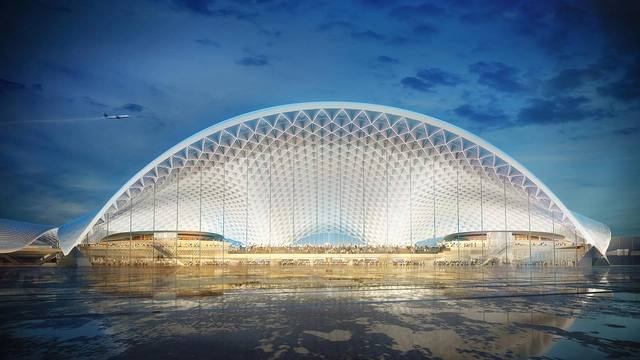
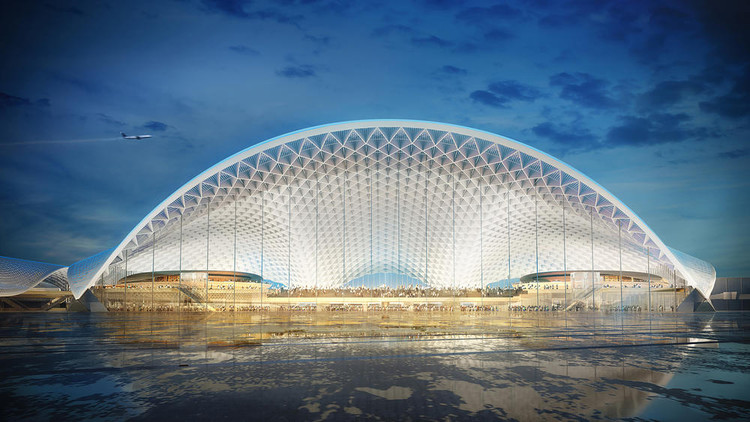
O'Hare International Airport expansion. Image Courtesy of Foster Epstein Moreno
Five design teams have been selected to present their ideas for the Chicago O'Hare Airport Global Terminal and Global Concourse expansion. The designs are on display at an exhibition opened by Mayor Rahm Emanuel at the Chicago Architecture Center. Teams include Fentress-EXP-Brook-Garza, Foster Epstein Moreno, Studio ORD, SOM and Santiago Calatrava. Known as O’Hare 21, the project represents O’Hare’s first major overhaul in 25 years.
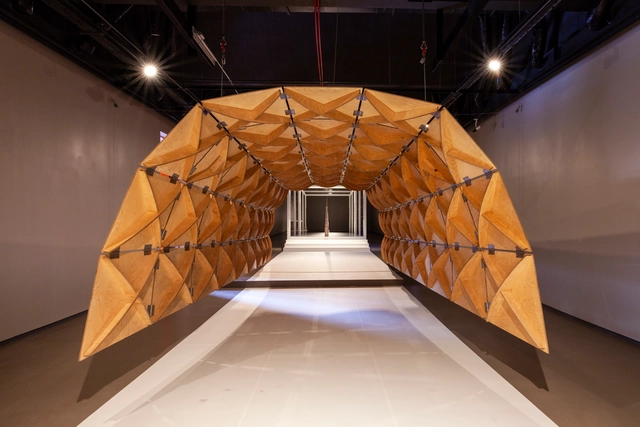
Architecture firm SOM has designed Kinematic Sculpture, an origami-like pavilion installation for Chicago Design Week. Exploring kinematics as the science of motion, the sculpture was formed as one of the firm's ongoing interdisciplinary research projects. As a test in integrated design, the structure aims to establish ideas that foster new architectural and structural solutions for pressing challenges in the built environment.
A floor plan is an interesting way to represent and approach the functional program of hospitals and health centers, where the complexity of the system implies the need for specific studies of the distribution and spatial organization for proper health care.
From our published projects, we have found numerous solutions and possibilities for health centers and hospitals depending on the site's specific needs.
Below, we have selected 50 on-site floor plan examples that can help you better understand how architects design hospitals and health care centers.
People are moving into urban centers at an unprecedented rate. According to the United Nations, the world's urban population has increased from 751 million in 1950 to 4.2 billion in 2018. By 2050, an additional 2.5 billion people are expected to reside in urban areas. In response to this rapid urban growth, designers are challenged to create sustainable and resilient spaces that accommodate complex human needs, both necessary and desired.
World-renowned architecture, interior design, engineering, and urban planning firm Skidmore, Owings & Merrill (SOM) invites educators and students from across the U.S. to engage in the 2018 SOM Foundation Research Prize: "Humanizing High Density." The SOM Foundation Research Prize is awarded to a faculty-led interdisciplinary design research proposal "with the potential to advance the practice of architecture, structures, urban design and related design disciplines."
After completing Town Square, a mixed-use, double-tower complex in the heart of St. Paul, Minnesota in 1980, the late architect Donald Smith of SOM told Architectural Record magazine, “We must reorient our attention to the center [of] cities to save them.”
Smith’s words were prophetic, it turns out, but not in the way he may have expected.
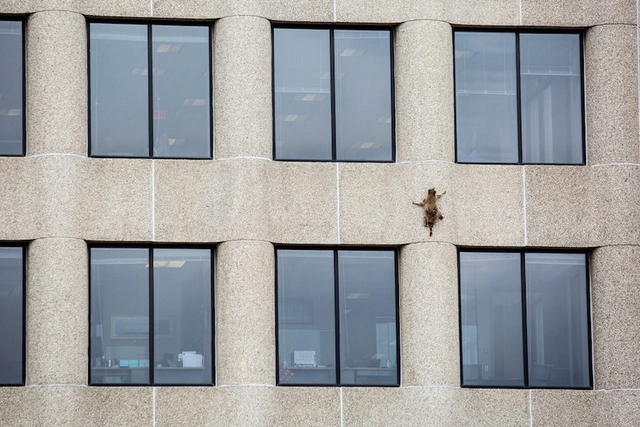
Last month, Town Square—now known as UBS Plaza—captured the attention of the globe as a scraggly, wayward raccoon climbed up its southern tower’s 25 stories.
Skidmore, Owings & Merrill (SOM) has unveiled images of its proposed 54-story mixed-usetower in Hangzhou, China. Standing at a height of 945 feet (288 meters), the "Hangzhou Wangchao Center" seeks to act as a gateway to the eastern Chinese city’s newly-planned Qianjang Century Town district. With 1.3 million square feet (125,000 square meters) of office, hotel, and retail space, the scheme represents the ambitions of Hangzhou to become a global destination, spurred by its hosting of the Asian Games in 2022.
Chicago-based Skidmore, Owings and Merrill (SOM) have won an international competition for the design of an enhanced urban district in Charenton-Bercy, on the eastern edge of Paris. Working with a team of urbanists, landscape designers and community think tanks, SOM have proposed a highly connected urban landscape incorporating a 180-meter energy efficient tower, and contemporary rotunda serving as a virtual reality hub.
https://www.archdaily.com/890669/som-selected-to-design-green-masterplan-for-eastern-parisNiall Patrick Walsh
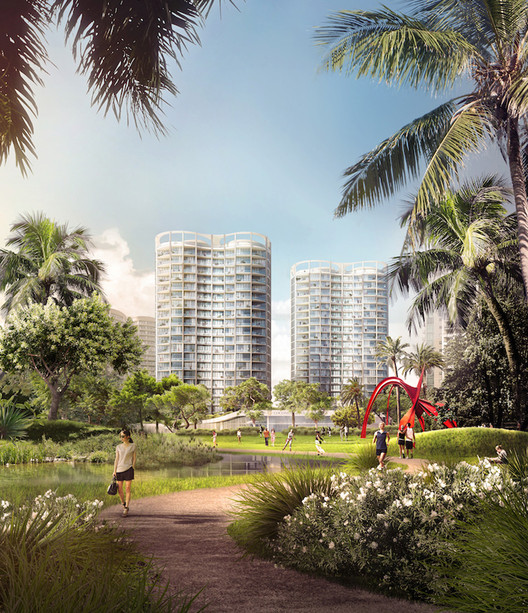
Why do so many architects use Alexander Calder sculptures in their renderings, even when the works have nothing to do with the institution or project depicted? The Calder Foundation has been tracking this phenomenon, and the results are featured in the images for this article.
A new exhibition at the Whitney Museum in New York explores mobiles—kinetic sculptures in which carefully balanced components reveal their own unique systems of movement—created by American sculptor Alexander Calder from 1930 until 1968, eight years before his death.
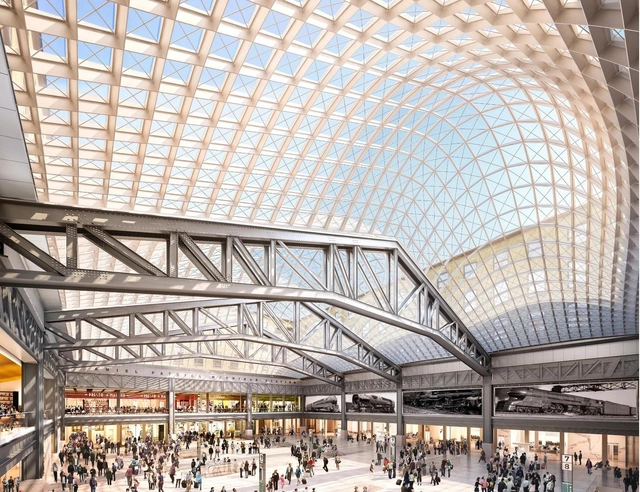
New York City’s fast-tracked Penn Station transformation project is moving forward, as Governor Andrew Cuomo has announced the closing of the $1.6 billion deal to redevelop a large section of the James A. Farley Post Office into the new “Moynihan Train Hall.”
The project will consist of a new 255,000-square-foot terminal for the Long Island Railroad and Amtrak, increasing Penn Station’s total concourse floor space by more than 50 percent, while an additional 700,000 square feet will be developed for commercial, retail and dining spaces to create a new mixed-use civic space for West Manhattan.
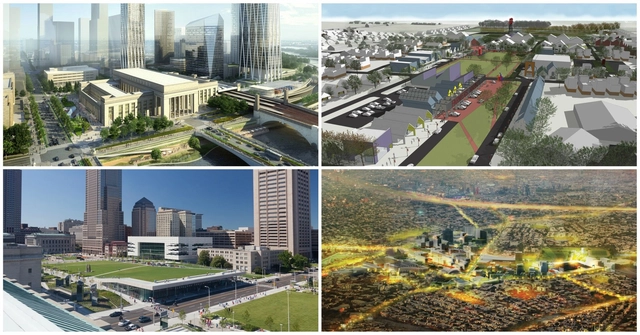
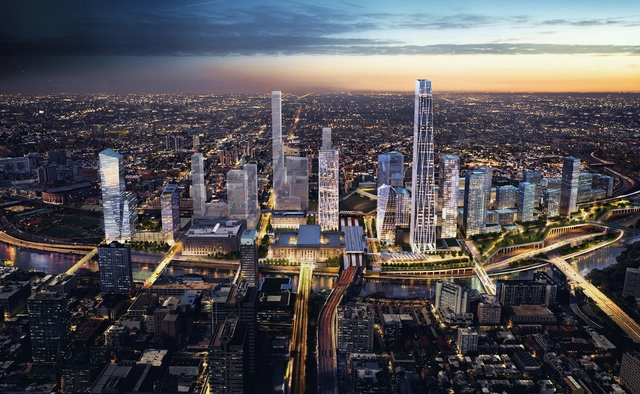
Skidmore, Owings & Merrill (SOM) has released plans for a new mixed-use urban district for Philadelphia’s 30th Street Station Precinct. In response to projections showing significant increases in transit activity in the coming decades, the project calls for a transformation of the existing Beaux Arts train station and surrounding neighborhood of University City. The design will improve transportation throughout the city, and will activate the area with new shops, restaurants and public plazas.
Courtesy of The Council on Tall Buildings and Urban Habitat
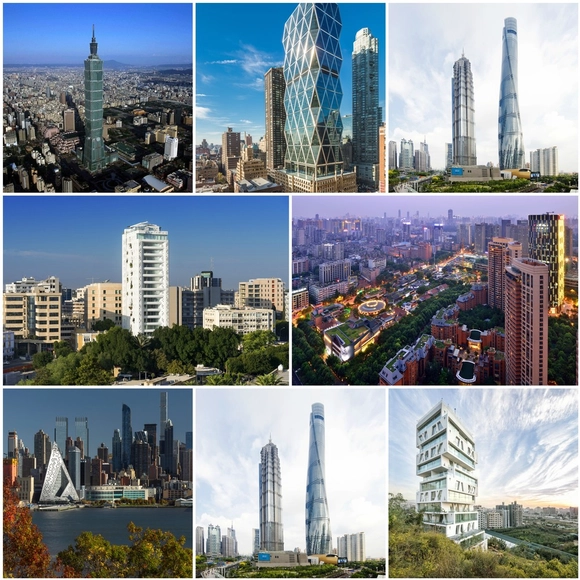
The Council on Tall Building and Urban Habitat have announced the winners of the 15th edition of the CTBUH Tall Building Awards. From over 100 submissions, the best buildings from four regions – the Americas, Asia & Australasia, Europe and Middle East & Africa – were selected, along with recipients of the Urban Habitat Award, the Innovation Award, the Performance Award and the 10 Year Award. The CTBUH will pick a global winner from the regional selections later this year.
The towers were chosen by a panel of architects from world-renowned firms and were judged on every aspect of performance, looking in particular for “those that have the greatest positive impact on the individuals who use these buildings and the cities they inhabit.”
Skidmore, Owings & Merrill (SOM) has released the plans for Manhattan West, a new office and residential development spanning five million square feet over the 2.6-acre platform that covers the active rail tracks connecting Penn Station to New Jersey and Upstate New York.
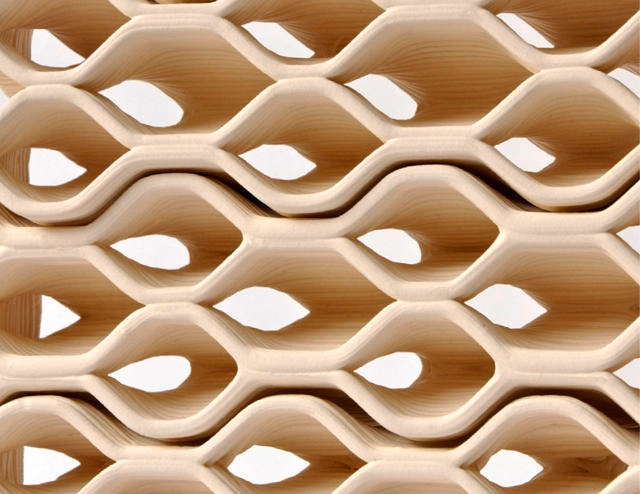
From interlocking 3D printed bricks to SOM's "All Aboard Florida" train station in West Palm Beach Fast Company has named 13 winners for their 2015 "Innovation By Design Awards." Each winner was selected from over 1,500 projects worldwide for being "big ideas" with "meticulously though out details" and a "clear viewpoint about how we live now—and how it could be better."
_13.53.37.jpg?1559156040&format=webp&width=640&height=580)
.jpg?1551806000 "© Benny Chan")
_Tom_Harris_(15).jpg?1551806141 "© Tom Harris")
.jpg?1551806155 "© Benny Chan")
.jpg?1551806066 "© Benny Chan")





_Benny_Chan_(4).jpg?1540293180&format=webp&width=640&height=580)
_SOM_(1-LR).jpg?1540293091&format=webp&width=230&height=230&crop=true)
_Benny_Chan_(3).jpg?1540293165&format=webp&width=230&height=230&crop=true)
_Benny_Chan_(2).jpg?1540293149&format=webp&width=230&height=230&crop=true)
_Benny_Chan_(1).jpg?1540293132&format=webp&width=230&height=230&crop=true)
_Benny_Chan_(4).jpg?1540293180)




_Nick_Merrick_for_Hedrich_Blessing_(10).jpg?1508608588)
_Nick_Merrick_for_Hedrich_Blessing_(24).jpg?1508608839&format=webp&width=230&height=230&crop=true)
_Nick_Merrick_for_Hedrich_Blessing_(16).jpg?1508608652&format=webp&width=230&height=230&crop=true)
_Nick_Merrick_for_Hedrich_Blessing_(7).jpg?1508609003&format=webp&width=230&height=230&crop=true)
_Nick_Merrick_for_Hedrich_Blessing_(23).jpg?1508608828&format=webp&width=230&height=230&crop=true)
_Nick_Merrick_for_Hedrich_Blessing_(9).jpg?1508608572)