Rajesh Vora

BROWSE ALL FROM THIS PHOTOGRAPHER HERE

When Mobility Becomes the Ground: Architecture, Adaptation, and the Search for Continuity

Audio available

Few conditions have shaped contemporary architectural discourse as profoundly as uncertainty. Across international biennials, exhibitions, and forums, architecture increasingly imagines its relationship to the world through flexibility, reversibility, and responsiveness—qualities intended to engage with climate emergencies, political instability, and unprecedented human mobility. Buildings are designed to transform, infrastructures to evolve, and cities to accommodate conditions that appear increasingly unpredictable. This emphasis on agility has expanded the discipline's capacity to engage with environmental change, offering valuable strategies for a world in constant transformation.

Yet this evolution points to a deeper shift in how architecture mediates the human condition. Architecture has long functioned as a mechanism for existential orientation—a way for human consciousness to carve an intelligible coordinate out of an indifferent cosmos, anchoring memory and identity to a fixed point. Within much contemporary architectural discourse, uncertainty increasingly appears less as an external condition to be mitigated than as the horizon from which architectural thinking begins. Spatial experience is increasingly shaped by environments designed around the persistence of flux, where static reference points give way to conditions of continuous transformation.

When Mobility Becomes the Ground: Architecture, Adaptation, and the Search for Continuity - More Images+ 5

From Passages to Shared Spaces: The Social Life of Circulation

Subscriber Access | 
Audio available

Most people rarely remember a passage. They remember the classroom, the apartment, the gallery, or the plaza at the end of it. Passages are usually designed to disappear into the background, guiding movement from one destination to the next. Yet some of architecture's most memorable experiences happen while moving through a place rather than arriving at it.

Circulation is often treated as one of architecture's most practical elements. Corridors connect rooms, galleries provide access, and walkways organize movement through a building. Their purpose seems straightforward: to help people get from one point to another. Because of this, circulation spaces have long been considered secondary to the programs they serve. Attention tends to focus on destinations, while the spaces in between remain largely unnoticed.

From Passages to Shared Spaces: The Social Life of Circulation - More Images+ 13

Sharjah Architecture Triennial 2026 Announces Theme to Rethink Civic Infrastructure for Collective Futures

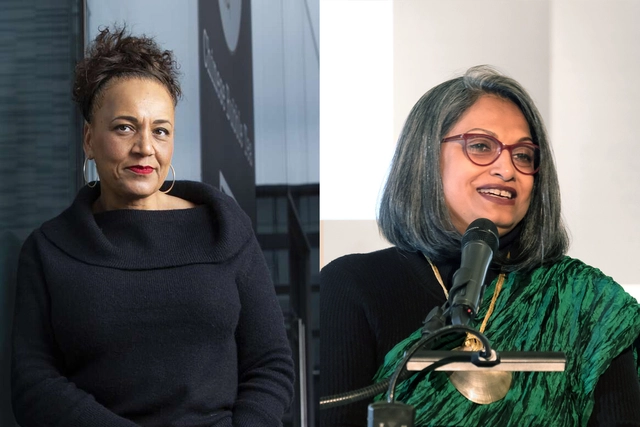
The Sharjah Architecture Triennial has announced the theme for its upcoming edition: Architecture Otherwise: Building Civic Infrastructure for Collective Futures. Scheduled for November 2026, the event will unfold across the city and the Emirate of Sharjah, UAE, through site-specific installations, exhibitions, performances, workshops, and public programs. Positioned as a platform for architectural and urban exploration across West Asia, South Asia, and the African continent, the Triennial will combine practical and theoretical approaches to contemporary urban life. Conceived by its curators, Vyjayanthi Rao and Tau Tavengwa, SAT03 aims to explore how architecture can shape collective life in regions undergoing rapid urban transformation. Consequently, selected participants will take part in month-long residencies, embedding their work within the social and cultural fabric of Sharjah.
Sharjah Architecture Triennial 2026 Announces Theme to Rethink Civic Infrastructure for Collective Futures - More Images+ 4

Shaping History: The Impact of Women Architects in Post-Colonial South Asia

In the mid-twentieth century, a set of South Asian countries collectively experienced a catharsis from colonizers' rule. The period that followed sparked an era of ideas and philosophies for a new future. During this time, architects were pivotal in creating modernist structures that defined the countries' post-colonial, post-partition and post-imperial identities. South Asian architects used design as an expression of hopeful societal visions, most of which have been actualized. With this success in nation-building, there has been a lack of accreditation for women architects in shaping South Asian histories. 

Shaping History: The Impact of Women Architects in Post-Colonial South Asia  - Image 1 of 4Shaping History: The Impact of Women Architects in Post-Colonial South Asia  - Image 2 of 4Shaping History: The Impact of Women Architects in Post-Colonial South Asia  - Image 3 of 4Shaping History: The Impact of Women Architects in Post-Colonial South Asia  - Image 4 of 4Shaping History: The Impact of Women Architects in Post-Colonial South Asia  - More Images+ 3

Lesley Lokko and Marina Tabassum Recognized in TIME's 2024 List of Most Influential People

Architects Lesley Lokko and Marina Tabassum have been selected in TIME Magazine’s ‘100 Most Influential People of 2024.’ Known as the TIME 100, the list is an annual compilation of individuals who have made significant impacts on the world in various fields such as politics, technology, entertainment, and more. Each person on the list is profiled by a guest writer, often someone who is also prominent in their field. Selected by Sarah M. Whiting, Dean of the Harvard Graduate School of Design, Marina Tabassum features in the Innovators chapter, while Lesley Lokko, selected by filmmaker Ava DuVernay, is recognized as a Pioneer.

Lesley Lokko and Marina Tabassum Recognized in TIME's 2024 List of Most Influential People - More Images

Low-Cost Housing in India: A Multistakeholder Approach

Subscriber Access | 

In a nation grappling with a severe housing shortage for its economically weakest sections, the concept of "low-cost housing" has surprisingly faded from public consciousness and policy discourse. A crisis impacting millions of the nation's poorest, the need for affordable housing has become even more pressing as India's population overtakes China to emerge as the most populous nation. If left unaddressed, the housing crisis may result in mass homelessness and undignified living conditions for citizens.

Low-Cost Housing in India: A Multistakeholder Approach - More Images

JSW Sanjeevani Multispeciality Hospital / SJK Architects

JSW Sanjeevani Multispeciality Hospital / SJK Architects - More Images+ 25

Beneghat, India

World Architecture Day 2023: Fostering Resilient Communities through Architecture

Subscriber Access | 

As has become customary in recent years, on the first Monday of October, we celebrate both World Architecture Day and World Habitat Day, serving as a reminder to the global community of its collective responsibility for the well-being of the built environment. This edition, like its predecessors, sheds light on the realm of architecture and the challenges faced by our cities, introducing new themes, contemplating the state of our urban areas, and proposing constructive strategies.

Since urban economies have encountered significant difficulties this year, the UN's World Habitat Day focuses on "Resilient Urban Economies: cities as drivers of growth and recovery." Launching Urban October, this event seeks to bring together diverse urban stakeholders to deliberate on policies to help cities recover after the dual economic impacts caused by the COVID-19 pandemic and conflicts worldwide. Aligned with this concept, World Architecture Day, created by the UIA in 1985, has chosen to concentrate on "Architecture for Resilient Communities," emphasizing the role and duty of architecture in fostering thriving community existence while initiating a global dialogue regarding the interconnectedness of urban and rural regions within every nation.

World Architecture Day 2023: Fostering Resilient Communities through Architecture - More Images+ 1

“As Architects, We Don’t Discover Our Identity, We Construct It”: In Conversation with Rahul Mehrotra

Rahul Mehrotra is a practicing architect based in Boston and Mumbai and he has been teaching at Harvard’s GSD where he is currently Chair of the Department of Urban Planning and Design and Director of the Master in Architecture in Urban Design Degree Program. Born in 1959, Mehrotra grew up in Lucknow, a city in Northern India and an important cultural and artistic hub. His father was a manager at a large machine tool company. The family moved a lot following Mehrotra senior’s frequent promotions, which led to changing residences owned by his company. Besides a few years in Lucknow and Delhi, they lived in different neighborhoods within Mumbai.

“As Architects, We Don’t Discover Our Identity, We Construct It”: In Conversation with Rahul Mehrotra - More Images+ 25

Sanjaynagar Slum Redevelopment Project / Community Design Agency

Sanjaynagar Slum Redevelopment Project / Community Design Agency - More Images+ 18

Auric Hall / IMK Architects

Auric Hall / IMK Architects - More Images+ 25

Lilavati Lalbhai Library / RMA Architects

Lilavati Lalbhai Library / RMA Architects - Library
© Tina Nandi

Lilavati Lalbhai Library / RMA Architects - More Images+ 22

Ahmedabad, India

Three Court House / RMA Architects

Three Court House / RMA Architects - More Images+ 15

Alibag, India

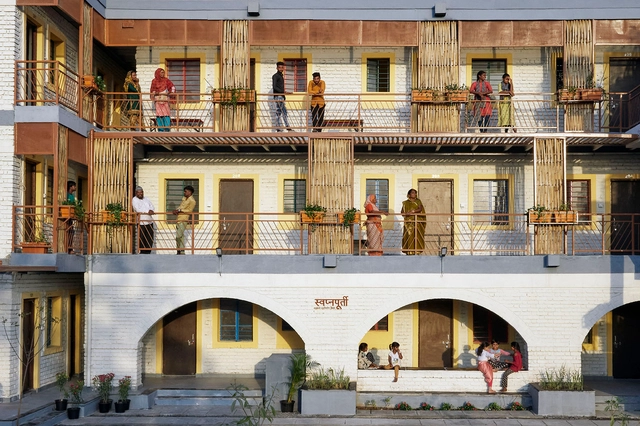
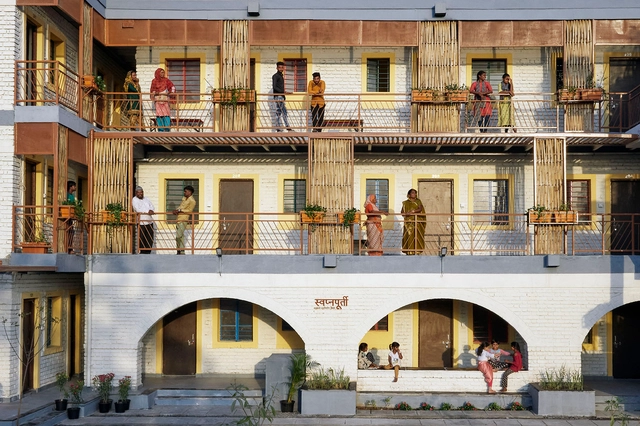
Girls Home / DCOOP Architects

  • Architects: DCOOP Architects
  • Area Area of this architecture project Area:  615
  • Year Completion year of this architecture project Year:  2017
  • Manufacturers Brands with products used in this architecture project
    Manufacturers:  Asian Paints, Dorset, Havells, Imola, Jaquar, +5

Kenneth Frampton on His Early Career and Appreciating Architectural Talent From Around the Globe

In a recent interview with Metropolis Magazine, Kenneth Frampton answered questions about his existing architectural influence and his opinion as it relates to the direction of architectural theory and criticism. Frampton has long been a prominent voice in the world of architectural theory and writing. He has taught at Columbia University's Graduate School of Architecture, Planning and Preservation (GSAPP) since 1972, all the while publishing a large collection of critical essays and books on the topic of 20th-century architecture—the most notable of those being his 1983 essay “Towards a Critical Regionalism: Six Points for an Architecture of Resistance.”

Even today, Frampton's evaluation of critical regionalism is still widely appreciated. In the interview, Frampton admits that he now sees the influence of critical regionalism primarily outside of "the Anglo-American world," but he believes that the implied importance of a "direct democracy" is what he sees as most beneficial.

The Dasavatara Hotel / SJK Architects

The Dasavatara Hotel  / SJK Architects - More Images+ 17

Tirupati, India

Automobile Design Studio / SJK Architects

Automobile Design Studio / SJK Architects - More Images+ 13

KMC Corporate Office / RMA Architects

KMC Corporate Office / RMA Architects - More Images+ 11

Hyderabad, India