Nico Saieh

Architectural Photographer based in Santiago, Chile

BROWSE ALL FROM THIS PHOTOGRAPHER HERE

The Delay of Meaning: On the Architecture of Smiljan Radić

Subscriber Access | 

Smiljan Radić's architecture often begins elsewhere: in a memory, a journey, a material, a stone, a half-seen structure, or a situation not yet organized as an architectural idea. In "Architecture: Distraction and Knowledge," his 2026 Pritzker Architecture Prize Laureate Lecture, distraction does not appear as a lack of focus, but as a way of receiving the world. It is through these peripheral encounters — travel, ruins, cities, stories, industries, and materials — that architectural knowledge slowly accumulates.

When Radić was announced as the 2026 Pritzker Architecture Prize laureate, the recognition did not simply confirm a body of work already known for its material strangeness. It also clarified an architectural position that has long resisted easy translation into theory, or style, or spectacle. Radić's work is often described through oppositions: heavy and light, primitive and industrial, fragile and monumental, shelter and object, ruin and apparition. Yet these terms only partially account for the force of his architecture. What makes the work difficult, and increasingly necessary, is its refusal to become fully legible as a claim of certainty.

The Delay of Meaning: On the Architecture of Smiljan Radić - More Images+ 24

Building with the Landscape: Non-Invasive Design Strategies for Steep Terrain

Subscriber Access | 

The relationship between constraint and design excellence is well established in architectural theory, yet often remains underexplored in discussions of site-specific practices. When architects encounter extreme topography, they face a fundamental choice: transform the landscape to accommodate the building, or modify the building to fit the landscape. The first approach is straightforward and requires the builder to cut, fill, terrace, and build on level ground. This choice, however, carries cascading consequences as any amount of earth moved may destabilize slopes, disrupt drainage, and fracture ecosystems. A growing body of innovative architectural work demonstrates an alternative to earth-moving and retaining walls.

Building with the Landscape: Non-Invasive Design Strategies for Steep Terrain - More Images+ 76

Smiljan Radić Clarke: Get to Know the 2026 Pritzker Winner's Work

The 2026 Pritzker Price Award has been awarded this year to the Chilean architect of Croatian descent, Smiljan Radić Clarke. Born in Santiago, Chile, in 1965, his practice evokes a geography of extremes, shaped by the tectonic tension between the staggering weight of the Andes and the seismic instability of the territory. After graduating from the Pontifical Catholic University of Chile and pursuing further studies in aesthetics in Venice, Smiljan Radić Clarke established his base in Santiago. From there, he has developed one of the most singular visions in contemporary architecture. His work privileges the intensity of the moment through a fragile architecture. Within it, the building operates as a temporary and tactile refuge that places the spectator in a state of aesthetic uncertainty, oscillating between ancestral ruin and avant-garde artefact.

Smiljan Radić Clarke: Get to Know the 2026 Pritzker Winner's Work - More Images+ 59

Designing for Presence: When Architecture Invites Us to Stay

Architecture is increasingly asked to do less, not more. In environments shaped by constant movement, noise, and expectation, spaces that allow people to stay, pause, and be present have become both rarer and more necessary. Many public and semi-public places are designed to keep people moving, consuming, or reacting, leaving little room for lingering, observation, or simply being without a reason.

In response, a growing body of work is shifting attention away from activation and toward presence. Rather than asking users to interact or participate, these spaces create conditions that support staying. Comfort, continuity, and openness allow people to remain without pressure or obligation, making presence a spatial quality rather than an activity.

Designing for Presence: When Architecture Invites Us to Stay - More Images+ 25

Expanding Practice: Architecture Think Tanks at the Intersection of Research and Design

In architecture, most practices revolve around delivering projects to clients. Offices are shaped by deadlines, budgets, and clear briefs. While this structure produces buildings, it rarely leaves space for architects to question broader issues — about how we live, how cities are changing, or what the future demands of design. But alongside this production-focused system, a quieter movement has emerged: studios, collectives, and foundations that prioritize research, experimentation, and reflection. These are the architecture think tanks — spaces designed not to build immediately, but to think first.

The idea of a think tank is not new. Traditionally found in politics, economics, or science, think tanks bring together experts to study complex problems and propose solutions. In architecture, their rise reveals a tension at the heart of the discipline. If architecture is to remain socially and environmentally relevant, can it continue to rely only on client-driven practice? Or must it carve out space for slower, deeper inquiry?

Expanding Practice: Architecture Think Tanks at the Intersection of Research and Design - More Images+ 48

Layers of Meaning: Exploring the Depth of Architectural Envelopes

Architecture has always played a key role in providing shelter and protection for human beings. In prehistoric times, we sought refuge in caves, taking advantage of rock structures for protection against the natural elements and predators. Over time, shelters began to be made from materials found in nature, such as branches, leaves, and animal skins, evolving into more permanent and complex homes, with walls made of stone, bricks or wood, roofs to protect against rain and sun, and doors to control access. As we developed more advanced building skills, we used materials such as wood, stone, and clay and architecture evolved significantly, with the construction of temples, palaces, and fortifications that provided not only shelter but also symbolized power, status, and cultural identity. Even so, our buildings can continue to be seen as shells that protect us from the outside world. 

From the massive stones of Greek temples to glazed skyscrapers, we work with a range of possibilities and thicknesses to separate what we consider internal and external. This article seeks to explore this diversity of thicknesses in architecture, from simple materials to complex construction techniques, highlighting how this variation not only provides protection but also influences our perception and interaction with the built environment.

The Illusion of Level: Detailing for Water in “Flat” Architecture

Subscriber Access | 

We walk on "flat" ground every day and rarely think twice—but how flat is it, really? In the city, curbs are chamfered, sidewalks pitch toward grates, and roadways are crowned to shed water into shallow gutters. In suburbs and on unpaved paths, irregular terrain is the norm. Inside buildings, by contrast, we pursue near-perfect horizontality—structural frames, slabs, and finishes are all disciplined to create level walking surfaces in the name of safety and accessibility. Yet flatness is inherently at odds with water. A closer look reveals a quiet repertoire of accommodations: slight falls at entries, thresholds raised a few millimeters, wet areas with barely perceptible pitches. The floor is read as flat, but it is in fact carefully tuned—micro-topographies masquerading as plane—to manage water without calling attention to themselves.

What are the common ways architects "keep things flat" while actually managing water—the perennial enemy of buildings? A useful way to look at it is by zooming into three recurring conditions: exterior or roof decking, bathrooms and other wet rooms, and exterior ground planes. Each relies on a slightly different toolkit—pedestal systems over sloped waterproofing, micro-gradients to floor traps, hidden perimeter drains, split slopes—to maintain the illusion of a seamless, level surface. Studying these situations side by side reveals just how much design effort goes into reconciling perceptual flatness with the messy reality.

The Illusion of Level: Detailing for Water in “Flat” Architecture - More Images+ 15

Re‑Situating Modernity: Bruno Giacometti’s Swiss Pavilion at the Venice Biennale

Amid the orderly grid of the Giardini della Biennale, the Swiss Pavilion appears almost reticent. Its low white volumes, completed in 1952 by Bruno Giacometti, seem to withdraw from the surrounding display of national pride. The building embodies a form of modernism that resists monumentality, where precision and restraint replace spectacle, and architecture becomes less an object than a framework for encounter.

Emerging from a Europe rebuilding itself, the pavilion reflects a time when nations were reimagining how to appear in the world. For Switzerland, neutrality had long been both a political stance and a cultural condition, and Giacometti translated this identity into a sequence of measured rooms arranged around an open courtyard, defined not by what they contain but by how they hold light, movement, and pause. The result is an architecture that does not speak loudly of belonging but invites attention through balance and care.

Re‑Situating Modernity: Bruno Giacometti’s Swiss Pavilion at the Venice Biennale - Image 1 of 4Re‑Situating Modernity: Bruno Giacometti’s Swiss Pavilion at the Venice Biennale - Image 2 of 4Re‑Situating Modernity: Bruno Giacometti’s Swiss Pavilion at the Venice Biennale - Image 3 of 4Re‑Situating Modernity: Bruno Giacometti’s Swiss Pavilion at the Venice Biennale - Image 4 of 4Re‑Situating Modernity: Bruno Giacometti’s Swiss Pavilion at the Venice Biennale - More Images+ 88

Beam House / Urzúa Soler Arquitectos

Beam House / Urzúa Soler Arquitectos - More Images+ 13

Curicó, Chile
  • Area Area of this architecture project Area:  240
  • Year Completion year of this architecture project Year:  2022
  • Manufacturers Brands with products used in this architecture project
    Manufacturers:  Arauco, Melón Hormigones, Timber

Staging Culture: The Architect as Curator

Architecture has never been confined to the act of building. It constantly negotiates between material practice and intellectual reflection, yet throughout the twentieth and twenty-first centuries, many architects felt that the built project alone was insufficient to address the full range of questions facing the discipline. Economic pressures, political contexts, and programmatic demands often narrowed the scope of practice.

Exhibitions and curatorial platforms, by contrast, created spaces of experimentation and critique, opening arenas where architecture could interrogate itself, where its past could be reinterpreted, its present challenged, and its future projected. In this tension, the figure of the architect-curator emerged, treating curating itself as a form of design — not of walls or facades, but of discourse, narratives, and frameworks of meaning.

Staging Culture: The Architect as Curator - Image 1 of 4Staging Culture: The Architect as Curator - Image 2 of 4Staging Culture: The Architect as Curator - Image 3 of 4Staging Culture: The Architect as Curator - Image 4 of 4Staging Culture: The Architect as Curator - More Images+ 32

The Architect as Writer: Expanding the Discipline Beyond Buildings

Architecture has always been more than bricks and mortar. It is equally constructed through words, ideas, and narratives. From ancient treatises to radical manifestos, from technical manuals to poetic essays, the written word has served as a spatial, pedagogical, and political tool within the field. Writing shapes how architecture is conceptualized, communicated, and critiqued — often long before, or even in the absence of, physical construction.

Historically, figures such as Vitruvius, Alberti, and Palladio employed writing to codify principles, project ideals, and legitimize architecture as a discipline. In the modern era, Le Corbusier, Adolf Loos, and Lina Bo Bardi wrote prolifically to expand the scope of architecture beyond form and function, often using publications as tools for persuasion and experimentation. The postwar period gave rise to new editorial strategies, as evident in the manifestos of Archizoom and Superstudio, and the polemical publications of Delirious New York and Oppositions, where writing served as both critique and project.

The Architect as Writer: Expanding the Discipline Beyond Buildings - Image 1 of 4The Architect as Writer: Expanding the Discipline Beyond Buildings - Image 2 of 4The Architect as Writer: Expanding the Discipline Beyond Buildings - Image 3 of 4The Architect as Writer: Expanding the Discipline Beyond Buildings - Image 4 of 4The Architect as Writer: Expanding the Discipline Beyond Buildings - More Images+ 31

The Finnish Pavilion at the 2025 Venice Architecture Biennale Explores Architecture as a Collaborative Endeavour

Archinfo, the Information Centre for Finnish Architecture, has announced the theme, curator, and exhibition team for the Pavilion of Finland at the 19th International Architecture Exhibition of La Biennale di Venezia. The exhibition, titled "The Pavilion – Architecture of Stewardship", will focus on the diverse labor involved in constructing and maintaining architecture, from design contributions by architectural workers and engineers to the efforts of construction workers, restoration architects, maintenance staff, and cleaners, all of whom play vital roles in the creation and upkeep of the built environment. Curated by Ella Kaira and Matti Jänkälä from the Helsinki-based architecture practice Vokal, it will use Alvar and Elissa Aalto's Pavilion of Finland to explore architecture as a collaborative endeavor.

The Finnish Pavilion at the 2025 Venice Architecture Biennale Explores Architecture as a Collaborative Endeavour - More Images+ 21

AD Classics: Finnish Pavilion at the Venice Biennale / Alvar Aalto + Elissa Aalto

Venice, Italy

Tucked within the leafy confines of the Giardini della Biennale in Venice stands a structure modest in scale yet immense in quiet conviction: the Finland Pavilion, designed by Alvar and Elissa Aalto for the 1956 Venice Biennale. Unlike the monumental pavilions that surround it, Aalto's structure was conceived not as a permanent structure, but as a temporary exhibition space for a single exhibition season. And yet, nearly seventy years on, it remains—weathered, resilient, and quietly luminous.

AD Classics: Finnish Pavilion at the Venice Biennale / Alvar Aalto + Elissa Aalto - More Images+ 21

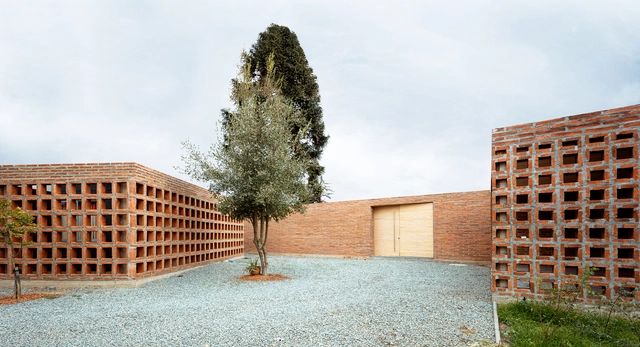
Casa Quilla / RLL Estudio Arquitectura

Casa Quilla / RLL Estudio Arquitectura - Houses
© Nico Saieh

Casa Quilla / RLL Estudio Arquitectura - More Images+ 20

Cahuil, Chile

Cero House / Estudio Sur Arquitectos

Cero House / Estudio Sur Arquitectos - More Images+ 21

Puerto Varas, Chile
  • Area Area of this architecture project Area:  1292 ft²
  • Year Completion year of this architecture project Year:  2023
  • Manufacturers Brands with products used in this architecture project
    Manufacturers:  Arauco, Kitchen Center, MK, Micropiso, WoodArch

MM House / Benjamin Goñi Arquitectos + Claro + Westendarp arquitectos

MM House / Benjamin Goñi Arquitectos + Claro + Westendarp arquitectos - More Images+ 16

Nilque, Chile

Architecture with SIPs: Fast-Build, High-Performance Prefabricated Homes

Subscriber Access | 

The current demands of the industry lead architects to design based on construction solutions that accelerate processes without compromising quality, while reducing waste and dependence on intensive labor. Among these options, SIP panels stand out as a modular alternative that combines thermal and acoustic insulation with speed and construction precision.

Named after their acronym, SIP panels are self-supporting elements consisting of a rigid foam core sandwiched between two structural claddings, typically OSB boards. Strong yet lightweight, these panels are manufactured under strict factory controls and transported to the construction site, facilitating the rapid assembly of floors, walls, and ceilings, while creating an airtight thermal and acoustic envelope. The thickness of the panel depends on the combined thickness of its components, and its weight typically does not exceed 20 kg per square meter.

Cultural Centers, Museums, and Galleries: Ancient Buildings Transformed into Art Spaces in Latin America

Many buildings often fall into disuse due to our cities' constant economic, social, and technological changes. The programmatic inconsistency of current times demands great versatility and adaptability from our infrastructures, increasingly leading projects to become uninhabited, and left to abandonment and decay.

Next, we present a series of 20 Latin American projects in which old warehouses, homes, prisons, mills, and markets were recovered and transformed into Cultural Centers, Museums, and Galleries.