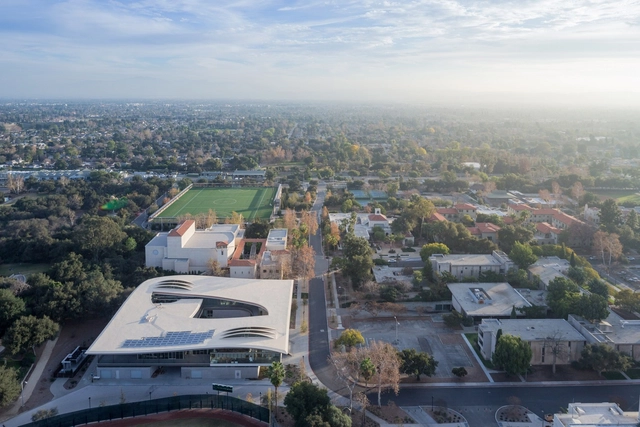


Architects
Location
Pomona Hall, Amherst, Claremont, CA 91711, USAProject Year
2014Photographs
Area
35000.0 ft2



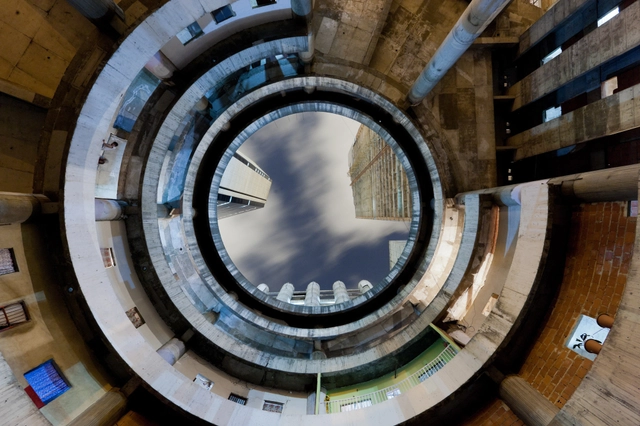
In an excellent essay for the Architectural Review, Charlotte Skene Catling deftly ties together a number of recent debates in the field of morality in architecture, from the false accusations aimed at Zaha Hadid by critic Martin Fuller to recent debates over whether architects have any responsibility to tackle poverty, an ostensibly political issue. Taking aim at one article in particular - in which Dan Hancox argues that architects such as Urban Think Tank who engage in humanitarian work are often 'fetishizing poverty' - Catling dissects the work of many of those in the field to find that they in fact do vital work to connect the top-down and bottom-up approaches that would otherwise never meet in the middle. Or, as Urban Think Tank's Alfredo Brillembourg says, in opposition to the horizontal city of the 19th century or the vertical city of the 20th, "the 21st century must be for the diagonal city, one that cuts across social divisions." Click here to read the article in full.

Sunday marked the completion of the New York City High Line, a three-phased project that transformed the once disused elevated rail tracks on Manhattan’s West Side into one of the world’s most respected public parks. With the first section opening in 2009, architectural photographer Iwan Baan has been documenting the entire process. Now, for the first time we present to you a photographic journey through the completed High Line designed by James Corner Field Operations with Diller Scofidio + Renfro. Take a look, after the break.
"Architecture is much more than art. And it is by far more than just building buildings" says award winning Burkina Faso architect Diébédo Francis Kéré. In the latest video from Louisiana Channel, Berlin-based Francis Kéré deliberates on the purpose of architecture in a changing society and the influence exerted by his home nation, Burkina Faso. For Kéré, context and medium are key: "I try to use local material: mostly clay and wood, to create buildings that are modern," he says. Kéré's clay modernism represents a new Burkina Faso, using natural and renewable materials as shown in School Library Gando. "If we build with clay we will have a better future, because we will use the resources we have," he adds.
"My people are proud, and that can deliver a lot of energy," says Kéré, optimistic for the future of architecture in Burkina Faso. Watch the video above to find out more about Kéré's approach to his European-based African practice, and read on after the break for ArchDaily's own Interview with Kéré from July.
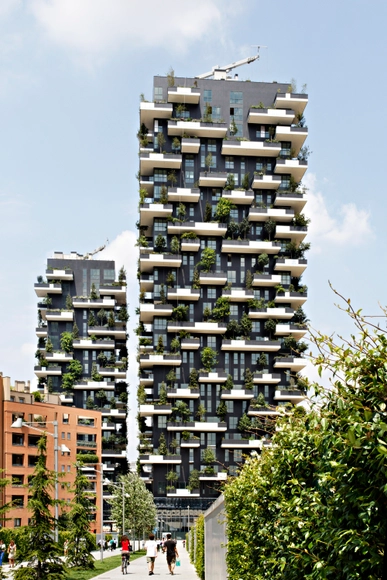
Rem Koolhaas, Steven Holl, Jean Nouvel and Boeri Studio are the masters behind five skyscrapers competing to be crowned the “World’s best.” Chosen as finalists for the 2014 International Highrise Award (IHA), the four practices are in the running for a prestigious title and €50,000 prize.
Award organizers from the City of Frankfurt/Main, Deutsches Architekturmuseum (DAM) and DekaBank at Frankfurt’s Paulskirche will announce a winner in mid-November. The chosen skyscraper will be selected by an esteemed, multidisciplinary jury based on the criteria ranging from future-oriented design and innovative building technology, to the building’s integrative urban development scheme and cost-effectiveness.
“Good architecture requires a willingness to take risks and a desire to try things out. All the finalists took this approach – there can be no innovation without experimentation. Our shortlist comprises three different prototypes of the future,” commented Jury Chairman Christoph Ingenhoven.
View all five of the competing highrises and the jury’s comments, after the break…

“Absorbing Modernity: 1914-2014 is an invitation to the national pavilions to show, each in their own way, the process of the erasure of national characteristics in architecture in favor of the almost universal adoption of a single modern language and a single repertoire of typologies.” In this article, originally published on Metropolis Magazine as "Whose Modernity?", Avinash Rajagopal investigates the conflict this mandated theme at the 2014 Venice Biennale unintentionally created between the Northern and Southern pavilions - with Northern pavilions tending to declare sole ownership over Modernism and many Southern pavilions denying that their countries were passive recipients of the North's globalization. For more on how the Southern pavilions challenged the typical conveyance of architectural history, continue reading after the break.
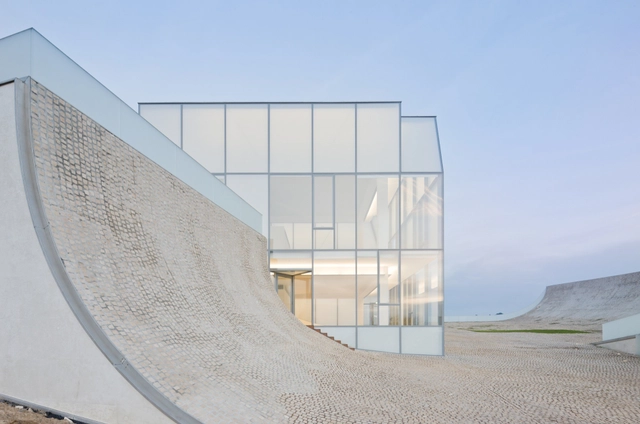
In honor of World Photo Day (August 19th) ArchDaily wanted to thank the photographers who bring to life the projects that we publish every day. So we asked 15 architects to weigh in on the work of some of our most-appreciated architecture photographers. Here, Steven Holl writes on behalf of Iwan Baan.


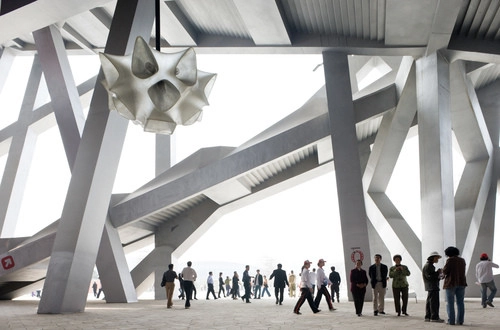
What influence do art and space have on the contemporary architectural design process? MoMA's most recent exhibition on architecture and design Conceptions of Space strives to answer this question. Themed under the umbrella of spatial relations, Curator Pedro Gadanho ruminates on the subject in a broad and philosophical sense. The exhibition delves into the topic using an interdisciplinary approach, incorporating research from French philosopher Michel Foucault on the subject of the expanded field. The exhibition aims to explore the relationship between the development of space and its deep-seated roots in the creative arts.
The room dedicated to the Wall at the 2014 Venice Biennale’s “Elements of Architecture” exhibition traces the development and evolution of walls over time, starting with archaic walls and ending with Barkow Leibinger’s “Kinetic Wall.”
It was here that we caught up with the Kinetic Wall’s architects, Frank Barkow and Regine Leibinger, to learn more about the vision and thought process that went into the design of this expanding and retracting elastic wall.“It’s very ephemeral, very light, but an idea of a kind of maybe not too far away future, that’s spatial. It changes the space that we’re standing in by moving back and forth. It has a kind of front, it has a back, it’s a little tongue-in-cheek,” Barkow explained.
A series of motorized points extend and retract the wall’s translucent synthetic material, creating peaks and valleys. Two layers of gridded fabric produce a moiré effect, “a second scale of movement, that is translucent/ephemeral,” according to a project description on Barkow Leibinger’s website.
If you enjoyed this video interview make sure you check out the rest of our 2014 Venice Biennale coverage, here.
Steven Holl Architects, in collaboration with Spirit of Space, have created two short films of the recently completed Seona Reid Building at Glasgow School of Art. The film series explores the complementary contrast of the new Reid Building and Charles Rennie Mackintosh’s 1909 building (which recently suffered a devastating fire), where "each work of architecture heightens the integral qualities of the other."
The first film takes the viewers on a "poetic climb" up and through the building's social circuit, which "purposefully encourages inter-disciplinary activity, with the hope to inspire positive energy for the future of art." The second film unpacks the design of the Reid Building in a conversation with design architects Steven Holl and Chris McVoy.
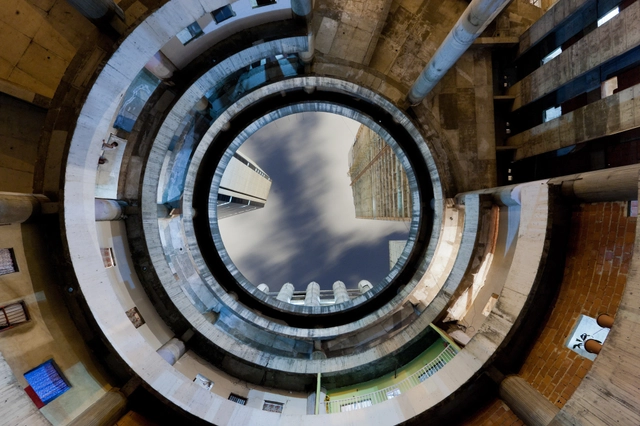
Following yesterday's news story about the forced eviction of the thousands of inhabitants living in Venezuela’s Torre de David (Tower of David), the world's tallest vertical slum, Urban-Think Tank has issued a statement. The group, which spent two years researching the remarkable urban space for their Golden Lion-winning Pavilion at the Venice Biennale 2012, has spoken with residents and hopes to provoke the architectural/design communities by adding their voice to the debate. Read the full statement, after the break.
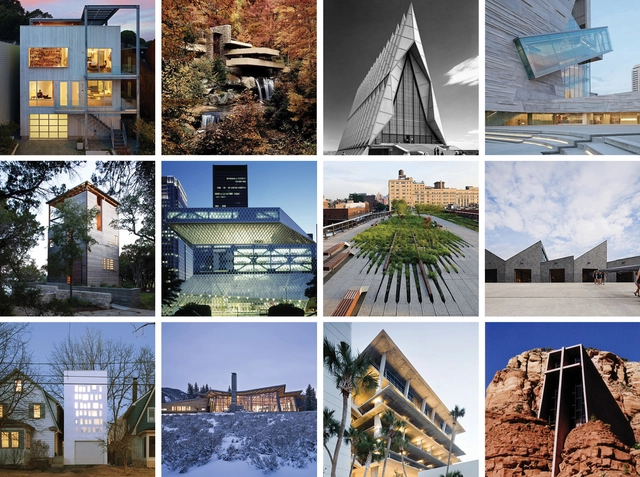
Happy 4th of July! To celebrate the USA's Independence Day, our editors have selected their favorite projects located in the USA, from architecture classics to extraordinary newcomers. Enjoy them all, after the break!
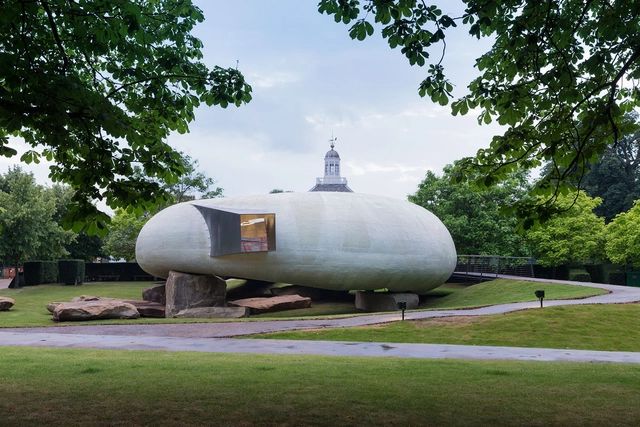
Last week, the 2014 Serpentine Pavilion opened in London's Hyde Park. The Serpentine Pavilion program invites architects who are yet to work in the UK to create a temporary installation at the gallery's grounds for one summer, and this year it was the turn of Chilean architect Smiljan Radic, who rarely builds outside his native country and is arguably the least well-known architect in the Pavilion's 14 year history.
Always a highlight in London's architectural calender, critics almost line up to write their reviews. This year, they are almost entirely unanimous: Radic's pavilion is, unquestionably, weird. But they're also unanimous on another judgement: it may be one of the best Serpentine Pavilions yet.
Read on after the break to find out what the critics said about this year's design
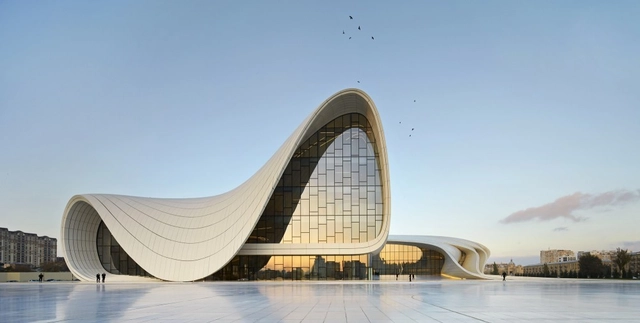
Zaha Hadid’s Heydar Aliyev Center has beaten out seven shortlisted designs to win London Design Museum’s Designs of the Year Awards. The shortlisted proposals - from a portable eye examination kit to Volkswagen’s XL1 CAR - will remain on view at the museum through August 25.
Not only is Ms. Hadid the first woman recipient in the Awards' seven year history, but the center is the first architecture project to be lauded: "It's beautiful, it's inspiring, it's the clear vision of a singular genius and we thought it was a remarkable piece of work," jury member Ekow Eshun noted.
Other nominated architecture projects included: NLE Architects' Makoko Floating School, The Turbulences FRAC Centre by Jakob + Macfarlane Architects, and the interior remodeling of the St. Moritz Church by John Pawson. See more stunning images of the Heydar Aliyev Center here.







.jpg?1404372840&format=webp&width=230&height=230&crop=true)
.jpg?1404372295&format=webp&width=230&height=230&crop=true)


