
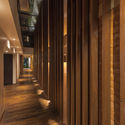

-
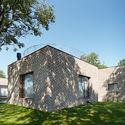
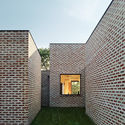
Architects: HDA: Hector Delmar Arquitectura
- Area: 770 m²
- Year: 2017
-
Manufacturers: CASTEL, Cement Design, Grundfos, Grupo Arca, Oventrop, +2


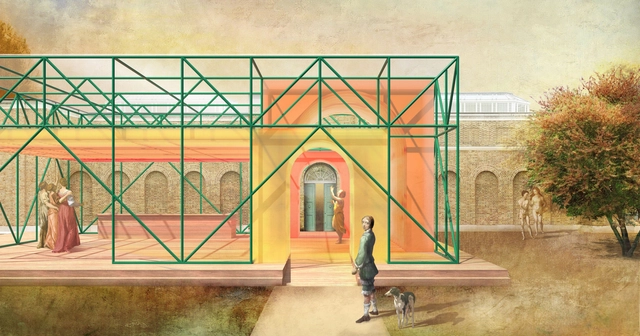
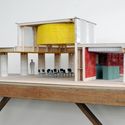
Following deliberation from a judging panel of industry experts, six emerging architecture firms have been shortlisted for the design of the Dulwich Pavilion 2019 in London, chosen from over 150. In collaboration with the London Festival of Architecture, the six schemes will be displayed at the Dulwich Picture Gallery throughout June and July of 2018.
The initiative follows on from the success of the gallery’s first pavilion in 2017, designed by IF_DO and exhibited at the London Festival of Architecture in 2017. Following the exhibition of the six shortlisted schemes for 2019, a public vote will be combined with a panel vote to select the winning pavilion.


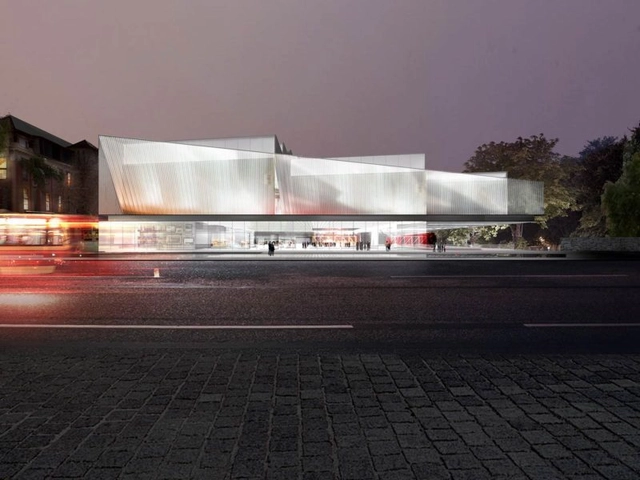
Diller Scofidio + Renfro and Woods Bagot has won an international competition for the design of the Adelaide Contemporary art gallery in Australia. Offering a “dynamic people-friendly” space for Adelaide’s North Terrace, the scheme features a dramatic “Super Lobby,” sky galleries, and a suspended rooftop garden.
The Diller Scofidio + Renfro and Woods Bagot scheme was chosen from a strong design field including submissions by Adjaye Associates, Bjarke Ingels Group, David Chipperfield Architects, and HASSELL. The announcement follows on from our publication of details on the shortlisted schemes in May 2018.


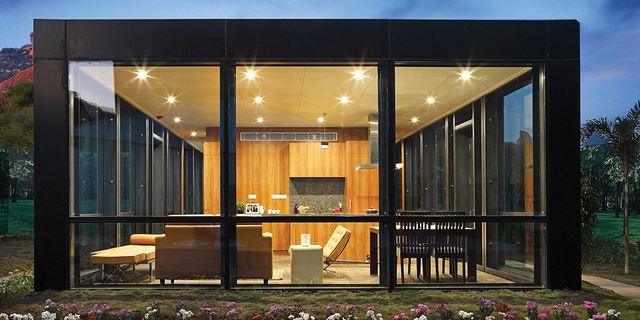
This article was originally published by Autodesk's Redshift publication as "Can Prefab Construction Meet Infrastructure Needs in India? KEF Infra Thinks So."
At KEF Infra One—a prefabrication plant outside of Krishnagiri, India—houses, cafeterias, and hospitals roll off an assembly line, as do the premade doors, windows, bathroom fixtures, and furniture to be installed within them. It’s a one-stop shop that makes building a house as easy as buying the food, dishes, and cookware for a family dinner in one fell swoop at Target.
The demands on infrastructure in India are huge. Given the country’s decentralization and its building trades’ reliance on manual labor, this level of modular building integration has been a far-off dream across all sectors. KEF Infra says it’s the only such facility in the world, integrating design, engineering, and fabrication to assemble building kits that provide far more than four walls and a roof, right out of the box.


There’s something irresistible about Robert Venturi and Denise Scott Brown’s architectural romance. They met when they were both young professors at the University of Pennsylvania; Scott Brown held seminars in city planning, and Venturi gave lectures in architectural theory. As the story goes, Scott Brown argued in her first faculty meeting that Frank Furness’ masterful Venetian gothic library should not be torn down to build a plaza (then a dissenting opinion). Venturi approached her after the meeting, offering his support. As Paul Goldberger wrote of the couple in 1971, “as their esthetic viewpoints grew closer and closer, so did their feelings toward each other.” Architecture lovers can’t help but love the architect-lovers.
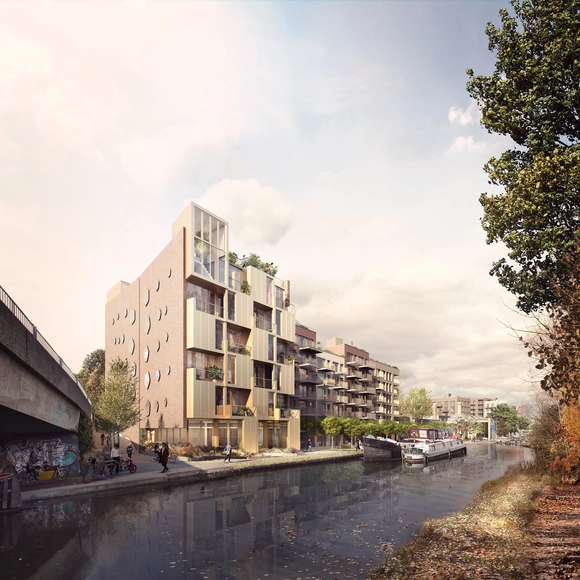
Wickside is a £120m “permeable, mixed-use neighborhood” that will provide 475 homes and 300 jobs for the surrounding community. Designed by BUJ Architects and Ash Sakula Architects, the neighborhood has recently received the all-clear from the LLDC planning committee. Almost nine years in the making, the scheme uses “urban blocks set around ordinary London streets” to create a complex, diverse townscape with a variety of uses. The neighborhood is housed within a 28,800 square meter former waste transfer site in Hackney Wick, London. Integrating the context’s existing buildings and cultural heritage, Wickside aims to develop the existing creative community through “retention and regeneration,” and is one of the largest development sites in the area.

_exhibition.jpg?1530836440&format=webp&width=640&height=580)
YACademy launches Architecture for Exhibition, a high-level training course offering 8 scholarships and internships in internationally-renowned architectural firms.
110 hours of lessons, a 60-hour workshop and internships/lectures held by internationally-renowned architectural firms like Zaha Hadid Architects (London), David Chipperfield Architects (London), Jean Nouvel Design (Paris), Carlo Ratti Associati (Turin), Fabio Novembre Studio (Milan), Studio Urquiola (Milan), aLL Design (London), MAXXI (Rome), Italo Rota (Milan), and Ferrari SpA (Maranello).

The past few decades brought a revolution in computer software and hardware; today we are on the cusp of a materials revolution. If yesterday we programmed computers and other machines, today we program matter itself. This has created new capabilities in design, computing, and fabrication, which allow us to program proteins and bacteria, to generate self-transforming wood products and architectural details, and to create clothing from “intelligent textiles” that grow themselves. This book offers essays and sample projects from the front lines of the emerging field of active matter.

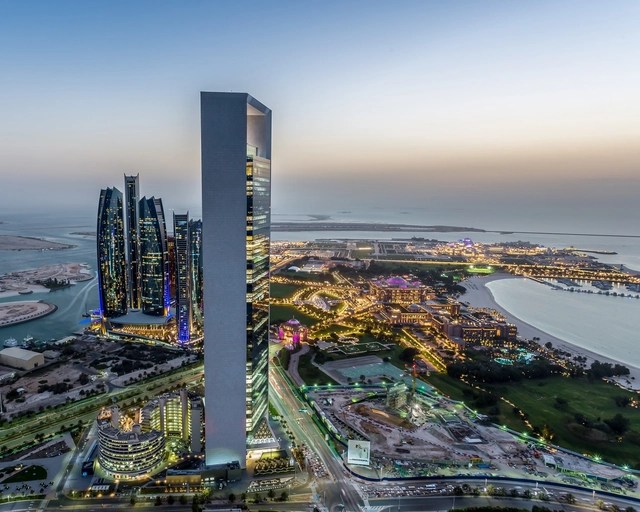
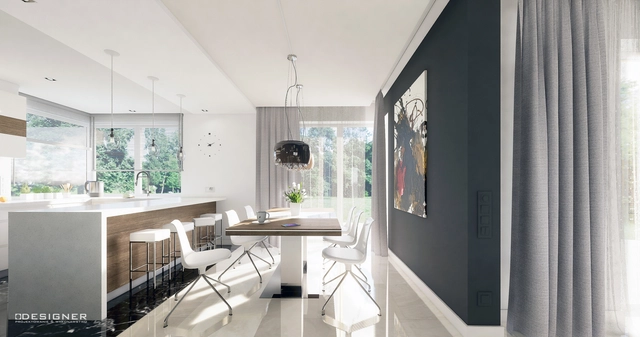
Architects are always trying to be more efficient and adding more value for clients. But with most software, rendering is very time-consuming, impairing efficiency significantly. It is exhausting for designers when the process of visual processing uses energy that would be better invested in design and architecture itself.
With the Enscape plugin, real-time rendering and virtual reality can help to remedy this situation. The plugin integrates as a toolbar in the popular design platforms Rhino, Revit and SketchUp, with a version for Archicad also currently in development. Because the software is a plugin for these popular programs, architects do not need to learn to use new software, but work in their familiar system with some additional features. And since the software runs on the local graphics card, projects do not have to be uploaded to the cloud.


_copy.jpg?1528216145 "© e10 Studio")











_exhibition.jpg?1530836440)