
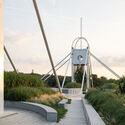

-
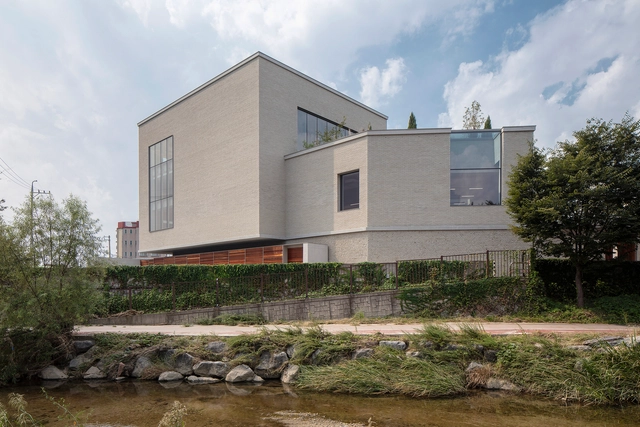
Architects: Výstaviště Praha
- Area: 7575 m²
- Year: 2024
-
Manufacturers: Accoya, mmcite, Assa Abloy, Carl Stahl, Rako, +18
-
Professionals: Greenville, Piada, DEKPROJEKT, A1 systém, Colt International, +2


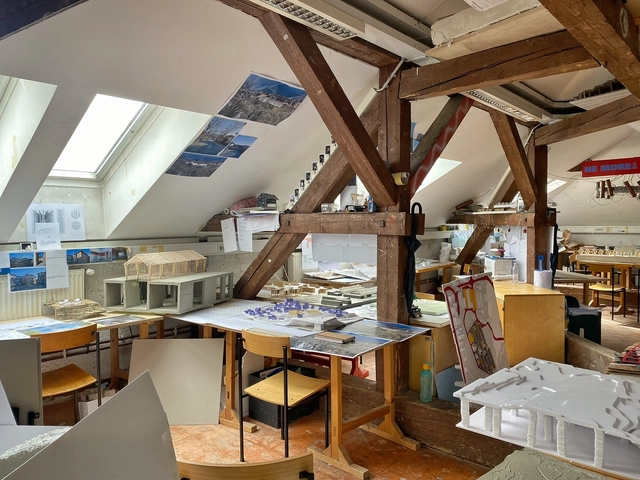
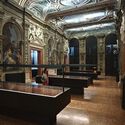
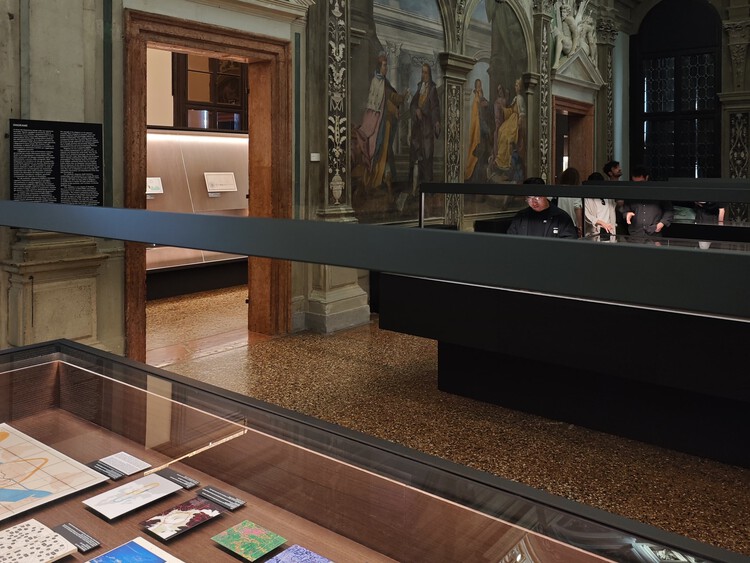
The exhibition "Intelligens. Talent. EUmies Awards. Young Talent 2025" has officially opened as a Collateral Event of the 19th International Architecture Exhibition – La Biennale di Venezia. Organized by Fundació Mies van der Rohe with the support of the Creative Europe Programme of the European Union, the exhibition presents the Shortlist and Finalist projects of the EUmies Awards in the Young Talent category. It brings together 12 master's thesis projects from 11 architecture schools across 7 countries, offering a comprehensive insight into emerging voices in architecture, urban planning, and landscape design.
On 19 June 2025, the exhibition will expand to include models of the three winning proposals, which will be announced during the EUmies Awards Day 2025 at Palazzo Michiel in Venice. This event will also unveil the winners of the Young Talent Open, which extends the awards' reach beyond the Creative Europe countries to include participants from the Council of Europe member states and the Asia-Pacific region. All selected works will be documented in a publication and incorporated into the EUmies Awards Archive, contributing to a growing repository of architectural experimentation and discourse.
Read on to discover the 12 finalist projects of the EUmies Awards Young Talent 2025.
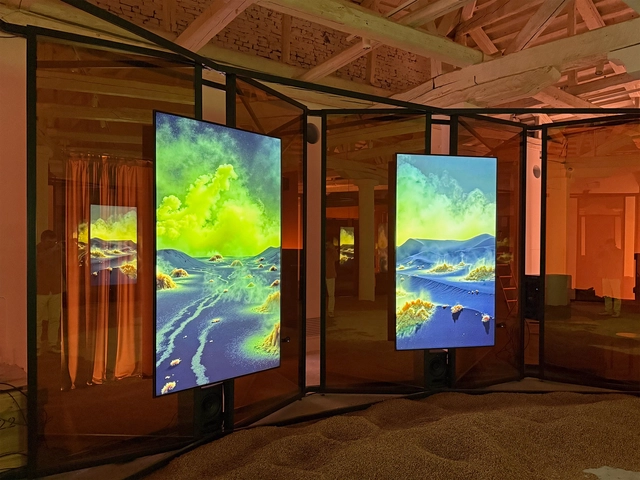
Titled Paraíso, hoje. [Paradise, today.], the exhibition representing Portugal at the 19th International Architecture Exhibition – La Biennale di Venezia addresses architecture as a cultural construction of landscape. Curated by architects Paula Melâneo, Pedro Bandeira, and Luca Martinucci, landscape architect Catarina Raposo, and video artist Nuno Cera, it offers an immersive installation featuring videos created using new digital technologies and artificial intelligence, along with an Atlas of images. Together, they construct a critical exploration of the proposed theme, the allegory of a "Paradise." This year, the Portuguese exhibition changed location, moving from Palazzo Franchetti to the Fondaco Marcello building, next to Venice's Grand Canal. It will remain open to visitors and host a series of debates until 23 November 2025.
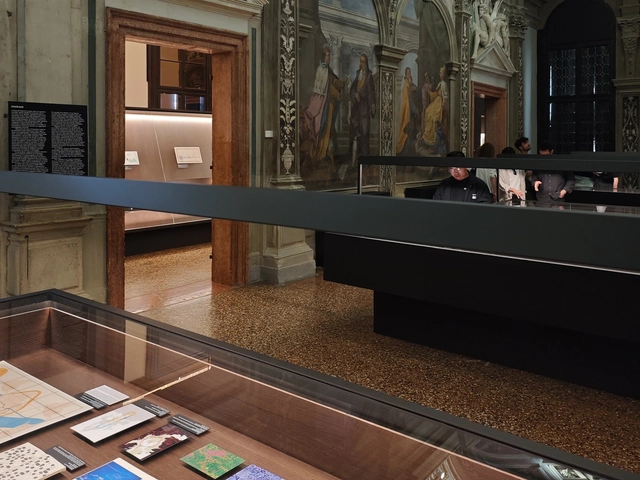
When we speak of intelligence at the 2025 Venice Biennale, the main exhibition broadly categorizes it into three domains: natural, artificial, and collective. While much attention has been drawn to robotic performances, future-forward material experiments—such as Boonserm Premthada's elephant dung bricks, or Canada's display of mesmerizing picoplankton, one often overlooked yet critical form of collective intelligence lies in the act of archiving.
Several national pavilions showcase this collective intelligence through beautifully curated exhibitions—the Spanish Pavilion's witty play on scale, for instance, features meticulously crafted models that invite close reading and delight. These curated collections offer a snapshot of the present, and in some cases, gestures toward the future. But without critically engaging with the past, without documenting and making sense of our shared spatial and architectural knowledge, the potential of collective intelligence remains incomplete. Archiving is not simply an act of preservation; it is a generative tool for projecting new futures.
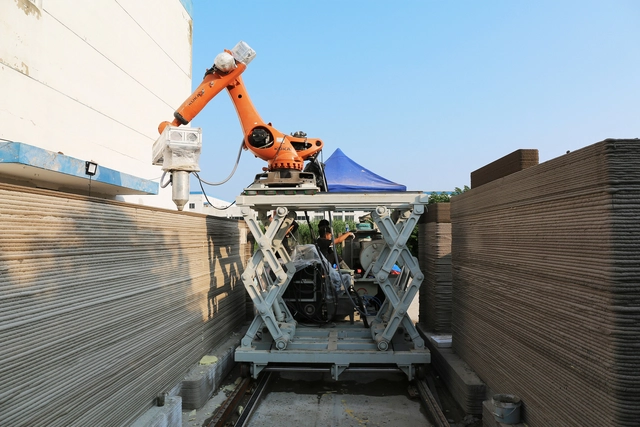
According to the analysis firm Gartner, 3D printer sales surged by 75% around 2014, nevertheless, the technology continues to experience significant growth. While there are multiple debates in the field of architecture about whether 3D printing can be considered craftsmanship or if it is feasible to mix local materials with 3D printing, its implementation from academia aims to create new experiences, research, and knowledge that contribute to its development and practical application. Now, how might the integration of 3D printing in academia provoke future changes in the construction industry? And how could education in architecture and design encourage collaboration with other disciplines to create new applications across different fields?