Manufacturers: Lumion, Abatjour de Arte, Archicad, BM Home Office, Bel Lar Casa Contemporânea, +10Casa Fausta, Confere Engenharia, Construflama, Due Fratelli, Infinito Vidros, Marie Camille;, Micheliny Martins, Movelaria Olga, Rex Bibendi, São Romão-10
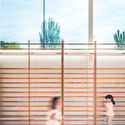
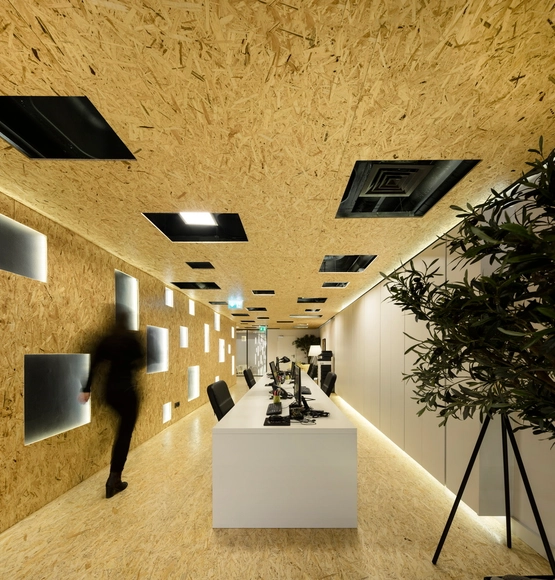
OSB (Oriented Strand Board) can be easily recognized for its distinctive appearance. This material consists of cross-oriented layers of wood strands compressed and bonded together with resin, applied under high pressure and temperature. As a result, the standardized panels have great stiffness, strength, and stability, and are often used as wall cladding attached to the steel frame of a building or as partitions. Also, they have good soundproofing capabilities, since the panels are uniform and have no internal gaps or voids. It is also worth mentioning that OSB can be fully recycled, thereby being considered eco-friendly.
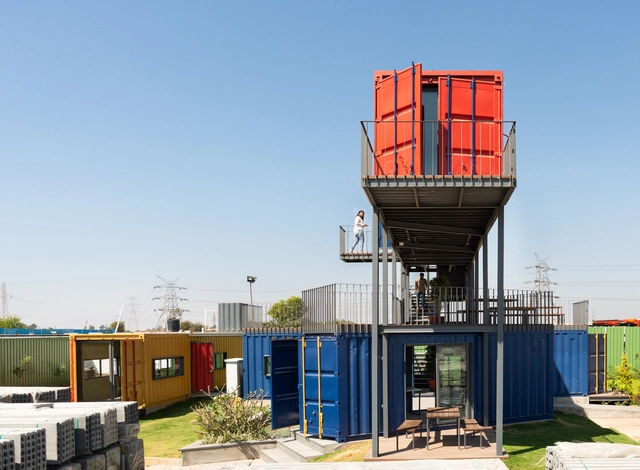
The construction industry is responsible for 75% of the consumption of earth's natural resources. Stone, sand, iron, and many other finite resources are extracted in huge quantities to supply the markets. Additionally, construction sites themselves generate enormous quantities of waste, whether through construction, demolition, or remodeling. In Brazil, for example, construction waste can represent between 50% and 70% of the total mass of municipal solid waste [1]. This waste often ends up in landfills and dumps rather than being properly disposed of, overwhelming municipal sanitation systems and creating informal disposal sites.
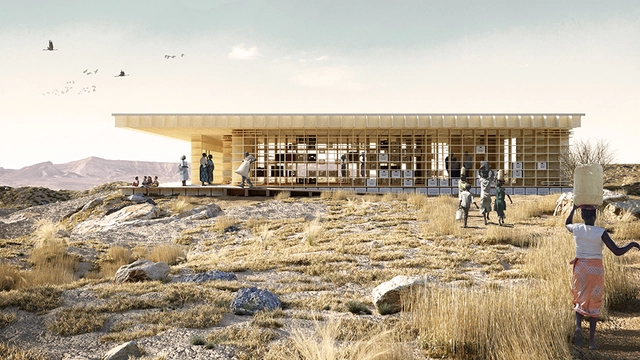
1st Prize Team: DRABELAND691 Project by: Aleksandra Wróbel, Agnieszka Witaszek, Kamil Owczarek from Poland. Image Courtesy of Kaira Looro competition 202
The Kaira Looro Architecture Competition to support humanitarian projects has released its full list of winning projects for an Emergency Operations Centre (EOC) in Sub-Saharan Africa. The contest, already in its 4th edition, aims to raise awareness among the international community about emergencies in developing countries, and support humanitarian projects in Africa.
Today’s cities face many rapidly rising challenges and opportunities. Smart cities, urbanization, new mobility, sharing economy, affordable living and many more (r)evolutions cause for lifecycle and cross-generational thinking, and a vision for a liveable, sustainable, affordable and futureproof city development.
The digital revolution is driving change in every part of our lives. The construction and design industry is rapidly discovering the potential of increased computational power to generate and fabricate buildings and objects, impacting the core principles of architecture and all involved materials. At the same time all levels of technology are used to create smarter cities that are safe, healthy and futureproof. Learn more about the future being built, today.
Next year’s Tallinn Architecture Biennale (TAB) has been postponed until 2022. Announced by the Estonian Centre for Architecture, the 6th edition has been adjourned “due to the postponement of the Venice Architecture Biennale as well as the uncertain times that international cultural events are facing because of the coronavirus outbreak”.
Armenian graphic designer and illustrator Nvard Yerkanian has created a new series exploring modernist architecture in Armenia. The illustration series aims to reveal the beauty and value of modernism to the public through the power of colors that accentuate the simple yet fantastic forms of these monuments. The series is an ode to the architectural heritage that has been lost and undervalued.
Due to the recent pandemic situation, for the courses held between September 2020 and January 2021, YAC has taken extraordinary measures to ensure the best performance of its activities and to facilitate access to its courses. In accordance with safety criteria, participation in the courses will be possible through a remote connection. Five scholarships are available for the full cost of enrollment and the full rules of the course are available on YAC's website.
While damage control and preparation is an ever increasing factor in how we plan our cities, certain extraordinary circumstances, like natural disasters, remain outside of our ability to plan and demand quick architectural responses that offer instant aid to the people affected, often being the difference between life and death. Natural, unpredictable events like earthquakes, tsunamis, hurricanes, floods, armed conflicts, territory disputes, or global crises--such as climate change or pandemics--require immediate action in order to mitigate ensuing damage and chaos. Emergency architecture is the immediate answer to the humanitarian side of a conflict, covering everything from housing to medical facilities for the affected.























.jpg?1590479205&format=webp&width=640&height=580)
.jpg?1590479740 "TAB 2019 \"Beauty Matters\", Head Curator Yael Reisner. Image © Tõnu Tunnel")
.jpg?1590479729 "TAB 2019 \"Beauty Matters\", Head Curator Yael Reisner. Image © Tõnu Tunnel")

.jpg?1590479205)