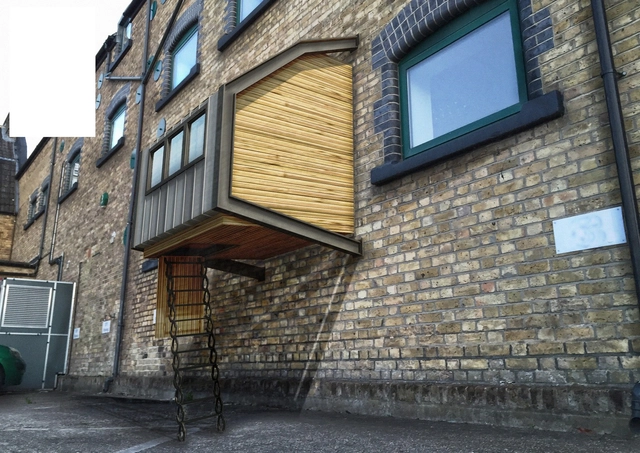
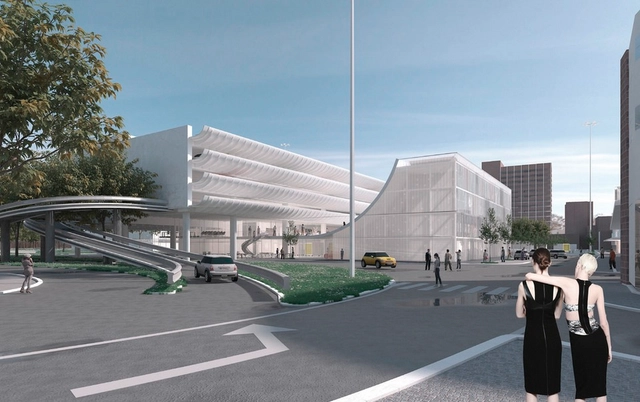
Exterior Rendered View. Image Courtesy of James Furzer
The 6th annual “Space for New Visions” competition has announced its winner: a project entitled “Homes for the Homeless,” by James Furzer of Spatial Design Architects. Hosted by FAKRO, a global manufacturer of roof windows and loft ladders, and A10 Magazine for European Architecture, the competition sought proposals that incorporated FAKRO products. With entries from around the world, projects were judged based on user comfort, environmental impact, functionality and natural light, among other things. Read about the winning entry after the break.
"London is on the verge of being ruined for all future generations," says Alain de Botton – a Swiss philosopher, notable author and founder of The School of Life and Living Architecture. "With a whopping 260 towers in the pipeline no area is safe, as planners, property developers and the mayor's office commit crimes against beauty to create fun buildings." In a film for The Guardian De Botton explains why he believes we're right to be nervous – and how we can stop this "clear desecration" of the UK's capital city.
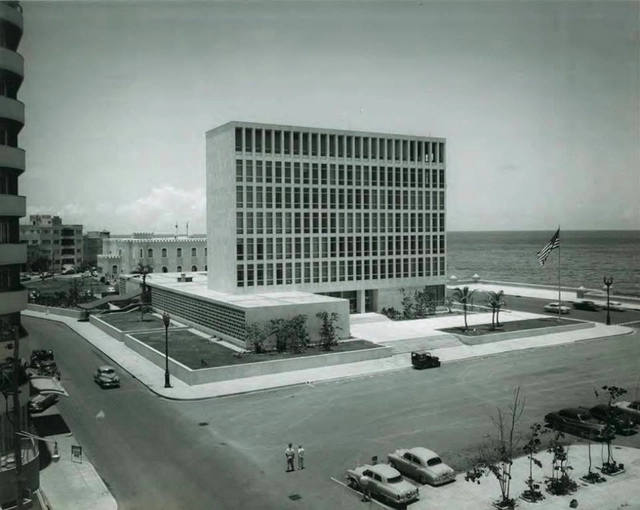
Completed in 1953, the U.S. Embassy in Havana was a defining project of midcentury American modernism
For the first time in over a half-century, the United States reopened its official diplomatic embassy in Havana earlier today, shining an international spotlight on Harrison and Abramovitz's modernist shoreline classic. Historically maligned by many Cubans as an embodiment of American arrogance and imperialism, the building has played a pronounced symbolic role in the escalation - and now the easement - of political animosities between the two countries.
Ahead of the 125th anniversary of the birth of Russian architect Konstantin Melnikov, Photographer Denis Esakov provides a recent look at 12 of Melnikov’s projects—all of which have been standing for over 70 years. Enjoy this selection of photographs that show how some projects have aged, deteriorated or been adapted, and note Melnikov’s persistent fascination with the meeting of curvature and rectangularity.
https://www.archdaily.com/770492/the-architecture-of-konstantin-melnikov-in-picturesAD Editorial Team
ArchDaily is continuing our partnership with The Architectural Review, bringing you short introductions to the themes of the magazine’s monthly editions. In this introduction to the June 2015 issue, The AR's editor Christine Murray addresses the question:"has architecture lost its social conscience?" According to Murray, "the question has become an arthritis; a dull ache that improves or worsens depending on the weather."
For some, the social purpose of architecture is associated with the idealism of youth, to be shed like a snakeskin as the responsibilities of age take over. But there is still plenty of teeth gnashing and hand wringing. Even if architects are powerless to shape the economic and political context of their work, a building is still a place where people gather. A social purpose, whether for a school or an office tower, is still the driver of its design. And yet, when the paperwork and construction are done, the bureaucracy surmounted, the fees paid (or not), and a building is finally complete, it’s the people we strip away. When architecture is published and the critic’s verdict given, it’s the messiness of life we edit out.
Internal and external images show the public interacting with the pavilion, while detail shots present the multitude of textures and materials that form the building. The juxtaposition of the moving images, along with Lívio Tragtenberg's strong soundtrack, transport the viewer to the Milan Expo and to the experience of walking on the organic surface.
Easy to overlook behind Kazuyo Sejima’s celebrated control of spatial and material effect is her emphasis on program and its role in the ratiocinated process of form-finding. In this 2002 lecture on her “Recent Work,” Sejima delves into the methodology that informs her work, beginning with two ongoing (and since-heralded) projects: the Theatre and Art Centre at Almere and the 21st Century Museum of Contemporary Art at Kanazawa.
In both of these projects, Sejima ruminates on the intrigue of the microunit, the autonomously coherent spatial cogs that accumulate to participate in the purposeful machine. First within the irregularly-intervaled grid of the Theatre (as studios and staging areas), and second within the cytoplasmic circumscription of the Kanazawa Museum (as exhibitions), individual programmatic components with discreet performative roles seem to float, untethered to each other, in voluminous seas of circulatory space. By segregating elemental blocks within these projects, Sejima exaggerates their apparent autonomies in order to paradoxically draw attention to their spatial interconnectedness.
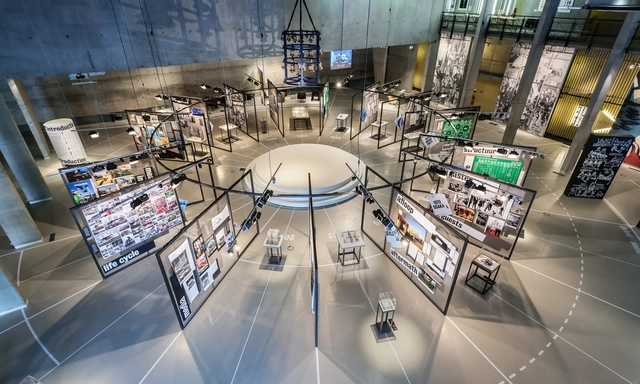
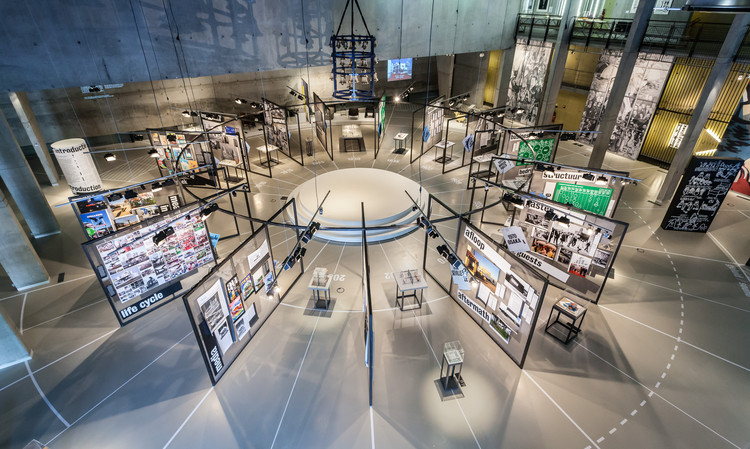
Now at the halfway point of the six month long World Expo in Milan, in which 145 countries are participating in a concentration of national spectacle surrounding the theme of "feeding the planet," Rotterdam's Nieuwe Instituut (HNI)—the centre for architecture in the Netherlands—is exhibiting an altogether more reflective display of national civic pride.
Rotterdam, which was blitzed and decimated during the Second World War, is a place well suited to host an exhibition whose underlying theme centres on the fragile, often precarious notion of national self-image. Following the war Rotterdam was forced to rebuild itself, carving out a new place on the world stage and reestablishing its importance as an international port. Now, seventy years later, Rotterdam is a very different place. In demonstrating just how delicate the construction of a tangible national identity can be this latest exhibition at the HNI offers up a sincere speculative base for self-reflection.
Architect David Craig and Dublin Design Studio have launched a crowd-funding campaign on Kickstarter for Scriba - a stylus designed with the input of hundreds of illustrators, designers, architects, animators, artists, mobile workers and tablet users that aims to make sketching for architects and designers more natural than ever.
This article is part of ArchDaily Essentials, a series of articles which give you an overview of architecture's most important topics by connecting together some of our best articles from the past. To find out more about ArchDaily Essentials, click here; or discover all of our articles in the series here.
https://www.archdaily.com/769341/ad-essentials-smart-citiesAD Editorial Team
As an unavoidable art form, “architecture is one of humanity’s most visible and long-lasting forms of expression,” writes Complex Media. Within the past 150 years—the period of modern architecture—a distinct form of artistry has developed, significantly changing the way we look at the urban environments around us. To highlight some of the key figures in architecture over the past 150 years, Complex Media has created a list of “25 Architects You Should Know,” covering a range of icons including Zaha Hadid, Ieoh Ming Pei, Philip Johnson, Oscar Neimeyer, SOM, Daniel Libeskind, and more. Read the full list to learn more about each iconic architect, here.
International architecture non-profit Shelter Global has announced the winners of its 2015 Dencity Competition. Out of 300 entries from 50 different countries, three winners and six special mentions were selected.
The competition’s goal was “to foster new ideas on how to handle the growing density of unplanned cities and to spread awareness of the massive problem,” and jury members sought out project designs that empower communities and allow for self-sufficiency. Read about the three winners, after the break.
This article is part of ArchDaily Essentials, a series of articles which give you an overview of architecture's most important topics by connecting together some of our best articles from the past. To find out more about ArchDaily Essentials, click here; or discover all of our articles in the series here.
https://www.archdaily.com/769338/ad-essentials-3d-printingAD Editorial Team
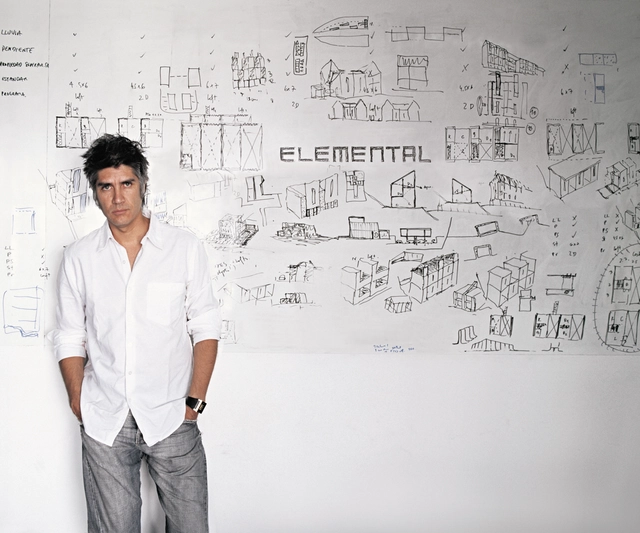
Citing the increasing popularity and success of the previous Architecture Biennales, chairman Paolo Baratta confirmed, "after many years in which the Architecture Biennale has continued to grow, we may now consolidate the decision to make it last six months, given the steady increment in the attendance of architecture schools from all over the world who come to participate in the Biennale Sessions project, and have made the Architecture Biennale a pilgrimage destination for students and teachers from the universities of many countries, from the United States to China.”
https://www.archdaily.com/770446/alejandro-aravena-appointed-director-of-the-2016-venice-architecture-biennaleAD Editorial Team
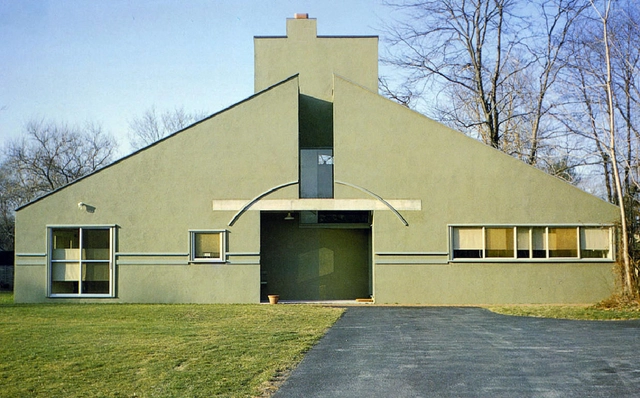
Robert Venturi's Vanna Venturi House is now for sale. According to reports on Curbed, the postmodern home could be yours for just $1.75 million! Said to be one of the top 10 buildings that "changed America," the house was originally designed and built by the Pritzker Prize laureate for his mother in 1964. The home's most recent owner, University of Pennsylvania professor Dr. Thomas P. Hughes passed away February, leaving the historic residence to his daughter who is now selling the home.
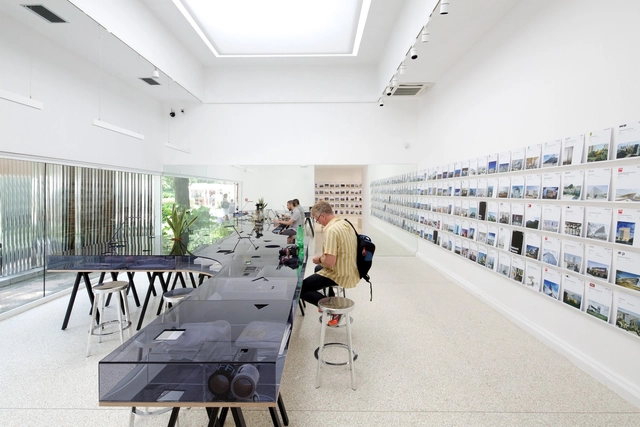
The US Pavilion for the 2016 Venice Architecture Biennale has launched a call for submissions to all architects interested in participating in The Architectural Imagination. The exhibition will present speculative architectural projects commissioned for specific sites in Detroit but with far-reaching application for cities around the world." Curators Cynthia Davidson and Monica Ponce de Leon will commission 12 US architects to "produce new work that demonstrates the creativity and resourcefulness of architecture to address the social and environmental issues of the 21st century." Each of the 12 projects will be exhibited in the pavilion and documented in an exhibition cataLog, a special issue of the journal Log.
The curators are looking for design excellence, innovative speculative thinking, and architectural expertise in built and/or unbuilt work. Read on to learn more.
As part of the ongoing festivities celebrating Karlsruhe's 300th anniversary (KA300), the German city's central palace is being illuminated nightly with projections inspired by Italian 70s architecture group Superstudio and Lebbeus Woods. The elaborate installation, the Schlosslichtspiele is showcasing the work of nine prominent artists and artist groups - all of whom uniquely explore the "depths and shallows" of the Karlsruhe Palace with their visual art.
This article is part of ArchDaily Essentials, a series of articles which give you an overview of architecture's most important topics by connecting together some of our best articles from the past. To find out more about ArchDaily Essentials, click here; or discover all of our articles in the series here.
https://www.archdaily.com/768810/ad-essentials-chinaAD Editorial Team
The city of London has been growing rapidly in the past decade, and with the help of New London Architecture's large-scale urban model of the city, some strange and interesting trends can be seen. Since the advent of ever-taller buildings, London has put laws into place to prevent views to historically significant buildings like St. Paul’s Cathedral and the Parliament Building from being blocked. As a result, strangely-shaped designs like the Leadenhall Building, endearingly referred to as the “cheese grater” by Londoners, have emerged as a way to work around the sightlines enforced by the city. Watch the video above for more on this interesting design dilemma.
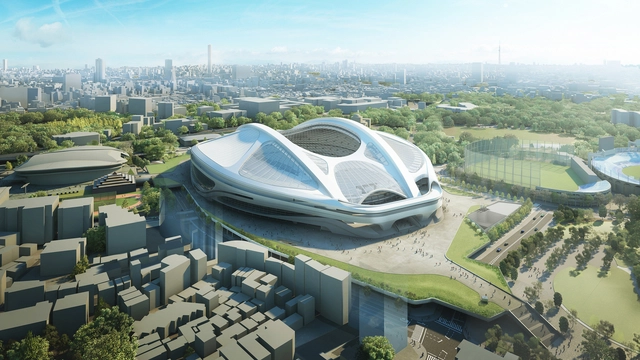
Following the news in 2012 that Zaha Hadid Architects had won a competition to design the 80,000-seat Tokyo National Stadium as a centerpiece for the 2020 Tokyo Olympics, Japan’s Prime Minister has announced that the plans are to be scrapped. Citing spiralling costs as a key reason, Shinzo Abe has declared that the stadium, which was set to replace the existing Kasumigaoka National Stadium, would not be completed in time for the 2019 Rugby World Cup nor the 2020 Olympic Games as originally planned.
The way our buildings and public spaces are planned has a significant impact on our quality of life. In the latest edition of The Urbanist, Monocle 24's weekly "guide to making better cities," Tom Edwards and his team explore urban accessibility and inclusivity: from how best to create and incorporate inclusive design, to a cab service in Hong Kong which has been designed especially for wheelchair passengers. They also discover what happens when technology and sound come together to create a map of the city, and why New York has introduced mental respite centres.
The anticipated £13 million plan is a major step forwarded considering the 1960s station, now a Grade II listed building, was recently slated for demolition. The adaptive reuse efforts are a result of a successful, international preservation campaign that secured a second life for the iconic structure.
This article is part of ArchDaily Essentials, a series of articles which give you an overview of architecture's most important topics by connecting together some of our best articles from the past. To find out more about ArchDaily Essentials, click here; or discover all of our articles in the series here.
By the mid point of the twentieth century, the clean lines of the International Style and the stripped utilitarianism of functionalism were becoming increasingly common in American and European cities. Created out of a wholesale rethink of core modernist values, Postmodern architecture came as part of a philosophical shift that was just as all-encompassing as the Modernism it sought to replace; aiming to revive historical or traditional ideas and bring a more contextual approach to design. A critical elite who never really left modernism often condemned postmodernism as tacky, regressive or pandering to popular opinion; but after something of a resurgence of modernism in recent years, what’s the value of postmodernism to contemporary thinking?
https://www.archdaily.com/769368/ad-essentials-postmodernismAD Editorial Team