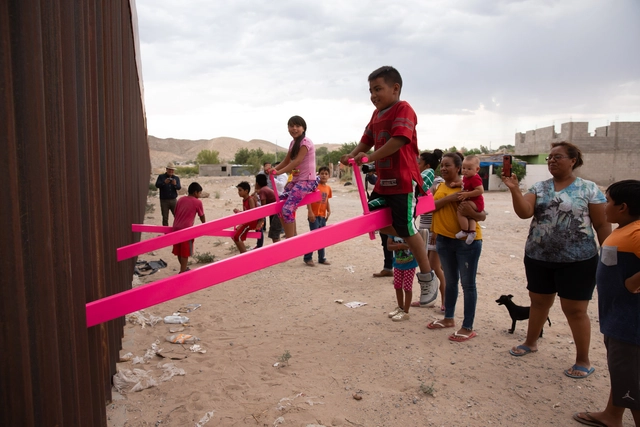
Mexico, a North American country spanning over 1,964,375 km2, features a vast mosaic of different cultures that extends far beyond its geographical boundaries. Nowhere is this diversity more evident than along the 3,141km border stretching from the Gulf of Mexico to the Pacific Ocean, running through 48 counties within the United States and 94 municipalities within the Mexican states.
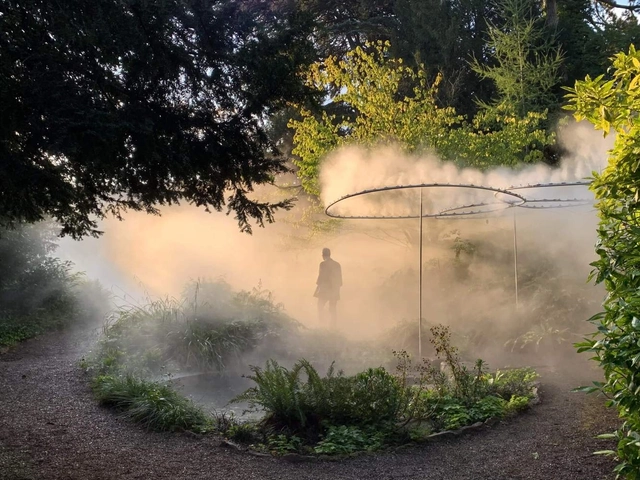
Design consultancy office AUTHOS and Swiss multidisciplinary Interactive Designer Stella Speziali have collaborated to create a unique spatial intervention at the Zurich Design Biennale 2021. Titled NEBULOSUS, the installation uses mist and augmented reality as an immersive and intangible 'structure' that changes the spatial boundary of Zurich's botanical garden and creates and explorative experience for visitors.
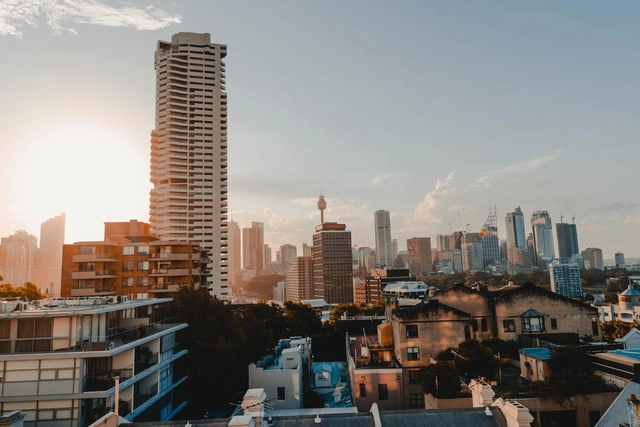
Prolonged heatwaves have been increasingly common in recent years, and cities are devising various strategies for combating the urban heat island effect. As Sydney experienced blistering summer temperatures of up to 50 degrees Celsius, the authorities have recently banned dark roofs on new homes and mandated lighter-coloured alternatives to reflect solar radiation. In Europe, Athens has taken the example of Miami and hired a Chief Heat Officer, tasked with finding coping strategies as the city confronts with heatwaves and wildfires that prompted a large number of residents to vacate the capital.
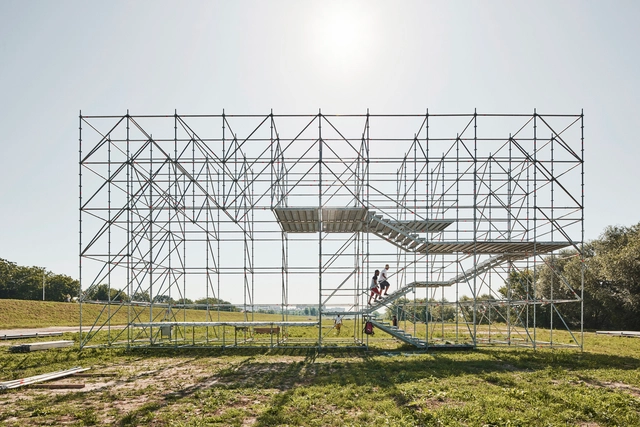
Beyond "experience tourism" and light entertainment, temporary architecture is a fertile ground for testing ideas, examining places, popularizing new concepts and technologies. Taking a wide array of forms, from disaster relief projects and utilitarian structures to design experiments, architectural statements and playful installations, transient structures showcase alternative visions for the built environment, opening up new possibilities and questioning established norms. As temporary architecture now seems at odds with sustainability imperatives, the following discusses the value of temporary architecture as a vehicle of experimentation, advancing design and engaging communities.
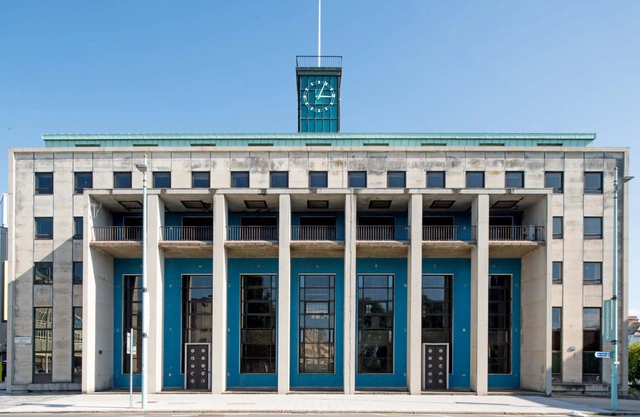
The National Provincial Bank in Plymouth, Southwest England, completed in 1959 and designed by the bank’s architecture department with BC Sherren serving as chief architect. . Image Courtesy of Elain Harwood
The term “mid-century modern” conjures up images of a sharp-suited Don Draper, slender teak cabinets, and suave chairs from Scandinavia. That is, at least, one perspective of the design movement and a view more of 1950s-era Manhattan offices than anything else. But in Britain, mid-century modernism manifested as something slightly different, coming in the form of schools, cathedrals, housing, and an era-defining festival, all eloquently described and illustrated by the prolific architectural historian Elain Harwood in Mid-Century Britain: Modern Architecture 1938-1963.
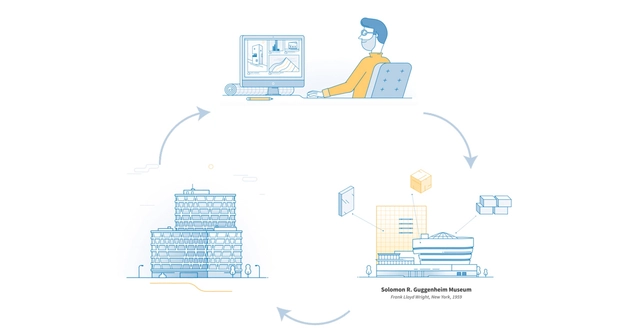
Although creative processes vary widely among professionals, some general aspects can be found in any design method. In general terms, we could say that the Architect's Journey through the Design Process consists of 3 stages: Inspiration, Research and Specification, and Construction. In all of them, the connection with materials and construction products is fundamental. After all, the ultimate objective of architects is to materialize their ideas and give shape to new environments that can withstand the test of time. To increase their knowledge and to make the most of their capabilities at every stage, architects search through various mediums for the best tools and references.
The following will unpack architects' behaviour throughout this creative journey and the different touchpoints with companies and manufacturers at every stage.
https://www.archdaily.com/967616/architects-creative-journey-and-the-connection-with-brandsPola Mora
The Neue Nationalgalerie, designed by Mies van der Rohe, reopened to the public after an extensive renovation project carried out by the practice of David Chipperfield. In this video created by Mies van der Rohe House, Chipperfield shares his thoughts on the design language of Mies van der Rohe while also discussing the qualities of Neue Nationalgalerie and the future role of architectural monuments. The interview is part of the film and exhibition project Mies Goes Future, which invites artists, architects, and historians to explore the work of the renowned Modernist architect as a source of inspiration for contemporary practice.
August 5th is National Health Day in Brazil. Our readers have already expressed their opinion on how psychology is essential to build healthy and pleasant spaces to live in, and for this reason, we decided to explore the impacts of the spatial experience on each person's well-being, improving quality of life and reducing mental stress. In other words, architecture not only contributes to physical health through ergonomics but also affects our emotional comfort.
https://www.archdaily.com/967003/architecture-and-health-how-spaces-can-impact-our-emotional-well-beingEquipe ArchDaily Brasil
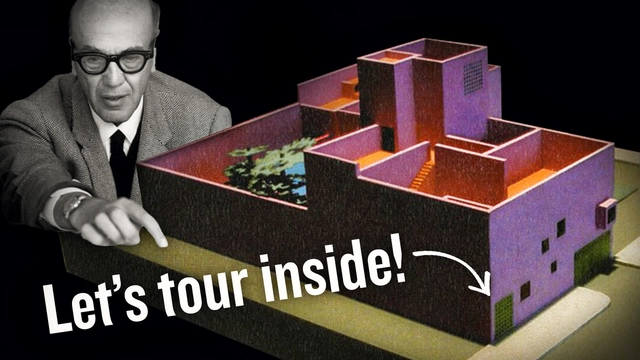
In 1984, the Menil Museum in Houston, Texas, commissioned the Mexican architect Luis Barragan to build a 3,000-square feet guest house to be located across the street from the famous Rothko Chapel. The architect came back with a design for a dazzling purple, pink, and orange 8,000-square feet mansion that looked to be more at home in Mexico City than a Houston residential suburban lot. So, due to the ensuing conflict between client and architect, the house would never get built, only displayed as an exhibition within the Menil’s galleries.
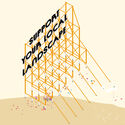
“Local” is a word that is broadly used to describe something particular about a place that makes it different from somewhere else. Across the globe, the “local-ness” of our cities is what makes them unique- in the way that people live, work, socialize, and especially in the way that they plan and construct cities and infrastructure. To someone living in a suburb, the way that they move from place to place might be through a car, while someone who lives in a dense metropolis might use a subway or bus system as part of their everyday lives.
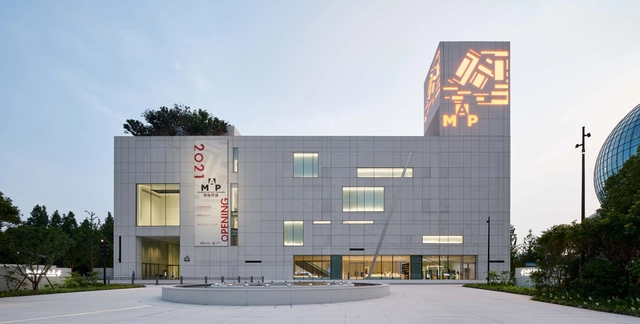
Atelier Jean Nouvel's monumental granite-clad museum in Shanghai's Pudong district is now complete and open to visitors. Labeled as a "domain" by the architecture firm, the Museum of Art Pudong covers an expansive plot of almost 40,000 sqm on the outer banks of the Huangpu River, and offers visitors a culture-driven space surrounded by the river and an undulating landscape of tall trees.
St. Bartholomew hut by Paradigma Ariadné. Image Courtesy of Concéntrico
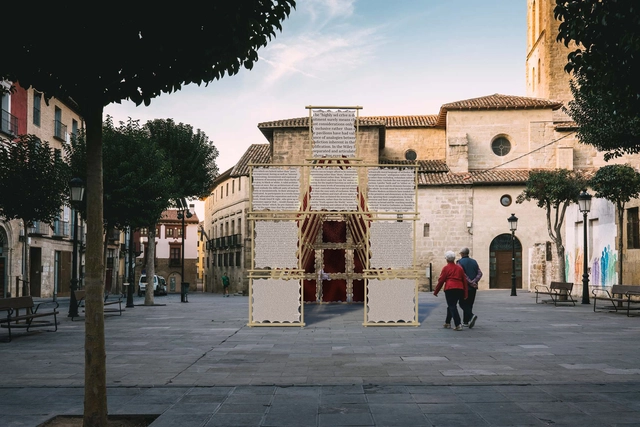
The International Architecture and Design Festival Concéntrico, now at its 7th edition, prompts an exploration of the urban environment through temporary installations inhabiting the public spaces of the city of Logroño, Spain. From September 2nd to 5th, the festival brings together an array of emerging architects and artists from all over the world to share their perspectives on urban spaces and communities.
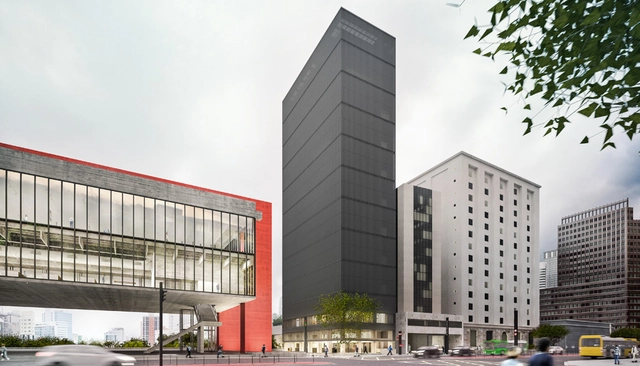
The Museum of Art of São Paulo - MASP will soon expand its facilities to include an annex next to the iconic project by Lina Bo Bardi. The 14-story Dumont-Adams building, which has been inactive for decades, has 7800 square meters and will be renovated to house exhibition wings, a café, a restaurant, and a restoration laboratory.
https://www.archdaily.com/967425/masp-to-receive-a-14-story-annex-on-paulista-avenue-designed-by-metro-arquitetosEquipe ArchDaily Brasil
Readers of ArchDaily and Strelka Mag have selected a shortlist of 15 architectural projects nominated for the joint ArchDaily & Strelka Award, which celebrates emerging architects and new ideas that transform the contemporary city. The second stage of voting, which will last until August 31st, will decide the three winners.
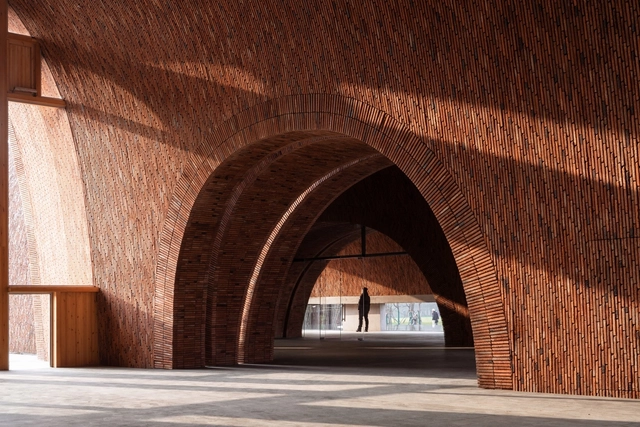
Jingdezhen Imperial Kiln Museum / Studio Zhu-Pei. Image Courtesy of Studio Zhu-Pei
Over the course of the last decade there has been a growing interest in the handcrafted buildings, as well as in the application of local and renewable materials in building construction. Under the concerns about the heavy environmental and economic expenses caused by construction, nowadays urban planners are embracing the concept of sustainability, which refers to “meeting our own needs without compromising the ability of future generations to meet their own needs”.
Office buildings are known for being utilitarian, efficient, and rigid. While this typology has earned a reputation for adopting rectilinear grids and open layouts, modern designs have begun exploring new alternatives for the contemporary workplace. Moving beyond standard work rooms, meeting spaces, and support zones, these projects are reimagining the relationships between envelope and program. This is a larger movement towards rethinking the formal and spatial characteristics of where we work. While this trend is being explored globally, cities have begun embracing new office designs at a larger scale.
Titled "The Available City", the fourth edition of the Chicago Architecture Bienniale will be open to the public on September 17th, 2021. This year, the event presents an unprecedented biennale model that experiments with an array of site-specific projects and programs displayed across the Chicago, "reframing what a biennial can do, be, and explore for a city". Over 80 projects from 18 different countries will respond to an urban design framework and bring ideas for community-centered, collective spaces through architectural elements, engaging programming, and enhanced community experiences.
We are about to start living in a completely wireless world, but in the meantime, many people are looking for alternatives to hide wires creating a more organized and clean space. Therefore, we have provided some tips for those who want to disguise TV cables and cords from other devices to make the environment more comfortable.
https://www.archdaily.com/967139/how-to-hide-tv-wiresEquipe ArchDaily Brasil
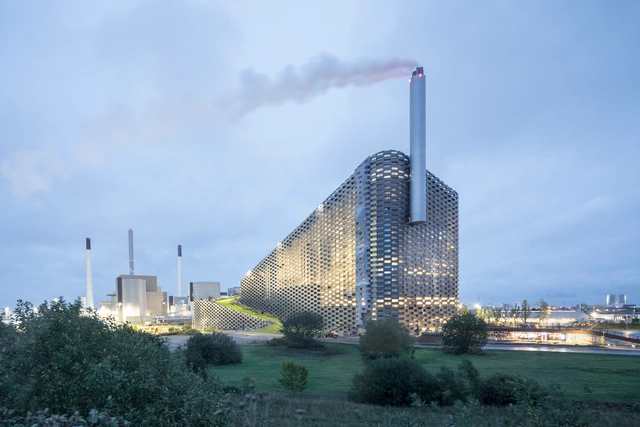
CopenHill Energy Plant and Urban Recreation Center / BIG
All human activities affect the environment. Some are less impactful, some much, much more. According to the United Nations Environment Program (UNEP), the construction sector is responsible for up to 30% of all greenhouse gas emissions. Activities such as mining, processing, transportation, industrial operations, and the combination of chemical products result in the release of gases such as CO2, CH4, N2O, O3, halocarbons, and water vapor. When these gases are released into the atmosphere, they absorb a portion of the sun's rays and redistribute them in the form of radiation in the atmosphere, warming our planet. With a rampant amount of gas released daily, this layer thickens, which causes solar radiation to enter and and stay in the planet. Today, this 'layer' has become so thick that mankind is beginning to experience severe consequence, such as desertification, ice melting, water scarcity, and the intensification of storms, hurricanes, and floods, which has modified ecosystems and reduced biodiversity.
As architects, one of our biggest concerns should be the reduction of carbon emissions from the buildings we construct. Being able to measure, quantify, and rate this quality is a good way to start.
The art of building a shelter made from blocks of ice is passed on from father to son among the Inuit, native peoples who inhabit the northernmost regions of the planet. The circular plan, the entrance tunnel, the air outlet and the ice blocks form a structure where the heat generated inside melts a superficial layer of snow and seals the gaps, improving the thermal insulation of ice. In a storm, an igloo can be the difference between life and death and perhaps this is the most iconic and radical example of what it means to build with local materials, few tools and lots of knowledge. In this case, ice is all you have.
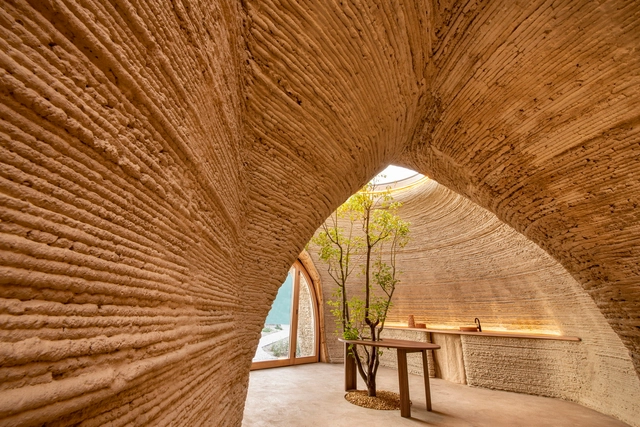
Taking advantage of abundant resources and local labor are key concepts for sustainable architecture, which are often overlooked at the expense of solutions replicated from other contexts. With new demands and technologies, the globalization of building materials and construction techniques, is there still room for local materials? More specifically in relation to 3D printed constructions, are we destined to erect them only in concrete?
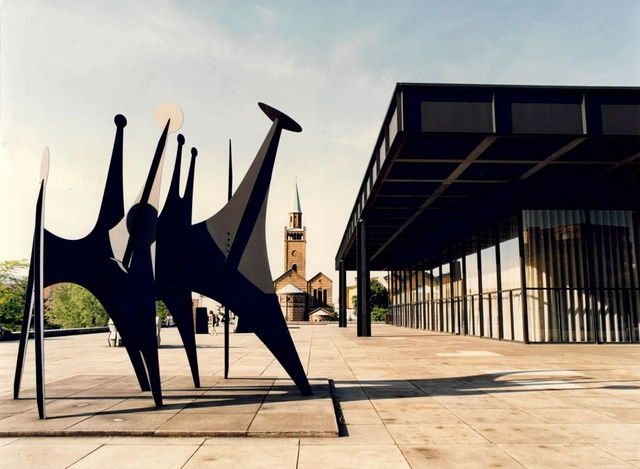
Minimal / Maximal is a solo exhibition of Alexander Calder’s opening this Sunday at the newly reopened Neue Nationalgalerie in Berlin.. Image Courtesy of Staatliche Museen zu Berlin, Nationalgalerie / Reinhard Friedrich
After being closed for six and a half years for a renovation by David Chipperfield Architects, the Berlin museum reopened Sunday, August 22.
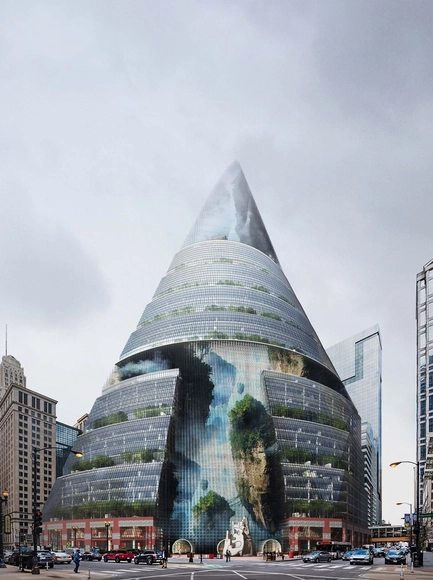
Thompson Scraper. Image Courtesy of Thompson Center Design Competition
The Chicago Architecture Center and Chicago Architecture Club have announced the seven finalists of the Thompson Center Design Competition, which called for new and innovative visions for the Illinois Thompson Center designed by Helmut Jahn in 1984. The winning design proposal will be announced during the opening of the September 14 pop-up exhibition of finalists work at the Chicago Architecture Center, and will run through October.
Questioning the new now, especially with the new challenges of Covid-19, around the world, cities are advocating for structural change and collective action. Berlin questions, an annual, multi-day conference and a platform for transdisciplinary dialogue, in its 2021 edition “Metropolis: The New Now”, tackled the immediate present, creating a place for debate. Dedicated to local solutions to global challenges, the event took on a hybrid format, at various locations in Berlin and online, resembling the world we live in.
ArchDaily had the chance to meet up with Lesley Lokko, architect, academic, and novelist at Berlin Questions, to discuss her talk “Africa as the lab for the future”, her visions for the future of architecture education and the future of big cities on a social, cultural and urban level.
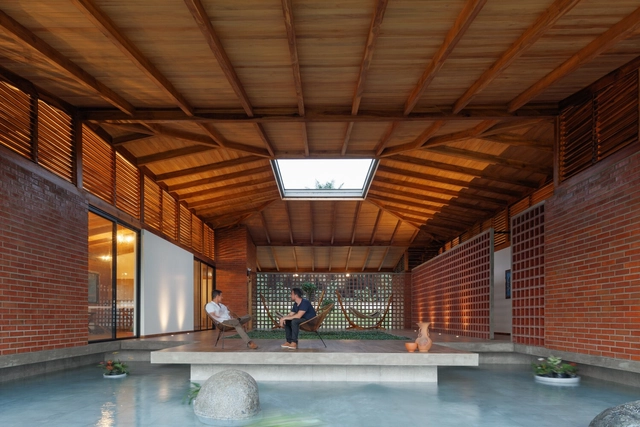
Wood is an extremely versatile material. It allows for the construction of robust and strong structures, while it can also be used as the raw material for delicate objects such as musical instruments. Understanding all its particularities, properties, and behavior is a journey of knowledge that could take a lifetime. Basically, wood is made up of cellulose, hemicellulose, lignin, and mineral elements, and each species has its own unique characteristics. The history of Stradivarius violins, for example, is interesting to mention: they are still worth fortunes and experts argue that luthiers have never been able to replicate their timbre on newer instruments. Researchers point out that the differentiated sound is due to the wood in the body and arm, which went through a submersion process with a mineral solution that increased the decomposition of hemicellulose. The treatment made the wood absorb less moisture, making the sound brighter and more pleasant.
This shows how complex it is to work with a living material like wood. It can swell or shrink depending on weather conditions, how the tree grew or was cut down, etc. And, varying between wet and dry states, it can end up rotting. Such factors must be understood when we work with a natural material, but it can also be a nuisance when we look for the aesthetic appearance of wood while lacking technical precision and maintenance capabilities.


.jpg?1627404680 "© Jaime Fernández de la Cruz")
.jpg?1627404912 "© Nómada Laboratorio Urbano")
.jpg?1627404887 "© Nómada Laboratorio Urbano")