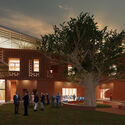
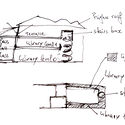
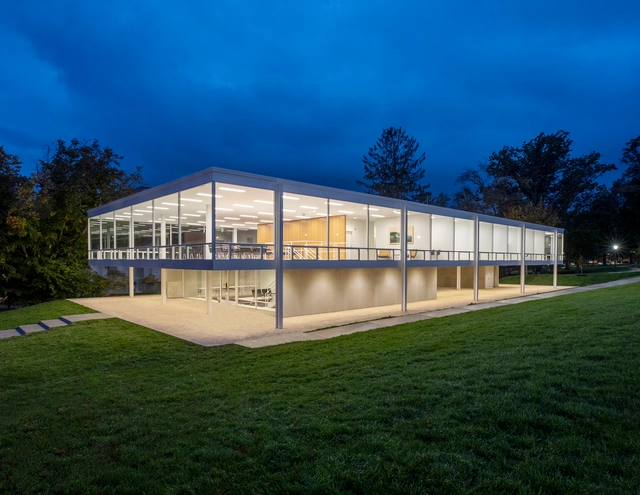
Indiana University inaugurated a new shared facility for the Eskenazi School of Art, Architecture + Design, which materializes a recently rediscovered design by Mies van der Rohe. The 1952 project intended for a fraternity house on the same IU Bloomington campus was entrusted to New York-based firm Thomas Phifer and Partners to be adapted to contemporary building codes and its current academic function while preserving the intended architectural aesthetic. The two-storey, 930 square meter building has officially opened to students and faculty.
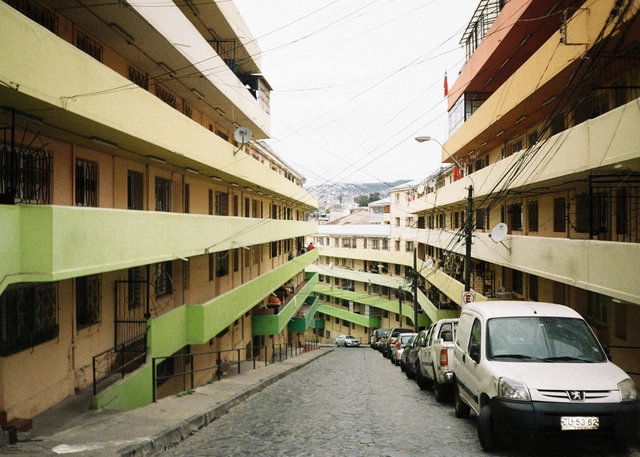
Capturing an image has become spontaneous and immediate. While mobile photography maintains quality, it loses the ritual of taking a picture, i.e. thinking about an image while walking through a new city or the framing possibilities for a building from your point of view. In short, each image is the result of focus, aperture, exposure and the characteristics of the space. Travelling with a 35mm camera sets your limits, some say it is the closest lens to the human eye, others say it is too narrow to capture a building from the outside, but no doubt it all depends on your judgement and the capabilities of the equipment at your disposal.
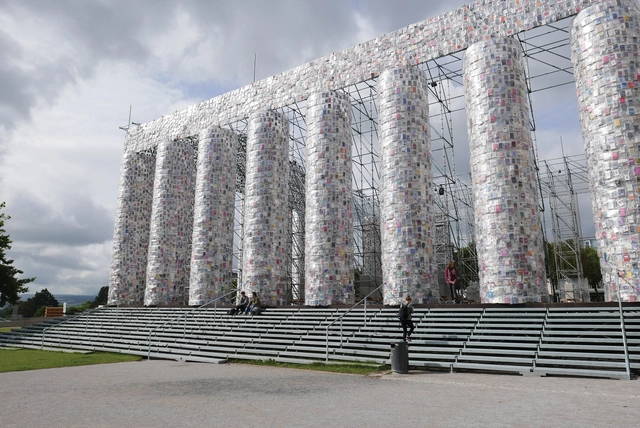
Marta Minujín, Parthenon of Books, Dokumenta 14, Kassel, Germany, 2017. Image by Anne-Catrin Schultz.. Image Courtesy of Real and Fake in Architecture–Close to the Original, Far from Authenticity?
The term “fake” has been in the media frequently in the early 21st century, referring to headlines and fictional statements that are perceived as real and are influencing public opinion and action. Replacing the historically more common term “propaganda,” fake news aims at misinformation and strives to “damage an agency, entity, or person, and/or gain financially or politically, often using sensationalist, dishonest, or outright fabricated headlines.” Tracing fake news and differentiating “real” information from personal opinions and identifying intentional (or unintentional) deceit can be complicated. It is similarly complex to trace the duality of fake and real in the built world. To explore the larger context of fake statements in architecture and environmental design, a look at the definition of fake and related terms might be necessary.
Recently, the Nobel laureate economist Paul Krugman wrote in the New York Times about the causes of unaffordable housing in New York City. He blamed the crisis on a few things, including a powerful financial “monoculture” in the city, NIMBYs, and the city itself blocking new construction. That last element, however—that the city blocks new construction—is an increasingly popular myth that needs examination.
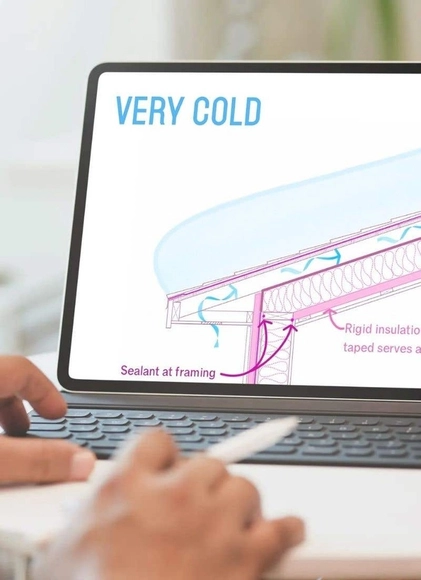
The clothes used by nomadic peoples in the desert (Bedouins, Berbers, Tuareg, among others) are usually dark, long and made of heavy fabric. Contrary to common sense, which would recommend light, pale and short clothes for a hot climate; heavy and loose clothing favors air convection, creating a constant flow of air along the body, providing thermal comfort in arid climates. For buildings, the analogy works. When approaching energy efficiency and project performance, we will inevitably talk about its envelope, among other aspects of the project. A successful solution in one location, will not always be efficient in another.
During the last 2 years we have created a series of articles on wellness and sustainability focused on the construction industry. But how do projects, according to their demands and context, apply the solutions to make them, in fact, efficient and perform well?
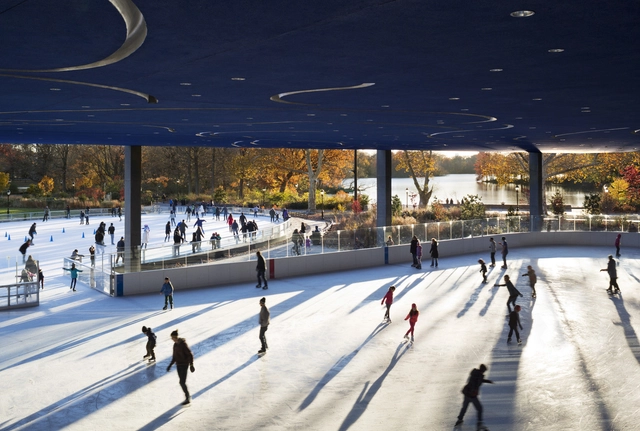
Skating and ice rinks combine temperature, atmosphere and structure together. Between sports and leisure, these spaces are designed around experience and time as some of the most interactive public spaces. As an architecture of recreation and play, skating centers also host a variety of sports. Today, the architecture of skating encompasses a range of programs and formal approaches that define some of the most iconic and social activities.
A corridor that is too narrow, a poorly located switch or a simple unevenness can go completely unnoticed to many, but they can also be insurmountable barriers for someone with a disability. We all have a family member or acquaintance with mobility difficulties and, possibly, we might also experience them at some point in our lives. Architecture has the power to create truly inclusive spaces so that people with disabilities can have the autonomy to perform all necessary daily tasks, without needing the help of others. Integrated into architecture, technology can play an important role in this context, making the spaces in which we live even more accessible to everyone.
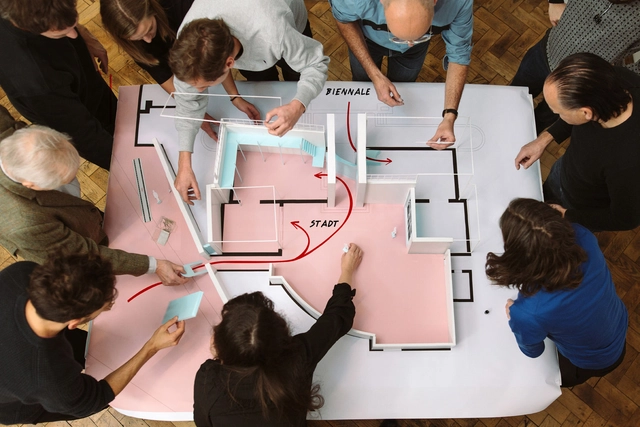
Architecture collective AKT and Hermann Czech will be collaborating on the concept and design of the Austrian Pavilion at the 18th International Architecture Exhibition - La Biennale di Venezia. Titled "Beteiligung / Participation", the pavilion will be temporarily converted into a social experiment that explores themes such as public vs. private, accessible vs. inaccessible, and communal vs. individual through architectural interventions. The 18th International Architecture Exhibition will be held from May 20th until November 26th, 2023.
Seven decades after designing Lever House, SOM returns to the iconic modernist building to resume its restoration, continuing its long-lasting stewardship of the project. SOM previously revisited the building in 2001, restoring its façade using high-performance materials while preserving the original architectural image. This time, the intervention concerns the ground floor and the third level terrace, as well as the mechanical systems, to significantly improve the building’s energy performance. When complete in 2023, the renovation will become an important example of extending the life of the midcentury built environment.
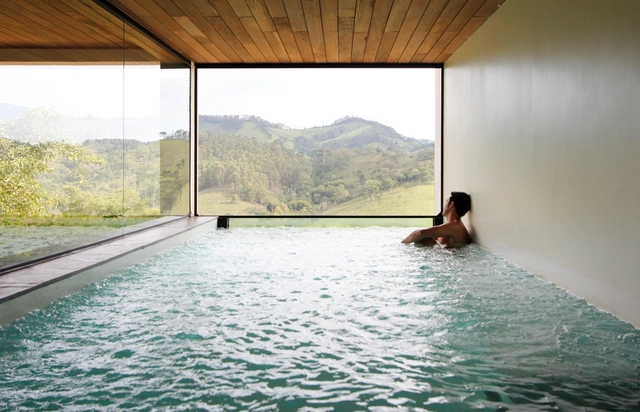
Big cities and the troubled routine of urban life increasingly reveal the need for moments of relaxation aimed at physical and mental health. This concern has become more evident after the long quarantine periods of the Covid-19 pandemic, when disconnecting from routine became even more difficult. Thus, in recent years, more and more people have been looking for activities and places that provide this rest.
For more than a century, a street market known as ‘The Blue’ was the beating heart of Bermondsey in Southeast London. On Saturdays gone by, hundreds flocked to the historic neighborhood, a site with roots reaching back to the 11th century when it was once a pilgrimage route to Bermondsey Abbey. Market punters used to sample goods from more than 200 stalls that famously sold everything under the sun. “You can buy anything down The Blue” was the phrase everyone went by.
First Place. Image Courtesy of Galiasgar Kamal Tatarian State Academic Theatre
The Open International Competition for the Development of an Architectural Concept for the Galiasgar Kamal Tatarian State Academic Theatre has announced its results. The consortium including Kengo Kuma & Associates was granted the first place, while the second place went to a proposal led by Asif Kahn Studio and the third place to Coop Himmelb(l)au and his team.
Graduating with an architecture degree is often met with the expectations of working a 9-5 job at an office. However, the reality is that many fresh graduates are venturing into diversified careers and exploring fields such as architectural photography, writing, rendering, set design, and project management. In this Editor's Talk, ArchDaily's Founder and Editor in Chief, Director of Software Product Development, Managing Editors, and Social Media Editor share their experiences of graduating with a Bachelor's Degree in Architecture then finding themselves exploring different, yet very complimentary career paths post graduation, proving that there is a lot more to the architecture practice beyond designing built spaces.
Dr Steffi Burkhart knows millennials. She knows, or at least has a very informed, deeply researched opinion, on how they want to live and how they want to work. And given that millennials – commonly accepted as those born between the early 1980s and mid-1990s – will soon dominate the workforce, understanding their professional and personal needs and aspirations is very useful information. This is vital for companies, cities and countries that want to attract and usefully employ the best millennial talent.
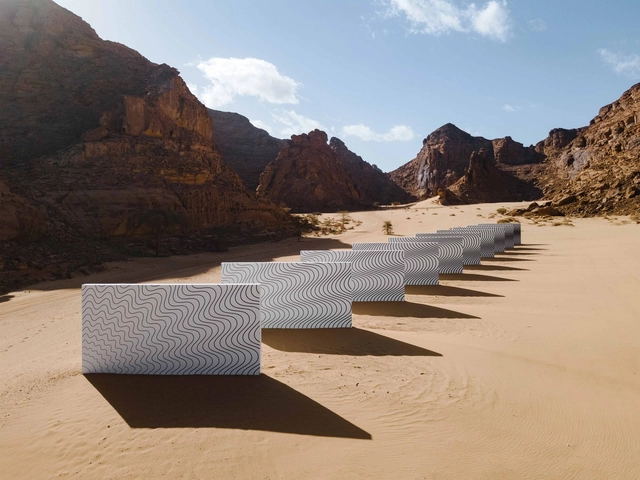
As part of the Desert X international contemporary art exhibition, the second edition of the Desert X AlUla features 15 contextual installations across the Saudi Arabian desert that explore "ideas of mirage and oasis". This year's exhibition is curated by Reem Fadda, Raneem Farsi, and Neville Wakefield, under the theme of Sarab (arabic for 'Mirage'), and invites artists to address the history and culture of the desert, its contemporary significance, and the dichotomy between the natural and man-made world.
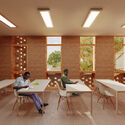
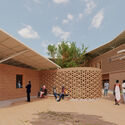
Construction began at the Goethe Institute in Dakar, designed by Kéré Architecture. The project is the first purpose-built space for the German cultural association and exchange centre in its over 60 years of global activity. Located within a residential area and a lush garden, the two-storey structure is shaped by the canopy of trees on-site and is being built using bricks made of laterite, a residual local rock with insulating qualities that help to passively regulate the indoor climate. The project will provide spaces for a wide array of activities, ranging from exhibitions and language courses to concerts and gatherings, all while building on the cultural landscape of Senegal.
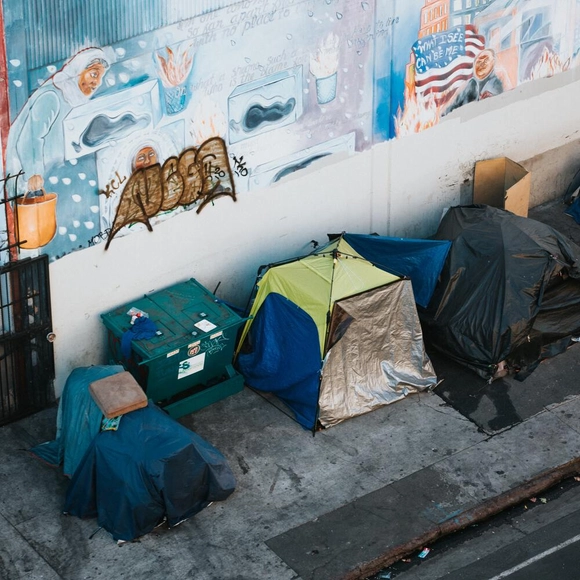
An architectural project conceived from the neoliberal system can only be hostile. That's what Father Júlio Lancellotti, an active figure in actions to support homeless people in São Paulo, says. His work at the head of Pastoral do Povo da Rua has deservedly received the attention of national and international media, as well as being frequently published on his own social networks, drawing the attention of the public and authorities to urgent issues of inequality, invisibility of the most vulnerable and the hostility of our architecture and public spaces.
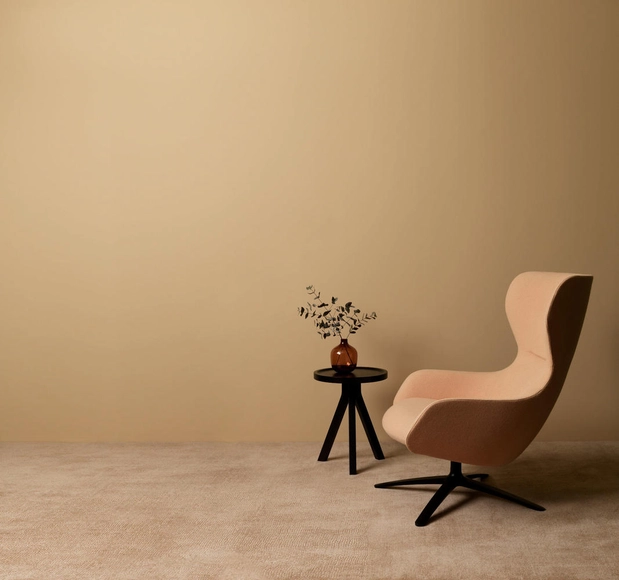
Boss Design argues that the office is no longer a routine-based work space but a purpose-driven destination space. Image Courtesy of Boss Design
The demands and expectations of the workplace have shifted dramatically over the last two years. The mission statement of the office is being re-drafted and its role and function re-defined. Mark Barrell, Design Director at global furniture manufacturer Boss Design, argues that the advance of hybrid or blended work – and 80 per cent of Boss’ clients have adopted that model – means that offices must become 'destination spaces', or rather a series of different destination spaces.
It is difficult to measure, observing a completed building, the amount of work, resources and knowledge that were deposited there. All decisions made influence in some way the performance of the building and its durability. As for the execution details, not all architects allow the dissemination of their constructive solutions. There are professionals, however, who go against the grain and focus on disseminating knowledge, identifying common design decisions that can lead to pathologies (such as leaks, rot, corrosion, mold and odors) and more economical ways to avoid them. This is the idea behind Building Science Fight Club, an Instagram profile whose purpose is to explain some issues and critically analyze certain constructive details and ways of installing materials. We spoke with Christine Williamson, creator of the platform, about her journey. See the full interview below:
Real-time visualization is used to generate renderings with excellent visual quality from a BIM or CAD model. When integrated into your design workflow, it can also facilitate collaboration and allows all parties within an architectural project to engage throughout the design process.
Here are five ways in which integrating real-time visualization can provide a complete understanding of design at various project stages.
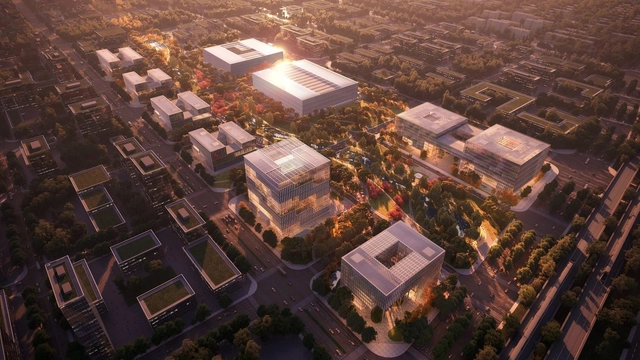
Gerkan, Marg and Partners (gmp Architects) have won the design competition for global smartphone producers Xiaomi's headquarters in Changping Future Science City in Beijing. Titled “Mi Cube”, the project reflects the company's philosophy of “Smart Technology, Minimalist Design” through an architecture that combines a geometric and structured facade with a multifaceted and dynamic interior sequence of spaces.
OPEN recently revealed the design of Sun Tower, a new landmark structure for the Chinese coastal city of Yantai. The project echoes the area's characteristic Ming dynasty watchtowers and proposes a cultural facility that re-establish the visitor's connection with nature. Comprising a semi-outdoor theatre, an exhibition space, a library and an observation deck at the top referred to as the "phenomena space", the structure is intended as a place "of reflection and contemplation".


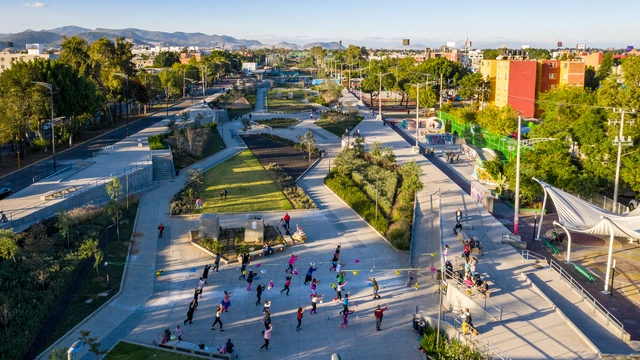
.jpg?1645781972 "Green field Factory of Karupannya Rangpur Ltd., by Nakshabid Architects. Image © Junaid Hasan Pranto")
.jpg?1645781751 "Red Deer College Polytechnic Student Residence, by Reimagine Architects Ltd. . Image © Cooper & O'Hara")
.jpg?1645782629 "Huaira, by Diana Salvador - Javier Mera. Image © jagstudio")













.jpg?1645609455&format=webp&width=640&height=580)


.jpg?1645609455)
.jpg?1645602665 "ArchDaily Product Development Team. Image Courtesy of Soledad Sambiasi")