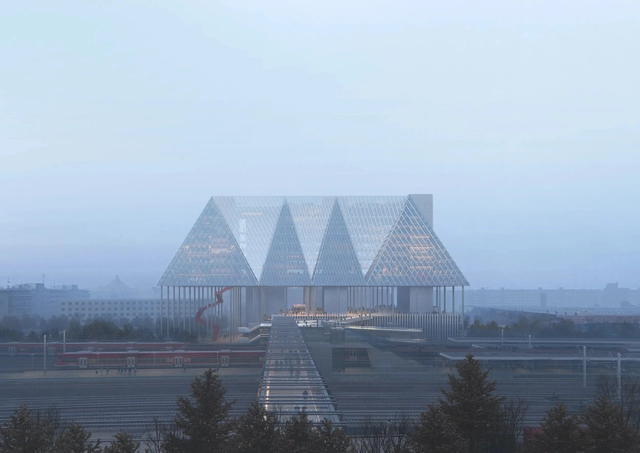
OMA’s competition design for UniCredit’s new Headquarters in Munich, Germany, proposes a plaza lifted off the ground to increase public spaces and urban connectivity and to activate an otherwise overlooked area. The scheme aims to “retroactively attribute character to an area which may never have had one.” The site is located by one of the city’s main arteries, the S-Bahn, a strictly functional area lacking in public spaces or amenities. The building proposed by OMA is lifted off the ground, with its limited footprint allowing for more public space to be integrated while preserving the site’s natural features.
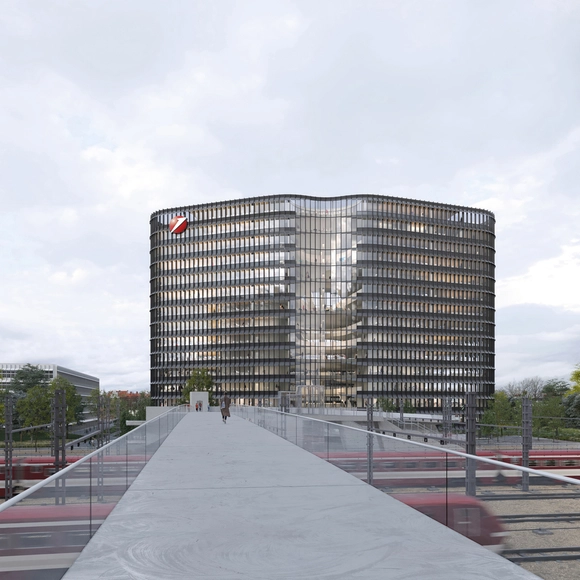
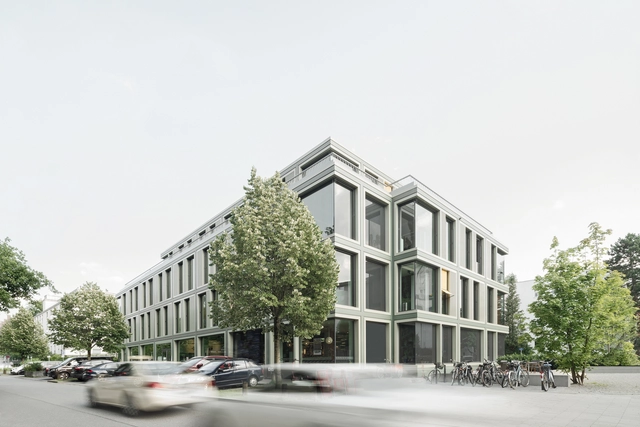
Sauerbruch Hutton has won the competition for Headquarters 2 (HQ2) for the Haidenauplatz Quarter in Munich. This high-rise building will be the focal point of the newly developing Haidenauplatz district in Eastern Munich. Serving as HypoVereinsbank's second central location, it will stand alongside the iconic Hypo high-rise from the 1970s in the neighboring Bogenhausen district. The design by Sauerbruch Hutton and landscape architect MDP Michel Desvigne Paysagiste was chosen from a pool of nine other international participants.
Fueled by pressing issues such as the climate crisis, population density and rapid urbanization, the built environment has become increasingly complex. Architecture and design professionals are faced with a challenging, yet fundamental task: to translate society’s ever-evolving needs into tangible and future-oriented solutions. In pursuit of this goal, they must embrace the countless tools, materials and technologies emerging every day in the construction field –from AI to virtual reality software and smart home systems. After all, to remain at the forefront in an industry where change is the norm, the ability to adapt and evolve is crucial for success.
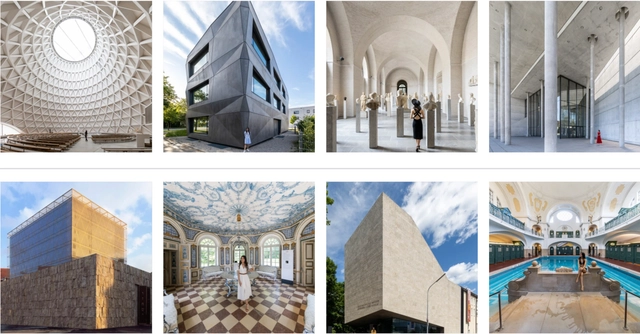
Munich – Bavaria’s capital since 1506 – is a city with layers and layers of history. Its many years as a rising architectural epicenter have left an interesting and unique mix of buildings. From Middle Age churches and cathedrals to contemporary synagogues. From skyscrapers to small pavilions. Brutalism to Art Nouveau. Munich’s architecture is truly extensive and marvelous.
Though not acknowledging Munich’s beer wonders would be wrong, the only mention of this substance would be in the stunning buildings (like the new Paulaner HQ by Hierl Architekten) that contain them. Yes, other aspects of the city are grandiose, but let’s focus on Munich’s top attraction: its architecture.
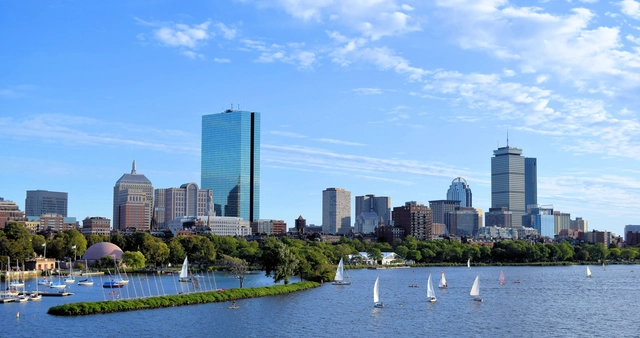
Boston is the latest city to announce a city-wide plan that, if passed, would eliminate the use of fossil fuels in new constructions and major renovation projects. This measure expands upon the commitment to enact climate action and make Boston a Green New Deal city. Other US cities like New York, Los Angeles, San Jose, Seattle, and Berkeley have all imposed similar measures in recent years. Seven European cities - Bilbao, Bratislava, Dublin, Munich, Rotterdam, Vienna, and Winterthur - have also developed a project to phase out fossil fuel from urban heating and cooling.
The Glyptothek Museum will showcase the first exhibition dedicated to Santiago Calatrava's array of sculptures and paintings inspired by Greek Antiquity. Running from June 21st to October 23rd, "Beyond Hellas: Santiago Calatrava in the Glyptothek" traces the architect's career as a sculptor, highlighting the influence of histories and cultures on Calatrava's design process.
San Riemo Residental Building by ARGE Summacumfemmer Büro Juliane Greb is this year's recipient of the DAM Prize for Architecture, an annual award highlighting outstanding German projects. Selected from 100 buildings nominated by the Deutsches Architekturmuseum (DAM), the San Riemo Residental Building was commended for an exemplary take on communal living and its spatial flexibility that can accommodate a wide range of dwelling scenarios. The finalist projects include OMA’s Axel Spinger building, Burger Rudacs Architekten’s John Cranko ballet school in Stuttgart and Florian Nagler Architekten’s , Research Buildings Bad Aibling.
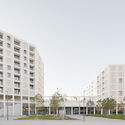
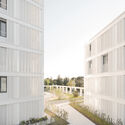
MVRDV revealed its plans to redevelop a challenging site surrounded by roads in the south of Munich through a design that combines the renovation of an existing building complex with the addition of two-stepping towers. Retaining six of the nine existing blocks, the project expands the current programme and creates a new landmark for the neighbourhood while placing a green plaza at the heart of the development.