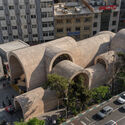
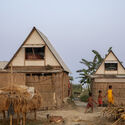
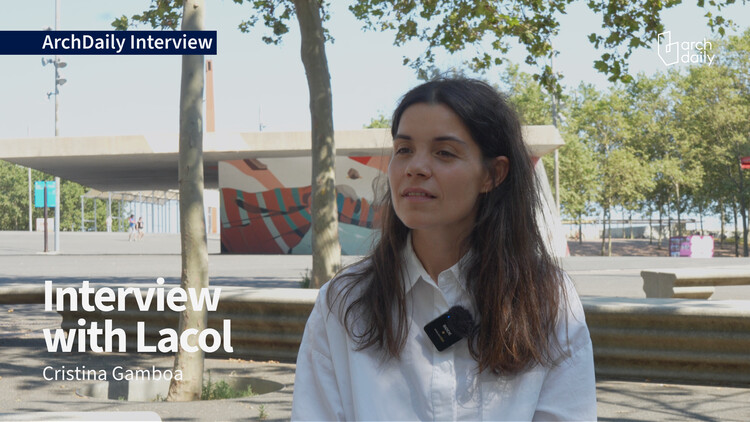
At the UIA World Congress of Architects 2026 in Barcelona, discussions surrounding the future of housing frequently extended beyond questions of design to include governance, ownership, and long-term stewardship. Among the speakers contributing to these conversations was Cristina Gamboa, co-founder of the Barcelona-based cooperative Lacol, whose practice combines architecture, housing advocacy, construction management, and environmental research through a cooperative model. During the Congress, ArchDaily spoke with Gamboa about how cooperative practice reshapes the architect's role, why participation extends beyond consultation, and how projects such as La Borda and La Morada continue to inform broader discussions on housing, care, and collective living.
Interview: The Latest Architecture and News
"Promoting Another Way of Living Together": In Conversation with Cristina Gamboa of Lacol
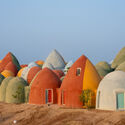
An Architectural Language of Artificial Cooling: Shade, Mist, and Autonomy

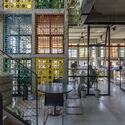
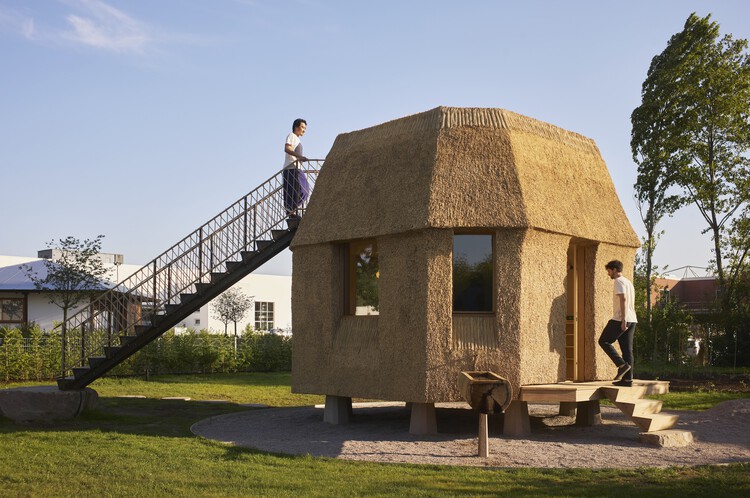
Concéntrico returned to Logroño for its 12th edition in June and transformed the city into a working site for architecture. Since its founding in 2015, the festival has built an identity on resisting a distant, controlled exhibition of design by constructing full-scale installations in the city's streets, plazas, and vacant lots, engaging residents and visitors as part of daily life. This year's program brought together more than twenty interventions by architects, designers, and researchers working across a wide range of geographies and methods, each contributing to a citywide experiment in reimagining public space.
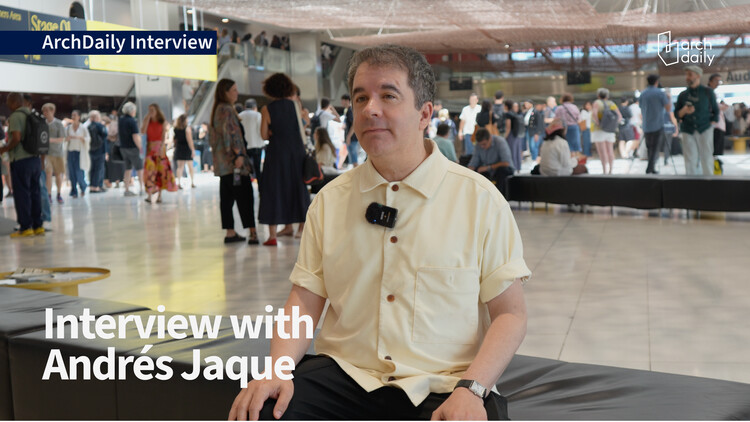
"Design Is Inseparable from Activism": In Conversation with Andrés Jaque at the UIA World Congress of Architects 2026
At the UIA World Congress of Architects 2026 in Barcelona, the theme Becoming. Architectures for a Planet in Transition framed architecture as a discipline operating within environmental, political, and social transformations rather than outside them. Among the speakers participating in this edition was architect Andrés Jaque, founder of the Office for Political Innovation and Dean of Columbia University's Graduate School of Architecture, Planning and Preservation (GSAPP). During the Congress, ArchDaily spoke with Jaque about architecture's capacity to generate alternatives, the role of experimentation in education, and why transition should be understood as a condition rather than a destination.
"Architecture Is Not Jewelry": Xing Ruan on Building for Time, Not Perfection

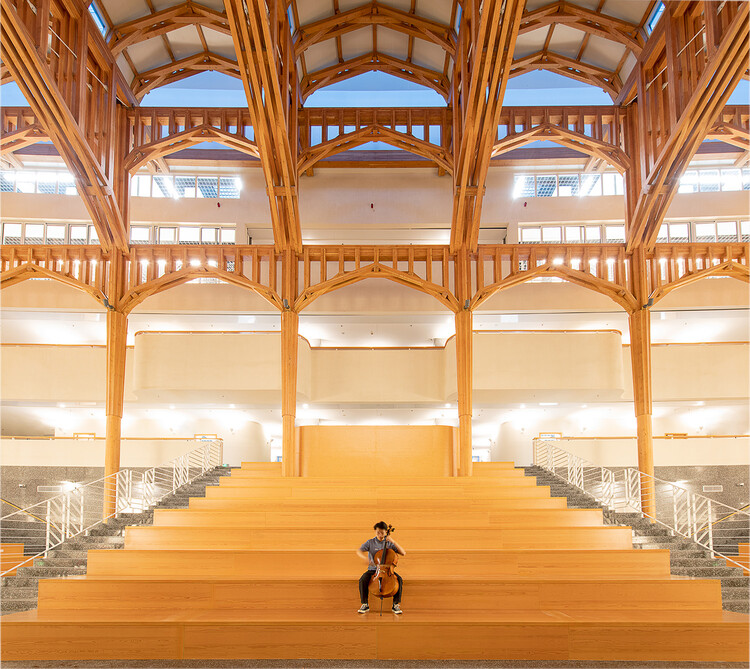
In 2023, the School of Design Building at Shanghai Jiao Tong University opened its doors after a complete remodeling and adaptation of an existing structure. Designed by architect and scholar Xing Ruan, who also serves as Dean of the school, the building went on to receive two recognitions at the Prix Versailles: the World Title of the Most Beautiful Campus and the Special Prize for an Interior, one of the three major honors of the competition. Awards of this kind tend to generate their own momentum. Once a building is recognized, it is quickly placed within a convenient narrative — its materials, techniques, form, and spatial decisions all assigned meanings that make the project legible, categorizable, and easy to cite.
Yet what an award confirms is perhaps only that a building has been seen. What remains worth asking is why it exists in the way that it does — what problems it was made to address, what beliefs it refuses, and what it proposes about the discipline beyond the occasion of its construction. It was in the School of Design Building itself that the following interview took place, moving between architecture, scholarship, frugality, and the limits of what buildings can — and should — be asked to do.
Architectural Decisions, Planetary Implications: Interview with UIA 2026 Barcelona Curatorial Team

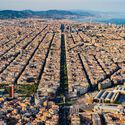
Barcelona is the first city in the history of the UIA World Congress of Architects to host the event twice. The 1996 edition, Present and Futures: Architecture in Cities, arrived at a charged moment, when the post-Olympic city was consolidating an urban model that would become one of the most studied and contested in contemporary urbanism, and when architecture was learning to think through the large metropolis as its primary site of inquiry. Thirty years later, the same city reopens the question under a different condition: one in which the built environment can no longer be understood as a self-contained object, but only through the wider ecological, material, and political systems that sustain it. The theme of the 2026 Congress — Becoming. Architectures for a Planet in Transition — does not abandon the urban concerns of 1996; it reopens them from a planetary scale.
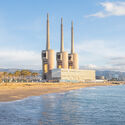
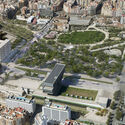
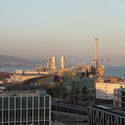
The curatorial team behind this edition, formed by Pau Bajet, Maria Giramé, Mariona Benedito, Tomeu Ramis, Pau Sarquella, and Carmen Torres, approaches architecture as a critical and transformative tool rooted in territory, working across practice, research, and teaching. Their program structures the Congress around six interconnected thematic lines (Becoming More-than-human, Becoming Circular, Becoming Embodied, Becoming Interdependent, Becoming Hyper-Conscious, and Becoming Attuned) and distributes it across three venues of very different characters — Les Tres Xemeneies del Besòs, the Disseny Hub at Glòries, and the CCIB — each chosen for what it represents as much as for what it can hold.
"I Don't Separate Architecture and Infrastructure": Interview With Shohei Shigematsu on OMA's New Museum Addition

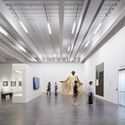
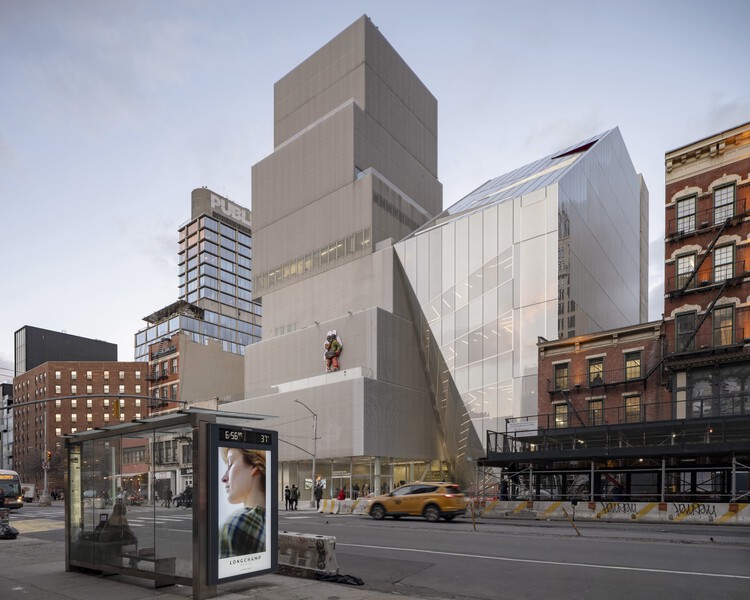
When the New Museum's original SANAA-designed building, a stack of shifted opaque boxes wrapped in a metal mesh skin, opened in 2007, it already seemed destined for some form of expansion to relieve the vertical pressure created by its constrained circulation and limited footprint. In March, the museum unveiled its long-anticipated addition, designed by OMA's Shohei Shigematsu and Rem Koolhaas. The angular and slightly set-back companion building doubles the museum's exhibition capacity while reshaping the institution's relationship to the city and to the original SANAA structure by Kazuyo Sejima and Ryue Nishizawa.
At the building's press opening, Koolhaas described the project "not simply as an extension but as a complement or counterpart." Shigematsu later elaborated: "We thought about designing a pair composed of two distinct and yet highly connected buildings. One is more vertical and introverted. The other is more horizontal and extraverted."
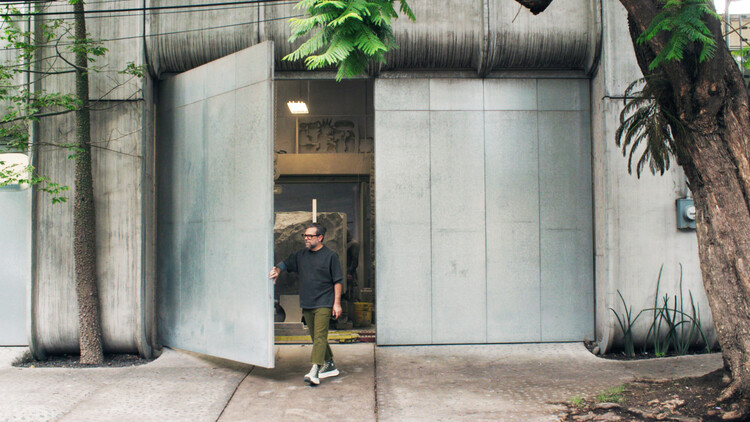
“Art Is Not Fiction, but a Surplus Reality:” Pedro Reyes on Sculpture as Social Practice in Louisiana Channel Interview
Mexican sculptor Pedro Reyes has developed a multidisciplinary practice that spans sculpture, architecture, social engagement, and activism. Trained as an architect, Reyes approaches sculpture as both a material and a collective process, combining traditional stone carving with participatory projects that address contemporary social issues. His work frequently explores transformation, whether through physical materials or community action, positioning sculpture as a tool for reimagining social realities. In a 2025 interview with Louisiana Channel, Reyes discusses the influence of architecture on his artistic practice, the concept of "social sculpture," and the importance of preserving craft traditions in an increasingly automated world.

"My Solutions Are Not Polite:" Liam Young on Architecture in the Age of Polycrisis in Louisiana Channel Interview
Australian artist, director, and BAFTA-nominated producer Liam Young creates imaginary worlds as a way of thinking through the futures we fear, desire, and are already making. As a creator and designer of atmospheres, he proposes speculative landscapes reflecting the possibilities of a world to come, whether ideal or truthfully unsettling. In his worldbuilding practice across the film, television, and video game industries, fiction becomes a tool for navigating the environmental urgencies of the present. He is considered a "futurist" working across design strategies, technological scenarios, and collective imaginations, grounded in his academic research yet reaching a wider audience in exhibitions such as "In Other Worlds" at the Barbican Centre in London and "Age of Nature" at the Danish Architecture Center in Copenhagen. In February 2026, he was interviewed by Marc-Christoph Wagner for Louisiana Channel, where he shares his visions of our future: from architecture consolidating as a boutique industry to the need for a new kind of planetary punk at the scale of the climate crisis.

"A Place Remembers What Has Happened:" Tsuyoshi Tane on Memory as a Design Driver in Louisiana Channel Interview
Tsuyoshi Tane is a Japanese architect born in 1979 in Tokyo and based in Paris, where he founded ATTA – Atelier Tsuyoshi Tane Architects in 2006. Working across cultural, institutional, and landscape-related projects, Tane has developed an architectural approach that positions memory as a fundamental design driver. In his interview with Louisiana Channel, filmed in his Paris studio, Tane reflects on architecture as a discipline of observation and thought, arguing that meaningful design emerges from carefully reading the traces embedded within a site. For him, architecture is not produced on a blank slate but begins with an inquiry into what already exists, physically, culturally, and emotionally, beneath the surface of a place.

"Beauty in Itself Is Dangerous:" Xu Tiantian on Moving Beyond Starchitecture in Louisiana Channel Interview
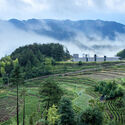
Xu Tiantian is the founding principal of DnA_Design and Architecture, an interdisciplinary practice that addresses both the physical and social dimensions of the contemporary living environment, across scales. Born in 1975 in Fujian, China, she received a Master of Architecture in Urban Design from the Harvard Graduate School of Design and a bachelor's degree in architecture from Tsinghua University in Beijing. Her recent work focuses on rural revitalization through a strategy she describes as "architectural acupuncture," understood as small-scale, site-specific interventions designed to activate local culture, agriculture, and tourism. These interventions, primarily concentrated in China's rural regions, have been recognized by UN-Habitat as a global model for urban–rural integration. In this interview with Louisiana Channel, she reflects on the role of the architect, questions architecture itself and the concept of beauty, explains her working methodology, and emphasizes the spatial dimension of nature.
“Great Architecture Must Be Poetry:” Zhu Pei on Architecture as a Form of Art in Louisiana Channel Interview
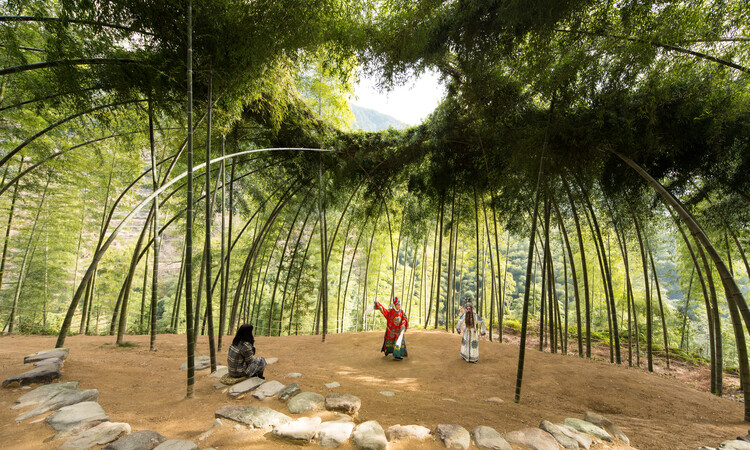
Zhu Pei is a Chinese architect born in 1962 in Beijing. He studied at Tsinghua University and UC Berkeley, and founded Studio Zhu Pei in 2005. The studio's experimental work and research focus on contemporary architecture, art, and cultural projects. With an artistic and exploratory approach, it investigates the relationship between the roots that anchor architecture in specific natural and cultural contexts and the innovation that drives architecture as a form of artistic revolution. In his interview with Louisiana Channel, Zhu Pei describes architecture as an artistic discipline that, like poetry, relies on openness, imagination, and the creation of new experiences. He argues that great architecture goes beyond functional problem-solving by generating a sense of wonder through its ability to "invent" and "create some new thing, new experience," positioning architectural practice as cultural and sensory exploration rather than purely technical production.


“For Decades We Have Valued the New More than the Old”: In Dialogue with OBEL Award 2025 Winners HouseEurope!
The potential of existing buildings to shape cities and communities in flux through reuse and adaptation is the key focus of HouseEurope! and their activism: addressing the pressing challenge across much of Europe, where it is often easier, cheaper, and faster to demolish buildings than to renovate. For decades, construction policies, industrial practices, and market systems have favored new development, often undervaluing the cultural, social, and environmental significance of existing structures. For their work advocating systemic change in architecture, HouseEurope! received the 2025 OBEL Award under the theme "Ready Made." In a conversation with ArchDaily, collective members of HouseEurope! Alina Kolar and Olaf Grawert discussed the organization's approach to architecture, policy, and collective action.
Rethinking Museums: A Conversation with Béatrice Grenier on Architecture as Cultural Policy

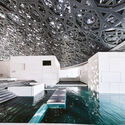
The opening of the new Fondation Cartier pour l'Art Contemporain in Paris last October sparked renewed questions around the role, form, and future of museums. As cultural institutions continue to proliferate worldwide in this digital era, the museum itself appears increasingly in need of redefinition. Rather than offering a single model or solution, Architecture for Culture: Rethinking Museums, written by architectural historian and curator Béatrice Grenier, argues for a more contextual and plural understanding of what a museum can be: an institution shaped by its environment, its public, and the specific cultural questions it seeks to address.
ArchDaily had the opportunity to discuss these ideas with the author against the backdrop of the Fondation Cartier's newly inaugurated home on Rue de Rivoli. Housed within a restored Haussmannian building that once accommodated the Grands Magasins du Louvre, the space has been radically reimagined by Jean Nouvel as a dynamic, transformable architecture.

"Build Something That Disappears": Gabriela Carrillo on Public Space Design in Louisiana Channel Interview
In this interview with Louisiana Channel, Mexican architect Gabriela Carrillo introduces us to the challenges that drive her work, particularly the projects carried out as a member of Colectivo C733, in which she currently participates alongside Carlos Facio, José Amozurrutia, Eric Valdez, and Israel Espin. Through an exploration of her definition of architecture, she offers reflections on the design of public spaces, the relationship between architecture and land art, and the role of the preexisting in the transformation of space. She defends architecture as a "powerful tool" for fostering connections between people and their environment, defining her practice as optimistic.


The Best Interviews of 2025: Architecture’s Year of Reflection, Repair, and Optimism

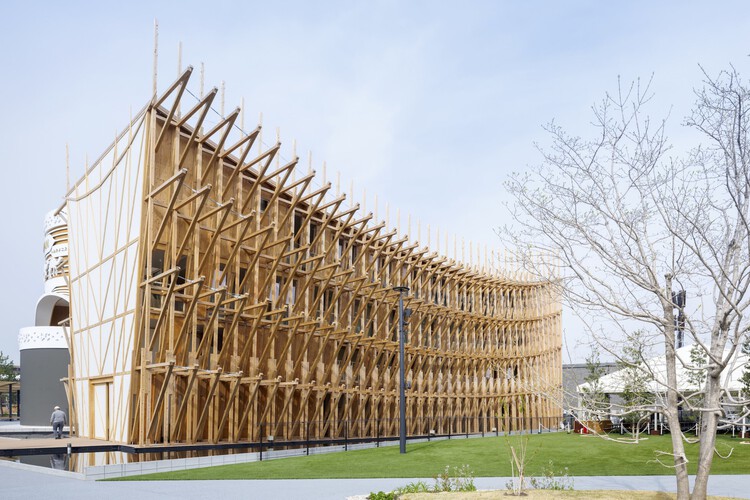
In 2025, the architectural field has been marked by a dense calendar of exhibitions, a measured slowdown in construction across multiple regions, and a period of reflection that scrutinizes the impact of intelligence (artificial and natural)—both on professional practice and workplace culture, as well as its use as a pedagogical tool. Over this calendar year, ArchDaily has published more than 30 interviews in a range of formats—Q&As, in-person conversations, video features, and more. These exchanges have engaged themes of sustainability and nature, housing and urban development, AI and intelligence, adaptive reuse and public life, and have closely followed major exhibition platforms including the Venice Biennale, Expo 2025 Osaka, Milan Design Week, Concéntrico, and others.
How Architects Are Responding to Technology That Turns Buildings into Carbon Sinks

During the Time Space Existence exhibition, organized by the European Cultural Centre in Venice, the building-solutions company Holcim and Pritzker Prize-winning architect Alejandro Aravena, with his firm ELEMENTAL, unveiled a full-scale prototype that introduces a new approach in incremental housing solutions.
The housing prototype—The Basic Services Unit—was built with Hoclim's recently launched biochar technology, which transforms buildings into carbon sinks by permanently trapping carbon in a bio-based material called biochar. This material is used as a component of low-carbon concrete, cement, and mortars.
"To Emerge Naturally from the Site": Zhang Pengju on His Aga Khan Award-Winning West Wusutu Village
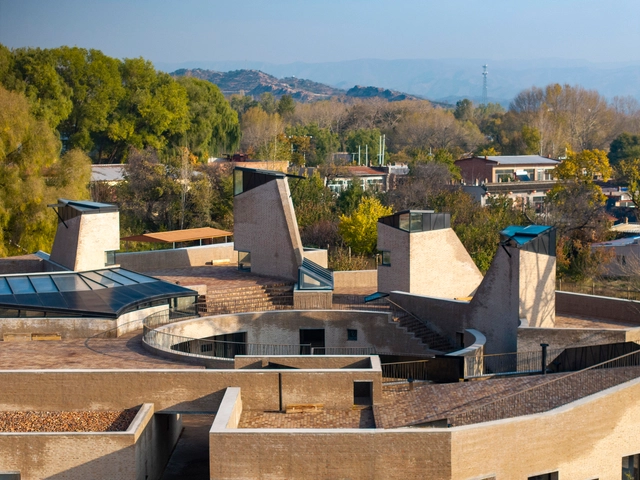
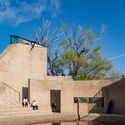
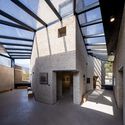
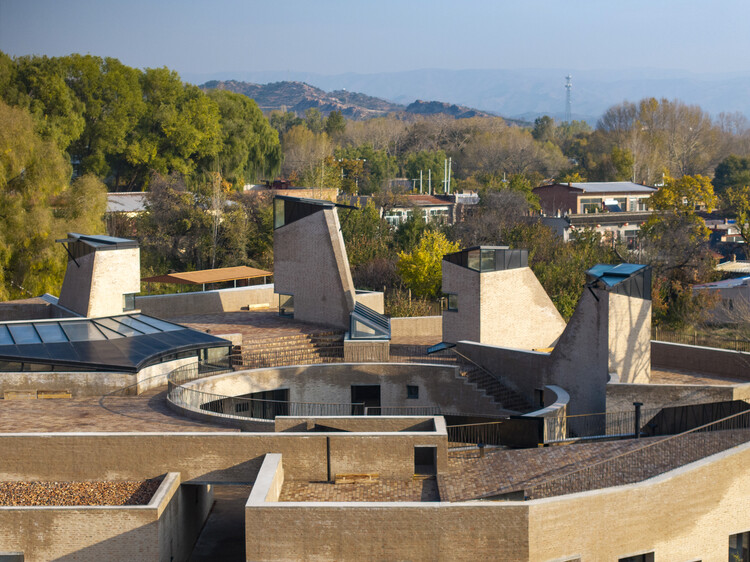
The 2025 Aga Khan Award for Architecture, one of the most prestigious honors in the field, celebrates projects that not only exhibit architectural excellence but also profoundly improve the quality of life for their communities. Among this year's winners is the West Wusutu Village Community Centre, a project in Hohhot, Inner Mongolia, by Chinese architect Zhang Pengju. In an era when rural areas often face social fragmentation and a loss of identity, this community center offers a powerful counter-narrative.
In recognizing this project, the award jury praised its ability to intervene in a sensitive yet rational manner, using design to foster inclusivity, resilience, sustainability, and overall well-being. The design achieves these goals by rejecting rigid functional zoning. Instead, a permeable circular courtyard integrates diverse community activities, organizing circulation and connecting multiple open rooms into a cohesive whole.
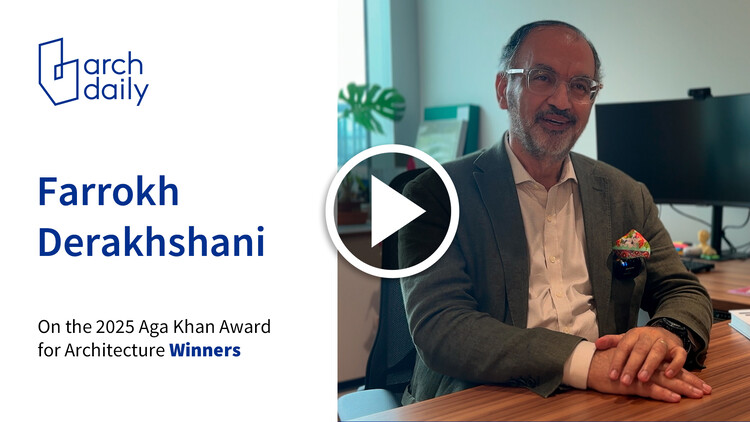
“Our Message This Time Was Optimism”: In Conversation with Farrokh Derakhshani, Director of the Aga Khan Award for Architecture
Today, September 2, the seven winners of the 16th Cycle (2023–2025) of the Aga Khan Award for Architecture were announced, following on-site reviews of the 19 shortlisted projects revealed in June. Established in 1977, the Award seeks to identify and encourage building concepts that respond to the physical, social, and economic needs of communities with a significant Muslim presence, while also addressing their cultural aspirations. To understand the vision behind this cycle's winners, ArchDaily's Editor-in-Chief, Christele Harrouk, spoke with Farrokh Derakhshani, who has been with the award for over four decades. He described the initiative as "a curated message to the world," a message that evolves with the times.