Imagination and policy development go hand in hand. Before we can create policies that bring about a desirable future, we must first envision what that future looks like, which is particularly significant in Architecture because we see the future as an integral part of the design process. This familiarity with envisioning the future carries a responsibility for us to create guidelines and regulations that can either support or obstruct the direction our planet takes.
In this moment of climate change, resulting from centuries of irresponsible practices, the idea of the future has been invaded by fear, an alert that would determine the survival of our existence. Architecture, along with other disciplines, has begun to channel efforts toward reexamining, reconceptualizing, and reformulating its practices toward the future we need to achieve. Beyond statistics and projections, the approach of architecture in relation to climate action brings to light numerous concepts, among them, the need for a historical review for the creation of this future.
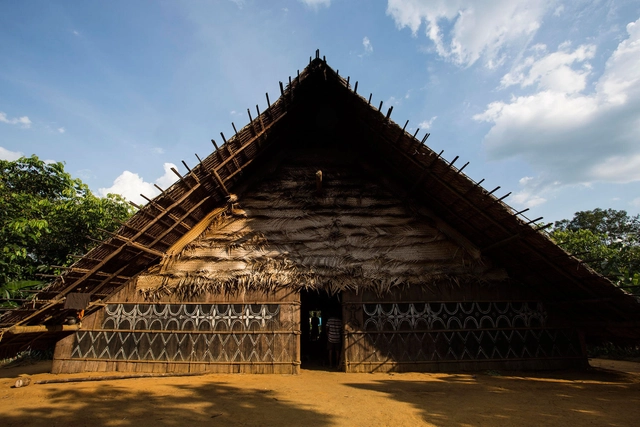
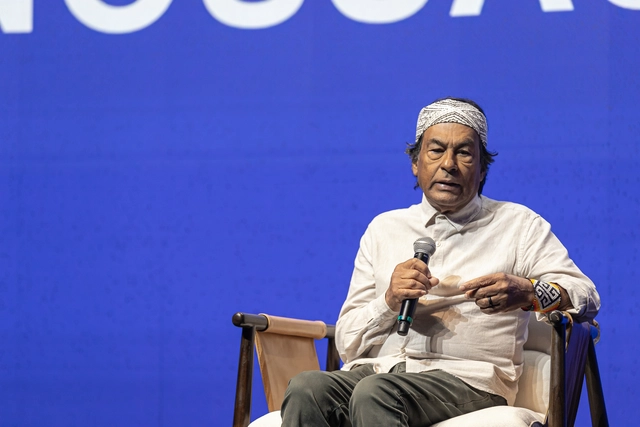
Krenak has a unique talent for transforming his life experiences into profound concepts, which he conveys through oral and poetic language. His worldview blurs the boundaries between landscapes, human beings, animals, rivers, and mountains. He strongly advocates for a reassessment of our lifestyle, emphasizing the importance of 'breaking up the ground to allow the channeled waters to resurface.' On September 5th, he participated in a discussion in São Paulo during the Archtrends Summit 2023, organized by Portobello. During this event, he shared his insights on topics such as cities, forests, and the future of our planet.
Modernity and globalization have significantly reduced geographical distances, transformed social interactions, and accelerated the flow of information across nations, which has, in a sense, made the world more accessible to people everywhere. However, it's important to note that when we say "everyone," we refer to a vast and diverse population. Modernity and globalization had an impact on noticeable inequalities in both social and technological realms, as more advanced and privileged nations have established benchmarks and norms for leisure, culture, and consumption. As a result, certain cultures have established a dominant influence, promoting the notion that there is a "correct" way to live and build cities. This unchecked pursuit of development comes at a significant cost to the Earth's ecosystems and biomes.
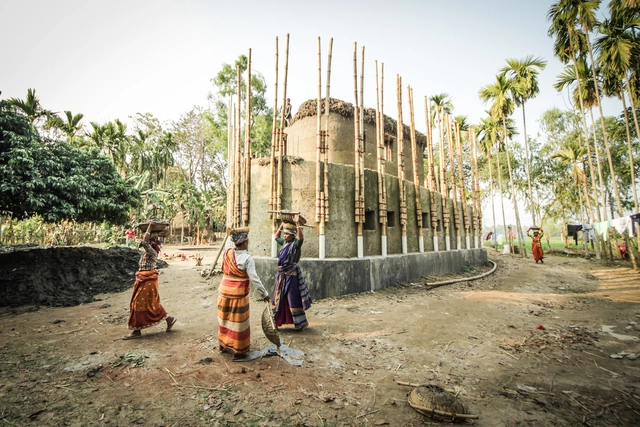
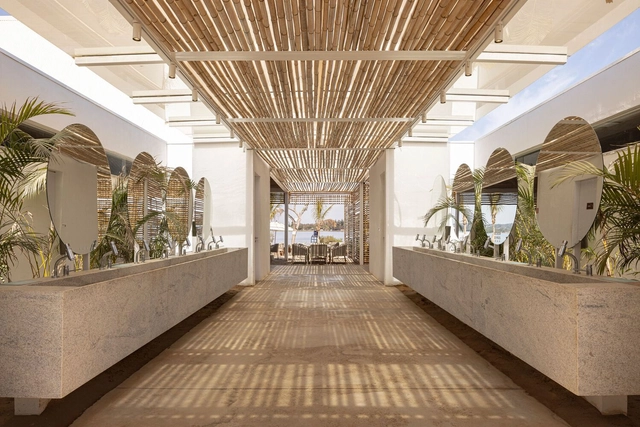
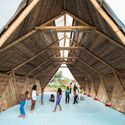
In recent years, there has been a noticeable surge in the pursuit of sustainability and eco-conscious practices across diverse domains, including interior architecture projects. Bamboo has garnered significant attention among various elements thanks to its remarkable versatility. It presents a wide array of creative opportunities for crafting environmentally conscious and elegant spaces.
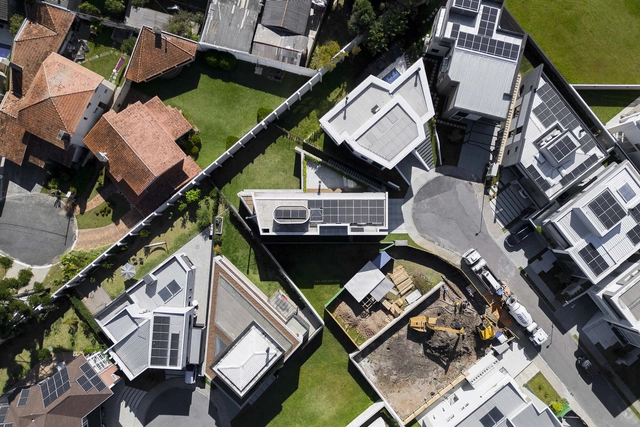
In the face of the environmental crisis and the need to mitigate climate change, adopting clean and renewable energy sources, such as solar energy, in architectural projects is becoming increasingly imperative. As a country with abundant sunlight incidence throughout the year, Brazil has enormous potential to take advantage of this energy source, which has become an increasingly attractive and viable option in the Brazilian scenario. There are numerous benefits solar energy can provide to both residents and the environment that make it a popular choice for residential use.
Under the titles of Optimism and Instability, this year’s global index score has returned to pre-Covid-19 days, highlighting that the world has fully recovered from the pandemic. Ranking living conditions in 173 cities based on stability, health care, culture and environment, education, and infrastructure, the survey suggests that nowadays, “life in cities is a bit better than at any time in the past 15 years”, although Stability scores dropped on average in 2023, due to worldwide clashes, political disruptions, social protests, inflation, and wars.
In parallel to this year's Venice Architecture Biennale, The European Cultural Centre (ECC) presented the sixth edition of its extensive architecture exhibition titled Time Space Existence. The 2023 iteration of the group show draws attention to expressions of sustainability in its numerous forms, ranging from a focus on the environment and urban landscape to the unfolding conversations on innovation, reuse, community, and inclusion. A total of 217 projects by established participants like Snøhetta or MADWORKSHOP and emerging players such as Urban Radicals or ACTA are currently on show through the 26th of November, 2023, at Venice's Palazzo Bembo, Palazzo Mora, and Marinaressa Gardens.
In response to climate change, the installations on show investigate new technologies and construction methods that reduce energy consumption through circular design and develop innovative, organic, and recycled building materials. Participants also address social justice by presenting living solutions envisioned for displaced communities and minorities, while others examine the tensions between the built urban environment and the nature surrounding it to identify opportunities for coexistence.
The circular economy concept became more defined in 1990 when it appeared in the article Economics of Natural Resources and the Environment, by British economists and environmentalists David W. Pearce and R. Kerry Turner. At the time, the main purpose of the research was to demonstrate that the traditional economy did not incorporate recycling. In this way, the environment assumed a secondary role, just like a simple waste reservoir. Therefore, the circular economy would gain strength as an opposition to the linear (or traditional) economy, in which the production chain motto is “extract, produce and discard”. A model deeply rooted in our economy that has become unsustainable for several reasons, like the depletion of natural resources and the contamination of the environment resulting from production and disposal.
The concept of sustainability emerged at the United Nations Conference on the Human Environment (UNCHE) in Stockholm in 1972 and was coined by Norwegian Gro Brundtland in the report "Our Common Future" (1987). According to this definition, the sustainable use of natural resources should "meet the needs of the present generation without compromising the ability of future generations to meet their own needs." However, despite the urgency of the concept and the constant evolution it has undergone over time, its application is often restricted to the controlled use of natural resources and the preservation of wildlife. In other words, it treats the situation from the perspective of "man versus nature," as a dichotomous view, with the loss of a holistic perspective.
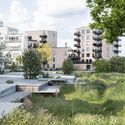
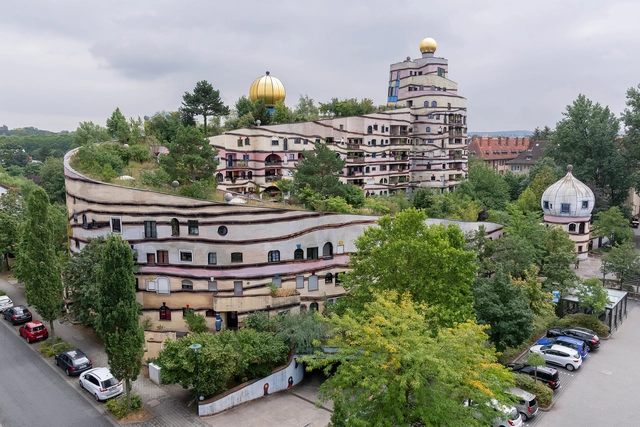
Waldspirale, Alemanha. Foto de Alexandre Prevot, via Flickr. Licença CC BY-SA 2.0
"I am tolerant. But I revolt. I accuse. It is my obligation. I am alone. Behind me there's no dictatorship, no party, no group, nor any mafia — neither a collective intellectual scheme nor an ideology. The green revolution is not a political revolution. The base sustains it and is neither minority nor elitist. It is a creative evolution in harmony with nature and the universe's organic course."
The above paragraph was said in the mid-20th century by Friedensreich Hundertwasser, an Austrian artist, and architect born in 1928. Hundertwasser marked architecture history with his distinct style of irregular and vibrant forms. His projects were a manifesto against rational and repetitive architecture. In them, there was a right to intervene in windows, irregular floors, green roofs, and spontaneous vegetation. As an architect, he always put diversity before monotony, believing in the right of each individual to modify their home and express their creativity. Above all, Hundertwasser believed in the importance of man's identification with nature and the world around him, addressing concepts related to community life and respect for the environment.
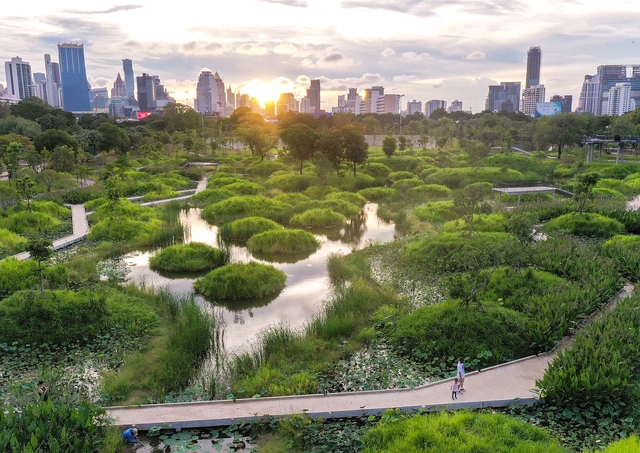
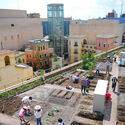
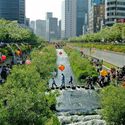
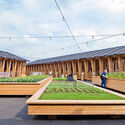
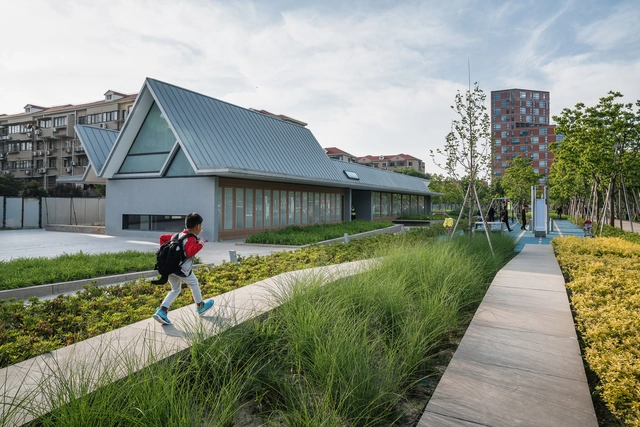
Infrastructure is widely known by the population in general, defined simply as a set of fundamental services for the socio-economic development of a region, such as sanitation, transportation, energy, and telecommunication. The commonly presented examples always refer to man-made physical structures. However, a new concept of infrastructure has emerged in recent decades, driven primarily by the urgent need for reconciliation between humans and nature for the survival of species.
World Wetlands Day is celebrated every February 2nd to raise awareness of wetlands. This day also marks the anniversary of the Wetlands Convention, adopted as an international treaty in 1971. Its enactment is because nearly 90% of the world's wetlands have been degraded since 1700, decimated three times faster than the forests. However, they are essential ecosystems that contribute to biodiversity, climate mitigation and adaptation, freshwater availability, world economies, and much more.
Carbon footprint, circularity and environmental sustainability are terms that are increasingly present in many professional fields, but what do they mean? How do they relate to architecture and the built environment? We spoke with civil, environmental and sanitary engineer Lucas Rosse Caldas about these and other emerging architectural issues.
Lucas is a professor at the Graduate Program in Architecture at the Federal University of Rio de Janeiro and the Civil Engineering Program at the same institution. He participated in chapter 9 of the sixth report of the Intergovernmental Panel on Climate Change (IPCC) on buildings. He wrote several scientific and technical articles about architecture and sustainable construction.
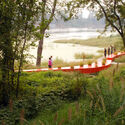
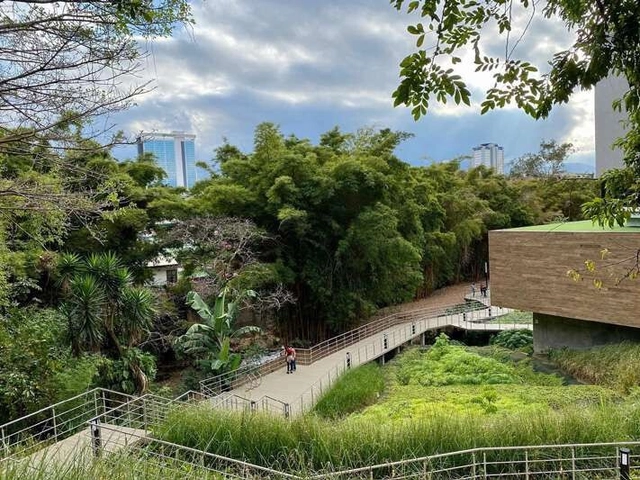
Rutas Naturbanas (San José, Costa Rica. 2015 – 2020). Fundación Rutas Naturbanas - Federico Cartín. Image Courtesy of Jeannette Sordi
Green corridors, or biodiversity corridors, are large portions of land that receive coordinated actions to protect biological diversity. According to Brazil’s National System of Nature Conservation Units, they strengthen and connect protected areas, encouraging low-impact use by implementing a more comprehensive, decentralized and participatory conservation alternative.
It is a great privilege to amplify the voice of architects and other built environment professionals. It is also an enormous challenge as it requires a lot of investigation and time from our content team. However, the effort is gratifying. It puts us in contact with some of the most prominent talents in our field who have been discussing subjects such as cities, metaverse, community, environment, democracy, sustainability, building technology and interiors, to mention just a few.
There was a time when buildings wanted to be mountains, roofs wanted to be forests, and pillars wanted to be trees. As the world began to go into a state of alert with the melting of glaciers and the consequent rise of Earth’s temperature, architecture – from a general perspective – was concerned with imitating the shapes of nature. Something close to human-made “ecosystems”, seen by many as allegoric and decorative, in service of marketable images of “sustainable development”.
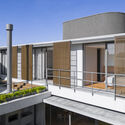

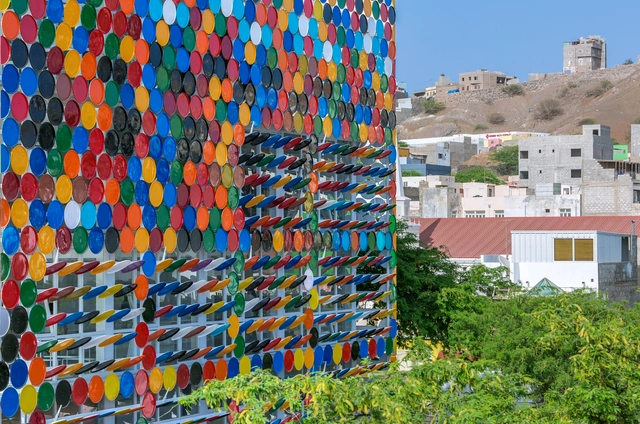
As part of the effort to make the construction sector more sustainable in the face of the climate crisis, the bioeconomy has stood out. While the road to net-zero architecture is still very complex, the emerging shift in culture and general thinking is evident, and innovation seems to be driving this transformation.
Extreme natural events are becoming increasingly frequent all over the world. Numerous studies indicate that floods, storms, and sea-level rise could affect more than 800 million people worldwide, ultimately costing cities $1 trillion per year by the middle of the century. This suggests that urban survival depends on addressing urban vulnerability as a matter of urgency to protect the city and the population.