Habitat: Vernacular Architecture for a Changing Planet
Climate change is the biggest challenge facing our planet. There has never been a more important time to understand how to make the best use of local natural resources and to produce buildings that connect to ecosystems and livelihoods and do not rely on stripping the environment or transporting materials across the globe.
In architecture we are so caught up in creating something new, we often forget about what happens at the end of a building’s life cycle—the unfortunate, inevitable demolition. We may want our buildings to be timeless and live on forever, but the harsh reality is that they do not, so where is all the waste expected to go?
As with most non-recyclable waste, it ends up in the landfill and, as the land required for landfill becomes an increasingly scarce resource, we must find an alternative solution. Each year in the UK alone, 70–105 million tonnes of waste is created from demolishing buildings, and only 20% of that is biodegradable according to a study by Cardiff University. With clever design and a better awareness of the biodegradable materials available in construction, it’s up to us as architects to make the right decisions for the entirety of a building’s lifetime.
Sand is the most-consumed natural resource in the world after water and air. Modern cities are built out of it. In the construction industry alone, it is estimated that 25 billion tons of sand and gravel are used every year. That may sound a lot, but it’s not a surprising figure when you consider how everything you’re surrounded with is probably made of the stuff.
But it’s running out.
This is a scary fact to think about once you realize that sand is required to make both concrete and asphalt, not to mention every single window on this planet. The United Nations Environment Programme found out that from 2011 to 2013, China alone used more cement than the United States had used in the entire 20th century and in 2012, the world used enough concrete to build a wall around the equator that would be 89 feet high and 89 feet thick (27 by 27 meters).
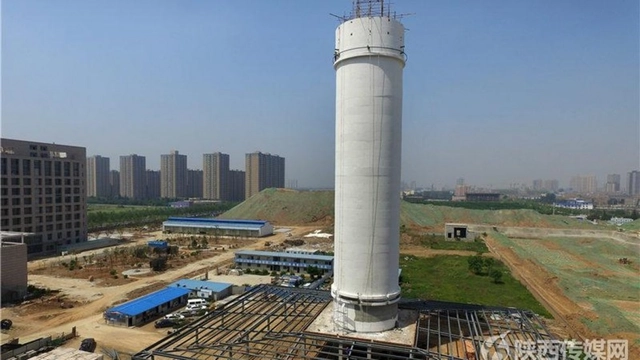
The 100-meter-tall air purification tower in Xi’an, China – believed to be the world’s largest air purifier. Image via South China Morning Post
A 100-meter-tall air purification tower in Xi’an, China – believed to be the world’s largest air purifier – has significantly improved city air quality, results from its preliminary run suggest.
According to researchers from the Institute of Earth Environment at the Chinese Academy of Sciences, the tower has managed to produce more than 10 million cubic metres (353 million cubic feet) of clean air per day since it was launched a few months ago. In the 10-square-kilometer (3.86-square-mile) observed area of the city, smog ratings have been reduced to moderate levels even on severely polluted days, an improvement over the city’s previous hazardous conditions.
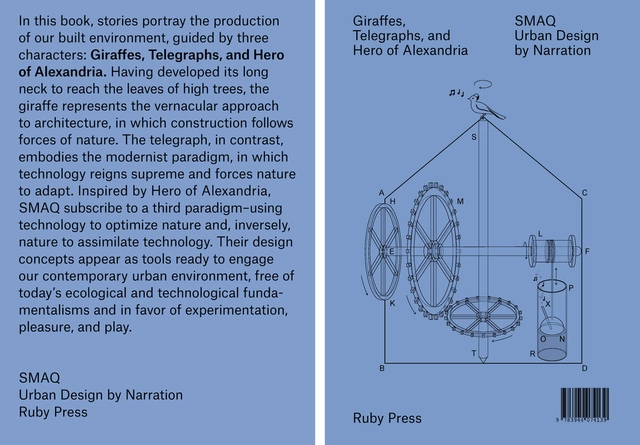
In this book, stories portray the production of our built environment, guided by three characters: Giraffes, Telegraphs, and Hero of Alexandria. Having developed its long neck to reach the leaves of high trees, the giraffe represents the vernacular approach to architecture, in which construction follows forces of nature. The telegraph, in contrast, embodies the modernist paradigm, in which technology reigns supreme and forces nature to adapt. Inspired by Hero of Alexandria, we subscribe to a third paradigm – using technology to optimize nature and, inversely, nature to assimilate technology.
The Australasian Student Architecture Congress (ASAC)—titled Agency 2017—will be held in Sydney from the 28th of November to the 2nd of December. It will be the first congress held in Sydney since 1999 and student-led by ASAC Inc., a non-profit student body based in NSW, Australia.
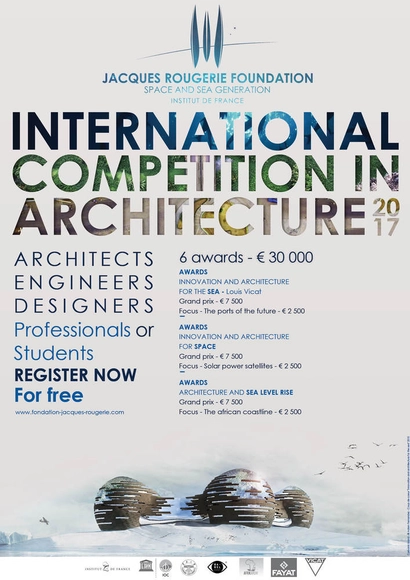
Call for action: International competition in architecture 2017
The architect, the engineer, the designer, all of them participate to the development and the construction of an upcoming world at their own level. Together, by looking further, beyond preconceived ideas and well-established concepts, these entrepreneurs, these creators, have the power to make up new rules, propose new directions: innovative facilities and housing bringing new living conditions, making room for new ways of moving, of consuming energy, to counter major environmental challenges of our era and others to come. The prizes of the Jacques Rougerie Foundation support and accompany this approach.
Innovation, architectural disruption, sustainable development and resilience against climate changes are the keywords of this 7th edition of the international competition in architecture of the Jacques Rougerie Foundation – Institut de France.
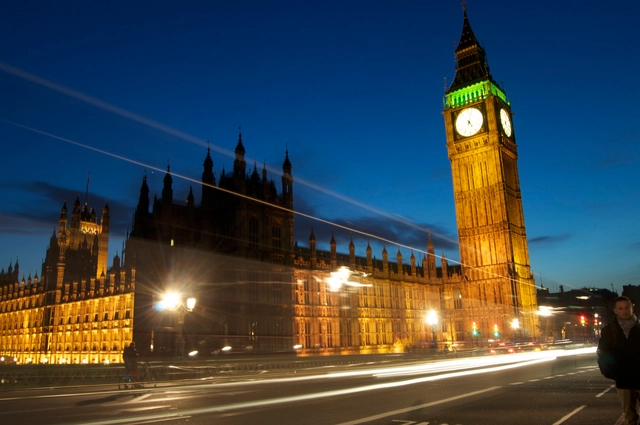
MIT has published new research revealing how the reconstruction of the British Houses of Parliament paved the way for legislation to tackle air pollution in Victorian London. Through original archival work into the 1840-1870 reconstruction, MIT architectural historian Timothy Hyde has revealed that work on the Parliament building was so hindered by air pollution that the British government ordered an inquiry into the effects of the atmosphere on new buildings.
https://www.archdaily.com/804029/how-rebuilding-britains-houses-of-parliament-helped-create-clean-air-lawsNiall Patrick Walsh
The Architectural and Environmental Design (AED) is created to be a platform for all early career researchers, practitioners and students from all around the world, helping them to share ideas, and to expand networks for scholars.
AED is an international conference that focuses on Sustainability and how it is approached by Architectural and Environmental Designs. AED engages with real life problems that affect the buildings on all scales, cities, and environment where it also discusses the built environment, and the factors that assist in shaping the built environment and how it affects our lives and our activities. IEREK for International Experts for Research Enrichment and Knowledge Exchange welcomes the abstract submissions to our Early Career conference.
Videos
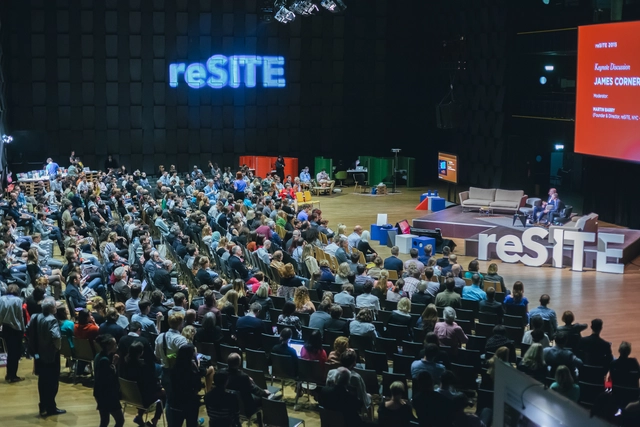
reSITE Conference, Prague, Forum Karlin. Photo Dorota Velek
On June 16-17, Prague will be hosting one of the leading architecture and urbanist events in Europe. Most of the 49 world renowned experts who will speak at reSITE 2016: Cities in Migration have experienced migration themselves. Coming from 20 countries, they will bring innovative solutions and successful strategies for European and Western cities to come to terms painlessly with the influx of new residents. Carl Weisbrod, Chairman of the City Planning Commission of NYC, Professor Saskia Sassen, sociologist at Columbia University, and Michael Kimmelman, the Architecture Critic for The New York Times will come from New York City. A huge number of speakers will come from Germany. Besides the famous landscape architect, Martin Rein-Cano from Topotek 1, Berlin, we will meet one of the city planner of Munich and the co-founders of the initiative “Refugees Welcome.”
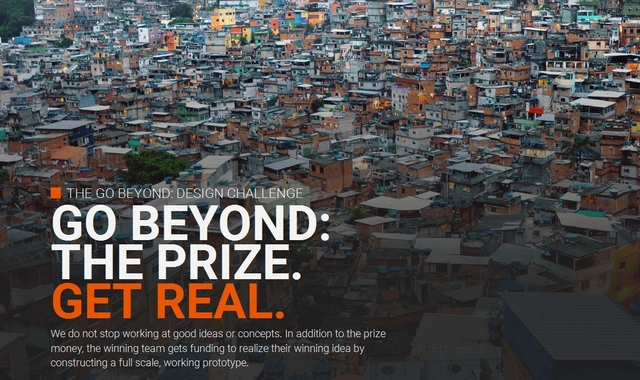
The Go Beyond: Design Challenge is unique from usual design competitions because it funds the construction of a working prototype in addition to offering prize money. This is an international design competition organized by the Singapore-based ONG FOUNDATION for architects, engineers, designers and innovators to create new-to-the-world solutions. Every year, about two million shipping containers are no longer used. What if these could be upcycled into sustainable architecture to reduce the total carbon footprint of global development?
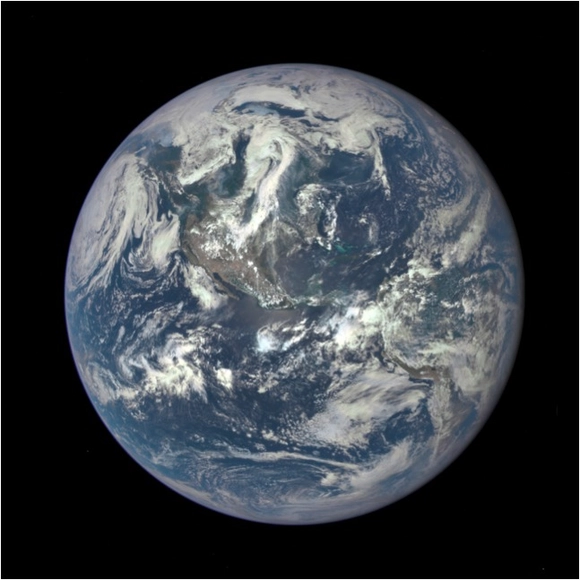
Earth as seen on July 6, from a distance of almost one million miles by a NASA scientific camera on board the Deep Space Climate Observatory spacecraft. Credit: NASA.
What do outer space capsules, submarines, and office buildings have in common? Each was conceived as a closed system: a self-sustaining physical environment demarcated from its surroundings by a boundary that does not allow for the transfer of matter or energy.
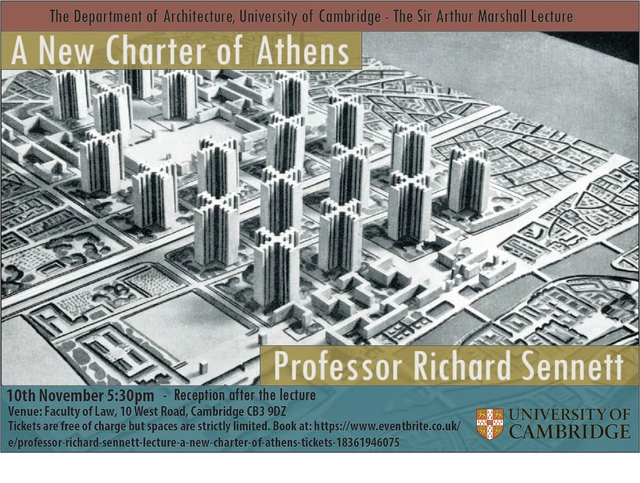
'Next year sees the opening of Habitat III, the environmental congress held every twenty years by the United Nations. For this event, a manifesto is being prepared about the design of cities. It aims to replace the guidance given by Le Corbusier and others nearly a century ago, in document they called "The Charter of Athens." The new Charter of Athens addresses issues emerging in the 21st Century about environmental crises, the uses of technology and big data, and the challenge of social inclusion. The lecture serves as an introduction to this modest proposal.'
From October 22-26, Cannon Design will host a prominent and diverse group of speakers to present at the Chicago firm’s 11th Annual EnvironmentalAwareness Week.