Back in 2008, ArchDaily embarked on a challenging mission: to provide inspiration, knowledge, and tools to the architects tasked with designing cities. In an effort to further align our strategy with these challenges, we recently introduced monthly themes in order to dig deeper into topics we find relevant in today’s architectural discourse. From architects who don't design to reframing climate change as a global issue, we are celebrating our 11th birthday by asking 11 editors and curators to choose ArchDaily's most inspiring articles.
Videos
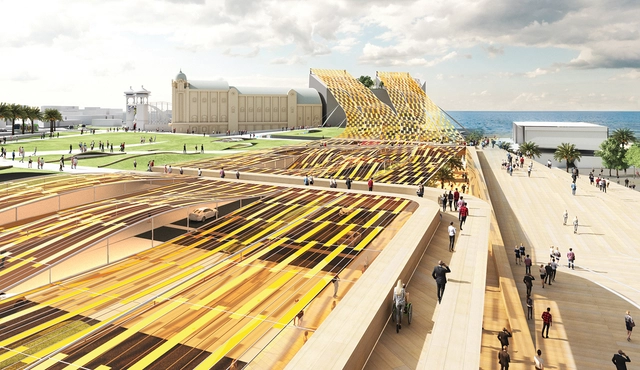
Light Up, by NH Architecture, Ark Resources, John Bahoric Design, and RMIT architecture students is the winner of the 2018 Land Art Generator Initiative design competition for Melbourne, and generates 2,220 MWh of clean energy.
The LAGI 2019 competition offers designers and creatives the opportunity to re-imagine energy infrastructure and demonstrate the beauty of a 100% renewable world.
About the Jose Marti Park Redesign RFQ: Through this RFQ, Van Alen and the City of Miami seek to commission a multi-disciplinary design team for the project that offers the full range of professional urban design, landscape architecture, and engineering services and includes at least one Florida-licensed firm. The design team will work with Van Alen Institute and the City to ensure that this treasured public space serves the present and future needs of the Little Havana community. Innovative and thoughtful design should allow the park to minimize flood impacts to the neighborhood, adapt to sea level rise over time, and enhance waterfront access for residents. Ideally this project results in a solution that can be replicated in other places experiencing similar conditions.
The latest UN special report on climate change, released in October 2018, was bleak - perhaps unsurprisingly after a year of recording breaking temperatures, wildfires, floods, and storms. The report, released by the UN Intergovernmental Panel on Climate Change (IPCC), reiterated the magnitude of climate change’s global impact, but shed new light on the problem’s depth and urgency. Climate change is a catastrophe for the world as we know it and will transform it into something that we don’t. And we have just 12 years to prevent it.
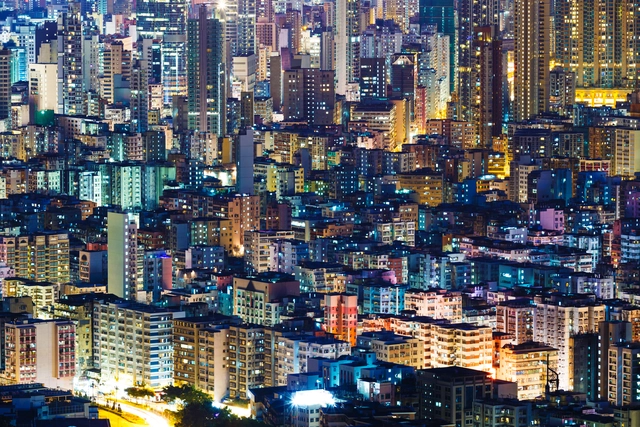
Hong Kong is one of the most densely populated cities on earth. Image via Shutterstock
Cities are hotter than surrounding areas because of a climate phenomena that is known as the urban heat island (UHI). While scientists have studied this effect for decades, new information has recently come to light that points to the way we arrange our cities as a key contributor to raised temperatures. The results could help city planners build our future cities better.
https://www.archdaily.com/909476/how-urban-planning-can-help-us-cope-with-climate-changeTaahirah Martin
For thousands of years, concrete has been a foundation of the built environment: the most widely used man-made material on the planet. However, as architects, and the public alike, sharpen their focus on the causes and effects of climate change, the environmental damage caused by cement has become a subject of unease.
As exhibited in a recent in-depth article by Lucy Rodgers for BBC News, cement is the source of about 8% of global CO2 emissions. The piece was written off the back of the UN’s COP24 climate change conference in Poland and found that in order to meet the requirements of the 2015 Paris Climate Agreement, annual cement emissions must fall by 16% by 2030.
https://www.archdaily.com/909187/the-environmental-cost-of-cement-and-what-to-do-about-itNiall Patrick Walsh
Mundo Verde at Cook Campus / Studio Twenty Seven Architecture
A misconception often surfaces in design circles that architectural beauty and evidence-based environmental performance are mutually exclusive. To address this, the American Institute of Architects (AIA) Committee on the Environment (COTE) is releasing a new tool that can assist architecture firms in designing high-performance energy-efficient buildings.
Despite the federal stance on paramount environmental issues, the AIA upholds and advocates for the responsibility of architects to mitigate against the effects of climate change. Aware that the construction industry consumes nearly 40% of the energy supply nationwide, the AIA COTE® Top Ten Toolkit presents a series of strategies to promote sustainability without compromising the design.
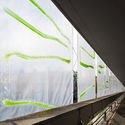
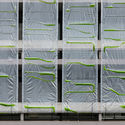
London-based architectural and urban design firm ecoLogicStudio has unveiled a large-scale “urban curtain” designed to fight climate change. “Photo.Synth.Etica” was developed in collaboration with Climate-KIC, the most prominent climate innovation initiative from the European Union, to “accelerate solutions to global climate change.”
Photo.Synth.Etica, currently on display at the Printworks Building in Ireland’s Dublin Castle, captures and stores one kilogram of CO2 per day, the equivalent to that of 20 large trees.
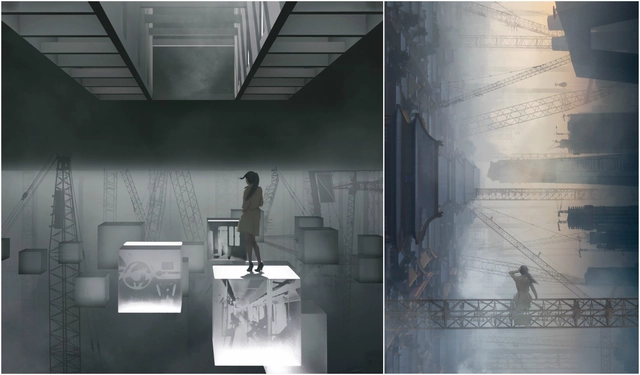
1st Place: Deep Pool That Never Dries. Image Courtesy of Blank Space
Blank Space, in collaboration with The National Building Museum, has announced winners of their fifth annual Fairy Tales competition, unveiled in front of a live audience at the Washington D.C. National Building Museum. The competition saw submissions from 65 countries, with 3 prize winners, a runner-up, and 9 honorable mentions chosen for their exploration of current events and the creative process through well-crafted short stories and artwork. The winners were chosen by a jury of 20 leading architects, including Daniel Libeskind, Bjarke Ingels, and Maria Aiolova.
https://www.archdaily.com/891849/a-tale-of-misplaced-trust-in-news-media-wins-2018-fairy-tales-competitionNiall Patrick Walsh
Fairy Tales 2017 Competition Winner: Last Day / Mykhailo Ponomarenko. Image Courtesy of Blank Space
When you’re used to the grind of architecture school, breaks can hit you like rain on a warm day—cool at first, but terribly annoying soon enough. While the first few days breeze past as you catch-up on lost sleep and binge-watch Game of Thrones, you realize before long that you’re going insane with nothing to absorb all your new-found energy.
This is where architectural competitions come in handy. They provide a constructive outlet while being deeply engrossing, thus keeping you from hopelessly refreshing Youtube to see if Buzzfeed uploaded a new video. Also, the fact that you’re no longer constrained by the direction of your studio-leader or school program enables you to experiment creatively. With diverse international competitions running at any given time, you can take your pick, depending on your individual interests and the amount of time you want to devote. However, the sheer number of available competitions can be deeply confusing as well. Here we shortlist seven of the most prestigious annual architectural competitions open to students:
An installation of nearly 100 books in the James Stirling-designed Book Pavilion at the Venice Biennale serves as a collection of documents that asks us to consider how climate intersects with architectural ideas.