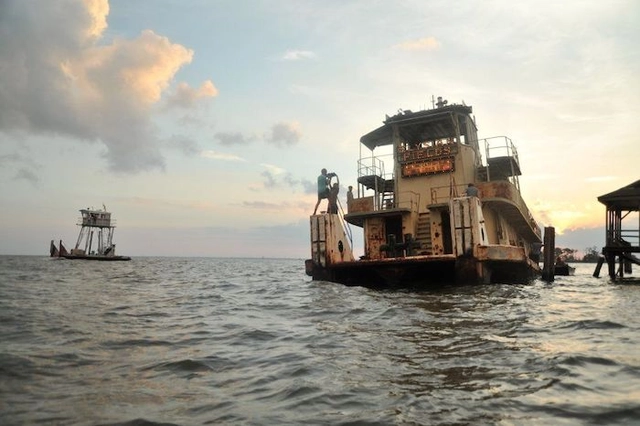
Beasts of the Southern Wild. Image: screenshot do filme
Architecture enjoys a close connection with moving picture, perhaps because of the limitless imagination it allows. Our mind can be taken far away to utopian worlds where we live different realities with our eyes and skin; movies can carry us to new and distant places, where we face new unusual realities.
However, besides carrying us to distant places, movies can also be a vehicle of social criticism. This is not news, as it has been done for almost as long as cinema has existed. The evolution of this role is relative to the topic of critique that has developed over time, as have our habits and ways of living. In this sense, one of the most emerging problematic of nowadays is climate change.from architecture to arts and, clearly, the movies.
Today's designers have inherited unprecedented global challenges, a legacy which will require radically new ways of fashioning the buildings, places, and landscapes that harbor our diverse ways of life. The College of Environmental Design offers several introductory and advanced programs for those interested in confronting these challenges in the fields of architecture, landscape architecture and environmental planning, urban design, and sustainable city planning. Please visit UC Berkeley's Summer Programs website to view images of student work and learn more about the CED Summer experience.
For decades, scientists have been warning us about global warming, and the consequences of human actions on the planet in the form of environmental disasters. The construction sector is today one of the major contributors to global warming and the climate crisis. According to data of the United Nations (UN), currently, 36% of the global energy is dedicated to buildings and 8% of all pollutant emissions are caused by the production of concrete alone.
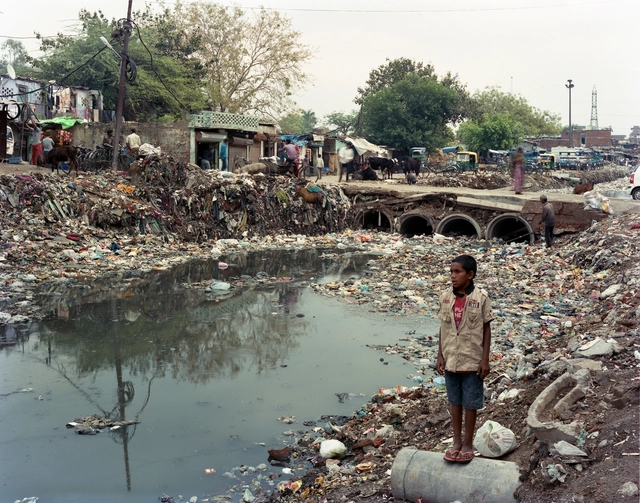
Iñaki Alday is the current dean of the School of Architecture of Tulane (New Orleans). Founder of Alday Jover arquitectura y paisaje, he also offers advice to the United Nations as an expert on the urban planning of rivers and deltas. In this context, he is a noted co-founder of the ‘Yamuna River Project’, a university research project for the recovery of the Yamuna River in New Delhi - one of the most polluted in the world.
Below, we talk with Iñaki Alday about innovations in cities related to the climate emergency, with questions that approach the urgency of research and how universities should prepare students to face the global challenge.
Goldman Sachs has released a report on the effects of climate change on cities across the world. The study explored the major changes that will transform the planet and highlighted several metropolises that will be at risk of flooding.
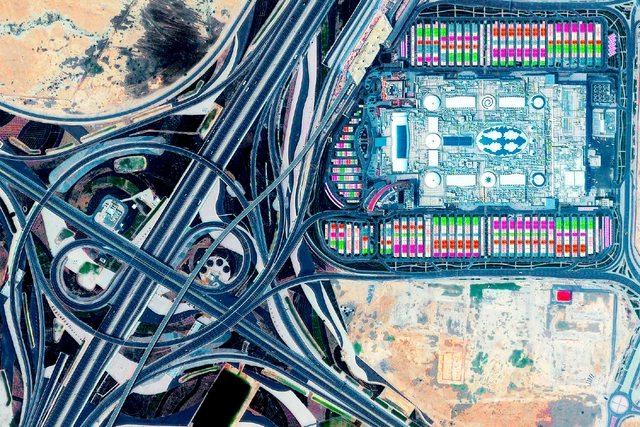
Mall of Qatar at the Rawdat Rashed Interchange, Al Rayyan, Qatar. Postcard image, Log 47: Overcoming Carbon Form. Photo: Maxar Technologies
Log 47 reconceives architecture’s role in climate change away from sustainability and solutionism and toward its formal complicity and potential agency in addressing the crisis. In this excerpt from her introductory essay, guest editor Elisa Iturbe defines carbon form as a necessary new way of understanding architecture and urbanism in order to develop a new disciplinary paradigm.
Until now, most environmental discourse in architecture has focused on carbon as a by-product of building and construction, making it seem that at the ecological brink, the most pressing concern is energy efficiency. This stance compartmentalizes the discipline and dislocates the origin of the climate crisis from the dominant political, economic, and spatial organizations that are its cause. In response to this dislocation, Log: 47 Overcoming Carbon Form reconsiders the link between architecture and climate by exploring the reciprocity between energy and built form. To do so, energy must be understood beyond its technical capacity, viewed instead as a political and cultural force with inevitable spatial repercussions.
To its great credit, the American Institute of Architects recently denounced the Trump administration’s decision to formally withdraw from the Paris Climate Agreement. This may put the professional organization on the right side of history, but it’s unlikely to sway any hardened hearts and minds in Washington. Obviously, the executive branch is worse than useless on this issue: not just an impediment to change, but a malevolent force for willful inaction. It’s hard to see it as anything less than an enemy of the climate.
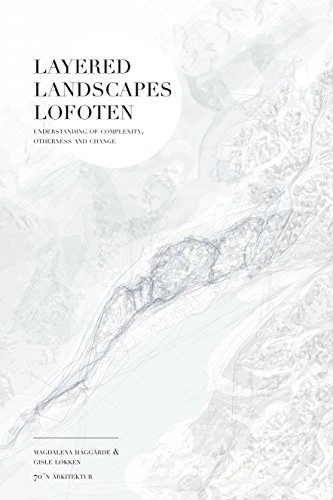
Layered Landscapes Lofoten — Understanding of Complexity, Otherness and Change adresses today’s most urgent issues about living together in landscapes and territories under severe pressure and transformation. The landscape holds essential information about our common history, ecology and social behavior — both rational and cognitive experience, and even hidden enigmas. The authors suggest how an open and unbiased approach to the landscape enables us to understand and operationalize knowledge and theory into valid proposals and projects for the future — not primarily through the traditional and habitual idea of the architectural object, but rather in contact with a global, collective and spatial territorial reality.
YAC - Young Architects Competitions and Cantiere delle Marche launch “Kiribati Floating Houses”, a competition of ideas aiming to design floating structures to tackle the challenges of the rise in ocean levels and climate change. A cash prize of € 15,000 will be awarded to winners. In addition, some projects will be selected to be part of an exhibition at Santa Maria della Vita in Bologna and some other projects will be selected to be part of an exhibition about the ocean exploration held by National Geographic at Palazzo Blu in Pisa. selected by a well-renowned jury made of, among the others, Kengo Kuma, Moon Hoon, Rocco Yim, Cristiana Favretto (Studiomobile), Simon Frommenwiler (HHF Architects), Fabio Roversi Monaco (Genus Bononiae), Giuseppe Zampieri (David Chipperfield Architects).
By 2050, the world’s population is expected to have exceeded 10 billion people, making overcrowded cities one of the most pressing issues of the present. Data analysis, machine learning, transportation developments, and the rapid development of new social technologies are increasingly changing the needs of people and communities, which will have a direct impact on the issue of overcrowding and on our built environment more largely.
Architecture is inherently linked to policy, politics, and power. With responsibility for the design and perception of the built environment, architects have a distinct role in shaping the human urban experience. As the world confronts issues of climate change, forced migration, and affordable housing, architects are increasingly putting themselves on the front line of the debate, using a variety of tools and avenues to clamor for change, and indeed design for it. However, while many official avenues exist for architects to advocate for social and environmental reform, there is an under-theorized method of resistance, a ‘road less traveled’ for social progress beyond officialdom.
https://www.archdaily.com/925260/we-need-diy-activist-architecture-to-fight-climate-changeNiall Patrick Walsh
Fellow architects, can we talk? This is gonna hurt, but it needs saying. Were I a poet, I’d write, The end is nigh, and we are why. I’m no bard, though, so I’ll put it this way: Most of us suspect anthropogenic climate change will lead to civilization’s end. Some architects deny the science (“The climate is always changing!”), while others ignore the obvious (denial is a good coping mechanism), but buried within the folds of all angst-addled designer brains lies the fear that today’s toddlers could be the last of us.
I’ll pause here to let the weight of that thought depress you.
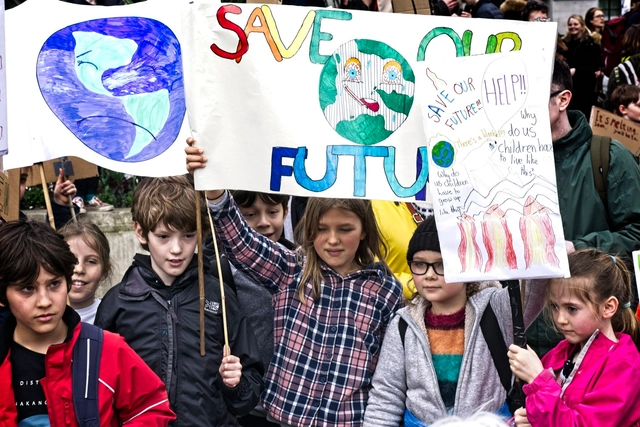
The Global Climate Strike is set to happen on the 20th of September 2019, just before the UN emergency climate summit, where people will disrupt their work to protest and advocate for actions against climate breakdown. Architects are joining on the march, through “Architects Advocate”, a movement encouraging the professionals of the industry to stand in solidarity with the rally.
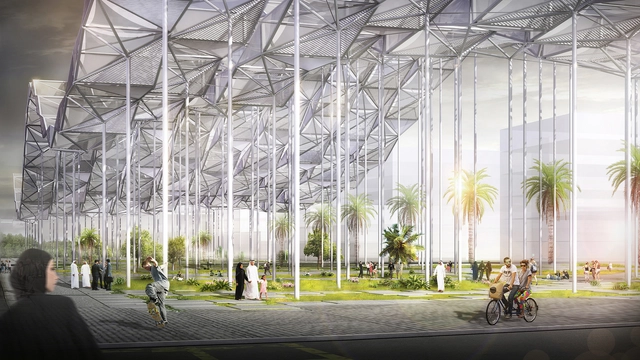
Chinese architect Mingfei Sun has designed an environmentally oriented urban hub for Masdar City, Abu Dhabi. Titled SURGE, its natural aesthetics and technological forwardness are intended to communicate a J.M.W. Turner-esque awe for the power of nature, making it an oasis of high aesthetic and ecological value.
https://www.archdaily.com/922010/surge-combines-high-aesthetics-with-environmentally-oriented-technologyLilly Cao
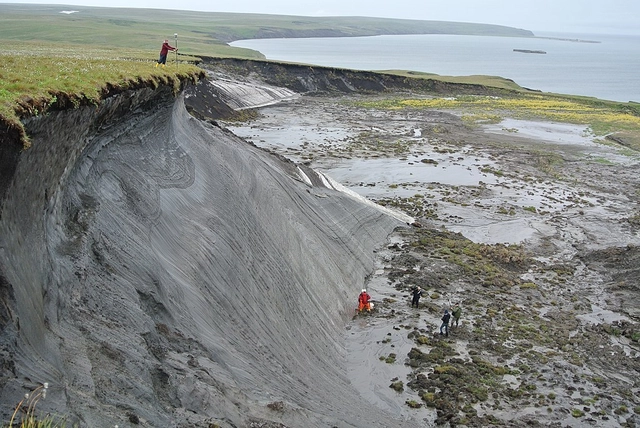
A recent report by the United Nations’ Intergovernmental Science-Policy Platform on Biodiversity and Ecosystem Services (IPBES) report reveals that the health of our ecosystems on which we and all other species depend is deteriorating more rapidly than ever. We are eroding the very foundations of our economies, livelihoods, food security, health, and quality of life worldwide. At this point, scientists believe that ecosystems untouched by human interventions no longer exist. Human civilization and technology have permanently altered our planet and some of the most tangible impacts include imploding population numbers, deforestation, pollution (air, water, soil, and industrial), ocean acidification, climate change, and invasive alien species.
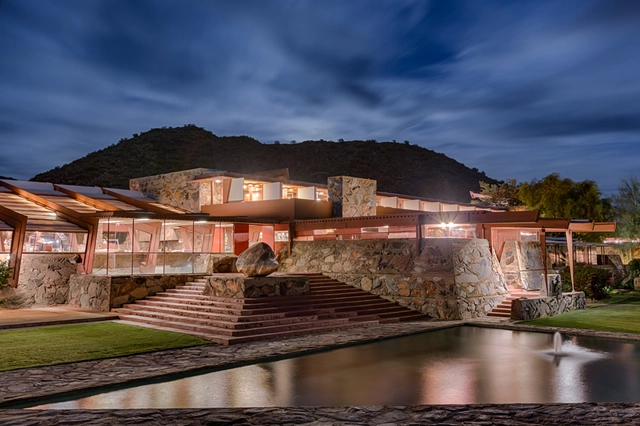
The Frank Lloyd Wright Foundation has used Earth Day, April 22nd, 2019, to launch a new initiative focused on educating the public about how sustainable practices are used in the conservation of National Historic Landmark sites, including the renowned architect’s Taliesin (Wisconsin) and Taliesin West (Arizona) residences. Taking place throughout the year, the Foundation’s efforts will aim to show how these practices can serve as examples for other facets of society.
https://www.archdaily.com/915558/frank-lloyd-wright-foundation-will-use-taliesin-west-to-educate-about-living-with-natureNiall Patrick Walsh
As the world recognizes Earth Day 2019, the public discourse is increasingly dominated by citizen action across the world manifesting a widespread fear and frustration at a perceived lack of action by governments and officials to confront the issue forthrightly. From the Extinction Rebellion protests that have gripped London, to school student strikes across 125 countries, global cities are increasingly finding themselves on the front line of a battle to limit the effects of global warming.
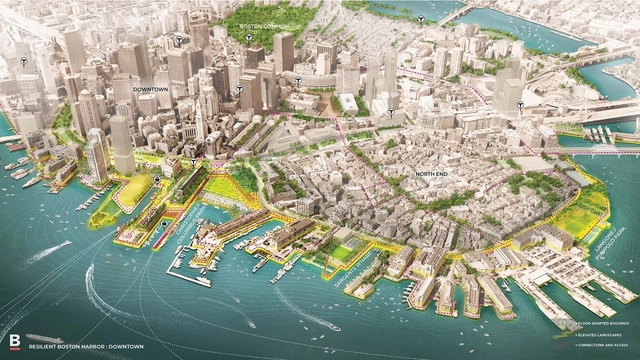
https://www.archdaily.com/915510/how-three-major-us-cities-are-preparing-for-climate-changeNiall Patrick Walsh






.jpg?1559718486)
.jpg?1559718881 "Campus for Infosys. Image © Morphogenesis")
.jpg?1559718521 "Pearl Academy. Image by Morphogenesis © Edmund Sumner")
.jpg?1559718319 "Pearl Academy. Image © Andre Fanthome, by Morphogenesis")
.jpg?1559718143 "Pearl Academy. Image © Andre Fanthome, by Morphogenesis")
.jpg?1559718143)