

-
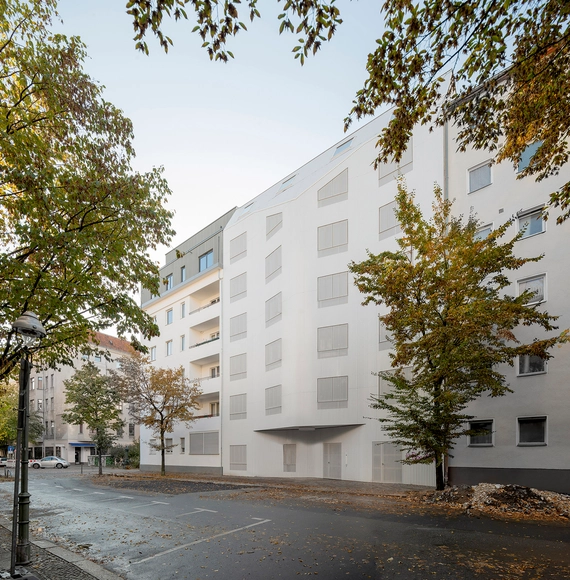
Architects: rundzwei Architekten
- Area: 1740 m²
- Year: 2019
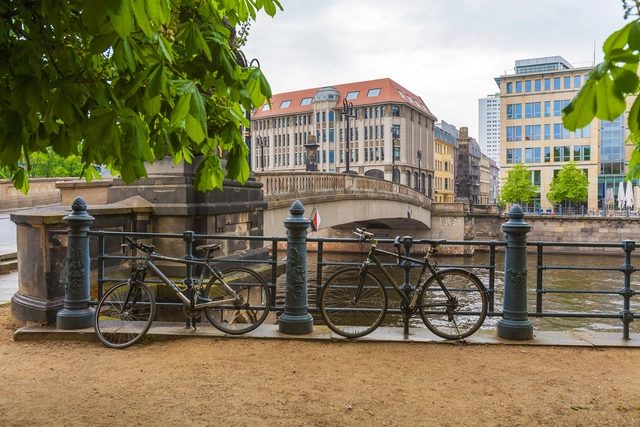
Volksentscheid Berlin Autofrei (People’s Decision for Auto-Free Berlin), has proposed a plan to limit cars within Berlin's Ringbahn, a long circle route around the inner city, making it the world's largest car-free area once approved. The citizen-initiative is aimed mostly at banning the use of private cars in central Berlin, with the exception of emergency vehicles, garbage trucks, taxis, delivery vehicles, and residents with limited mobility, who would all be given special access permits.


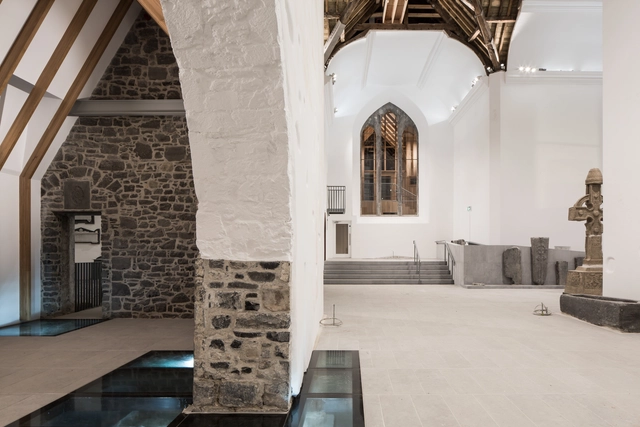
The dawn of the Anthropocene has thrown the idea of adaptive reuse into the limelight: effectively the pinnacle of urban regeneration and revitalization. It utilizes the presence of existing buildings with historic and cultural value and re-purposes them to be functional. Essentially a form of architectural salvage; a sustainable and viable means of rebuilding.
Recent events such as the pandemic has highlighted inequalities in our cityscape, the inadequate segments in a state of disuse and disrepair. Adaptive reuse can replenish these areas and create new cultural hotspots, encouraging activity and creating vibrant and healthy mixed-use environments.
Below is a diverse selection of cultural hotspots using Adaptive Reuse

Last year, a series of new museums, expansions and several museum renovations have opened their doors to the public, adding a new dimension to the cultural landscape around the world. From the long-awaited re-opening of the Neue Nationalgalerie in Berlin, to Ryue Nishizawa's Jining Art Museum merging with the landscape, and MVRDV's reflective Art Depot, discover the architecture of the latest venues of art and culture.
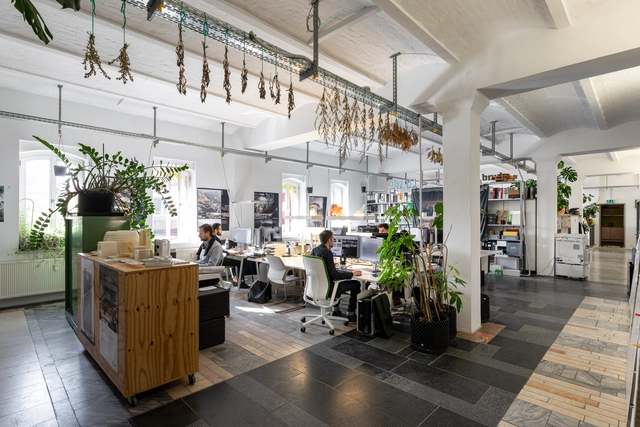
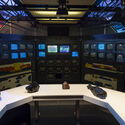
After a two-year hiatus due to the global pandemic, Architectural photographer Marc Goodwin has resumed work on the Atlas of Architectural Atmospheres, Archmospheres, starting with the city of Berlin. This project that seeks to capture architecture offices from around the world has already gathered images from Madrid, Brazil, Panama City, the Netherlands, Dubai, London, Paris, Beijing, Shanghai, Seoul, the Nordic countries, Barcelona, Los Angeles, and Istanbul.
Documenting diverse architecture and design studios, Goodwin captured 13 different office spaces in Berlin, including Hesse, LAVA, JWA, Tchoban Voss, Richter Musikowski, Barkow Leibinger, FAR frohn&rojas, studio Karhard, Jasper, Kleihues + Kleihues, Graft, Bundschuh Architekten and Sauerbruch Hutton.

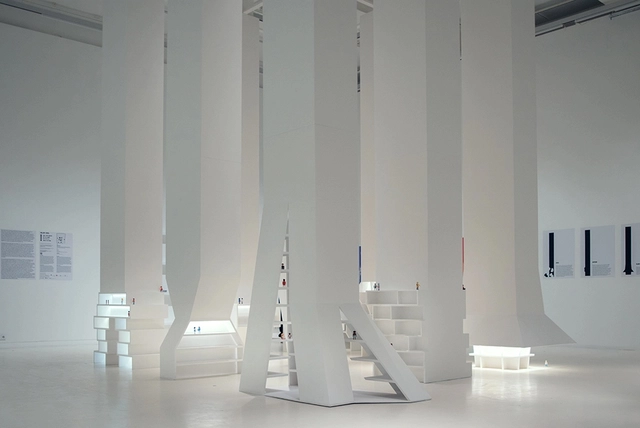
Shape Tomorrow, a new exhibition at AEDES Architecture Forum in Berlin, is a reaction to both staid, self-serious architecture shows and to the staid, self-serious architecture profession. Taking the form of a miniature city, it turns buildings into named characters, encourages visitors to populate structures with miniature people, and leaves space for them to fill the room with their ideas and criticism.
The exhibition, on view through January 13, is the brainchild of German architect Matthias Hollwich, founder of New York-based HWKN—a burgeoning firm known for both its research and its sense of whimsy. The show centers on nine, 16-foot-tall white plaster towers whose glowing bases take on the forms of some of the firm’s playful, kinetic projects from around the world. These include 25 Kent, a fractured office building in Williamsburg, and Die Macherei, a jutting and terraced mixed-use business district in Munich.


Fotografiska Museum has announced its expansion to three new locations in Berlin, Shanghai and Miami, to be housed within existing buildings redesigned by Herzog & De Meuron, Neri&Hu and Rockwell Group. A former department store in Berlin's Jewish Quarter, a 1946 factory building in Miami and a historically significant warehouse complex in Shanghai are the future Fotografiska venues set for completion in 2022 and 2023. Together with the existing locations in Stockholm, Tallin and New York, these will form the world's largest private art museum in terms of size, number of locations, and exhibitions per year.


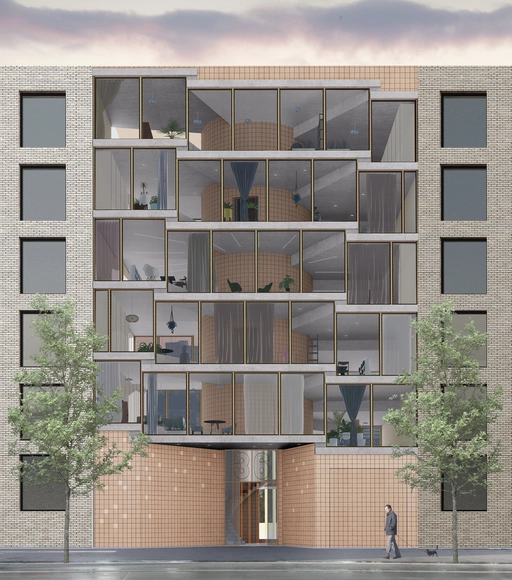
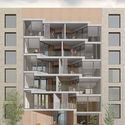
German architecture firm Meyer-Grohbruegge has proposed a new residential typology that "adds a dynamic spatial dimension to a small building gap and emphasizes physical experience in housing". The competition-winning design features a central spiral staircase that connects the entire structure together and offers residents a fluid and dynamic interior that merges the outdoors and indoors.


MVRDV revealed plans for adaptive reuse of Berliner Union Film Ateliers (BUFA), receiving planning approval to redevelop the first two buildings. The project expands the scope of the site to address a broader user base, including all kinds of creative industries, as well as organisations and individuals involved in activism and social justice. Building on the site's heritage and spatial diversity, MVRDV proposes a series of sustainable transformations of the existing structures, reaffirming the adaptive reuse ethos.


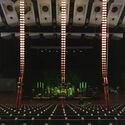
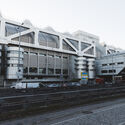
For 10 days, Berlin's abandoned International Congress Centre (ICC) was transformed into a stage for performance, acrobatic and visual arts, films, concerts and talks during Berliner Festspiele's "The Sun Machine Is Coming Down" event. The 1970s futuristic building that remained closed for the last seven years provided the framework for a multi-layered experience, illustrating its potential for reactivation and adaptive reuse.
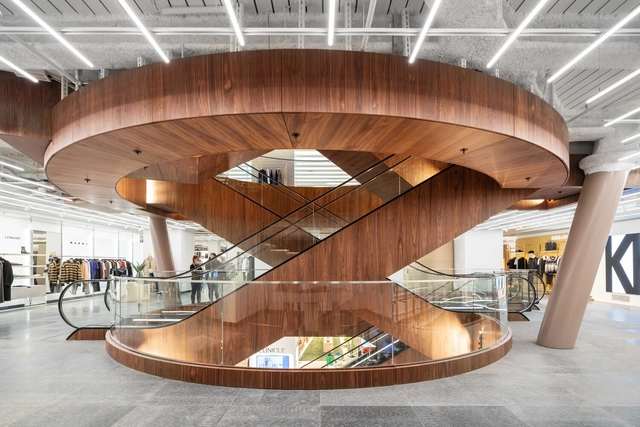

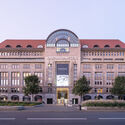
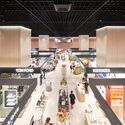
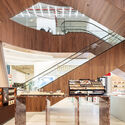
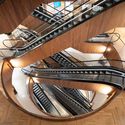
The first quadrant of OMA’s Berlin KaDeWe department store transformation opened its doors to the public, revealing a new approach to retail design in the age of online shopping and shifting consumer behaviour. The masterplan divides the historic building, the largest department store in continental Europe, into four smaller, easily accessible and navigable sectors. The completed quadrant features a six-storey void containing a series of escalators and simultaneously acting as circulation, retail and event space.