Showcase your project at the 25th Tile of Spain Awards

Showcase your project at the 25th Tile of Spain Awards

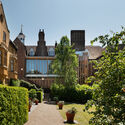
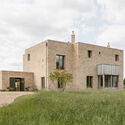
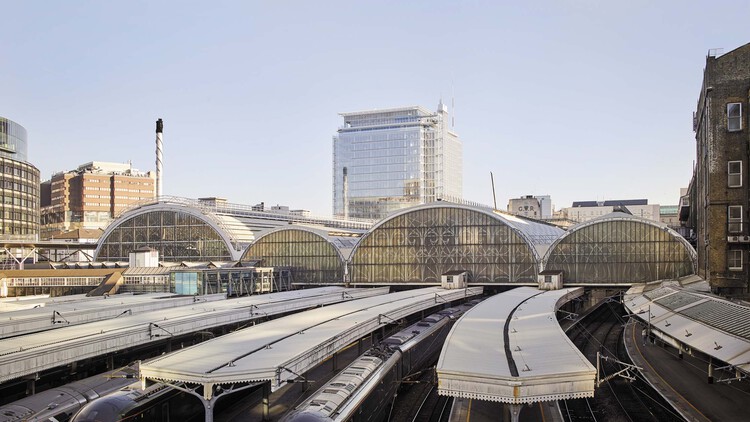
The Royal Institute of British Architects (RIBA) has announced the six shortlisted projects for the 2026 RIBA Stirling Prize, marking the award's 30th anniversary. Established in 1996, the Stirling Prize recognizes the building considered to have made a contribution to the evolution of architecture in the United Kingdom. This year's shortlist spans a broad range of typologies, including a new public square above one of London's busiest transport interchanges, the adaptive reuse of a 1970s theater into a cultural venue, a high-density residential development, two projects for Cambridge colleges, and a family home set on the edge of Epping Forest. The winner will be announced on October 15 at Old Billingsgate in London.

We invite you to participate in the ArchDaily China's 2026 Building of the Year Awards. We ask you to recognize and reward the projects that you feel are creating the largest impact in the built environment, that ArchDaily China has published on our projects database in 2025. By nominating and voting, you form part of an interdependent, impartial, distributed network of jurors and peers that has consistently helped us celebrate architecture of every scale, purpose, and condition, from countries large and small, and architects of all descriptions. Over the coming weeks, your votes will result in 455 projects being filtered down to just 15 projects. The 15 projects with the most nominations will move on to the voting round.

Following two exciting weeks of nominations, ArchDaily's readers have evaluated 455 projects and selected 15 finalists for the Building of the Year Award China. Architects and enthusiasts participated in the nomination process, choosing projects that exemplify what it means to push architecture forward. These finalists are the buildings that have inspired ArchDaily readers the most, which also reveal the growing trend of Chinese architecture.
Among the 15 finalists of the 2026 China Building of the Year Award, we can see a gradual shift in focus from large-scale public buildings to rural revitalization, community public spaces, exploration of new typology of school and small-scale interior spaces. People are paying more attention to their personal needs and living experiences as well as the surrounding spaces. We can also observe how different firms are responding to the needs of cities and users during the period of transformation in the real estate.
Before we get to shortlisted nominees, we want to highlight the values of this awards process — as the world's largest platform for architecture we are acutely aware of our responsibility to the profession, and to the advancement of architecture as a discipline. Since our mission is directly related to the architecture of the future—inspiring and educating the people who will design the urban fabric of the future—the trust placed in us by our readers to reflect architectural trends from regions around the whole world creates challenges that we are eager to rise to. The democratically-voted, user-centered Building of the Year Awards is one of the key pillars of our response to these challenges, aiming to tear down established hierarchies and geographical barriers. Here are the 15 finalists of the 2026 China Building of the Year Award, and the voting period will run from April 8th to April 15th, 11:59 PM (Beijing Time), 2026. The final winners will be announced on April 16th, 2026. Click here to see the details and how to vote.

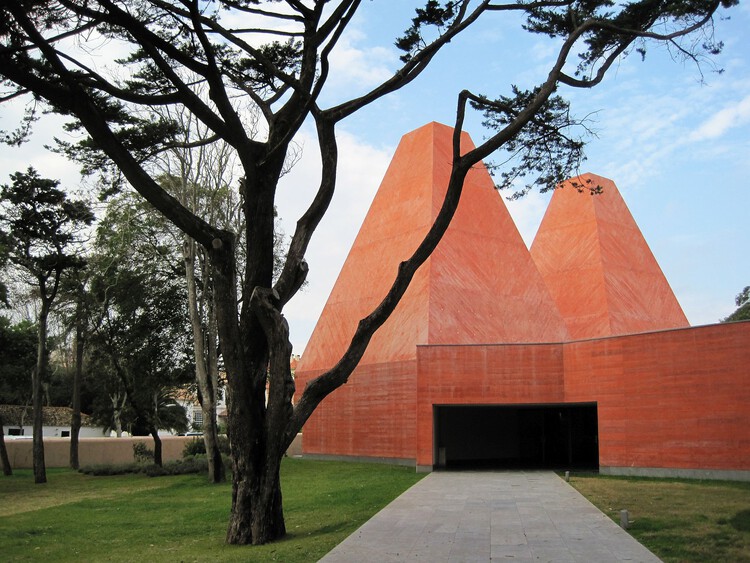
On June 30, 2026, Portuguese architect Eduardo Souto de Moura received the 2026 UIA Gold Medal, the highest distinction awarded by the International Union of Architects, during a ceremony held at the Basílica de la Sagrada Família in Barcelona. Presented as part of the 2026 UIA World Congress of Architects, taking place from June 28 to July 2, the award recognizes Souto de Moura's sustained contribution to architecture through a body of work defined by contextual sensitivity, material precision, and a lasting influence on contemporary architectural culture.

Established through a collaboration between the International Union of Architects (UIA) and UN-Habitat, the UIA 2030 Award recognizes projects that demonstrate how design can contribute to the achievement of the United Nations Sustainable Development Goals (SDGs). Announced during the 2026 World Urban Forum in Baku, Azerbaijan, the third cycle of the biennial award honored projects that address issues ranging from water management and affordable housing to participatory planning, access to public space, and climate resilience.

A collective discussion titled "Beyond Recognition: Exploring the Role of Architectural Awards" is taking place on June 29 in Barcelona, on the occasion of the UIA World Congress of Architects 2026. The debate starts from the conviction that, in today's context of accelerating global challenges, the role of architectural awards must evolve. The event follows the conversation initiated during the 2025 Venice Architecture Biennale, where the relevance of awards was questioned, paving the way for a new conversation on how architectural awards can contribute to shaping practice, institutions, and public discourse. The discussion sessions are convened by representatives of major international awards: the Aga Khan Award for Architecture, Ammodo Architecture Award, EUmies Awards, Holcim Foundation Awards, Mies Crown Hall Americas Prize, and the OBEL Award, and are joined by prominent figures in the field of architecture and design.

Buildner has announced the results of its Museum of Emotions Competition Edition 7. The Museum of Emotions is an annual international design competition that tasks participants to explore the extent to which architecture can be used as a tool to evoke emotion.
The brief calls for the design of a conceptual museum with two exhibition halls: one designed to induce negative emotions; the other designed to induce positive emotions. Participants are free to choose any site of their liking, real or imaginary, as well as choose the scale of the project. The meaning of 'positive' and 'negative' is up for interpretation: What two emotions might a designer consider contrasting? How might an architect conceive spaces which elicit fear, anger, anxiety, love or happiness?

This week's stories reveal a growing focus on reconnecting design with physical reality, whether through construction, landscape, public space, or collective participation. From the curatorial direction of the upcoming Venice Architecture Biennale 2027 to internationally recognized projects addressing flood resilience, affordable housing, and ecological restoration, many of the week's discussions challenged architecture's increasing detachment from material, environmental, and social conditions. At the same time, major cultural interventions, temporary structures, and public forums explored how institutions and civic spaces can become more accessible, adaptable, and engaged with everyday urban life.

Buildner has announced the results of its competition, the Last Nuclear Bomb Memorial No.6. This competition is held each year to support the universal ban on nuclear weapons. In 2017, on the 75th anniversary of the 1945 bombings of Nagasaki and Hiroshima, which claimed the lives of over 100,000 people, the United Nations adopted the Treaty on the Prohibition of Nuclear Weapons.

"I want to start by thanking architecture itself." With these words, Chilean architect Smiljan Radić, the 55th laureate of the Pritzker Architecture Prize, opened his acceptance speech in Mexico City. Reflecting on what he calls "distractions," he thanked the many encounters that have accompanied him throughout his life and practice: from art, cities, materials, structures, and compositions to landscapes, poetry, nature, forms, stories, and memories. He spoke about what, within them, provoked him and the marks they left on his architectural imagination.
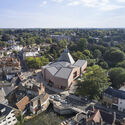
From the black light in Chandigarh and the interior of San Salvatore in Rialto, to the heaps of stone on the Croatian island of Brač; from the fallen columns of the Temple of Poseidon and the abandoned shires scattered across Chile, to People Meet in Architecture, Kazuyo Sejima's 2010 Venice Architecture Biennale, the traveling Chilean circus, and the silence of the water within the cisterns of Hagia Sophia, his speech unfolded as a tribute to moments, encounters, and distractions. A collage of memories and impressions that, together, shaped the architect he became.

Buildner has launched Buildner's Unbuilt Award 2026, the third edition of its annual competition, offering a 100,000 EUR prize fund.
Buildner has also announced the results of Buildner's Unbuilt Award 2025, the second competition in a series celebrating architectural design that has yet to be realized. With a generous 100,000 EUR prize fund, this initiative provides a global platform for architects and designers to showcase their most compelling unbuilt projects, whether conceptual, published, unpublished, or fully developed.

In the high desert of the San Rafael Valley, a few miles from the United States-Mexico border in Lochiel, Arizona, an adobe schoolhouse has stood for more than a century. Built before 1905, before Arizona was an incorporated state, the schoolhouse served generations of Mexican American students from Arizona and Sonora, cultivating shared cultural experiences, stories, and relationships that transcend physical and political boundaries. Over decades of education and shared histories, it became a place where language and narrative moved freely, even as geopolitical tensions continued to rise along the border. Today, it is one of the last remaining one-room adobe schoolhouses in the United States.
Adobe is among the oldest building technologies in the American Southwest, and among the most demanding to steward. In desert climates, earthen walls face intense weathering from temperature extremes, cracking due to seasonal shifts, and accelerated decay after storm events. These vulnerabilities require sustained and skilled maintenance over many seasons and compounding decades. After years of encroaching abandonment and structural threats, a twelve-year restoration effort by local community members who understood this building as critical cultural infrastructure brought the schoolhouse back from the edge of demolition. That the community chose to undertake this effort, given everything Adobe construction demands of those who care for it, is a statement about what the loss of this building would have cost. The result is a structure that now stands as a monument to Mexican American heritage and a living archive of rural border education.

Buildner has launched the Unbuilt Award 2026, the third edition of its annual competition, offering a €100,000 prize fund. At the same time, the results of the Unbuilt Award 2025 have been announced, marking the second competition in a series that celebrates architectural designs that have yet to be realized. The initiative provides a global platform for architects and designers to showcase their most compelling unbuilt projects—whether conceptual, published, unpublished, or fully developed.

In November 2025, ArchDaily launched its first edition of the Student Project Awards. The decision to introduce this new award came from a place of hope; hope in the next generations of architects, their talent and vision, and the importance of giving them visibility and recognition. After all, the future of architecture is being shaped right now, in classrooms, studios, and workshops around the world, and it is vital to support those shaping it. The response was remarkable, with projects from students in every continent, showcasing a wealth and breadth of viewpoints, solutions and visions.
Five months after the launch of the open call, and following the announcements of a longlist of 104 projects and a shortlist of 20, our external jury of architects and practitioners carefully reviewed the proposals to select the three winners and four honorable mentions of the ArchDaily Student Project Awards. Approaching each project with care, the jury looked beyond final outputs, focusing on the ideas, questions, and positions driving the work. The result is a selection of winning projects that reflect both the spirit of the awards and the shifting priorities shaping architecture today.

Every architecture student knows what it's like to spend sleepless nights working away, rushing to finalize a project as a deadline looms ahead. Revising every detail, putting the finishing touches and hoping for the best. The pay-off? Seeing the finished project, talking about it with your classmates, and getting to dream about your perfect idea of what a space should look and feel like.
While making the shortlist selection throughout the past two weeks, the ArchDaily jury panel was well-aware of what it feels like to be an architecture student. Comprised of architects, the panel carefully studied, considered and debated each individual project, with an understanding of what goes into each and every submission. The result is a shortlist that exemplifies the spirit of the Student Project Awards and its mission to recognize the creativity and vision of students who are redefining architectural practice and discourse.

Lesley Lokko OBE has been recognized with the African Cultural Icon Award, honoring "leaders in the creative arts who promote African culture and heritage on a global stage." The accolade is one of nine awards presented annually to publicly nominated and industry-recommended figures by a panel of judges from across Africa. Nominees are evaluated based on "impact, innovation, sustainability, and contribution to Africa's growth." Lokko is the Founder and Chair of the African Futures Institute (AFI), headquartered in Accra, Ghana, and Director of the Nomadic African Studio, an annual month-long itinerant teaching program working across the African continent. She has been acknowledged for her transformative contributions to architecture, education, and cultural discourse within and beyond Africa, consistently challenging conventional narratives around African identity, space, and creativity.
The 2026 Pritzker Price Award has been awarded this year to the Chilean architect of Croatian descent, Smiljan Radić Clarke. Born in Santiago, Chile, in 1965, his practice evokes a geography of extremes, shaped by the tectonic tension between the staggering weight of the Andes and the seismic instability of the territory. After graduating from the Pontifical Catholic University of Chile and pursuing further studies in aesthetics in Venice, Smiljan Radić Clarke established his base in Santiago. From there, he has developed one of the most singular visions in contemporary architecture. His work privileges the intensity of the moment through a fragile architecture. Within it, the building operates as a temporary and tactile refuge that places the spectator in a state of aesthetic uncertainty, oscillating between ancestral ruin and avant-garde artefact.