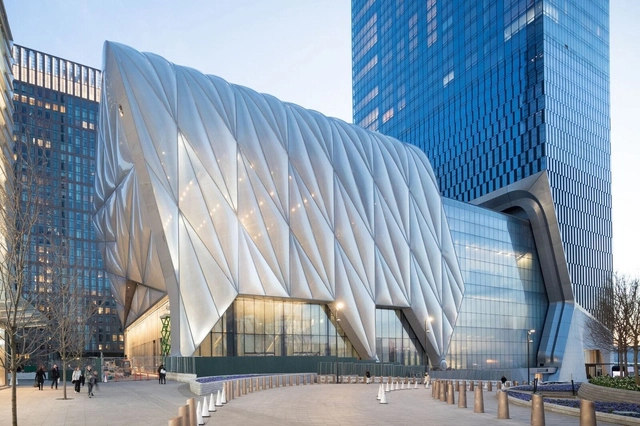
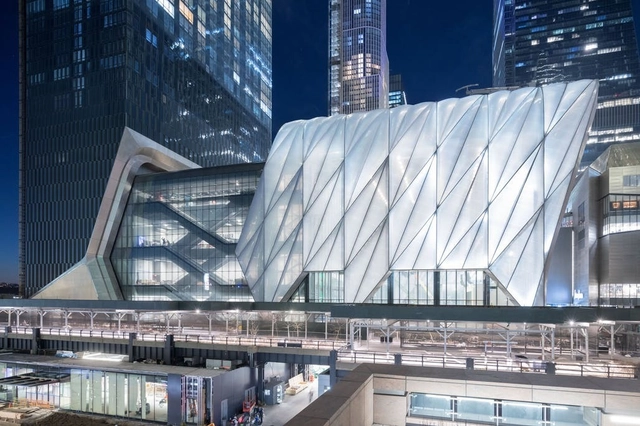
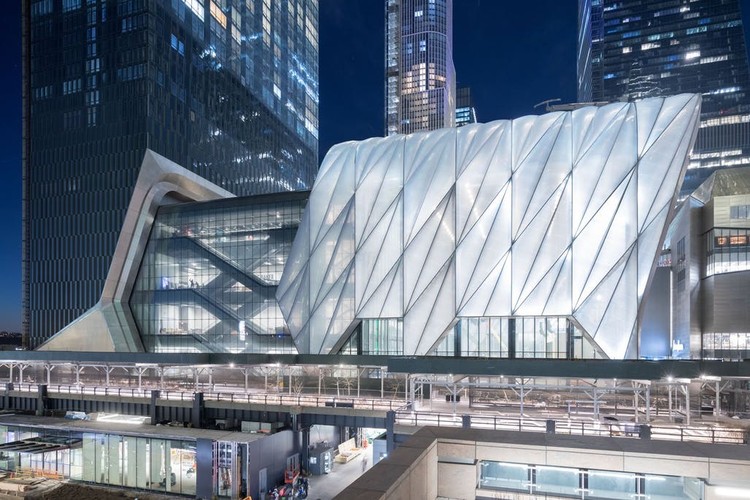
Until recently, the architecture world largely viewed plastic polymers as inferior building materials, handy for wipe-clean kitchen surfaces, but not practical in full-scale building applications. But with technological innovations driving material capabilities forward, polymers are now being taken seriously as a legitimate part of the architect’s pallet. One of the most widely-used of these materials is a fluorine-based plastic known as ETFE (Ethylene tetrafluoroethylene). Brought into the public consciousness thanks to its use on the facade of PTW Architects' Water Cube for the 2008 Beijing Olympics, architects are now realizing the film’s capabilities to express a new aesthetic and replace costlier transparent and translucent materials. Its most recent and spectacular public appearance was on the 120-foot telescopic shell of The Shed, designed by Diller Scofidio + Renfro and Rockwell Group in New York City.
Diller Scofidio + Renfro and Rockwell Group's iconic Shed has opened after more than a decade in the making in New York City. The building features a 120-foot telescopic shell in Hudson Yards that can extend out from the base building when needed for larger performances. Clad in ethylene tetrafluoroethylene (ETFE) “pillows,” the project is connected to the High Line on 30th Street to bring performances and art to the city's newest neighborhood,
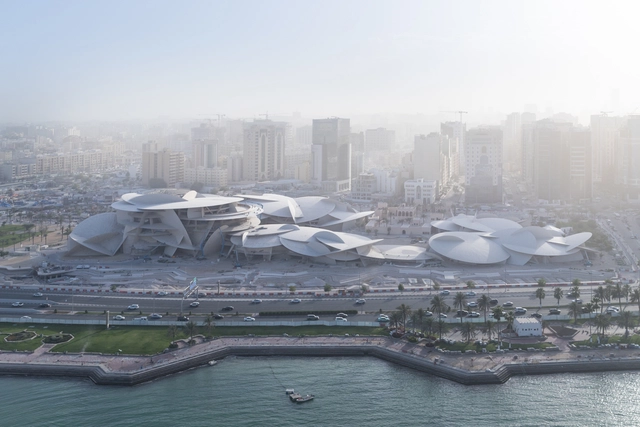
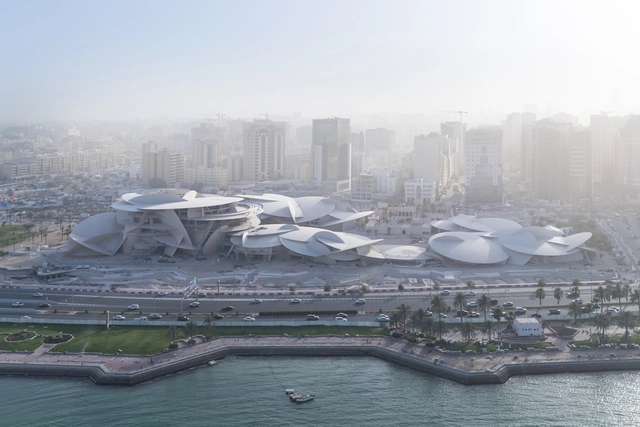
The Jean Nouvel-designed National Museum of Qatar has opened to the public in Doha. The architectural concept for the scheme has been inspired by the desert rose, and seeks to create a dialogue between the fluid, contemporary architectural form of the museum, and the historic objects it will contain. As quoted in a recent press release by Qatar Museums, the scheme will “give a voice to Qatar’s heritage whilst celebrating its future.” The museum opened to a lavish ceremony attended by architect Nouvel, and celebrities such as Victoria Beckham and Johnny Depp.
https://www.archdaily.com/893374/jean-nouvels-national-museum-of-qatar-takes-shape-as-new-images-releasedNiall Patrick Walsh
ArchDaily turns 11! To commemorate the occasion, we want to share with you the 11 projects most visited by our readers during this incredible journey. From the indisputable and timeless classics from of designers like Le Corbusier and Ludwig Mies van der Rohe, to the pioneering works of architects such as Zaha Hadid and OMA, passing through the delicate work of Gabinete de Arquitectura, these 11 examples teach us valuable lessons about architecture, most importantly: how to design for specific requirements without losing the creativity and beauty of architectural design.
On behalf of ArchDaily, we want to thank you for sharing with us the best architecture in the world, helping us to inspire professionals from all over the world to build better cities.
For this year's Women in Architecture Awards, The Architectural Review and the Architects’ Journal have selected Sheila O’Donnell as Architect of the Year and Xu Tiantian to win the Moira Gemill Prize for Emerging Architecture in the 2019 Women in Architecture awards. The Architect of the Year award recognizes excellence in design specifically in the context of a recently completed project and the Moira Gemmill Prize for Emerging Architecture is awarded to women designers under the age of 45 who show design excellence indicative of a bright future.
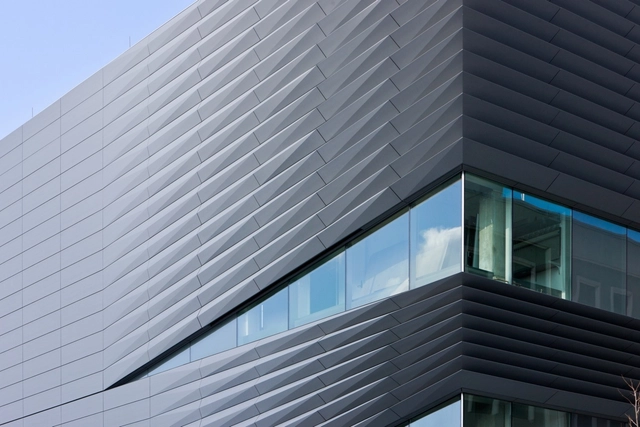
Zinc is a natural element extracted from ores. Its symbol, which appears in the dreaded Periodic Table, is Zn. Through a metallurgical process of burning its impurities (reducing zinc oxide and refining), it assumes a much more friendly appearance, and later becomes the sheets, coils, and rollers used in construction. The main characteristic of this material is its malleability, which allows it to be worked easily, allowing to cover complex forms in facades and roofs of buildings.
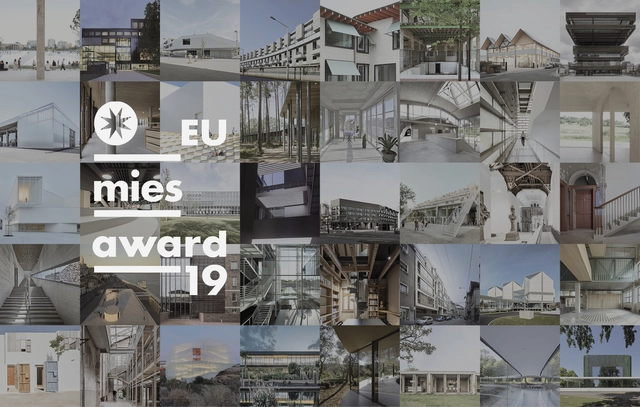
The European Commission and the Mies van der Rohe Foundation have announced the 40shortlisted works that will compete for the 2019 European Union Prize for Contemporary Architecture – Mies van der Rohe Award. The Prize, for which ArchDaily is a media partner, has seen a jury distill 383 nominated works into a 40-project-strong shortlist, celebrating the trends and opportunities in adaptive reuse, housing, and culture across Europe.
https://www.archdaily.com/909537/shortlisted-projects-announced-for-the-eu-mies-award-2019Niall Patrick Walsh
As 2018 winds to a close, we've started to look ahead to the projects we're most looking forward to in 2019. Many of the projects listed here have been in the works for years, having experienced the frustrating false starts and lulls that come in a profession dependent on long-term and significant capital investment, not to mention changing politics.
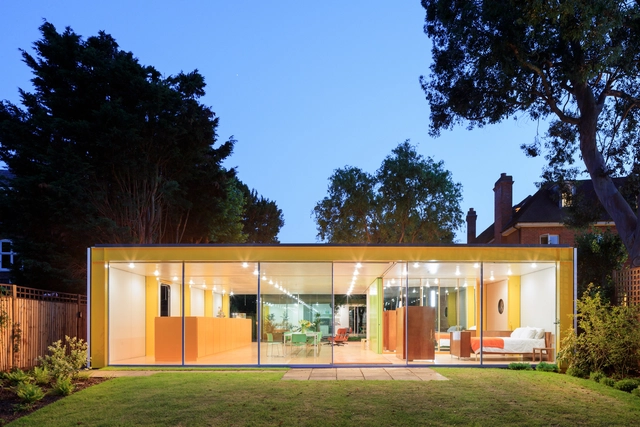
Harvard Graduate School of Design (GSD) has announced the six recipients of the 2019 cycle of the six recipients of their Richard Rogers Fellowship program. Inspired by Lord Richard Rogers’ “commitment to cross-disciplinary investigation and engagement,” the Fellowship established last year to support individuals “whose research will be enhanced by access to London’s extraordinary institutions, libraries, practices, professionals, and other unique resources.”
The 2019 winners were chosen from a pool of more than 140 applicants hailing from around the world. As in previous years, the fellowship allows the winners to spend a three-and-a-half month residency at the Rogers' Wimbledon House in London. The recipients also receive funding to cover their travel to London and $100,000 cash.
https://www.archdaily.com/907431/harvard-announces-the-2019-richard-rogers-fellowsKatherine Allen
In March 2016, when world-renowned architect Zaha Hadid died of a heart attack at age 65 in a Miami hospital, the news sent shockwaves through the architecture community.
The flamboyant British designer—born on October 31, 1950 in Iraq, educated in Beirut, and known as the “Queen of the Curve” for her swooping, elegantly complex designs—was a legend in her time. She had design commissions around the world, been awarded the Pritzker Prize in 2004 and the Royal Institute of British Architects’ gold medal in 2016, and transcended the old-guard strictures of a staunchly male-dominated profession.
Since the end of World War II, Russia’s cities have grown in a Modern Soviet style. This prolonged use and application of the principles of architecture’s modern movement heavily affected the country’s development and urban expansion. But now, the new generations of architecture professionals are seeking to make a change.
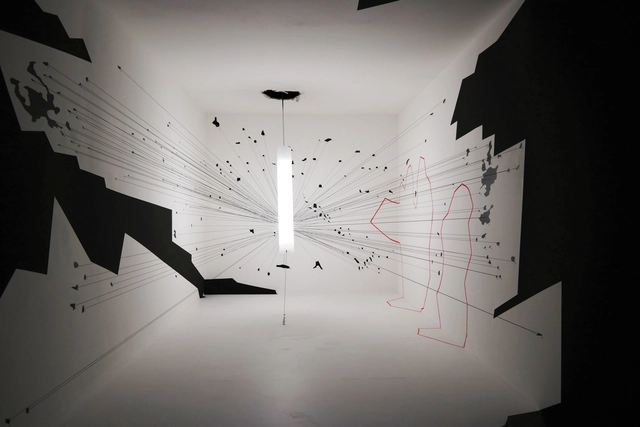
Forensic Architecture has been crowned overall winner of the Beazley Designs of the Year 2018, with their exhibition “Counter Investigations.” The firm has undertaken sterling work in recent years, uncovering miscarriages of justice and international war crimes through architectural analysis of imagery, from official news, satellite footage, and crowdsourced information.
The spatial investigation group, based in Goldsmith University London, is currently nominated for the 2018 Turner Prize. The interdisciplinary group of architects, filmmakers, journalists, lawyers, and scientists have devoted their energy to investigating state and corporate violations worldwide.
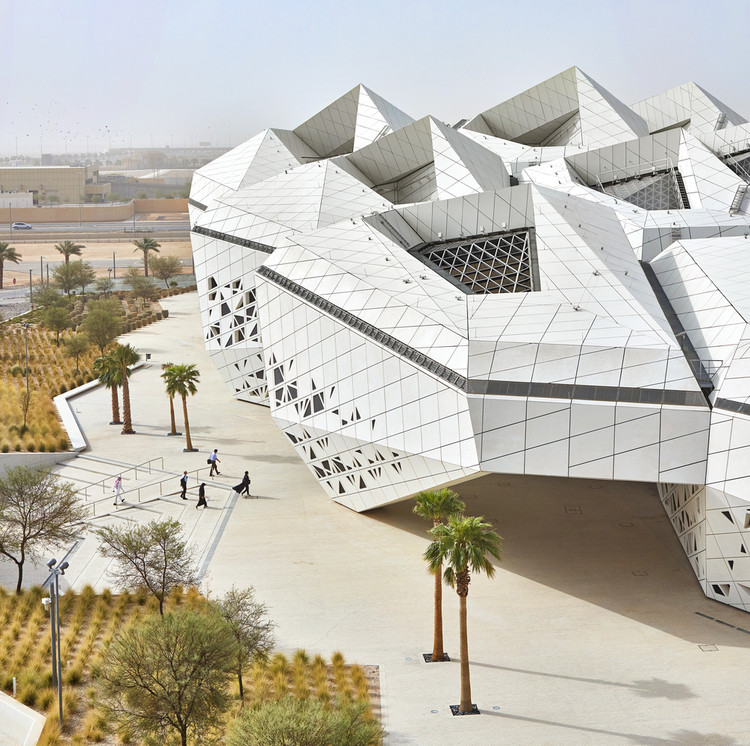
Surely every architect has wondered how the fluid but complex forms of the architecture of Zaha Hadid Architects are brought to reality. And it's beautiful to see how an initial conceptual idea –probably drawn as a quick sketch– materializes in precise and detailed planimetric drawings.
We have compiled a series of construction details from 9 projects developed by Zaha Hadid Architects that give insight into her distinct style and approach, showing us that, with a little ingenuity and a lot of expertise, even the most impossible-seeming dreams can be built.
If the surest sign of summer in London is the appearance of a new pavilion in front of the Serpentine Gallery, then it’s perhaps fair to say that summer is over once the pavilion is taken down. The installations have gained prominence since its inaugural edition in 2000, acting as a kind of exclusive honor and indication of talent for those chosen to present; celebrated names from the past names include Zaha Hadid, Rem Koolhaas, and Olafur Eliasson.
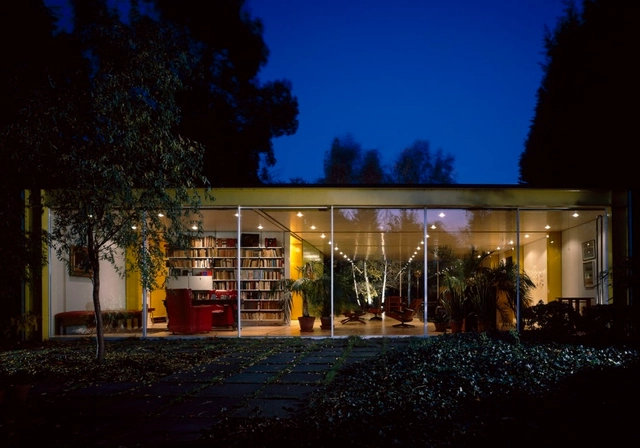
Harvard University Graduate School of Design has announced the 2019 Richard Rogers Fellowship cycle. Open to accomplished practitioners and scholars working in fields related to the built environment, the research-focused residency program is based in London at the Wimbledon House, designed by Lord Richard Rogers in the late 1960s. Fellows have researched a diverse series of topics, including examinations of public and affordable housing; how food and cooking transform cities; and citizen-driven urban regeneration initiatives, among others.
A coalition of 19 U.S. mayors have joined together with C40, a group dedicated to climate action. The coalition has proposed a plan to ensure that all new buildings be net-zero by 2030. The cities are joining forces with the World Green Building Council (WorldGBC) to achieve their emissions goals. All cities in C40 have signed the pledge to ensure new buildings will be required to produce as much energy as they consume by 2030. The initiative is part of a larger plan to make all buildings net-zero by 2050.






.jpg?1551411640&format=webp&width=640&height=580)







.jpg?1540932376&format=webp&width=640&height=580)

.jpg?1540930206&format=webp&width=230&height=230&crop=true)


.jpg?1540932376)

.jpg?1539856634&format=webp&width=640&height=580)


.jpg?1539856634)