-
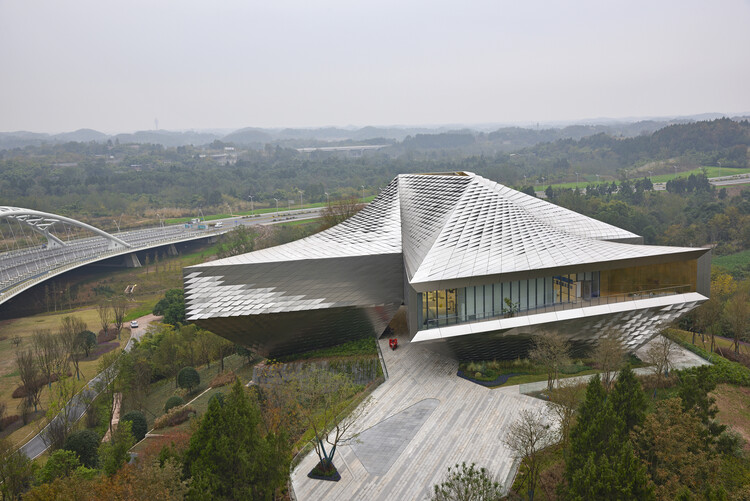
Architects: IwamotoScott Architecture
- Area: 3000 m²
- Year: 2025

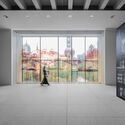
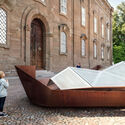
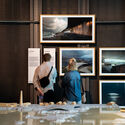
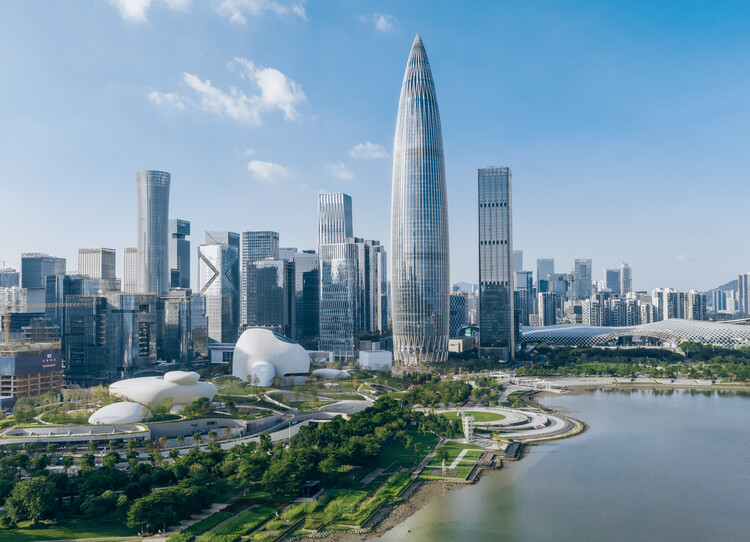
This week, architecture's relationship with culture took center stage through exhibitions, public projects, and new cultural infrastructure that extend architectural discourse beyond the building itself. While major exhibitions from Australia, Shanghai, Barcelona, and Copenhagen examined themes of housing, landscape, and place through research and design, newly unveiled projects in China and Italy demonstrate how museums, performance venues, and mixed-use projects are increasingly conceived as open public landscapes rather than isolated institutions, while new exhibitions and construction milestones reflect ongoing experimentation in adaptive reuse, context-responsive design, and flexible urban environments.


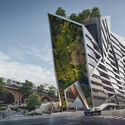
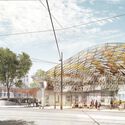
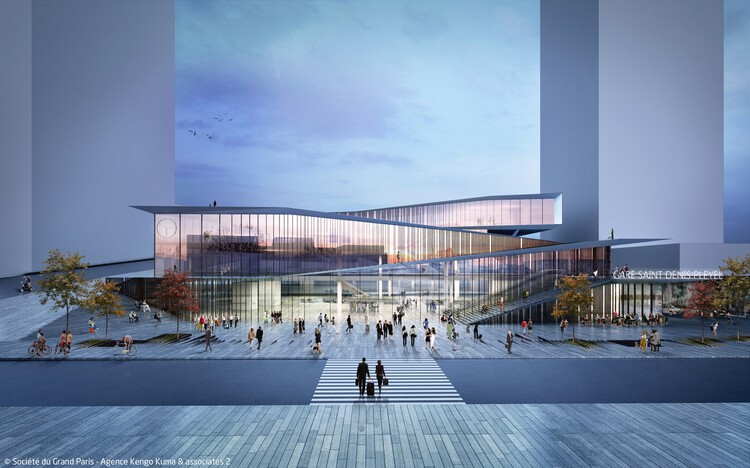
The Grand Paris Express project consists of 200 kilometers of new, fully automated metro lines, 68 new stations, and four new orbital lines (15, 16, 17, and 18), in addition to the extension of Line 14. The network is being delivered in phases between 2024 and 2031: Line 14's 8 stations are fully operational following its 2024 extension, Line 18 is the most advanced of the new lines, with testing underway ahead of its first opening, and civil engineering is largely complete on many sections, with tracks, systems, architectural fit-out, and testing now progressing station by station. Each of the 68 stations is assigned to a specific architect or architectural team, sometimes in collaboration with landscape architects for above-ground elements.

In 1968, the furniture designer and RCA professor David Pye published The Nature and Art of Workmanship, a book built around a distinction between "workmanship of risk" and the "workmanship of certainty." Pye was not writing about architecture, and despite how the phrase gets used today, he was not really writing about hands versus machines either. He pointed out that a printing press, entirely mechanical, still depends on someone judging the ink and the register, while a woodturner working a lathe by hand can follow a template closely enough that almost nothing is left to chance.
Workmanship of risk, in Pye's definition, is any process where the outcome is not fixed in advance but depends on the judgment, dexterity, and attention the maker exercises while the work is still underway. Workmanship of certainty is the opposite condition, as the result is settled before production begins, locked into a jig, a mold, or a program, so that everything downstream is execution. Pye was careful to note that neither mode is inherently superior and that a numerically controlled machine, calibrated to leave room for drift, can sit closer to risk than a hand tool run to a fixed template.


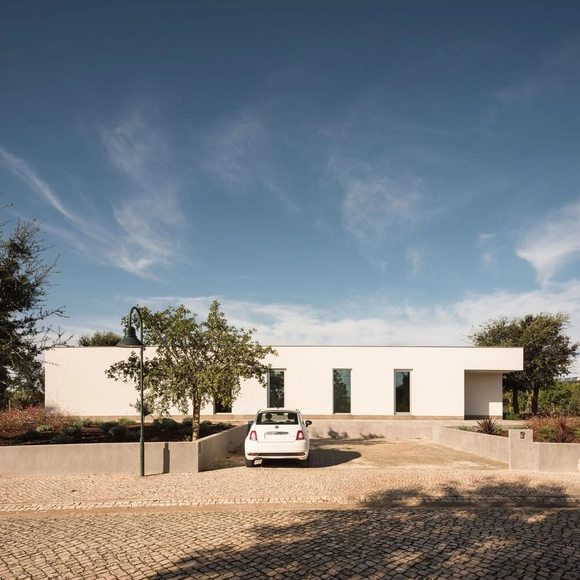


As pillars of our cultural landscape, many masterpieces of the Modern Movement are often demolished, abandoned, or altered regardless of the context in which they are located. Preserving this architectural legacy highlights the role of architecture and design professionals in shaping built environments where continuity between the past and the present reinforces communities' sense of place. On Long Island, a coalition of advocates came together to save the A. Conger Goodyear House, which dates to 1938 and was designed by Edward Durell Stone. Considered one of the notable examples of the International Style in the United States, the house attracted significant attention throughout the 1940s, appearing in specialized journals, books, and popular publications.


Buildner has announced the results of its third edition Architect's Stair international architecture ideas competition. The event invited designers to reflect on one of architecture's oldest and most symbolic elements: the stair. Beyond its functional role as a connector of levels, the stair was positioned here as a medium of architectural storytelling—an invitation to explore ideas of procession, sequence, space, and form.

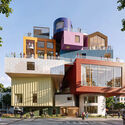
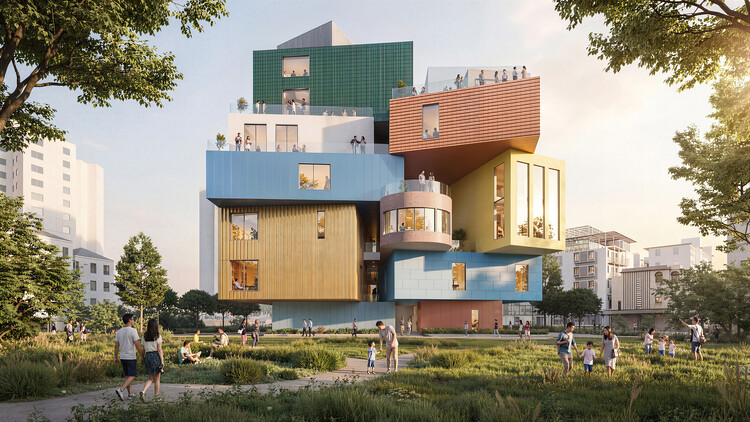
Designed by MVRDV, Bihailou Art Village is a mixed-use cultural and commercial centre currently under construction in Shenzhen, China. Located in the Shatoujiao neighborhood near the Hong Kong border, the mixed-use project combines cultural, commercial, and public programs within a vertically stacked composition derived from the firm's "Vertical Village" concept. Designed to accommodate independently operating venues while maintaining publicly accessible circulation, the development reinterprets the scale and spatial character of the surrounding urban fabric through a series of distinct volumes.