CityMakers is working with ArchDaily to publish a series of articles, conversations, and interviews with the different actors in the co-production of cities behind the Barcelona CityMakers Lab 2019, an event taking place from October 14 to 20.
On this occasion, we feature Salvador Rueda, director of the Urban Ecology Agency of Barcelona, who will give a Masterclass at the Barcelona CityMakers Lab 2019, addressing the challenges of implementing Barcelona's Sustainable Urban Mobility Plan based on "Superblocks".
On August 8, as part of Expo Arte-Objeto—an exhibition commemorating the 60th anniversary of Llano de la Torre— Firenze invited architect Ricardo Casas to reinterpret the use of porcelain tiles with playful, exclusive designs.
Inspired by the successful Tejiendo la Calle initiative—winner of the Design and Citizen Participation Award at the 2016 Ibero-American Design Biennial—Supertrama is a public art program in the autonomous community of Extremadura, Spain, focused on rural areas. In municipalities with fewer than 5,000 inhabitants, residents collaborate with architects, artists, and other creative professionals interested in public art to transform their local public spaces.
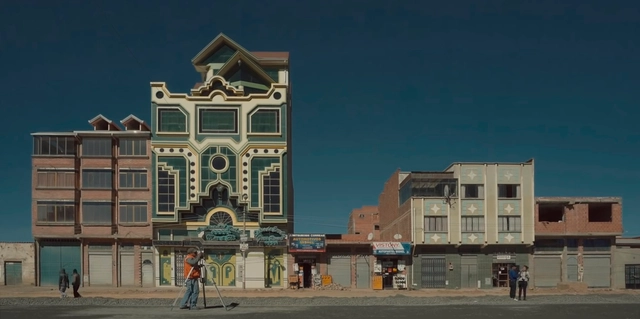
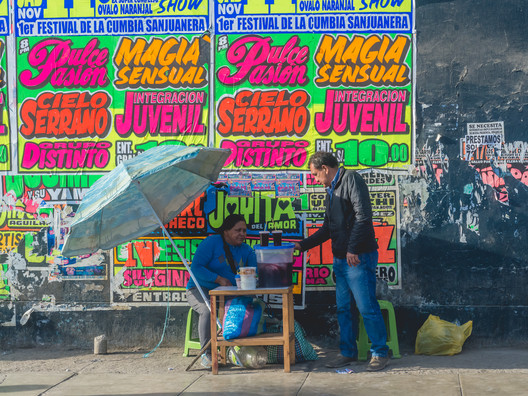
It is best to remember a diverse Lima, rather than the centralized capital. To remember that this very centrality has turned it into a meeting ground for Peru's diverse cities. Everyone comes to the capital, yes, but in this city, the three regions (coast, highlands, and jungle) blend while preserving their essence like nowhere else. "Todas las sangres" (All Bloods) is the title of the most ambitious novel (1964) by Peruvian writer José María Arguedas—an attempt to portray the whole of life through the representation of geographical and social settings from across the country. This expression, which remains relevant today, points to the racial, regional, and cultural variety of our society. Speaking of "all bloods" unites and blends us: it contains and integrates our diversity. Speaking of "all colors" evokes this colorful and intercultural nature.
On June 5, 2019, the College of Architects of the State of Oaxaca, a member of the Federation of Architects of the Mexican Republic (FCARM), officially launched the call for entries for the First Oaxacan Architecture Biennale 2019. The initiative aimed to showcase and promote architecture developed within the state, elevating Oaxacan architecture to a national stage. For this inaugural edition, the jury consisted of architects Aldo Paul Ortega Molina, Victor Sánchez Ruz, Prometeo Alejandro Sánchez Islas, Miquel Adriá, and Andrea Griborio.
Fernando Higueras (1930-2008), a leading figure of late-modern Spanish architecture in the 1960s, was, like many others of his generation, an Icarus-like youth obsessed with reaching the sun. Far from conforming to the rigid standards of his time, his architecture rose above the earthly plane with a single goal: to conquer the unknown. Even then, he concluded that modern architecture was misguided, that none of it made sense. Looking at contemporaries like Le Corbusier and Mies van der Rohe—with their flat roofs and obstinate obsession with lightness—nothing added up for him. His undeniably reactionary attitude drove him, from an early age, to boldly rebel against the hypocrisy of the triumphant establishment.
In October of last year, in an exclusive interview with ArchDaily, we spoke with architect Alberto Kalach about the role of the architect and land-use planning in Mexico. During our conversation, he strongly emphasized the need to reinvent the architect's role to develop much more holistic projects integrated with their territory.
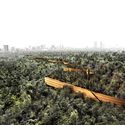
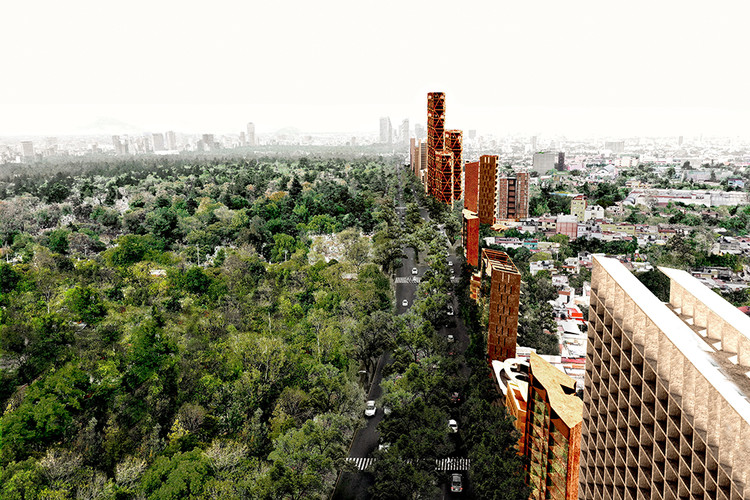
Based on this premise, Alberto Kalach's firm, Taller de Arquitectura X, presents an ambitious project centered on integrating the park with the city and vice versa. This initiative addresses the more than 70 neighborhoods surrounding the forest—an area home to 800,000 people living less than 1 kilometer from the Chapultepec Forest, 560,000 of whom reside behind Avenida Constituyentes, which severely limits their mobility to the park.
The University of Navarra presents three Master's programs for 2019: the Master's Degree in Architectural Theory and Design (MtDA), the Master's Degree in Environmental Design and Building Management (MDGAE), and the Master's Degree in Architecture (MUA). These in-person programs will be taught at the university's Pamplona, Madrid, and Bilbao campuses starting in September of this year. Explore more details below.
Today, architecture is a fertile ground for experimentation—a laboratory for testing solutions and building theory. It offers an opportunity to question paradigms, rethink contemporary ways of living, and understand our inherent cultural heterogeneity. Ultimately, it provides a space to enhance the critical value of design and investigate the current place of local practices within a global context.
With a deep understanding of their territory and an exploratory spirit, these emerging firms approach the discipline in innovative ways. Many are defined by an open and evolving character, featuring a multidisciplinary makeup where architecture, urban planning, design, and art seamlessly merge. Below, we present six architecture firms based in Argentina whose work prompts us to reflect on contemporary needs, domesticity, objects, the city, and local production:
Lluís J. Liñán, from the ARKRIT Collective, invites us to reflect, in his article "Global Valdrada," on the consequences of humanity's increasingly close relationship with its media representations, to the point where the distinction between the two realities is no longer discernible: it shapes our way of thinking and behaving, and therefore, how we produce everyday reality. Does the same apply to architecture?
https://www.archdaily.com/1119643/valdrada-global-access-to-information-shapes-the-way-we-produce-architectureLluís J. Liñán
Ink and paper were enough to immortalize the charm and spell of balconies, courtyards, and houses—both iconic and everyday structures. The giants of Argentine literature draw their pens to confront the concrete, reminding us once more of what moves and concerns us about architecture.
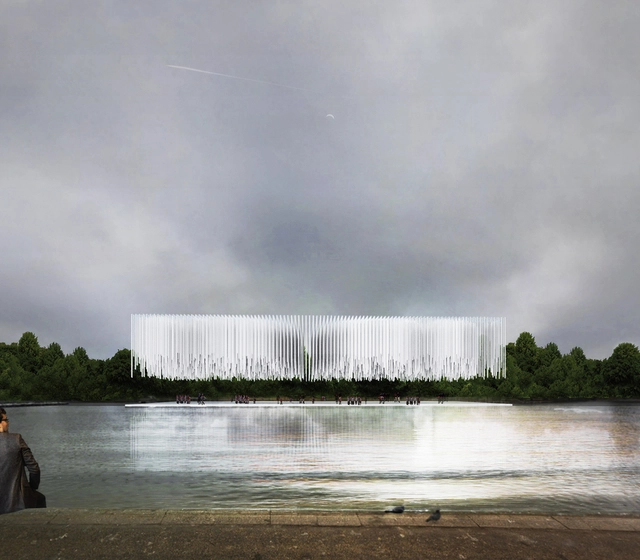
After receiving 94 proposals from 29 different countries, the Hyde Park Music Pavilion (HPMP) international ideas competition, organized by arquideas, has announced the winning projects. Hyde Park is one of the largest parks in London, England, and one of the city's nine Royal Parks, three of which form a chain from the entrance of Kensington Palace, through Kensington Gardens and Hyde Park, to Buckingham Palace.
1° Premio - Perspectiva Exterior. Image Cortesía de Arq. Gustavo Robinsohn
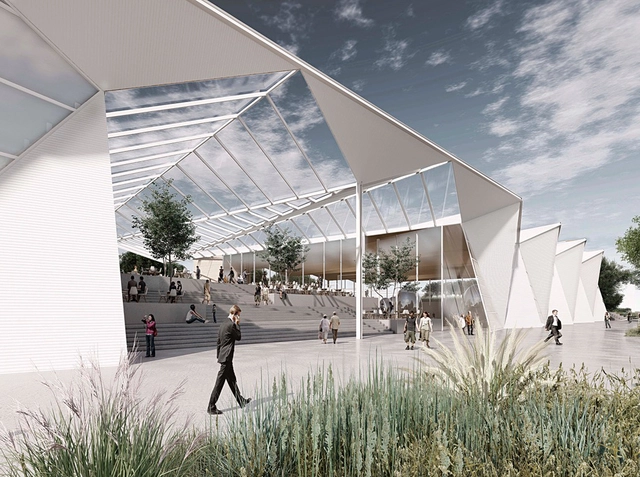
The results of the International Ideas Competition for the design of the Thematic Pavilions for Expo 2023 on the Tecnópolis grounds have been announced. Organized by the Sociedad Central de Arquitectos(SCA) and the Colegio de Arquitectos de la Provincia de Buenos Aires (CAPBA), and sponsored by the Federación Argentina de Entidades de Arquitectos (FADEA), the fifth of the six international competitions involved the design of two pavilions to serve as exhibition areas for the themes addressed by the Expo, creating ideal spaces to explore creative industries in an educational and entertaining way.
Iconoclast, painter, musician, photographer, visionary, genius… and architect. Fernando Higueras [Madrid, 1930-2008] left his mark on the history of Spanish architecture in an emotional way, showcasing architecture in its most essential quality.
Born in Madrid on November 26, 1930, Fernando Higueras was, like many others, a key exponent of late architectural modernism in 1960s Spain. Far from being merely novel or exceptional, his approach reiterated the timeless lesson of the creative process: talent and grace were not enough; they had to be accompanied by immense perseverance and, above all, passion.
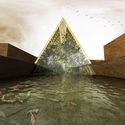
Argigram is a project that explores the possibilities of developing a local version of the future, presented as an exhibition from July 23 to September 8 at the Mar del Plata Museum of Contemporary Art (MAR). Curated by Martin Huberman, the exhibition focused on the production of nine cities for the 2050-2100 period, where various architects from Argentina had the opportunity to study and test territorial relationships, aesthetic tensions, and cultural developments to reclaim the creative and cultural sovereignty of Argentina's future.
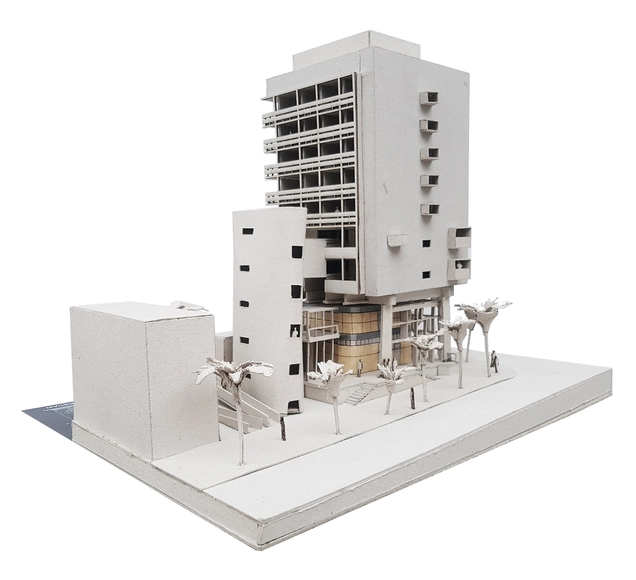
Instituto de Previsión Social (Soto & Rivarola. 1959). Maqueta en corte: Diana Aguilar, Maxi Billerbeck, Christian Navotka, Florencia Calvo y Bruno Lefalle.. Image Cortesía de Elías Barczuk
We often think of heritage as a collection of valuable assets inherited by an individual or a group. While we sometimes identify fully with its meaning and the legacy passed down to us, we all too often squander its benefits.
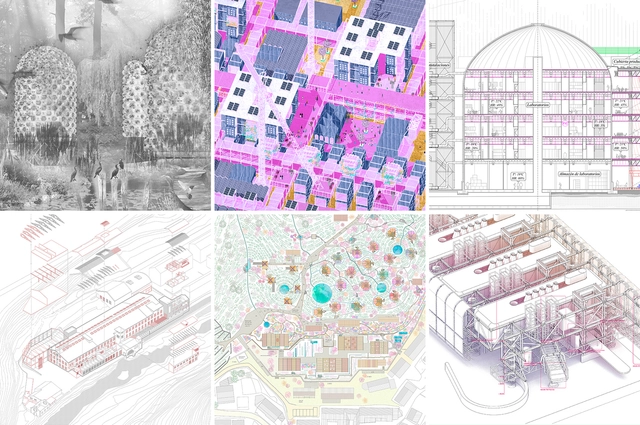
To showcase the valuable output of Spanish universities, we launched an open call in September, inviting our readers to submit their thesis projects. Following a comprehensive evaluation of nearly 50 proposals, we selected 6 projects that not only offer innovative responses and deep research into complex, contemporary issues but also challenge and question the future of architecture.
Fifty years after its last participation, Cuba returns to the Milan Triennial for the XXII International Exhibition, titled "Broken Nature: Design Takes on Human Survival."
Addressing the relationship between humanity and nature, the Cuban Pavilion showcases unconventional examples of organic architecture: the National Art Schools of Havana, born of Fidel Castro and Che Guevara's desire to offer art education to all developing nations.
As part of the 2019 Chicago Architecture Biennial, the Graham Foundation hosted Tatiana Bilbao's exhibition, "Unraveling Modern Living," featuring an immersive installation that transforms a former domestic space to explore new forms of collectivity. Through this intervention, Bilbao reconfigures the existing architecture to create a garden, a space for knowledge, a space for dialogue, and a space for gathering, in collaboration with the Sweet Water Foundation, Colectivo 1050°, MAS Context, and Lurie Garden, among others.
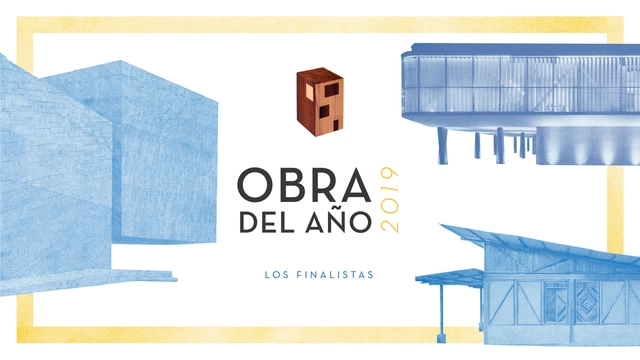
More than 10,000 readers nominated their favorite projects from nearly 1,000 built works in Latin America and Spain: the day has come to meet the finalists of ODA19.
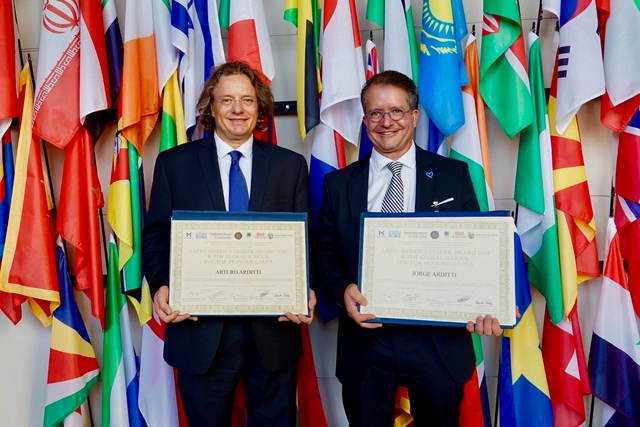
On Wednesday, December 4, Mexican architects Arturo and Jorge Arditti received the Honorary Doctorate Latin America Leaders Awards 2019 at the United Nations headquarters in Vienna. The distinction was awarded by The Global School for Social Leaders in collaboration with 1MillionStartups, The Ban Ki-moon Centre for Global Citizens, the Humanist World Foundation, and the Analysis and Opinion Research Group (GIAO).
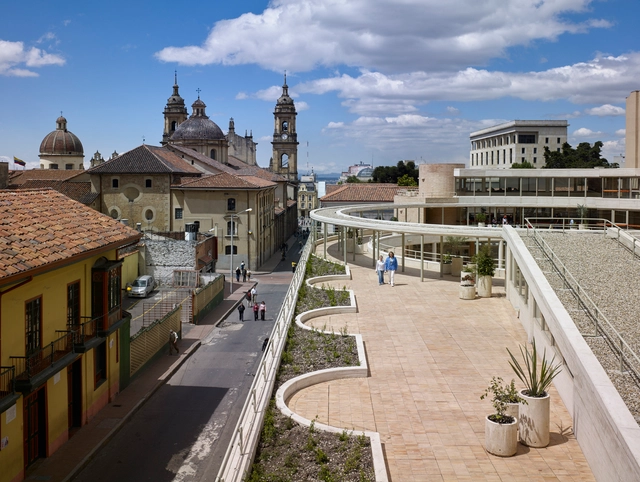
Bogotá's Historic Center is a crucial sector for the capital's development. But what makes a city an attractive hub for urban development? The answer depends on the scale of the evaluation; for its residents, it is measured in quality of life, job opportunities, and green spaces, among other factors. While economic factors drive the realization of these parameters, public policies that organize the territory and facilitate urban development ultimately take precedence.

.jpg?1566510800&format=webp&width=640&height=580)









_8575.jpg?1568928556&format=webp&width=640&height=580)
_8568.jpg?1568928579)
_8548.jpg?1568928532)
_8569.jpg?1568928567)
_8576.jpg?1568928544)
_8575.jpg?1568928556)