Former ArchDaily's Managing Editor. BA in Architecture from Newcastle University, and interested in how overlooked elements of architectural culture —from the media to competitions to procurement processes can alter the designs we end up with.
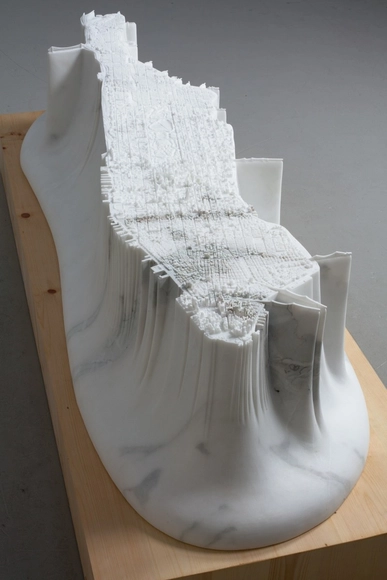
You've never seen Manhattan quite like this: Metropolis Magazine's Komal Sharma takes a look at "Little Manhattan", a sculpture by Yutaka Sone which renders the famous island in 2.5 tons of solid marble. The power of the artwork lies in the play with scale: the initial impression of a huge marble block contrasts with the tiny, intricately detailed skyline forming a mere skin on top; the subsequent realization that this skin corresponds to the familiar vertical city brings you to a more complete understanding of Manhattan's scale. You can read the full article here.
In this delightful article on Metropolis Magazine, Christopher Hawthorne recounts his meeting with Deborah Sussman, the one-time protégé of Charles and Ray Eames whose work breaks the boundaries between graphic design and architecture. From her collaboration with Frank Gehry to her iconic designs for the 1984 LA Olympics, Sussman has come to define a curiously Californian style. You can read the full article here.
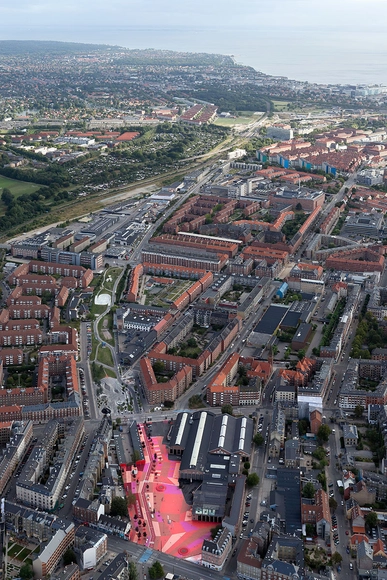
In an enlightening interview on Future Cape Town, the Lord Mayor of Copenhagen Frank Jensen discusses what it is that makes Copenhagen, and Denmark as a whole, such a green-focused society. The key it seems goes beyond simple politics, stemming from a combination of early adoption, a robust and widely appreciated welfare system and a culture of collaborative innovation. You can read the full interview here.
The UIA (International Union of Architects) is inviting architecture students to enter its "Healthcare Otherwhere" competition, part of their World Congress in Durban, South Africa this summer. Against a backdrop of poor health outcomes caused by poverty, the competition challenges students to propose how architecture might be involved in promoting good health by designing a building in the Warwick Junction area of Durban. Registration has been extended to April 17th. You can register here.
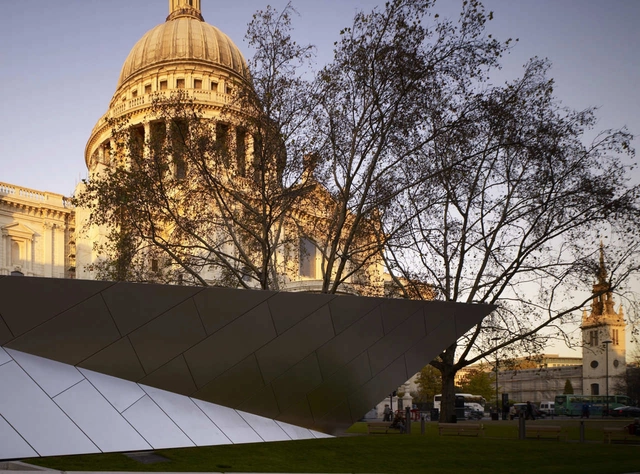
In this intriguing article in the Telegraph, Stephen Bayley critiques protecting cities' "traditional" view corridors out of nostalgia (or fear of bad architecture). On the premise that "not all development is bad" and that "the only cities that do not develop are dead ones", Bayley argues forcefully for better, rather than less, city building. You can read the full argument here.
Despite 20 years of government promises to improve the quality of housing following the end of apartheid, for many in South Africa's townships there has been little noticeable change. This is not to say that the South African government has not been working to meet these goals; however, the scale of the problem is so large, and with population growth and migration, the challenge is only getting greater.
20 years ago, Greg Girard and Ian Lambot published "City of Darkness", a book which documented life inside the notorious Kowloon Walled City in Hong Kong during its peak in the late 1980s. When the high-rise slum was cleared and demolished soon after in 1993, this collection of photographs, interviews and essays became a eulogy of sorts, becoming one of the key texts on the most densely populated place the world has ever seen.
Two decades later, Girard and Lambot have revisited the book - and to fund this new edition, they have turned to Kickstarter.
Read on after the break to find out what's new in this edition and how you can help fund the book.
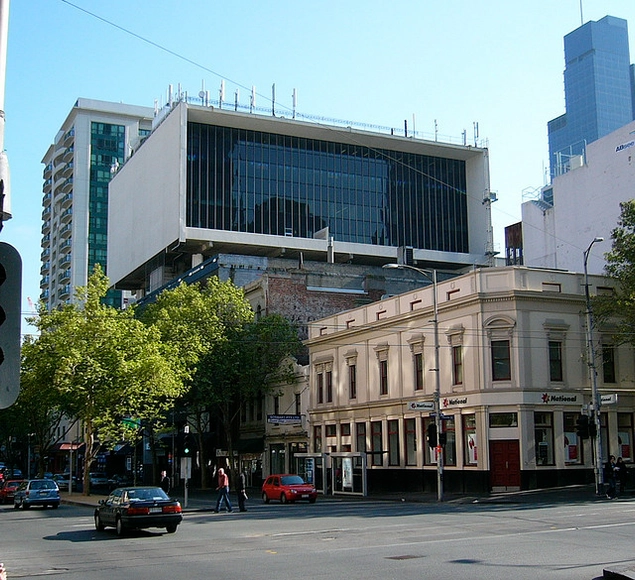
Melbourne newspapers are reporting on an argument breaking out over the preservation of the city's postwar modernist buildings, centering (as ever) on the dispute between their value as cultural heritage vs their 'ugliness' (you can see all the contested buildings in a neat graphic at The Age). While many are in favor of preservation, Alan Davies, in anarticle for Crikey, warns that the cultural benefit in protecting these buildings should always be weighed against the cost of preventing the developments that would have taken their place. Read the full article here.
To commemorate the 25th anniversary of the fall of the Berlin Wall this autumn, Germany planned two memorials, one in Berlin and one in Leipzig. However, as Der Spiegel reports, not only are they almost certainly not going to be complete in time for the anniversary, they have both proven highly controversial with the local people. Will these designs turn out to be monuments to German reunification, or just monumental failures? Read the article on Der Spiegel to find out more.
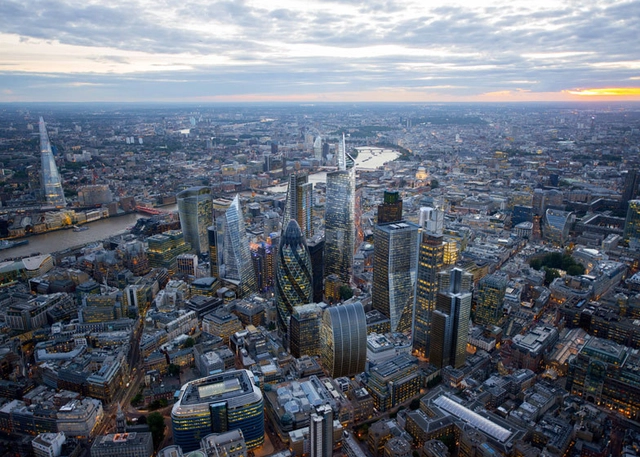
Central London as it will look when all current projects are completed.. Image Courtesy of CPAT / Hayes Davidson / Jason Hawkes
In a study of all development plans in London, the think tank New London Architecture has found that at least 236 buildings over 20 stories are currently either under construction, approved or awaiting approval in the capital - with over 80% of these projects yet to break ground.
The study, created to support an exhibition by NLA called "London's Growing... Up!," found that 80% of the new towers will be residential, and that the areas of greatest activity were in Central and Eastern areas of London, with 77% of these tall buildings in the City of London or the Boroughs of Tower Hamlets, Lambeth, Greenwich, Newham and Southwark.
Read on for more results of, and reactions to, the study...
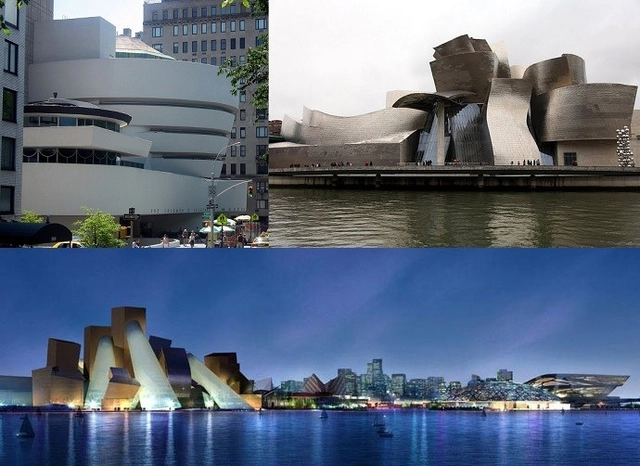
As part of his strategy to solidify the "Olympic Legacy" of East London, Mayor Boris Johnson has recently been focusing on providing the Queen Elizabeth Olympic Park with a little more diversity in its buildings, placing an emphasis on bringing cultural institutions alongside the sports buildings. Now, alongside the V&A's plans for new galleries and University College London's proposed design school and cultural centre, The Art Newspaper reports that Johnson is out to grab a headline attraction: London's own Guggenheim.
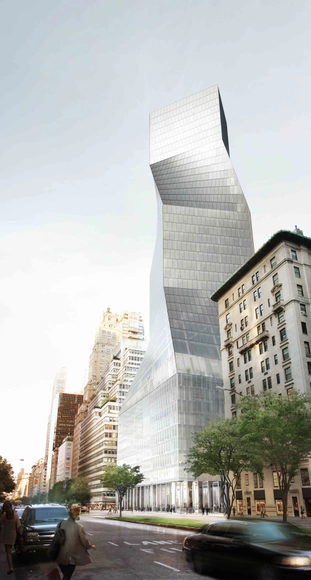
Brown is critical of OMA's entry for 425 Park Avenue, believing that the pressure of the competition meant it was lacking in OMA's usual sophistication. Image Courtesy of OMA
In an interesting article for the Architects' Newspaper, Marshall Brown explains why competitions are bad for architecture (both the business and design) and challenges his fellow architects to kick the habit. While competitions used to drive architectural innovation, he says they have become little more than "fantastic and relatively affordable publicity" for the developers who commission them, with competition masters such as BIG driving "an arms race of gigantic object-scape." You can read the full article here.
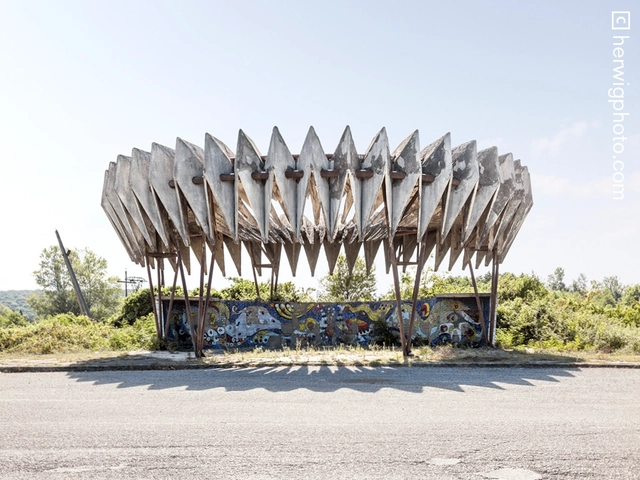
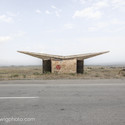
Pitsunda, Abkhazia. Image Courtesy of herwigphoto.com
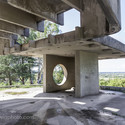
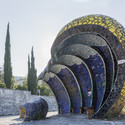
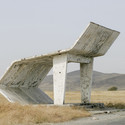
Over a decade ago on a cycling trip across Europe, photographer Christopher Herwig stumbled upon a curious phenomenon that would become his obsession for years: bus stops. Curiously for a regime usually associated - both architecturally and otherwise - with uniformity and with sameness, the bus stops built by the Soviet Republic display remarkable diversity and creativity. Herwig made it his mission to photograph as many of these remarkable structures as possible, travelling through Latvia, Lithuania, Estonia and Russia; Kyrgyzstan, Uzbekistan, Tajikistan, Turkmenistan and Kazakhstan; Ukraine, Moldova, Georgia, Armenia, and Abkhazia.
Now complete, Herwig has launched a Kickstarter to turn this remarkable collection of photographs into a limited edition book, which he describes as "the most mind-blowing collection of creative bus stop design from the Soviet era ever assembled." Check out some of the images after the break.
The New City of Songdo in South Korea. Image Courtesy of Cisco
Originally published by Metropolis Magazine as "Big Data, Big Questions", this article by Alex Marshall examines what is arguably the most important aspect of smart city design: not how they will be created, but who will create them. He finds that, though an apparently new phenomenon, smart cities are just like their forebears in that they are built primarily by political will, not microprocessors.
Not long ago, I bought a beetle-shaped piece of silicone and metal that slips into my pocket and keeps track of how much I walk. Called a Fitbit One, it’s essentially a glorified pedometer. The device’s shell is jammed with hard- and software that lets it talk to my computer and iPhone. It sends me attaboys! on its tiny screen and, most importantly, the gadget talks with my spouse’s Fitbit, which allows us to compete with each other.
The Fitbit is not on anyone’s list of smart-city phenomena, but I would argue for including it, because it’s changing my relationship with the streets I walk in New York City. It also illustrates the pervasiveness of smart technology, and its limitations. For all its coolness—and it is cool—my device is doing something digitally that had already been done well mechanically, and at a lower price. A lot of the smart-cities technology is like this—it’s changing how we do things, but often not what we do.
Read on for more about the changes brought about - or not brought about - by smart cities after the break
In a public interview, director Mary McGuckian speaks with Shane O'Toole of DoCoMoMo Ireland about her soon-to-be-released film, "The Price of Desire," a biopic about the influential Irish modernist Eileen Gray - narrated from the perspective of Le Corbusier, no less. McGuckian explains how the film and the extensive research behind it went far beyond the usual remit of a biopic. Indeed, not only did it spawn an accompanying documentary ("Gray Matters", directed by Marco Orsini) and book, it even played a pivotal role in the restoration of E1027, Gray's seminal house design, to a point where it was possible to film on location.
In his talk at TEDx Vilnius, Koen Olthuis compares the cities of today with those at the turn of the 20th century: "cities are not full, we just have to search for new space... they made elevators and built a vertical city. We have to do exactly the same, but our generation has to look at water." With that in mind he looks at the top 10 reasons that floating cities are becoming a more popular idea, including: they provide solutions for topical issues such as flooding and sustainability; they can be used as 'plug in' travelling global amenities, useful for things like Olympic Stadiums; or could even allow us to rearrange urban areas.
Videos
Doonamoe, County Mayo Ireland. Town of Belmullet. The Thin Places are Irish places where time past, present, and future converge. This project envelops a 100 ft deep blowhole by the Atlantic Ocean. The waves are thrusting up over a 100 ft into the air and the thin place walk is aligned to the equinox. Image
Originally published by The Huffington Post as "The Problem With Architecture Today (and the Solution)", Monica Gray documents the work of Travis Price, an architect and professor who works with his students to produce singular works all over the world which fight against the soulless architecture of our age.
According to Travis Price, an award-winning architect and philosopher whose work is rooted in ecology and mythology, most architecture today is just plain soulless. "You go into malls and they float all kinds of Roman columns and fake images. It's Disney. It's superficial. It's mass produced. It's empty."
Price, a fellow of the American Institute of Architects, focuses on restoring the "spirit of place" to modern design by providing an alternative to the "sprawl, mall and tall" trend of generic suburban architecture today, or, as he puts it, "a slow moving Pompeii blanketing us with the pursuit of loneliness and homogeneity."
Read on after the break to find out how Price is in his own way combating this problem