
1. ArchDaily
  2. Articles

Articles

Follies and Monuments

Subscriber Access | 
Follies and Monuments - Image 2 of 4

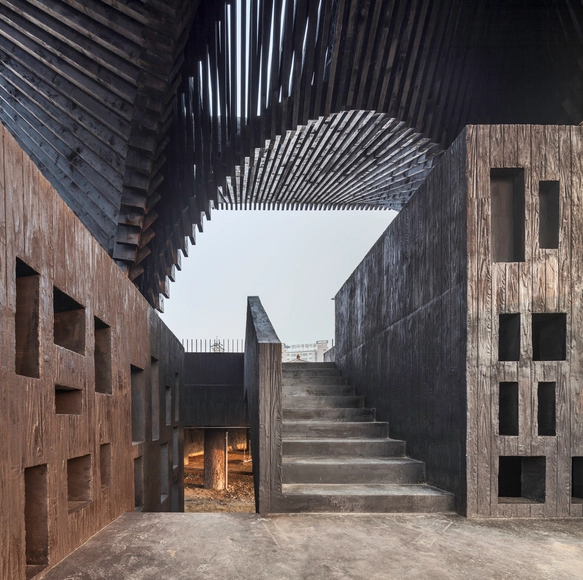
My commitment to pavilions—to the idea of making constructional follies—is connected with needing to develop prototypes and carry out constructional research away from the normal practice of architecture. Without being subject to a client’s brief, the pavilions give me an opportunity to develop and test different methodologies, which is something that has always interested me about teaching. They are investigations into various kinds of context, dealing with urban scenarios and landscapes—they are about making something in space for its own sake, when the guiding idea comes from a reading of place. The pavilions fine tune my engagement with a specific situation, allowing me to see what is essential in terms of an action or construction. I did not set out with the idea of working in series, but as different opportunities came up, the process of designing them became more organic, the language seemed to make sense, and as one thing reinforced another, they took on a life of their own. 
Aerial Futures Explores the Future of Urban Air Mobility in New Video

Subscriber Access | 

Advances in technology have changed the way people work and move around congested cities. Since free space in these urban areas has become scarce, people have shifted their perspective upwards and are now looking to the sky for new means of mobility, transporting their goods via cargo drones and flying ‘taxis’.

Mayank Thammalla Transforms the Venetian Canals into an Architectural Canvas

Subscriber Access | 

Nothing is ordinary about the Italian city of Venice. Whether it is the vividly-colored architecture that dates back to Gothic and Byzantine eras, or the fact that the city is floating on water, culturally-rich Venice is an intriguing destination for people of all backgrounds and interests.

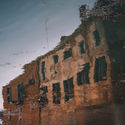
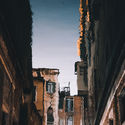
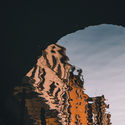
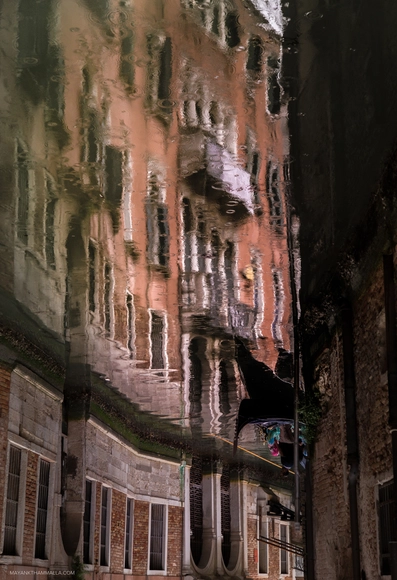
With every visit to Venice, London-based architect and photographer Mayank Thammalla found himself discovering new scenic views of the city, ones that are often tucked beneath its architecture. In his recent photographic series ‘Echoes of Venice’, Thammalla used the canal ripples as his canvas and displayed the deteriorating architecture of Venice from a unique, inverted perspective.

Mayank Thammalla Transforms the Venetian Canals into an Architectural Canvas - Image 1 of 4Mayank Thammalla Transforms the Venetian Canals into an Architectural Canvas - Image 2 of 4Mayank Thammalla Transforms the Venetian Canals into an Architectural Canvas - Image 3 of 4Mayank Thammalla Transforms the Venetian Canals into an Architectural Canvas - Image 4 of 4Mayank Thammalla Transforms the Venetian Canals into an Architectural Canvas - More Images+ 17

Iphan's Cultural Heritage Dictionary: What Is "Place"

Subscriber Access | 

Places are physical spaces imbued with cultural significance, to which values are assigned. In Brazil, the term was permanently integrated into the heritage vocabulary in 2000, following Decree No. 3,551—which established the four Registry Books, including the Registry of Places—and the implementation of the National Inventory of Cultural References. Within this framework, Place is, therefore, a category for classifying cultural assets.

ArchDaily Topics - June: Travel

As architects, we are on an endless journey of discovery, open to new experiences that fuel our creativity. We explore our surroundings and beyond, we travel to expand our views and open our mind, being often exposed to the unexpected. All these experiences are stored in our mental hard drive until the inspiration moment comes, drawing random non-linear connections between them and putting us into a state of divergent thinking, from where new ideas appear. 

Continuity and Sensitivity Drive the Designs of Ricardo Bak Gordon

Subscriber Access | 

Past, Present, Future is an interview project by Itinerant Office, asking acclaimed architects to share their perspectives on the constantly evolving world of architecture. Each interview is split into three video segments: Past, Present, and Future, in which interviewees discuss their thoughts and experiences of architecture through each of those lenses. The first episode of the project featured 11 architects from Italy and the Netherlands and Episode II is comprised of interviews with 13 architects from Spain, Portugal, France, and Belgium.

Continuity and Sensitivity Drive the Designs of Ricardo Bak Gordon - Featured ImageContinuity and Sensitivity Drive the Designs of Ricardo Bak Gordon - Imagen 1 de 4Continuity and Sensitivity Drive the Designs of Ricardo Bak Gordon - Imagen 2 de 4Continuity and Sensitivity Drive the Designs of Ricardo Bak Gordon - Imagen 3 de 4Continuity and Sensitivity Drive the Designs of Ricardo Bak Gordon - More Images+ 19

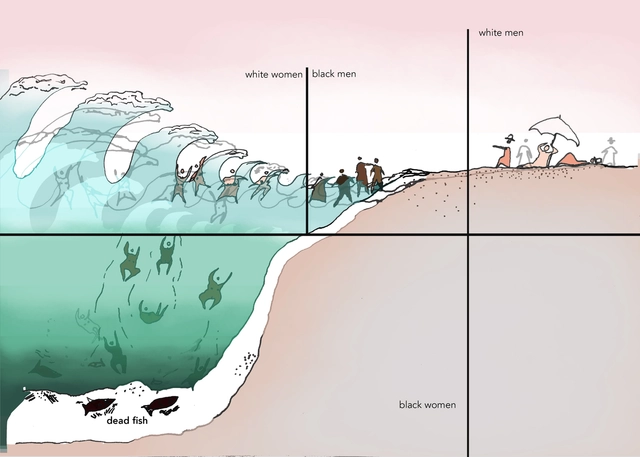
Dead Fish on the Beach: the Problem with “Women in Architecture”

Dead Fish on the Beach: the Problem with “Women in Architecture” - Image 1 of 4

Eyes of the City: Seeing and Designing Beyond the Human / Jeanne Gang for the Shenzhen Biennale (UABB) 2019

Subscriber Access | 

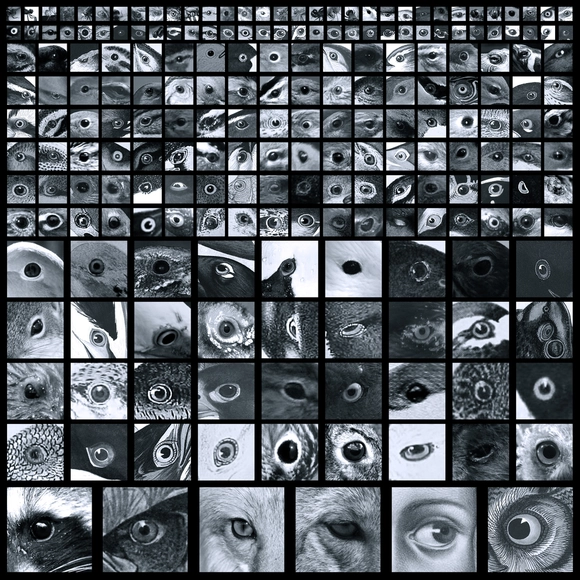
What happens when the sensor-imbued city acquires the ability to see – almost as if it had eyes? Ahead of the 2019 Shenzhen Biennale of Urbanism\Architecture (UABB), titled "Urban Interactions," ArchDaily is working with the curators of the "Eyes of the City" section at the Biennial to stimulate a discussion on how new technologies – and Artificial Intelligence in particular – might impact architecture and urban life. Here you can read the “Eyes of the City” curatorial statement by Carlo Ratti, the Politecnico di Torino and SCUT.

“We all live in an ecosystem; we just don’t know it. When it comes to urban areas, people have an ecological blind spot.” — Seth Magle, Director, Lincoln Park Zoo Urban Wildlife Institute, Chicago.

The advance of AI technologies can make it feel as if we know everything about our cities—as if all city dwellers are counted and accounted for, our urban existence fully monitored, mapped, and predicted.

Arquicast #73: 11 Ways to Become a Better Architect (Without Doing Architecture)!

Subscriber Access | 
Arquicast #73: 11 Ways to Become a Better Architect (Without Doing Architecture)! - 1 的图像 4

This biweekly episode features a lighthearted discussion on a topic of great interest to architects. Inspired by the article published on ArchDaily, "11 Ways to Become a Better Architect (Without Doing Architecture)", we invited journalist Ana Paula Capellano to explore unconventional ways of acquiring general skills that can be applied to the field of architecture and urbanism. We discuss the eleven topics proposed in the text, sharing our personal experiences and, naturally, some lighthearted disagreements.

Angelo Bucci, Gui Mattos, and Tryptique design faucets and showers

Subscriber Access | 

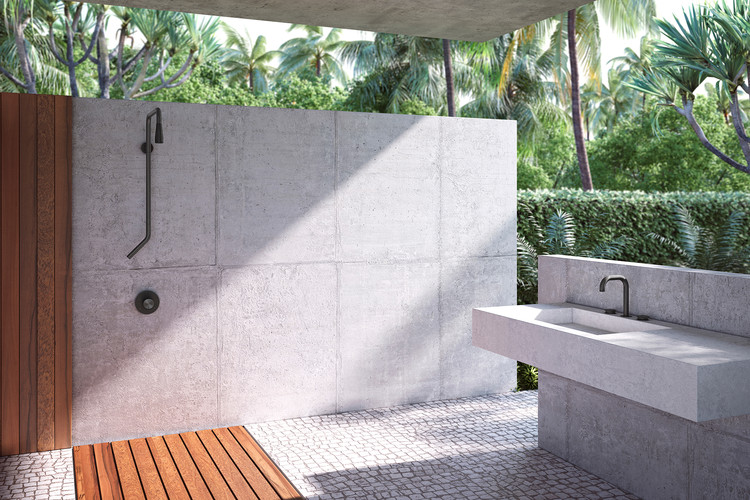
From March 12 to 15, 2019, Expo Revestir brought together a vast array of national and international exhibitors along with over 60,000 visiting professionals. As Latin America's largest finishing solutions trade show and a well-established event in the construction and surface materials market, many companies take the opportunity to launch new products and showcase industry innovations.

Designing and mastering every part and stage of a project is inherent to the practice of architecture. Here at ArchDaily, we have previously featured architects who have developed designs for furniture and various other objects. Among this year's launches at Expo Revestir, several prominent architects have designed bathroom fixtures. This is the case for Angelo Bucci, Gui Mattos, and Tryptique, among others, in partnership with the manufacturer Docol.

Angelo Bucci, Gui Mattos, and Tryptique design faucets and showers - Image 1 of 4Angelo Bucci, Gui Mattos, and Tryptique design faucets and showers - Image 2 of 4Angelo Bucci, Gui Mattos, and Tryptique design faucets and showers - Image 3 of 4Angelo Bucci, Gui Mattos, and Tryptique design faucets and showers - Image 4 of 4Angelo Bucci, Gui Mattos, and Tryptique design faucets and showers - More Images+ 1

The Gardens of Mina Klabin Warchavchik: Public and Private Modernity

Subscriber Access | 

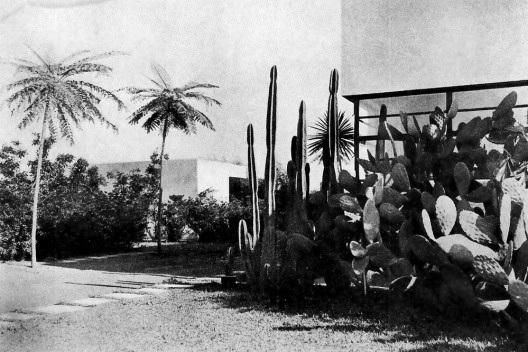
The life story of São Paulo-born landscape architect Mina Klabin Warchavchik is deeply intertwined with the history of modern art and architecture in Brazil, especially in São Paulo. Her father, Maurício Freeman Klabin, a Lithuanian immigrant, had left Russia due to a decree prohibiting Jewish land ownership. Upon arriving in Brazil in the late 19th century, he began working in a workshop producing blank books for the typography market, a business he would acquire within a few years. 

Cities and the balance between opportunities and commuting

Subscriber Access | 

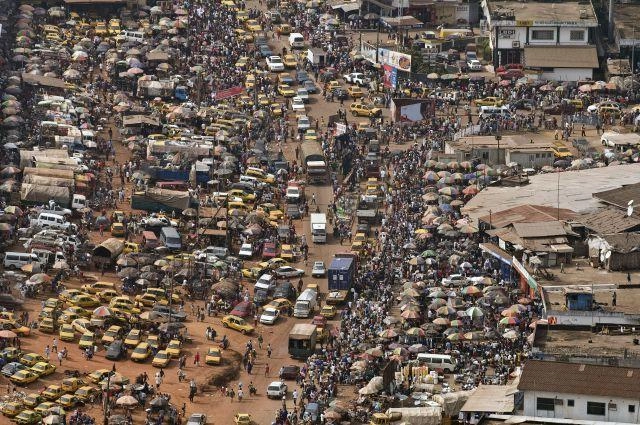
Emmanuel leaves home with his two daughters at 5:00 a.m. every morning. They take a minibus from their home in Awoshie, a residential neighborhood in Accra, Ghana, to the business district where Emmanuel works. The round trip usually costs $0.90—equivalent to about 20% of the average daily wage in Accra—and takes well over an hour. When traffic is heavy, the cost doubles. To save on a bus fare, Emmanuel sometimes sits one daughter on the other's lap.

Discover the Pavilion Representing Mexico at the 2019 Venice Art Biennale

Subscriber Access | 

Discover the Pavilion Representing Mexico at the 2019 Venice Art Biennale - Image 1 of 4Discover the Pavilion Representing Mexico at the 2019 Venice Art Biennale - Image 2 of 4Discover the Pavilion Representing Mexico at the 2019 Venice Art Biennale - Image 3 of 4Discover the Pavilion Representing Mexico at the 2019 Venice Art Biennale - Image 4 of 4Discover the Pavilion Representing Mexico at the 2019 Venice Art Biennale - More Images+ 6

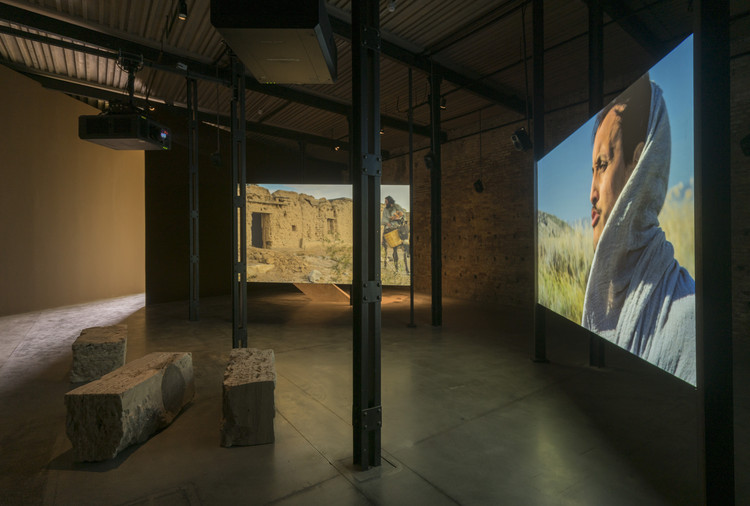
The International Art Exhibition of the Venice Biennale opened its 58th edition on May 11, 2019, at the Sale d'Armi in the Arsenale in Venice, and will run through November 24. At this world-renowned event, Mexico presented its contribution to the national pavilions with Acts of God by artist Pablo Vargas Lugo. Curated by Magalí Arriola, the project seeks to establish a dialogue with the curatorial concept of the Biennale Arte 2019, May You Live in Interesting Times, to examine how we value our actions, the connections we establish between the natural world and geological time, and to question the origins of our moral choices and inherited values, such as the idea of redemption.

Düsseldorf University's Brutalist Architecture Through the Lens of Luciano Spinelli

Subscriber Access | 

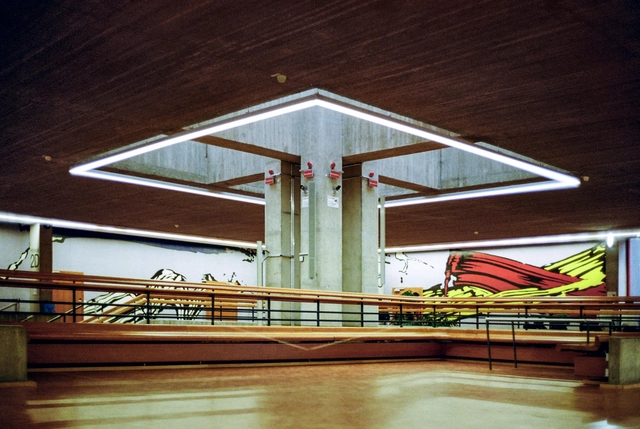
Although Brutalist architecture is often criticized for its raw, unfinished look, it has been frequently used in the design of public buildings, with many becoming iconic landmarks. Some architects chose to break away from typical concrete structures and implemented a pop of color on the walls, window frames, and flooring, adding some dynamism to the monotonous palette.

Shot with a Leica M6 film camera, architecture and interior design photographer Luciano Spinelli photographed the Düsseldorf University campus, displaying the contrast between its brutalist architecture and vibrant design features.

10 Exhibition Design Projects by OMA

Subscriber Access | 

Founded in the 1970s by Rem Koolhaas, Elia Zenghelis, Madelon Vriesendorp, and Zoe Zenghelis, the Office for Metropolitan Architecture (OMA) is one of the world's most renowned practices. While the firm has realized numerous projects and built iconic works across various countries, its work is not limited to architectural design alone. Instead, OMA frequently transcends strict disciplinary boundaries to engage with other areas of practice.

The Ultimate List of Sites Declared World Heritage in Mexico

Subscriber Access | 

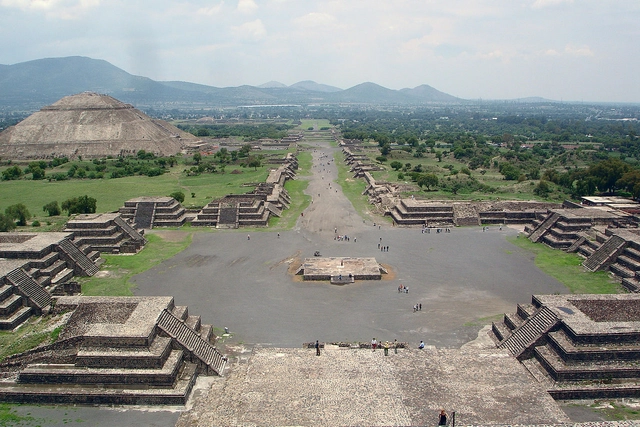
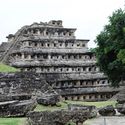
The Ultimate List of Sites Declared World Heritage in Mexico - 1 的图像 4The Ultimate List of Sites Declared World Heritage in Mexico - 2 的图像 4The Ultimate List of Sites Declared World Heritage in Mexico - 3 的图像 4The Ultimate List of Sites Declared World Heritage in Mexico - 4 的图像 4The Ultimate List of Sites Declared World Heritage in Mexico - More Images+ 32

According to a statement published on the UNESCO page, the UNESCO World Heritage List is a legacy of monuments and sites of great natural and cultural wealth that belongs to all of humanity. The Sites inscribed on the World Heritage List fulfill a function of milestones on the planet, of symbols of the awareness of States and peoples about the meaning of those places and emblems of their attachment to collective property, as well as of the transmission of that heritage to future generations.

Watch Manhattan Grow over 400 Years

Subscriber Access | 
Watch Manhattan Grow over 400 Years - Imagen 1 de 4

The island of Manhattan is one of the most recognizable urban centers in the world. For the past four hundred years, the island that so many New Yorkers call home has changed and evolved depending on the needs of its inhabitants – today totaling over 8 million.

Spotlight: Frank Lloyd Wright

Subscriber Access | 

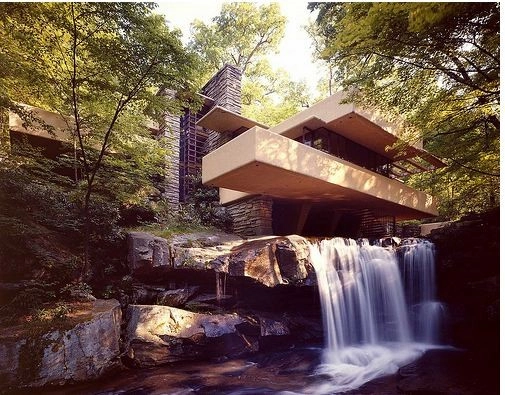
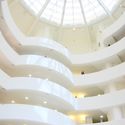
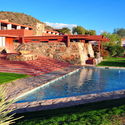
In 1991, the American Institute of Architects called him, quite simply, “the greatest American architect of all time.” Over his lifetime, Frank Lloyd Wright (June 8, 1867 – April 9, 1959) completed more than 500 architectural works; many of them are considered masterpieces. Thanks to the wide dissemination of his designs and his many years spent teaching at the school he founded, few architects in history can claim to have inspired more young people into joining the architecture profession.

Spotlight: Frank Lloyd Wright - Image 1 of 4Spotlight: Frank Lloyd Wright - Image 2 of 4Spotlight: Frank Lloyd Wright - Image 3 of 4Spotlight: Frank Lloyd Wright - Image 4 of 4Spotlight: Frank Lloyd Wright - More Images+ 20