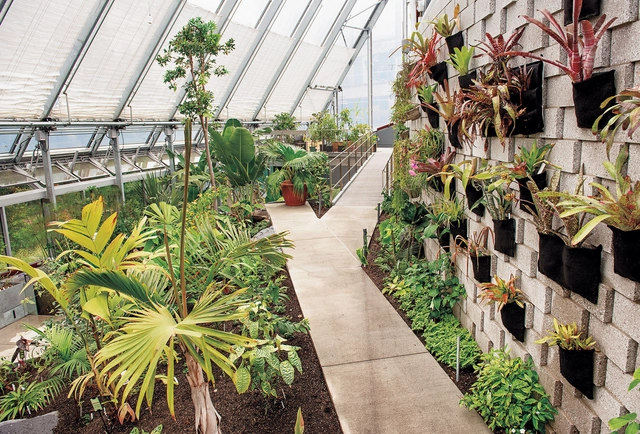
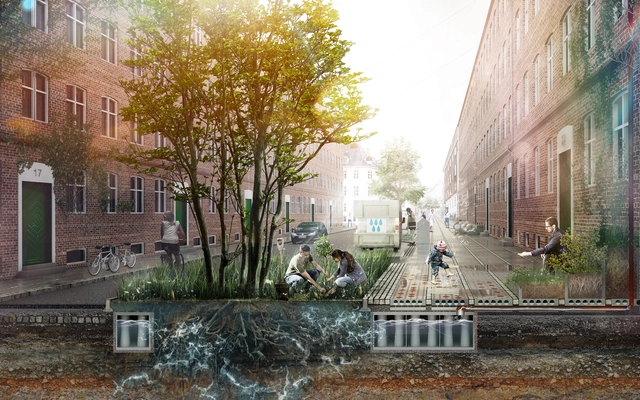
Entries to the 6th International LafargeHolcim Awards for sustainable construction will close on February 25, 2020. The competition seeks projects by professionals as well as bold ideas from the Next Generation that combine sustainable construction solutions with architectural excellence. The Awards accept projects and concepts from architecture, engineering, urban planning, materials science, construction technology, and other related fields.
in 2019, the Bauhaus turned 100 and a crop of museum buildings sprang up for the celebration.
In 2019, two museums bearing the name Bauhaus appeared on the German culture circuit. Angling to capitalize on the design school’s centennial, the Bauhaus Museum Weimar was first out of the gate, opening in early April; a few clicks behind, the Bauhaus Museum Dessau followed suit in early September. A third project, the much-delayed extension to Walter Gropius’s 1979 Bauhaus- Archiv/Museum für Gestaltung in Berlin, did not manage to keep pace and isn’t expected to open for a couple more years yet.
While 2019 saw the completion of great works of architecture, it has also been a busy year for unbuilt designs. Whether this consists of imaginary visions intended to broaden horizons and innovations, or practical projects intended for construction, ArchDaily has published a wealth of unbuilt projects throughout the year that have been recognized and celebrated by juries, peers, and institutions.
As the year draws to a close, we look back at the top competition-winning architecture of 2019. From built competition-winning entries from the world’s leading firms, to student and young architect entries which imagine the architecture of the future, the list offers an insight into what the architecture world has in store for the next year, decade, or even century.
As 2019 winds down, the media has started its annual ritual of taking stock, compiling lists, looking back. In the architecture world, the year’s biggest news story was arguably the Notre-Dame fire. The image of the cathedral’s burning roof—a wrenching sight—filled TV and computer screens around the world and occasioned an outpouring of grief, especially in France, where the building holds a central place in the nation’s collective consciousness. It was an architectural tragedy as well as a cultural one. No doubt: the April inferno struck at the very heart of France.
Images taken from Nicola Tartaglia, Nova scientia, second book, Distantia del transito, 1558
What happens when the sensor-imbued city acquires the ability to see – almost as if it had eyes? Ahead of the 2019 Shenzhen Biennale of Urbanism\Architecture (UABB), titled "Urban Interactions," ArchDaily is working with the curators of the "Eyes of the City" section at the Biennial to stimulate a discussion on how new technologies – and Artificial Intelligence in particular – might impact architecture and urban life. Hereyou can read the “Eyes of the City” curatorial statement by Carlo Ratti, the Politecnico di Torino and SCUT.
https://www.archdaily.com/931663/how-does-architectural-design-change-when-the-city-becomes-equipped-with-the-most-recent-advances-in-artificial-intelligence-alessandro-armando-giovanni-durbiano-for-the-shenzhen-biennale-uabb-2019Alessandro Armando and Giovanni Durbiano
Natural disasters, mass migrations, economic crises, or simply the passage of time can leave significant architectural works—and even entire towns—abandoned to decay, losing their habitability either partially or completely. Recognizing that these buildings form part of our recent history, a growing number of photographers, historians, and urban explorers (urbex) are venturing out in search of these modern ruins.
Peripheria Films has shared with us their audiovisual piece developed for the exhibition "The Cathedral of Malaga, an Unfinished Symphony," curated by Juan Manuel Sánchez La Chica and Adolfo de la Torre (marinauno arquitectos).
The video traces the construction process of this unfinished building over time—a classic of Andalusian architecture in Spain.
Last April, Mayor Bill de Blasio of New York announced plans to introduce a bill that would ban the construction of new all-glass buildings. Part of a larger effort to reduce citywide greenhouse emissions by 30 percent, other initiatives included using clean energy to power city operations, mandatory organics recycling, and reducing single-use plastic and processed meat purchases. The announcement came on the heels of the city council passing the Climate Mobilization Act, a sweeping response to the Paris Climate Agreement that included required green roofs on new constructions and emissions reductions on existing buildings.
https://www.archdaily.com/931309/de-blasios-glass-skyscraper-ban-could-mass-timber-and-transparent-concrete-take-its-placeLilly Cao
Wood is a noble material that has been used in construction since time immemorial, across all regions of the world where it is available. Although this material can be applied to almost any use, we have focused this article specifically on residential projects previously published on our site and located in Colombia.
Odile Decq was born in 1955 in Laval, France and studied at École Régionale d'Architecture in Rennes, Brittany. She graduated from the École Nationale Supérieure D'architecture in Paris-La Villette in 1978 and received her diploma from the Paris Institute of Political Studies in 1979. Decq set up her practice in Paris the same year and soon met Benoît Cornette who was studying medicine at the time but switched to architecture. By 1985 he received his architecture degree and the couple renamed their firm into ODBC. In 1996, ODBC won the Golden Lion in Venice for their drawings, selected out of a pool of invited emerging voices that included Zaha Hadid, Enric Miralles, and Liz Diller and Ric Scofidio. That was the beginning of the computer drawings, expressing movement, ambiguities, layering, and overall new dynamics that characterize Decq’s liberated forms and spaces.
World Heritage Site is the title given to specific places on the globe (landscapes, cultural routes, cities, or architectural structures) by the United Nations Educational, Scientific, and Cultural Organization, or UNESCO, as a way to recognize their natural or cultural relevance and to encourage their preservation. Up to 2019, 1121 places in over 167 countries have been declared World Heritage Sites, of which 869 are cultural, 213 natural and 39 are mixed category.
Gone are the days when the kitchen was relegated to a service area. Following the traditional system of bourgeois residential tripartition (dividing the house into social, intimate, and service areas), the kitchen was originally designed as an independent and closed space. Today, more and more, projects seek to integrate and relate it to other rooms in the house, facilitating different interactions among its residents. Due to this transformation, the appearance of the kitchen also changed, and traditional ceramic and stone cladding gave way to new materials.
Emerging in 1981 with the publication of the essay “The Grid and the Pathway” by Alexander Tzonis and Liane Lefaivre, it was Kenneth Frampton's 1983 essay “Towards a Critical Regionalism: six points for an architecture of resistance” that brought the term “critical regionalism” wider recognition. The essay was published in the anthology “The anti-aesthetic: essays on Postmodern culture,” edited by critic and historian Hal Foster, initiating a debate later revisited in "Prospects for a Critical Regionalism," also written by Frampton that same year for the journal Perspecta.
While we wait for summer 2020 and another chance to watch the medal counts climb and cheer on our home countries in the next Olympics, a different type of international contest has tallied its scores and the United States has taken the gold in the World Design Rankings, with China and Japan following for second and third place respectively. Sponsored by the international A’ Design Award and Competition, the world’s largest and most diverse design accolade, the World Design Rankings are compiled based on the number of designers from each country granted an A’ Design Award.
From hospitals and retail stores to large commercial facilities and school buildings, resilient flooring is a popular choice for its durability. Yet like any material, it is subject to human error and neglect; if not properly maintained, even resilient flooring may deteriorate (in aesthetics, function, or both) before its time.