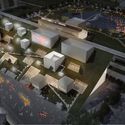
The Bahá'í International Community has unveiled a proposal for the national Bahá'í House of Worship of Papua New Guinea. In the capital city of Port Moresby, a celebration was held at the temple’s future site to showcase the scheme, coinciding with the Bahá'í New Year. Inspired by the art of weaving, the architects’ vision was for a temple where the people of Papa New Guinea could unite to worship and find inspiration.
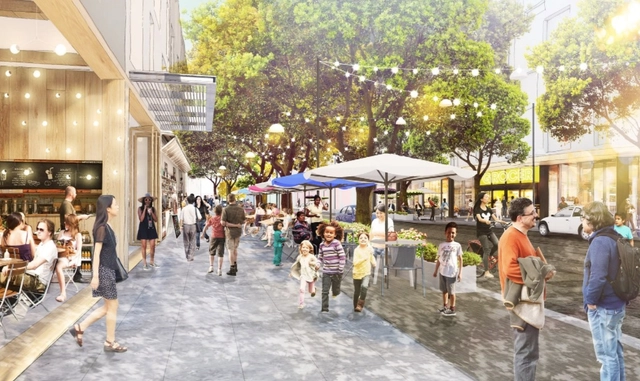
Willow Village will form part of Facebook's OMA-designed Willow Campus. Image Courtesy of OMA
“Do people love tech companies so much that they would live inside them?” This is the question posed by The New York Times in an article reflecting on Facebook’s plans for Willow Village, a 59-acre urban district located at the company’s Menlo Park headquarters in San Francisco, California.
https://www.archdaily.com/891145/zucktown-usa-will-facebook-design-your-future-cityNiall Patrick Walsh
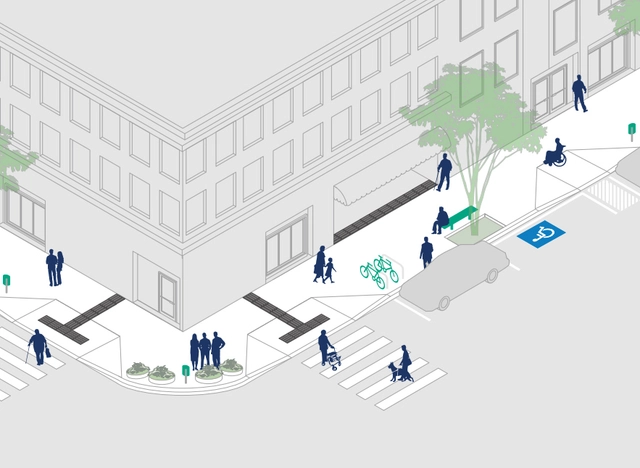
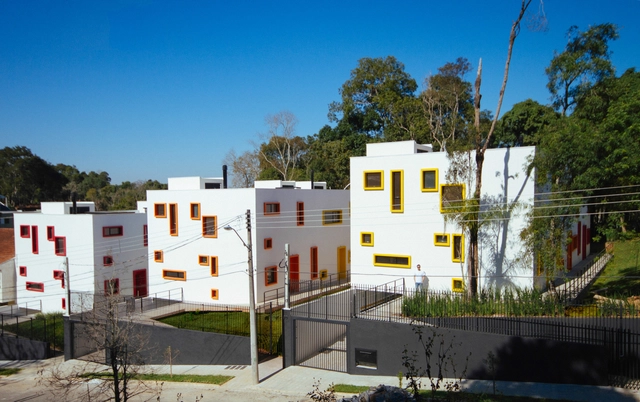
Recognizing that well-designed and high-quality sidewalks encourage walking in cities, the City of Florianópolis has launched the Calçada Certa program, aiming to ensure legal guidelines for sidewalk design are followed and to guide citizens in designing and building public walkways.
The program is accompanied by an illustrated manual presenting recent updates to the ABNT NBR 9050/2015 and ABNT NBR 16537/2016 standards. These address, respectively, accessibility in buildings, furniture, urban spaces, and equipment, and tactile paving design.
Videos
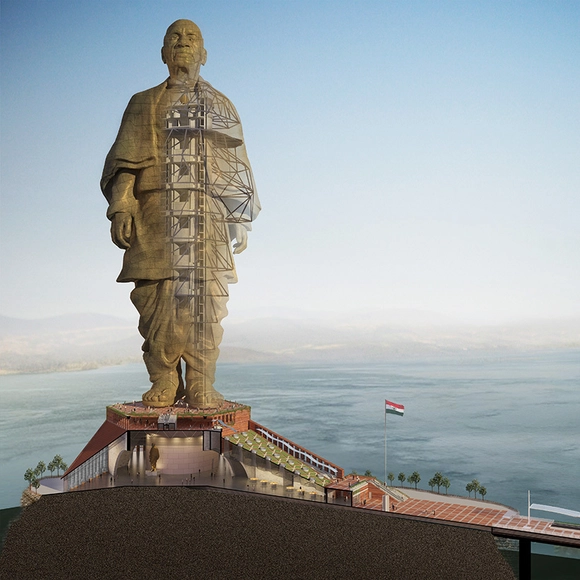
Section of the Statue and Surrounds. Courtesy of Michael Graves Architecture & Design
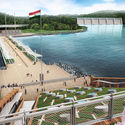
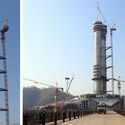
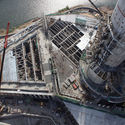
The Statue of Unity, to be the world’s tallest statue when completed, has made significant headway with its construction. Designed by Michael Graves Architecture & Design, the Statue of Unity will be 182-meters tall and depict Vallabhbhai “Sardar” Patel, the first deputy Prime Minister of India. Standing at almost twice the height of the Statue of Liberty, the Statue of Unity project will also consist of a hotel, memorial garden, visitor’s center and miles of roadways and bridges to connect the statue to the town of Kevadia, India.
After Pascall+Watson’s success with their concept design for the £130m Arrivals Terminal at Stansted Airport, the firm have been selected for the £600m transformation programme by MAG (Manchester Airports Group owners of Stansted Airport). As demand for air travel continues to increase, Pascall+Watson’s plans aim to provide a greater choice of airlines and destinations by making use of the airport’s spare runway capacity and supporting the future growth.
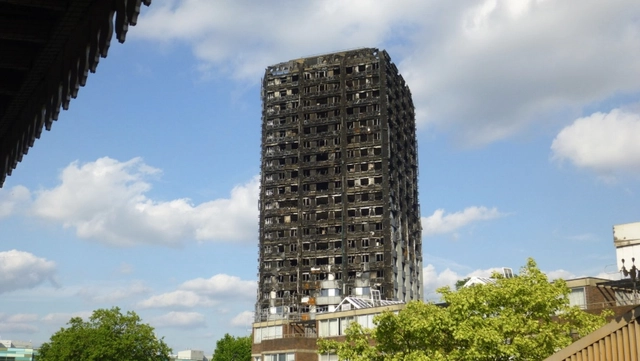
Adjaye Associates is among a team of high-profile architects tasked with generating ideas for the overhaul of Lancaster West Estate, an area of London containing the ruined Grenfell Tower, tragically destroyed by fire in 2017.
The Professional Practice Commission (CEP) of CAU/BR will review the four main regulations governing the professional practice of architects and urban planners throughout Brazil. These are CAU/BR Resolutions No. 10 (Occupational Safety Engineering), No. 18 (Professional Registration with CAU); No. 22 (Inspection of Architecture and Urbanism); and No. 28 (Corporate Registration with CAU). “These four resolutions define the daily routine of architects and urban planners,” says coordinator Lana Jubé (GO). “The goal is to approve new resolutions on these matters by the end of 2018.”
Archademy is the world's first accelerator for architects and interior designers. Inspired by startup accelerators, it focuses on structuring small firms to boost professional performance in just a few months.
Much like a consultancy, Archademy offers a customized package for architecture and interior design firms, along with mentoring sessions and workshops. The accelerator also aims to build a professional network, thereby generating job opportunities and collaborations.
Harvard University Graduate School of Design (Harvard GSD) has announced the four finalists for the 2018 Wheelwright Prize, a $100,000 travel research-based grant available to early-career architects worldwide.
Selected from over 125 applications from nearly 40 countries worldwide, the four finalists are from Belgium, Mexico, Brazil, and the United States. This year’s jury includes 2014 Wheelwright Prize Winner Jose Ahedo, Edward Eigen, Frida Escobedo, K. Michael Hays, Mark Lee, Mohsen Mostafavi, and Michelle Wilkinson. A winner will be named in April.
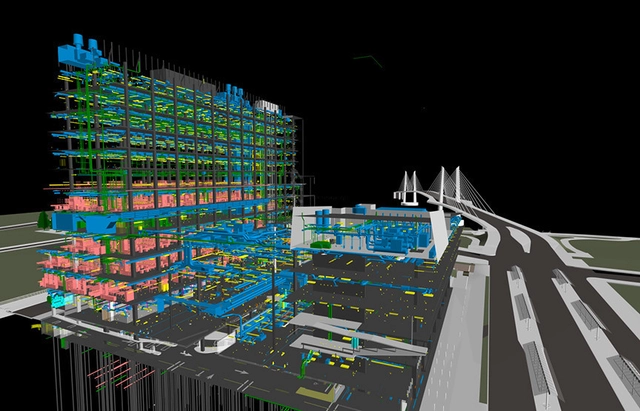
On March 8 and 9, 2018, Barcelona hosted the European BIM Summit, an annual international congress on Building Information Modeling (BIM). The event focused on promoting best practices in BIM use, sharing methodologies, and fostering international alignment.
During the summit, Ana Rojo, Director General of Production and Engineering at Ineco, announced that public building construction projects in Spain must use BIM methodology by the end of 2018. Ineco is part of the European Public Administration Group and has been commissioned to draft the Manual of Common Practices for BIM implementation. Along with the es.BIM commission, the organization is responsible for implementing this methodology across all processes carried out by Spain's Ministry of Development.
https://www.archdaily.com/1113795/bim-will-be-mandatory-for-public-works-in-spain-this-2018Javier García Librero
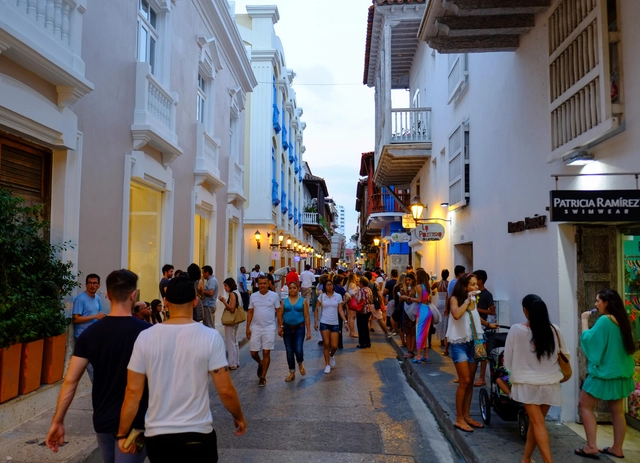
Following its presentation and discussion with restaurant, commercial, and resident associations, the Mayor's Office of Cartagena (Colombia) announced the pedestrianization of 45 streets in its historic center, as reported by Caracol Radio. The decision is backed by the Bolívar Trade Council through its executive director, Patricia Galindo, who told the local outlet that the project will regulate traffic in the historic center and the San Diego neighborhood. This and other measures aim to improve mobility for residents, citizens, and tourists in the area.
The Bolívar Trade Council has participated in the various events organized by the District to coordinate these measures. Crucial to this process was listening to all stakeholders, as well as the district administration's willingness to lead on one of its most important issues, working to find effective and consensus-driven solutions for everyone.
Since the concept of driverless cars first became a serious prospect, a lot of attention has been given to the possibility of their malfunction—if an autonomous vehicle damages property or even harms a human, who is at fault? And, given a worst-case scenario, how should a vehicle's software choose between whose lives it prioritizes, the passenger or the pedestrian? This last question even became the basis for the Moral Machine, an online platform created by the MIT Media Lab that essentially crowdsources public opinion on different variations of the classic trolley problem thought experiment.
However, all of these questions had been considered largely theoretical until last night when, as The New York Times reports, a woman was struck and killed by an autonomous vehicle in Tempe, Arizona. As a major component of many predictions of futuristic "smart cities," the development and testing of autonomous vehicles hold huge implications for urbanism (ArchDaily has previously covered predictions of major change by car manufacturers and researchers) meaning that this fatal event could have a ripple effect on the development of cities.
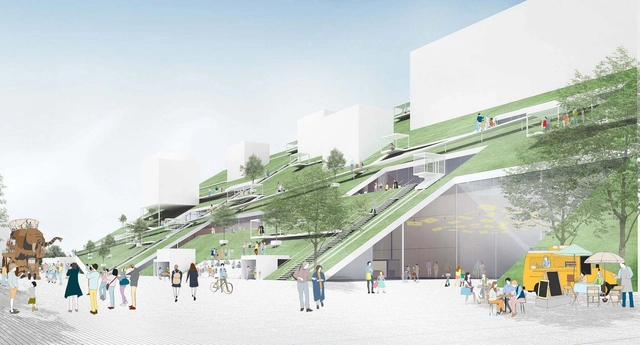
Riken Yamamoto & Field Shop has released images of the proposed TaoyuanMuseum of Art in Taiwan, having won an international competition for the scheme’s design in 2018. Acting as a symbolic gateway to the heart of the city, the architect’s vision was for a hub where every visit leads to new discoveries and experiences.
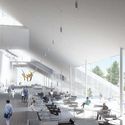
Named “The Hill,” the competition-winning scheme is defined by a sloping green roof, hosting artwork, pavilions, trees, and an outdoor theater. Beneath the roof, a structure named “The Cube” contains permanent exhibitions and collections, and establishes a link between the museum and Blue Pond Park beyond.
Beginning a multi-division examination with pass rates in the 50-60% range is a seriously daunting task. That’s without even mentioning the overwhelming amount of study materials and opinions floating around in cyberspace. Never fear, ArchDaily is here to help you navigate the tools and techniques available to you when cracking open the books and (hopefully) passing your first exam.
City Councilor Marielle Franco, who was shot and killed in Rio de Janeiro, had introduced a bill last December to establish a Technical Assistance program for Social Interest Housing in the city. “This is a historic demand of social movements and organizations linked to the field of architecture and urbanism, given the massive low-income population that needs designs and construction work to improve their housing conditions,” Marielle stated in the bill's justification. “It is also important to expand the number of examples of good design and construction practices in the city, contributing to the dissemination of these experiences.”
We are pleased to announce a strategic partnership between the ARKRIT Collective and ArchDaily en Español to regularly publish critical essays that foster debate, rigorous argumentation, and discussion around architecture.
ARKRIT is a research group within the Department of Architectural Design at ETSAM in Madrid. Over more than a decade, it has established itself as a hub for reflection and knowledge production by and for architectural criticism. Founded by Professor of Architectural Design Dr. Antonio Miranda Regojo-Borges, its members include PhDs and university academics working across various European and Latin American research centers.
Last week, ArchDaily covered a story about the gender pay gap at Foster + Partners. We thought such a story was "unsurprising" given that the gender pay gap is something that is widely reported on, and present in almost every industry, and we wanted to share a case of it happening in an architectural firm many of us are familiar with. What we did not expect was that readers would think it is a non-issue, or that such reporting was sensational. Is it possible for us to talk about gender in the workplace without being up in arms? Why does the gender pay gap issue make people uncomfortable?
Some of our editors discussed how gender plays into their workplace experiences as well as some hopeful recent signs that we are on a path to change.


.jpg?1521650494 "Courtesy of Bahá'í International Community")










_(1).jpg?1521456027)

.jpg?1521330302&format=webp&width=640&height=580)