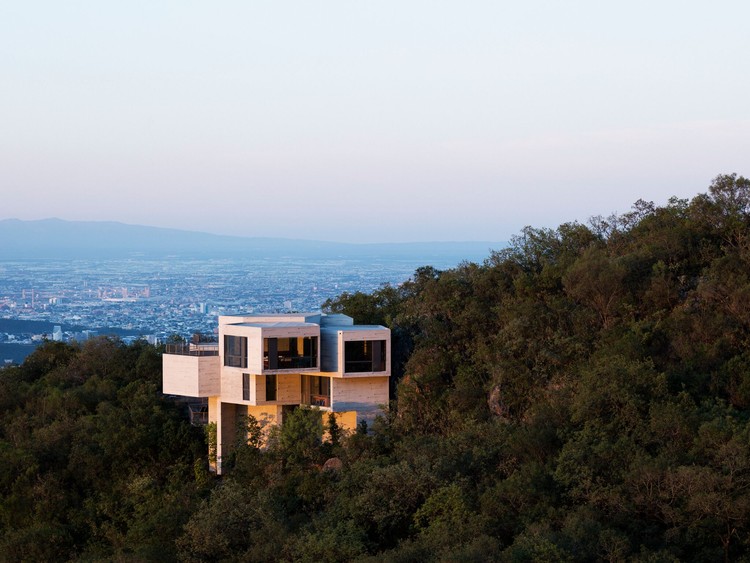
From Portuguesearchitectural photographerFernando Guerra comes imagery of MAD's Huangshan Mountain Village in China. This residential design, comprising ten housing blocks that mimic the mountain range they are embedded in, is just one piece of the Taiping Lake tourism master plan; architecture and nature blend together to create modern apartments with differing panoramic views.
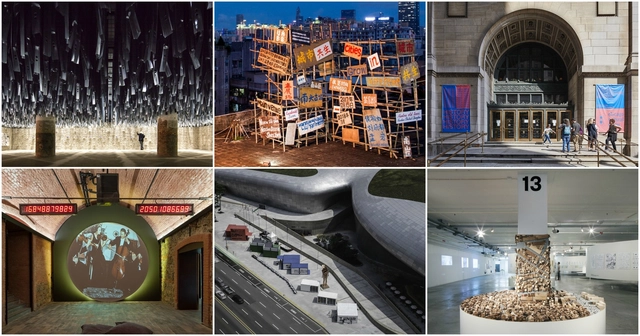
Venice? Chicago? Lisbon? Seoul? Architecture biennials, biennales, triennials, and triennales have become a vital part of the culture of modern architecture. Every two or three years, they debut new ideas, discuss popular topics, and showcase the best of what is happening in the field for both today and tomorrow. But, with the proliferation of these events in countries around the world, they can be tough to keep track of. How many are there, and when are they? ArchDaily has you covered. Below we have compiled what we believe is a comprehensive list showing the what, where, and when of the world's architecture and design biennials, triennials, and a handful of the larger yearly events. We've also included some more in-depth descriptions of a handful that have (in recent years at least) proven themselves to be big names.
Videos
Songdo in South Korea is perhaps the most complete realization yet of the smart city concept. Image Courtesy of Cisco
In order to be successful in any field, professionals must stay ahead of the curve—though in architecture nowadays, technology progresses so quickly that it’s difficult to be on the front lines. Virtual Reality can transport architects and their clients into unbuilt designs and foreign lands. Smart Cities implement a network of information and communication technologies to conserve resources and simplify everyday life. Responsive Design will give buildings the ability to be an extension of the human body by sensing occupants' needs and responding to them.
With the technology boom, if architects want to stay in the game they will inevitably have to work alongside not only techies but scientists too. Neuroscientist Colin Ellard works “at the intersection of psychology and architectural and urban design.” In his book, Places of the Heart: The Psychogeography of Everyday Life, Ellard examines how our technology-based world impacts our emotions and behavior to try to figure out what kind of world we should strive to create.
In their latest issue, Rolling Stone has named Elon Musk "The Architect of Tomorrow," as well as listed architects David Benjamin and Kate Orff as two of their "25 People Shaping the Future in Tech, Science, Medicine, Activism and More."
Higher education is on the cusp of a major transition. It’s extremely likely that professional training, including that necessary to become an architect, will be conducted primarily online in the relatively near future. This means that design studio classes, a hallmark of the architect’s experience, will also happen online, likely without the in-person, face-to-face contact that defines that experience. The shift will eliminate many self-defeating aspects of today’s studio culture, but there’s also potential pitfalls that need to be addressed, before an online version of that culture acquires its own bad habits. We can do this by pro-actively devising new teaching and working methods that leverage the capabilities of digital education to promote constructive social dynamics between students.
In the midst of the tall, rectilinear skyscrapers which make up downtown Chicago appears a short, sloped glass curtain wall, topped by a protruding truncated cylinder structure: Helmut Jahn’s Thompson Center. Opened in 1985, the building was to be home for a variety of agencies of the State of Illinois, and its design was a play off of the traditional American statehouse, updated with glass walls symbolizing government transparency and an immense atrium evoking the atrium spaces found in most United States’ statehouses. The interior spaces, however, stirred further contention with the public. Unconventional red, blue, and white paints coat the interior elements—a design choice many believed to be provocative and even jarring.
From the moment we attend our very first lecture to the peak of our careers, architects are plagued with stressful events that are unlike any other profession. Meeting deadlines, dealing with planning and fabricating the dreams of our clients, our job can be intense and extremely demanding.
Often when we complain about it to our non-architect friends, however much they try, they don’t quite understand. They are not used to the impact that moving a staircase or rotating a plan might have on our workload, nor can they relate to losing a favorite pen. But among ourselves, we can wallow in our pain together as we go through just what makes our job so stressful (and rewarding)!
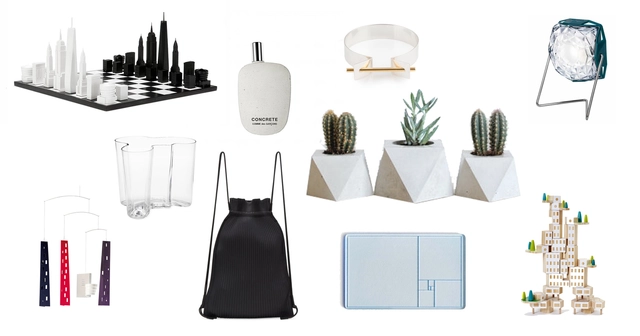
Winter is here, the streets are full of festive lights and store displays are decorated with gift-wrapped goodies which must mean only one thing—the holiday season is upon us!
Architects, ArchDaily has got you covered: our 2017 holiday gift guide features over 40 ideas, with gifts ranging from the slightly wacky to the delicately designed. This year the list includes an assortment of concrete furnishings and accessories, space frame-inspired jewelry and architectural building blocks.
One year on from the Chicago Riverwalk’s completion, designers Sasaki Associates have released mesmerizing footage of the Riverwalk from a new perspective. Using a drone to give an overview of the project, the video captures the successful integration of the Riverwalk into the urban landscape as it changes shape and form, defining a unique experience for the public. Global design firm Sasaki led the team as prime consultant on the last two phases of the Riverwalk, working in close collaboration with local firm Ross Barney Architects.
In the second film from this year's series of PLANE—SITE's Time-Space-Existence videos, Mexican architect Tatiana Bilbao shares her philosophy of how architecture should be designed with the user’s experience in mind, rather than for standalone aesthetic qualities. In the video she discusses how architects should to some extent let go of their artistic intentions for a more practical approach to serve the needs of people, discussing how architecture has become detached from its key purpose over the last fifty years due to the influence of capitalism.
The seventh house in the Arts & Architecture Case Study program was built with real clients in mind: a family of three with creative hobbies. The result, designed by Thornton M Abell, is a flexible home with a distinctive functional character.
The house divides neatly into three separate areas: to the left of the entrance, working spaces make up nearly half of the full floorplan, with living and sleeping areas off to the right and extending forward into the garden. Sliding panels between the roomy central reception/dining area and the cozy living room create the option of privacy or extra space, as required, with the terrace and splash pool beyond offering further possibilities for summer entertaining. A small planting area beside the sliding door blurs the line between indoors and out.
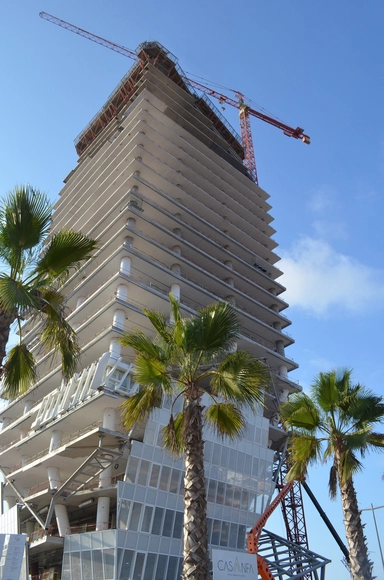
This Fall, global architecture and design firm, Morphosis has their plate full as four of their projects reach significant construction milestones. From Africa to the Middle East, Europe and the U.S., Morphosis is creating international landmarks that display their values of sustainability and future development. Read on to learn more about what Thom Mayne's team is up to.
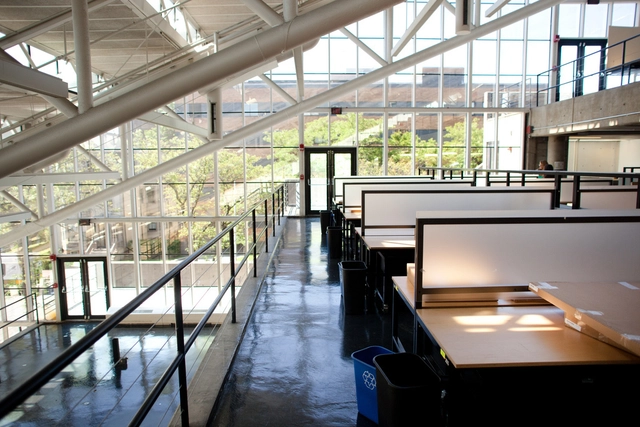
At my most recent job, I did all of my best work at home. I would actively try to avoid the office for as long as possible. At home, I had two desks and complete control over my environment. Distractions and breaks were choices.
Once I went into the office, the environment changed. There were constant distractions, from other employees, dogs barking (for the record: puppers were a net positive), impromptu meetings and birthday celebrations. It was very difficult to get into flow states and incredibly easy to be broken from them. Of all the places I could work, my desk at the office was often the worst option.
Late last month Current Affairs published an essay by Brianna Rennix and Nathan J. Robinson titled “Why You Hate Contemporary Architecture: And if you don’t, why you should.” The piece, written in a pseudo-funny Internet lexicon wherein all objects of criticism are “garbage,” is so laden with irony—the poorest of substitutes for analysis—that it is difficult to discern a core argument. Still, I’d like to question the central premise of the piece: that what the authors term “contemporary architecture” is ugly and oppressive, and that liking it is nothing shy of immoral.
This article was originally published on the blog of the Chicago Architecture Biennial, the largest platform for contemporary architecture in North America. The 2017 Biennial, entitled Make New History, will be free and open to the public between September 16, 2017 and January 6, 2018.
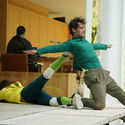
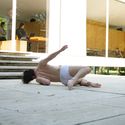
“Writing about music is like dancing about architecture.” This famously misattributed analogy has floated through the arts world for decades as shorthand for the difficulty of imposing the gestures of one creative discipline onto another. But why should dance and architecture get lost in translation? Isn’t there an inherent poetry to the movement of bodies navigating the built environment?
Earlier this month, Abu Dhabi’s much-awaited “universal museum,” the Louvre Abu Dhabi designed by Pritzker Prize-winner Jean Nouvel, was opened to the public. After several years of delays and problems including accusations of worker rights violations, revisions in economic strategies, and regional turmoil, the completion of the museum is a feat in itself. Critics, supporters, naysayers, artists, economists, and human rights agencies, have all closely followed its shaky progress, but now that it’s finally open, reviews of the building are steadily pouring in.
Read on to find out how critics have responded to Nouvel’s work so far.
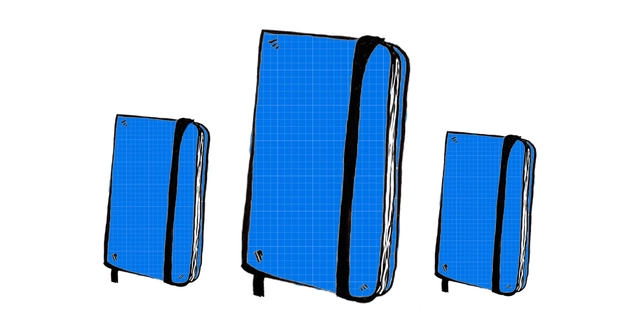
The sketchbook: it is probably the first thing you buy in architecture school, and, the thing you hold on to most dearly. It is one of the most important tools to help document, problem-solve, and archive your journey as an architect. The sketchbook is the physical extension of one’s architectural mind, and the way one organizes it says a lot about the holder. What does your sketchbook say about you? Read on to find out:






.jpg?1511989021&format=webp&width=640&height=580)






.jpg?1511296287&format=webp&width=640&height=580)

.jpg?1511197306&format=webp&width=640&height=580)
.jpg?1511278123)


.jpg?1511197306)
.jpg?1511265934&format=webp&width=640&height=580)
_%C2%A9_Louvre_Abu_Dhabi_-_Photography_Marc_Domage.jpg?1511018413 "© Marc Domage")
.jpg?1511018528 "© Roland Halbe")

.jpg?1511265934)