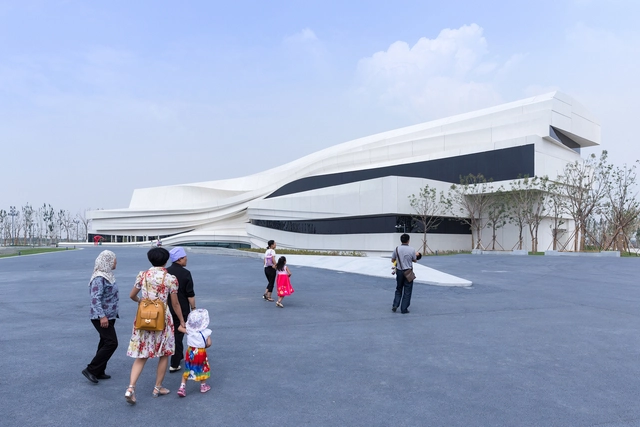
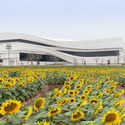
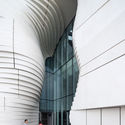
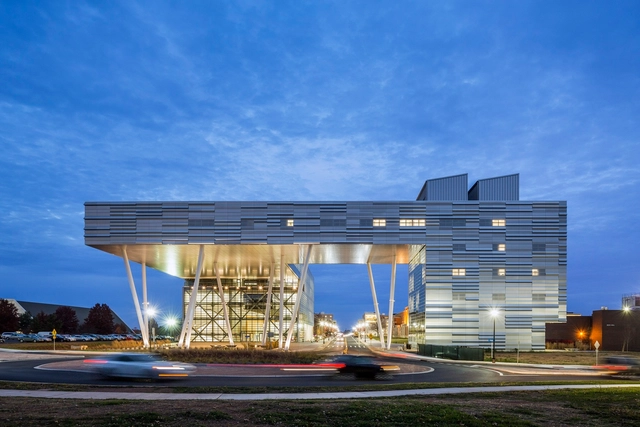
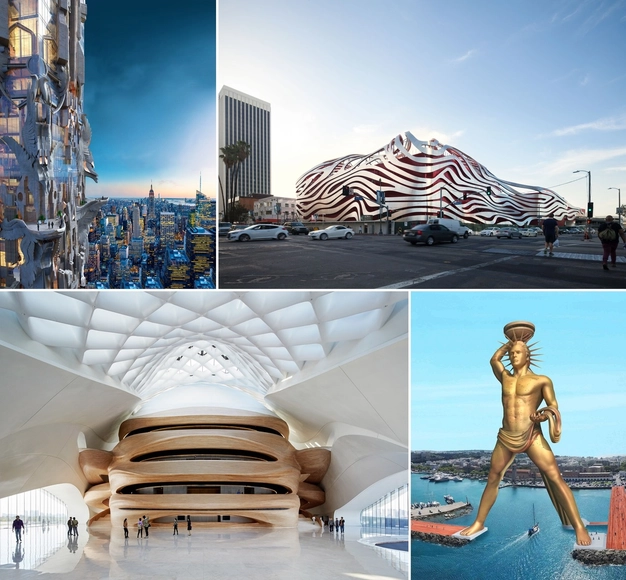
This contemporary art museum is not what it seems. It appears, at first, to be a fairly familiar manifestation of the contemporary architectural discourse, and indeed the striking fluidity of its lines and its impressive mastery of parametrically-enabled tectonics as well as GRC technology put it on a par with recent buildings by Zaha Hadid or MAD, but this first impression is somewhat deceptive: the building is, in fact, refreshingly unique and a radical point of departure from the dominant design ideology of our times, a significant rupture from the orthodoxy. And a very promising one.
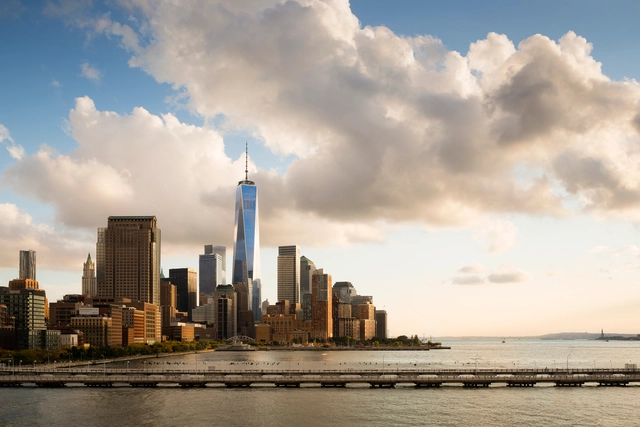
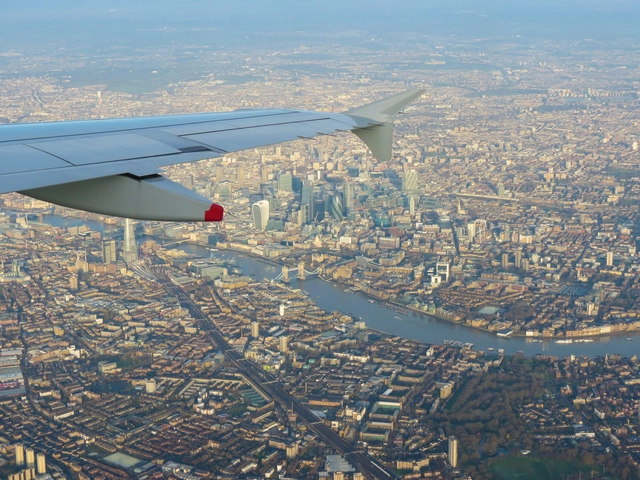
When comparing 44 major cities, Arcadis' 2016 International Construction Costs Index has found New York to be the world's most expensive city to build in. London came in as a close second, reporting cost of building prices (on average) 20 percent higher than Paris. In contrast, Taipei was labeled as the "cheapest" city for construction. According to the study, "strong currencies and significant resource constraints" were a result in higher prices. Read on for the complete lists of most expensive, and least expensive, cities for construction.
Traditionally, the start of a new year is a time for making plans and optimism for the future. As a result, it's a time when many architects might start dreaming of moving their career to an unfamiliar and exciting country. But as Brandon Hubbard explains in this article, originally published on The Architect's Guide as "Is Working Abroad Bad For Your Architecture Career?" there are many reasons that you shouldn't be so hasty to cross borders and seas in an attempt to advance your career.
Architecture, perhaps more than any other profession, is filled with people who want to live and work abroad.
Some architecture students get a taste for travel while in school. Study abroad programs in the US are quite common. Often when students finish their degree they are drawn to the idea of living abroad.
A doctor can easily find a person wandering nearby. An accountant can easily find an excel spreadsheet. Architects don't have the luxury of buildings coming to us (that would be cool though). We have to go to them. This has inspired generations of architects to pack their sketchbooks and travel.
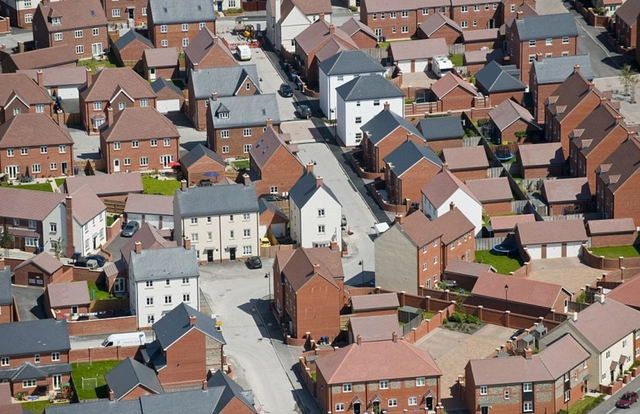
In his essay "Figures, Doors and Passages", the architectural historian Robin Evans described how "it is difficult to see in the conventional layout of a contemporary house anything but the crystallization of cold reason. Because of this," he asserted, "we are easily led into thinking that a commodity so transparently unexceptional must have been wrought directly from the stuff of basic human needs." His words, which highlight the passive approach of designers, developers and dwellers when it comes to the vast majority of British housing being built today, were first published in 1978 – two years before the Conservative government under Margaret Thatcher introduced the 1980 Housing Act.
UPDATE: AL_A has won planning permission for their Southampton Maggie's Center design. According to a report by the Architects' Journal, the 420 square-meter "disappearing" building will be the charity's 19th center. It is set to open in 2017.
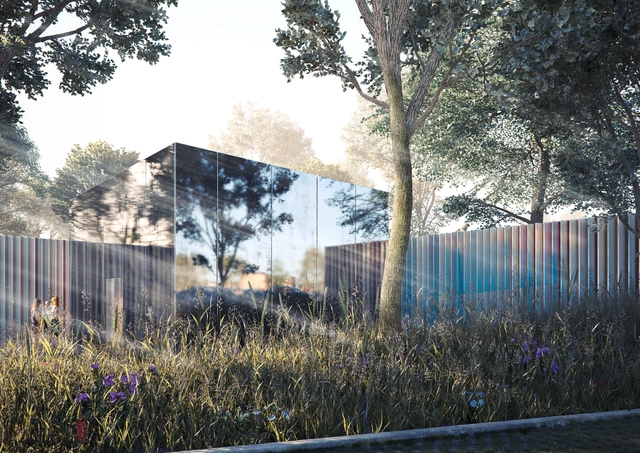
Amanda Levete Architects (AL_A) has submitted plans for a new Maggie's Center in the English coastal city of Southampton. Sited at the Southampton General Hospital, the proposed center will provide free practical, emotional and social support for people with cancer and their family and friends. The new building aims to provide a warm and welcoming sanctuary within the built-up hospital environment.
"Bringing a bit of magic to the place, the building emerges from this wild naturalistic landscape with an almost ethereal clarity," described AL_A. "Subtle, understated and imbued with light, it is designed to lift the weight from the shoulders of all who visit and work there."
Founded in 1986 in Mexico City, Enrique Norten's practice TEN Arquitectos is not known for a signature style, preferring to make each project a modernist-infused response to its own specific conditions. Nonetheless, they have become one of the most widely-recognized architectural practices emerging from Mexico, with projects throughout North America. In the latest interview in his "City of Ideas" column, Vladimir Belogolovsky speaks with Norten in New York to find out how the architect's past has influenced his current design work, and to discuss the future trajectory of architecture.
Villa Malaparte, built in 1938 by the Rationalist architect Adalberto Libera in Punta Massullo on the Isle of Capri, is considered to be one of the best examples of Modern Italian architecture. The house, a red structure with inverted pyramid stairs, sits 32 meters over a cliff on the Gulf of Salerno. It is completely isolated from civilization, only accessible by foot or by boat.
The house was commissioned by the Italian writer, Curzio Malaparte whose eccentric character eventually led him to dominate the design process, causing serious conflict with Libera. Malaparte wanted the house to reflect his own personal character and become a place for solitary contemplation and writing. He once said: "Now I live on an island, in an austere and melancholy house, which I built myself on a lonely cliff above the sea. [It is] the image of my desire."
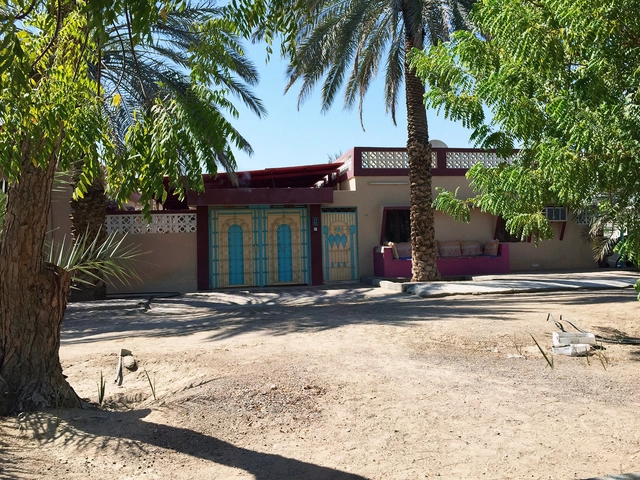
Entrance to a National (Sha’abi) House in the Salamat neighborhood in Al Ain. Photography by Yasser Elsheshtawy. Image Courtesy of National Pavilion UAE la Biennale di Venezia
As announced in October 2015, UAEU professor Yasser Elsheshtawy has been selected to curate the United Arab Emirates pavilion for the 2016 Venice Biennale. Following the Biennale’s theme of Reporting from the Front, Elsheshtawy—who runs the blog Dubaization, a term he coined in 2004 to depict the influence of Dubai on the urban discourse—has chosen to highlight the country’s social housing program, known as Sha’abi housing, which began in the 1970s and continues on to today.
ArchDaily was given the opportunity to speak to Elsheshtawy about the history of the United Arab Emirates’ Sha’abi housing, and what role it might play in informing the urban future of a country that has become renowned for a very different type of architecture. Continue reading for our exclusive interview with Elsheshtawy on this year’s UAE pavilion.
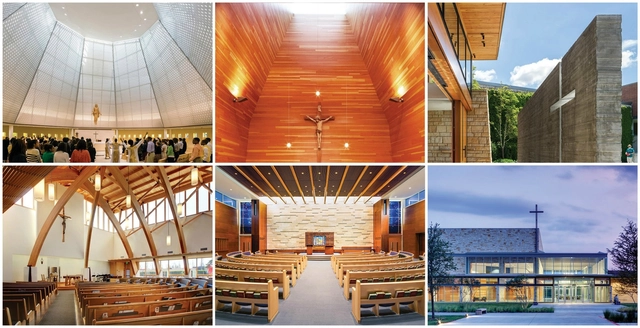
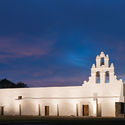
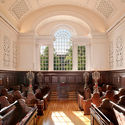
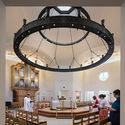
Religious buildings make up many of the highlights of architectural history, and the Religious Architecture Awards from Faith & Form magazine and the Interfaith Forum for Religion, Art, and Architecture celebrate the latest entries in this category. As trends in religious practices and the buildings that house them have changed, this year’s awards celebrate a wide variety of structures, including a growing number of renovation and restoration projects, as well as the first-ever award for a building in the “megachurch” category. From a total of 44 entries, 16 projects received awards in one of five categories: New Facilities, Renovation, Restoration, Adaptive Reuse/Repurpose, and Liturgical/Interior Design.
Read on to see all the winners of the Religious Architecture Awards.
This has been an intense year at ArchDaily, and I’d like to look back and share what we’ve done during 2015, and give you a glimpse of what will come during 2016.
We started this project in 2008 in a very instinctive way, but always understanding that we should provide value to architects. Today, we are publishing in 4 languages (including the new ArchDaily China!), reaching more than 400,000 daily readers who are viewing 120 million pages every month - and bookmarking thousand of projects on My ArchDaily. This scale has made us understand what is adding value - and what is not - to architects in a very insightful, data-driven way. Our analysis for our end of the year posts has shown us how important it is for you to have access to technology and resources than can help you on your work.
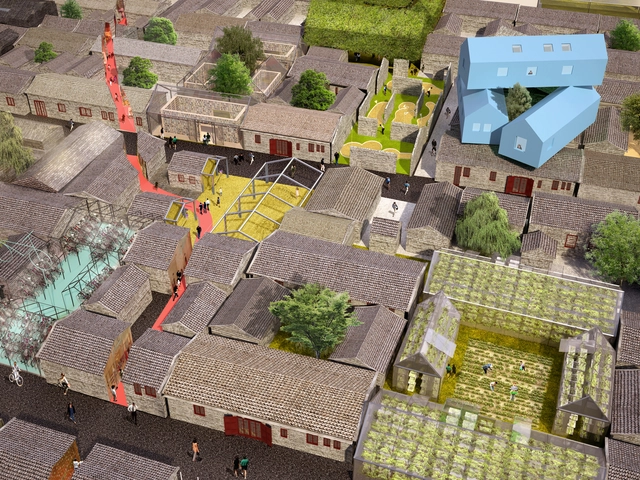
MVRDV has taken it upon themselves to reimagine the Chinese Hutong. Focusing in on Beijing's prominent and currently vacant Xianyukou Hutong, the practice has set out to define its future and envision "the next hutong" - one that is "monumental, dense, green, mixed and individual" and can be built in phases.
As I have touched on in the past many times, context is what transforms an artistic rendering into a photorealistic visual that accurately portrays a building. Seemingly minute details such as the warmth of interior lighting in night renders can actually make a dramatic impact on how the image is received by a potential client or investor. With this in mind, and in a continual attempt to improve the accuracy of renderings while increasing the value they provide to architects, some rendering artists are now taking advantage of readily available Unmanned Aerial Vehicle (UAV) platforms – more commonly referred to as drones – to gain a unique vantage point of land slated for development.
In the past capturing aerial photographs of an area could only be achieved from planes or helicopters, both of which come at a hefty price tag, even to rent. Drones equipped with the same capabilities can now be purchased for a fraction of the cost, making aerial photography more attainable. Aside from capturing standard video or images, drones have given rendering artists access to software that allows them to accurately map the topography of an area slated for development, adding a new level of context and accuracy to the rendering.
Estonian contemporary architecture is diverse in nature. Here, one can find the spark and freshness of Danish- and Dutch-influenced architecture as well as the tradition-carrying conservatism of Nordic Modernism. A third trend that can be highlighted in contemporary Estonian architecture is a context-sensitive approach to built environment, in which particular emphasis is placed upon the historical, social, as well as spatial contexts. Siiri Vallner’s works may be classified into the latter of these three groups. The buildings she has designed do not number many, but by way of their spatial ideas and solutions they have strongly influenced and enriched Estonia’s architectural culture.
Siiri Vallner is currently sharing her office Kavakava with Indrek Peil, another relatively young Estonian architect. Vallner has received several awards over the last few years. In 2013, together with Indrek Peil, Katrin Koov, and interior architect Hannes Praks, she was awarded the National Culture Award for their architectural solution for the University of Tartu’s Narva College in Narva, Estonia. She was likewise one of three female architects to be given special international recognition at the “arcVision Prize – Women in Architecture” competition in Italy (2013). I spoke with Vallner about both her work and her projects.
The Institute for Digital Archaeology (IDA), a joint-venture between Harvard University (US), the University of Oxford (UK) and Dubai’s Museum of the Future (UAE) have announced that they will replicate a structure of architectural significance that was destroyed earlier this year by IS, or 'Islamic State', at full scale in the centre of London and New York City. The arch—all that remains of the Temple of Bel at the Syrian UNESCO World Heritage site—was captured by militants in May and destroyed. By no means an isolated case, IS have looted and demolished a number of similar architectural and anthropologically important sites that "pre-date Islam in Iraq," condemning them as "symbols of idolatry."
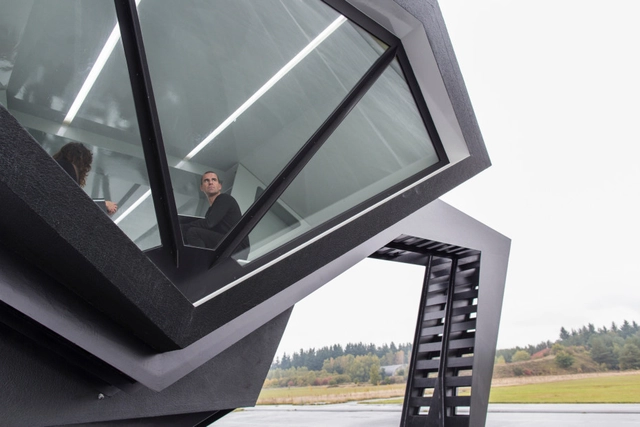
Whether it's a bisected war bunker, an office space that forbids sitting down or a hulking yet ultimately purposeless machine of war, the chances are that if you've seen a project by RAAAF, it provoked some questions. But while their work may appear merely idiosyncratic, it is informed by a deep understanding and questioning of culture. Originally produced and published by Freunde von Freunden as "Experiments In Spatial Dynamics: RAAAF," Leonie Haenchen delves into the architecture and philosophy that drives the unconventional Dutch practice.
It’s pouring without mercy, but at Soesterberg Airbase this is highly appreciated. “We like this weather,” says Ronald Rietveld, co-founder of RAAAF, as he greets us at the entrance of what appears to be an enormous post-apocalyptic amusement park. “The rain suits this atmosphere much better.”
RAAAF stands for Rietveld Architecture-Art-Affordances, which doesn’t really prepare one for what’s revealed behind the doors of Shelter 610. A monstrous arthropod made out of steel with two spindly legs stares vacuously out of its white glassy eyes. Every attempt to name this mechanical being fails, it merely appears as a collision of past and future—science fiction in flesh and blood. “Everything we do should be an in-the-moment experience, something that people can feel physically. If this object was only presented on paper, it would simply not be as strong,” says Ronald and grins mischievously. “I am sure you will still remember this moment in five years.”
Forty-seven years after their first appearance, Lina Bo Bardi's iconic glass easels have returned to the gallery at São Paulo's Museum of Art (MASP), displaying some of the museum's most valuable paintings, spanning from the medieval to the modern, in an exhibition on the second floor of the museum.
Removed from display in 1996, the concrete pillars, wood and glass easels were reviewed by METRO Arquitetos, who became part of MASP's curatorial team -- in charge of exhibition design -- last December. Having carried out various exhibitions this year at the museum - such as Brazilian Art Through the 1900s - METRO Arquitetos decided to end the year by bringing back the easels, in an exhibition similar to the original one conceived by Lina, which almost five decades later, continues to impress with its innovative way of exhibiting art in museums.
We had the opportunity to visit the exhibition montage and speak with architect Martin Corullon about the return of the easels and the process of recovering the space as conceived by Lina for the museum. Read the complete interview below.













.jpg?1451393990 "The End of Sitting (2014). Image © Jan Kempenaers")

.jpg?1449583733&format=webp&width=640&height=580)
.jpg?1449583611 "© Romullo Baratto")
.jpg?1449583703 "© Romullo Baratto")
.jpg?1449583687 "© Romullo Baratto")
.jpg?1449583718 "© Romullo Baratto")
.jpg?1449583733)