-
Architects: Mohamed Amine Siana
- Area: 650 m²
- Year: 2015
-
Manufacturers: Bisazza, Sorevet



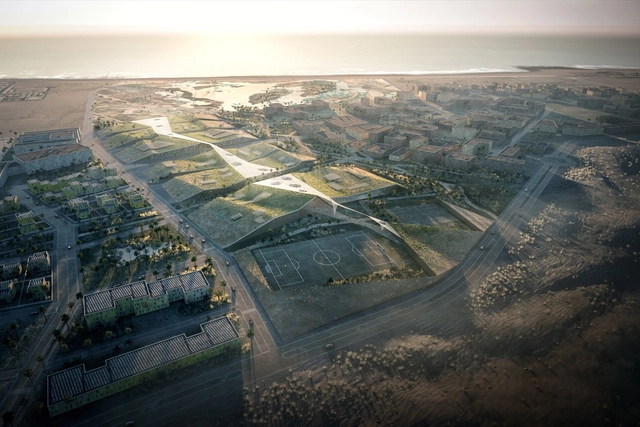
Agence d’Architecture A. Bechu & Associés has won a competition to design a new campus for the University of Laâyoune to be located in the oceanside town of Foum el Oued, Morocco (Western Sahara). Launched by King Mohammed VI last February, the competition was named a national priority project supported by Office Chérifien des Phosphates (OCP), a Moroccan company and the world’s leading producer of phosphate. The project was aimed at contributing to the economic and social boom of the region by creating a new platform for innovation and research & development.
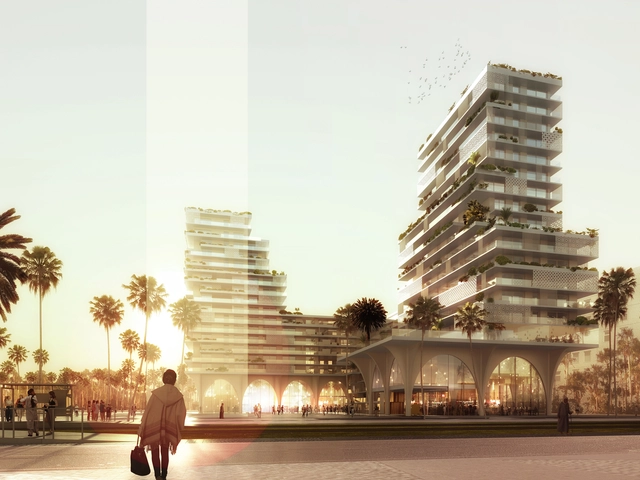
Hamonic+Masson & Associés is envisioning a new Casablanca via the redesign of its financial district, Casa Anfa. The Paris-based firm, which just won a city-sponsored competition to pioneer a transformation of the area, has unveiled big plans for Lot 65-2. The plans respond to questions on the urban scale as well as preservation and sustainability.
"Form and urbanity” underscore the project’s drive for reimagining the links between high-rise entities in the Moroccan city.
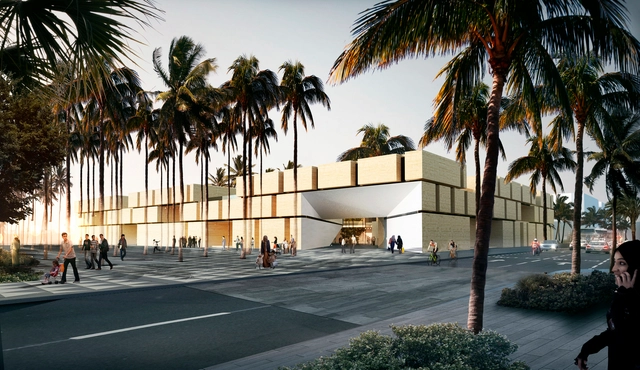
Urban Agency and OUALALOU+CHOI have drawn heavily from local inspiration for the design of a new adult education center in south-west Morocco. The isolated site is set against a harsh environmental backdrop, and in response the proposal only uses 10 000 of the allocated 22 000 square meters to create a compact building centered around an internal courtyard. This will allow it to be expanded upon in the future, as the building fulfills its intent as a world class education facility.
The project uses the traditional "Medersa" (first universities) as precedent, incorporating a dynamic internal courtyard and a simple exterior envelope. The Medersa, known for their "social, cultural and climatic ingenuity," not only foster communal activity in their internal spaces but are protected from harsh sun, winds and sandstorms, creating a climatically controlled interior zone.

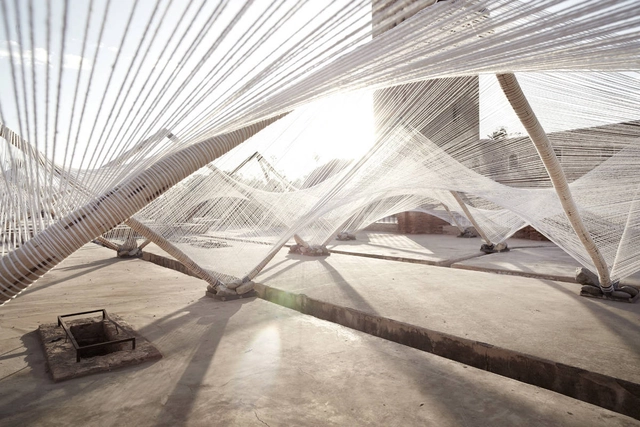
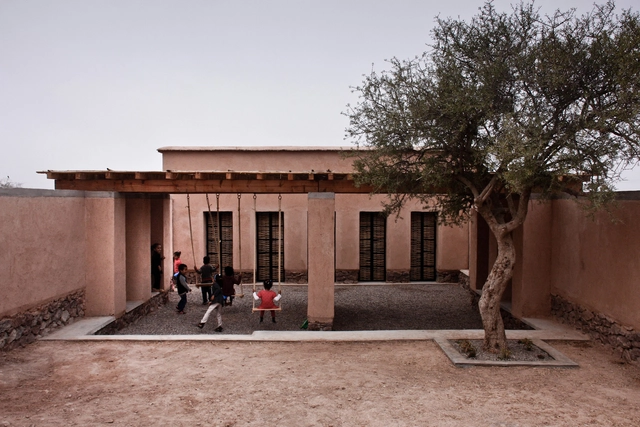
From 4 until 11 of september 2016 BC architects & studies is organizing together with Solve the Puzzle a design and build workshop about earth building and other local construction techniques of Morocco.
.jpg?1446160424&format=webp&width=640&height=580)
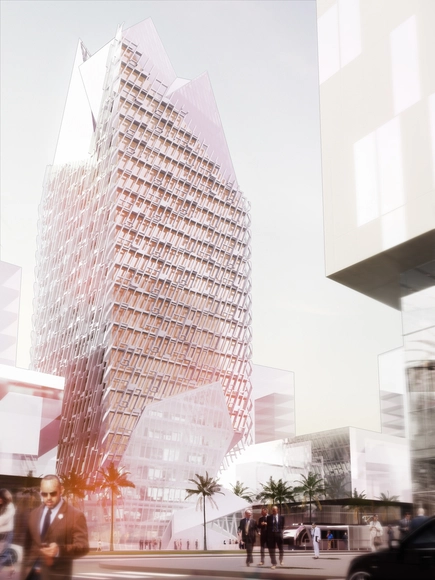
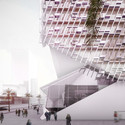
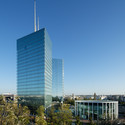
Mophosis Architects have just released their design for the Casablanca Finance City tower in Morocco. The building's iconic crown, coupled with the way the building interacts with ground-level public space, creates an "inverted double-crown" that will serve as social symbol and meeting place. Following the model set in Paris' La Defense district, the project will anchor a new business district (Casablanca Finance City) and embody "Morocco’s vision for the future and setting precedents in building performance, scale, and style for a city that does not yet exist." Slated for completion in 2017, the 226,042 sq. ft building broke ground in December of 2014.
Read on to learn more about Morphosis' brise-soleil-wrapped tower.
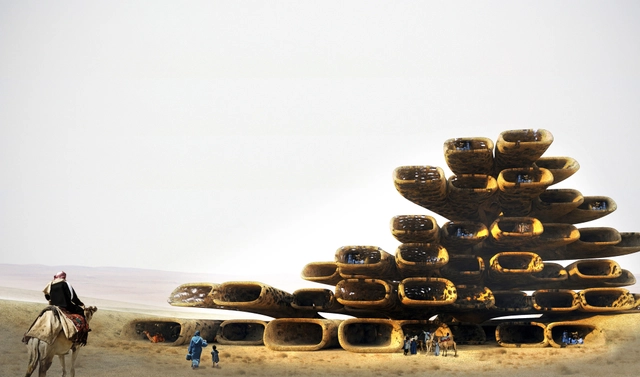
Flohara by XTU Architects envisions an inhabitable desert wall that constructs itself from the natural processes of its environment. Featured at the Venice Biennale's Morocco Pavilion exhibition entitled “Fundamental(ism)s,” this ecological phenomenon defies the conventions of housing, offering shelter from varying climatic conditions and supporting both human and plant life in the harsh desert.
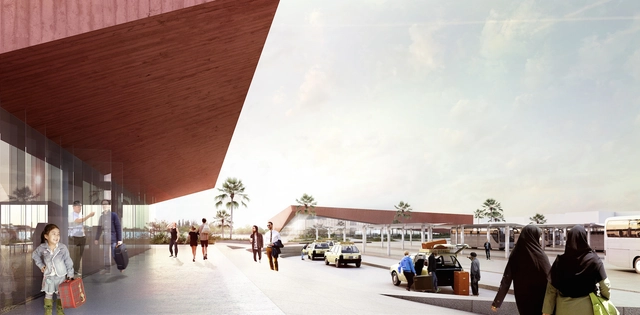
As part of an international competition, Narrowminded Architects teamed up with BOM Architects to identify and solve central functional deficiencies in a proposal for a new Marrakech Central Bus Terminal. Together, the architects found that obsolete infrastructure, unclear orientation, hazardous traffic density, rampant pollution, and confusing overlaps between vehicular and pedestrian flow were all contributing factors in the inefficiencies and hindered advancement of the terminal. Thus, with the intent to create a timeless environment that could flourish in Marrakech's future morphological developments, the proposal adopted a strategy to thoroughly address each individual issue.
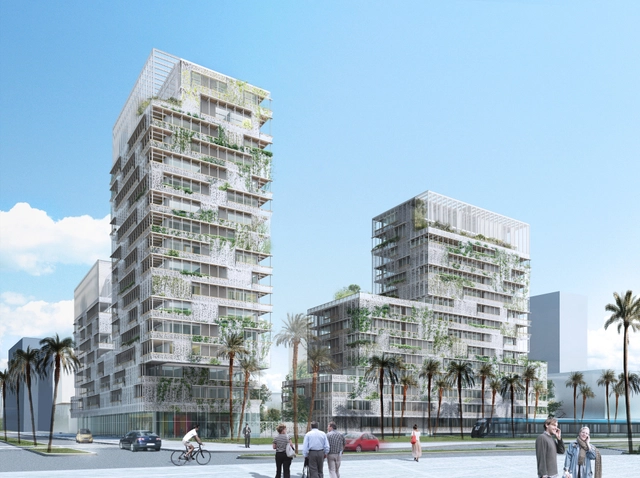
Herreros Arquitectos just sent us their recent project for a mixed-use building in Casablanca, Morocco. Resulting from a series of urban, spatial, formal and sustainable variables, the project--which includes housing, commercial and athletic spaces--is characterized by a permeable facade that directly responds to the climate. The repeated decorative element is a reinterpretation of a traditional geometric code that is common to the region.
The project was featured in the Moroccan Pavilion in the 2014 Venice Biennale. Find the images and product description, after the break.

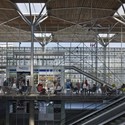
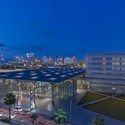
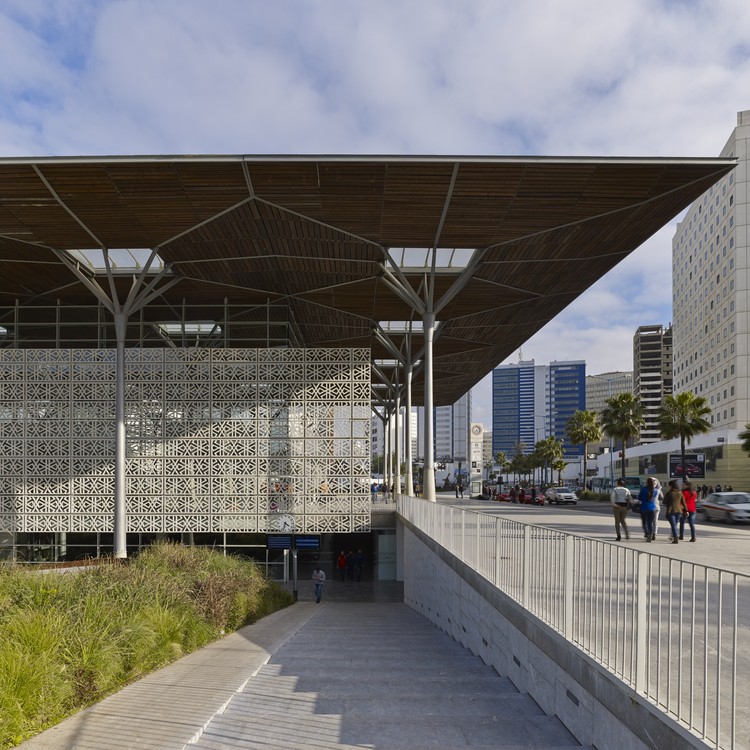
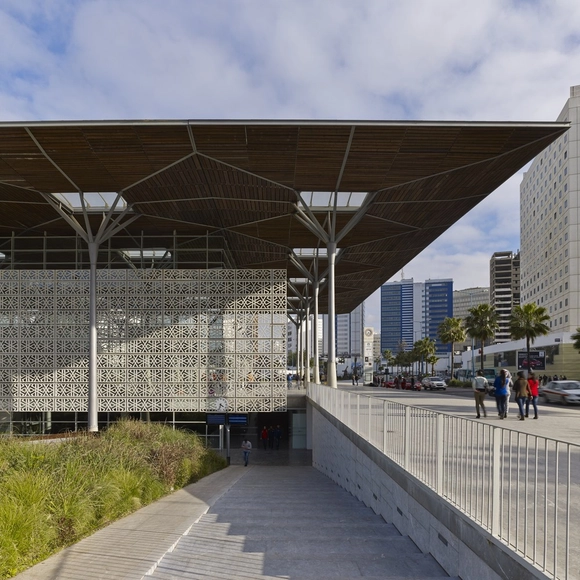
Silvio d’Ascia Architecture, Omar Kobité Architecture and Eric Giudice Architects have been announced as winner of an international competition to design the new TGV high-speed railway station in Kénitra. The winning design aims to unite the northern and southern parts of the city by providing two entryways joined by one geometrical volume whose triangular framework recalls traditional shapes found in vernacular Moroccan architecture.
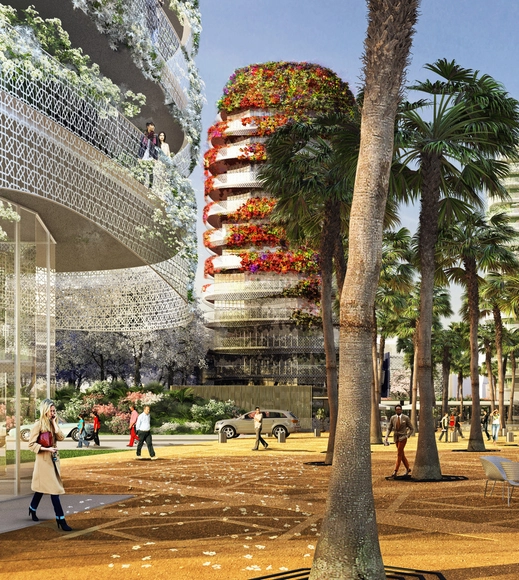
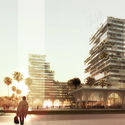
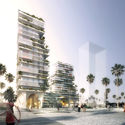
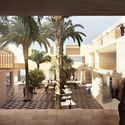
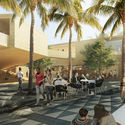
Maison Edouard François has masterplanned a new mixed-use neighborhood for the Moroccan city Casablanca: “The Gardens of Anfa.” Scheduled for completion in 2017, the plan calls for three mid-rise residential towers, a low-rise office tower, and a series of residential blocks connected by a central piazza and concealed within a lush multicolored landscape. Each “organically-shaped” tower will be enhanced by a trellised facade that fosters the growth of bougainvilleas and jasmine, further camouflaging the structure and “demarcating the limits of a garden.”





.jpg?1446160010 "© Fernando Guerra | FG+SG")
.jpg?1446160348 "© Fernando Guerra | FG+SG")
.jpg?1446160781 "© Fernando Guerra | FG+SG")
.jpg?1446160618 "© Fernando Guerra | FG+SG")
.jpg?1446160424)