The Royal Institute of British Architects (RIBA)’s Future Trends Survey for December 2014 has revealed little month-on-month change in indexes with the acknowledgement of a growing level of optimism. After falling back slightly in November 2014, the workload index has remained consistent at +29 (from +37 in November). Workload forecast balance figures have remained extremely positive, with practices reporting +50 in Northern Ireland and up to +75 in Scotland. Furthermore, practices of all sizes have been responding with "optimistic" workload prospects heading into the next quarter. The percentage of respondents reporting that they had personally been under-employed fell to 9% from 12%.
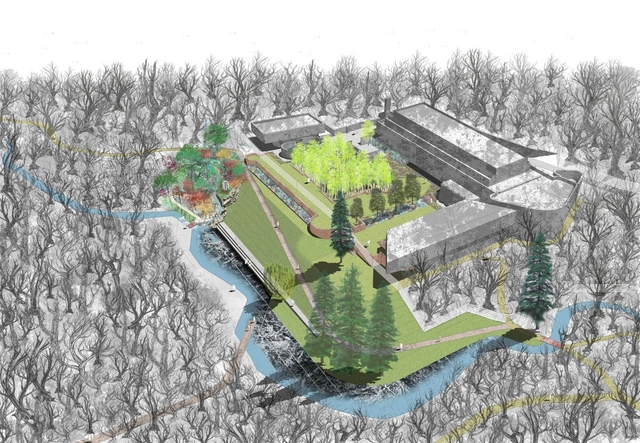
Scotland's Grade-A listed BrutalistSt. Peter's Seminary, abandoned for the past 25 years, is being rediscovered through drone technology. The building, which was originally designed by Gillespie, Kidd & Coia in 1966 and heavily inspired by the work of Le Corbusier ("with Scottish inspirations"), has recently been offered a new lease of life. London-based Avanti Architects, along with Glasgow-based ERZ Landscape Architects and NORD Architects, recently released the first images of their plans to breathe new life into the iconic building. This filmed footage not only gives a sense of how dilapidated the structure is in its current state, but also hints at the exciting possible future it has as an arts venue.
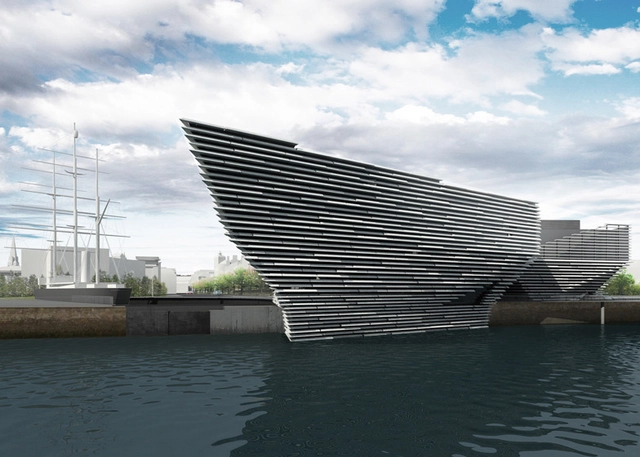
When Kengo Kuma's concept for the new Victoria and Albert Museum of Design (V&A) in Dundee, Scotland, was unanimously chosen as the winning design in late 2012, the jurors had stated that the proposal has been "subject to exhaustive scrutiny, including having external assessors do a detailed examination of projected costs." They stated that they "did not have to exclude any of the submissions on grounds of affordability." It is now reported, a little over two years later, that the original £45million budget has now exceeded £80million in spite of the fact that the building has already been 'redesigned' once in order to try to reign in soaring costs.
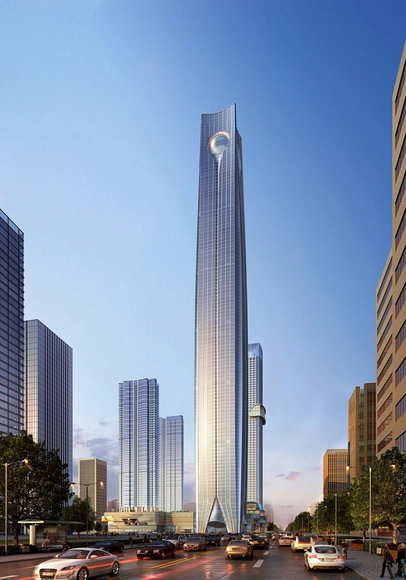
The 'Pearl of the North' (expected to complete 2018). Image Courtesy of Atkins
In an article for the Wall Street Journal, Dinny McMahon and Yang Jie visit Shenyang - a "chilly industrial town" in north eastern China which was once the country's capital (circa 1600). The city will soon be home to what's being dubbed the 'Pearl of the North', "a 111-floor office tower that will, briefly, be the seventh-largest in the world, dwarfing One World Trade Center." The tower, designed by Atkins, is "symptomatic of China’s edifice complex," McMahon notes - and the city is "just getting started." Read the article in full here.
Landscaped overview (proposed). Image Courtesy of ERZ Landscape Architects
In an article for The Guardian, Rowan Moore explores the state and future of the Grade A listed BrutalistSeminary of St. Peter, "where the influence of Le Corbusier’s monastery of La Tourette combines with [...] Scottish inspirations." Although the building is often seen as wholly unique in the canon of religious buildings, it is still comprised of traditional elements - "cloister, chapel, refectory, cells - but rearranged over multiple levels in unexpected ways, alternately enclosing and opening up to its surroundings."
To mark the 10th anniversary of the topping out of New York City's Hearst Tower, Lord Foster returned in order to narrate a short film shedding new light on the building with the aid of camera drones. The 46 storey building - which is integrated into a 6 storey base brick structure designed by Joseph Urban in 1928 - was "one of the most sustainable buildings of its time." Now, ten years later, this footage captures spectacular new views of the main atrium.
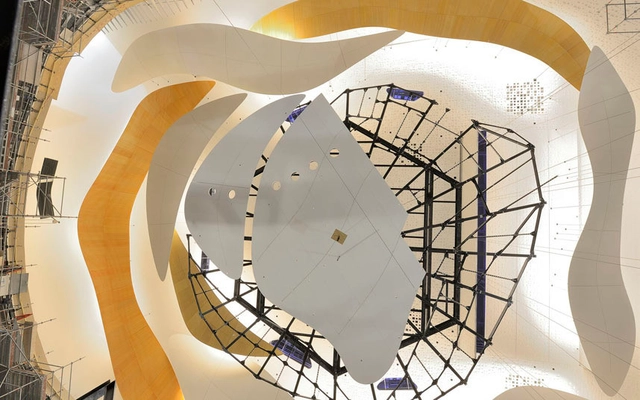
Ateliers Jean Nouvel’s long awaited opening of the Philharmonie de Paris concert hall took place yesterday at a VIP event in which the French President, Francois Hollande, officiated the ceremony three years after it was scheduled to take place. Jean Nouvel, however, did not attend the event, instead writing an incendiary column for French Newspaper Le Monde, and releasing a statement saying he feels that the building has opened “too early” and it ”is not finished.” He argues that “there were no acoustic tests of the concert hall [as] the schedule did not allow the architectural and technical requirements to be respected, [...] despite all the warnings which I have been giving since 2013.”
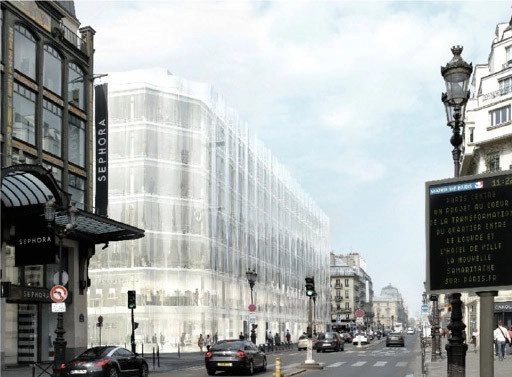
An appeals court has revoked permission for SANAA's restoration of the landmark Art Deco La Samaritaine department store in Paris. The plans, which would see a comprehensive overhaul of the 19th-century structure that finally shut its doors in 2005 following four decades in decline, would create an all-new shopping centre and luxury hotel as part of a 70,000m² mixed use development.
The project, commissioned by the LVMH conglomerate - which owns brands like Dom Pérignon, Givenchy, Louis Vuitton and BVLGARI - was halted because "the wavy, etched-glass facade proposed [SANAA] did not meet local planning requirements and was out of character with the surrounding buildings." It is understood that La Samaritaine will now appeal to the Council of State, France's highest administrative court. The city of Paris has mentioned in a separate statement that it would also support this latest appeal.
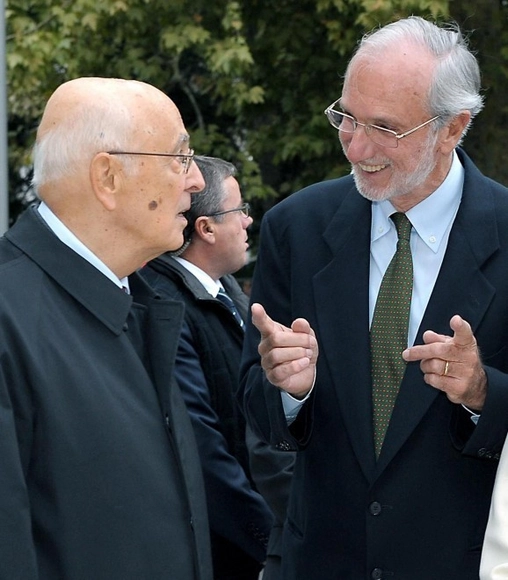
President Giorgio Napolitano and Renzo Piano (2012). Image Courtesy of La Repubblica
In The New Yorker's latest Postcard from Rome Elizabeth Kolbert talks to Renzo Piano in his Senate Office at the Palazzo Giustiniani, just around the corner from the Pantheon. Piano, who was named a Senator for Life by Italian President Giorgio Napolitano in September 2013 (when he was 75 years of age), immediately "handed over the office, along with his government salary, to six much younger architects." He then "asked them to come up with ways to improve the periferie - the often run-down neighborhoods that ring Rome and Italy’s other major cities." Kolbert attests to Piano's belief in the power of museums and libraries and concert halls. For him, "they become places where people share values [and] where they stay together." "This is what I call the civic role of architecture."
The 2015 RIBA Norman Foster Travelling Scholarship has launched and is inviting applications from schools of architecture around the world. A £6,000 grant will be awarded to one student by a panel of judges which will include Lord Foster and the current President of the RIBA, Stephen Hodder. First established in 2006, the scholarship is now in its eighth year and is designed to fund international research on a topic related to the survival of our towns and cities in a location of the student’s choice.
In a film for the BBC Magazine, Spanish architect Santiago Calatrava talks through his designs for the new St. Nicholas Church - the only non-secular building on the 9/11 Memorial site. The building, which broke ground last year, has been described by Calatrava as a "tiny jewel" for lower Manhattan, comprising of a white Vermont marble shrine sat beneath a translucent central cupola that is illuminated from within. The new church, of Greek Orthodox denomination, replaces a church of the same name which was destroyed during the attacks of 9/11. It is sited close to its original location on 130 Liberty Street, overlooking the National September 11 Memorial park and museum. With the building set to open in early 2016, Calatrava discusses the key conceptual ideas and references behind its unique, controversial design.
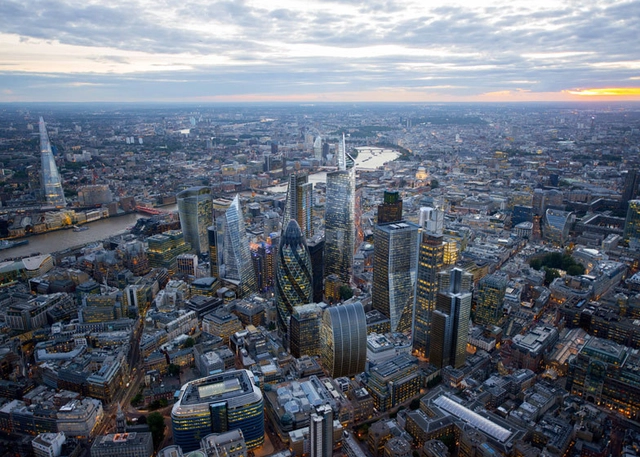
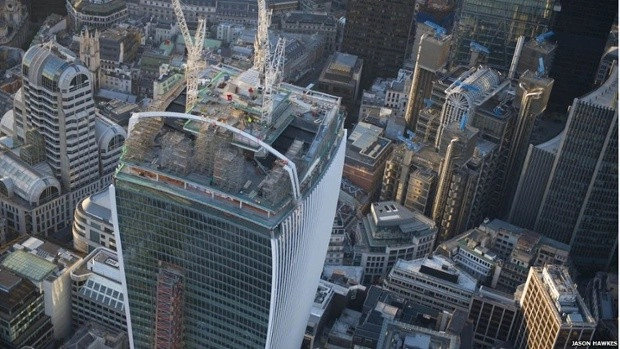
A changing skyline. Image Courtesy of CPAT / Hayes Davidson / Jason Hawkes
It has been revealed that the theme for the 2015 London Festival of Architecture (LFA) will centre around 'Work In Progress'. The festival, which is comprised of a series of events in and around the UK capital, seeks to "highlight the key role architecture plays in social, urban and cultural development." The annual celebration, which will run between the 1st and 30th June, will be jointly delivered by the Architecture Foundation, the British Council, New London Architecture, and the RIBA's London branch. Last year's 10th anniversary festival saw over 200 events ranging from walking tours and cycle rides, to exhibitions, talks, debates and films all addressing the theme of 'Capital'.
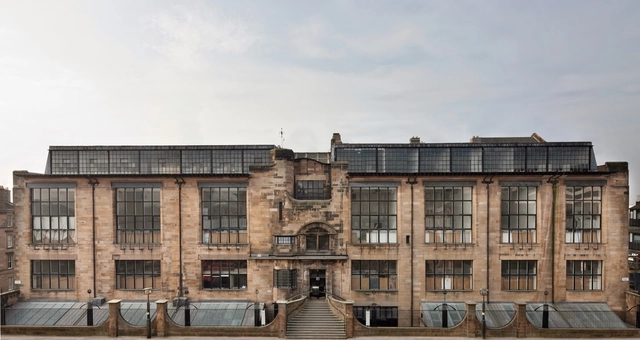
Five practices are the running to restore Charles Rennie Mackintosh's celebrated school of art in Glasgow. UK based John McAslan + Partners (who restored Mackintosh's last major commission), Scottish practice Page \ Park, and London and Hong-Kong based architects Purcell are all in the frame to lead the restoration of the Mackintosh Building amid a debate over how best to approach the rebuilding of the library and the areas of the building that were devastated by fire in May of last year. The selection of Avanti Architects and LDN Architects complete the rostra.
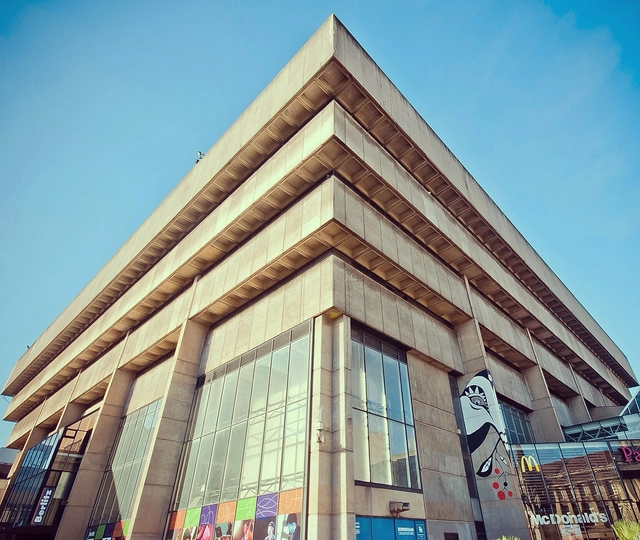
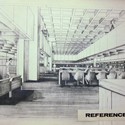
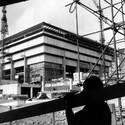
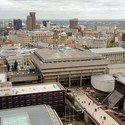
Work has begun on the demolition of the UK city of Birmingham's former Central Library, designed by home-grown Brutalist architect John Madin. The move by Birmingham Council to not retain the structure of the library, in spite of ideas and petitions put forward by numerous public groups (including one titled Keep The Ziggurat), has been widely met with disappointment among the architectural community. The BBC recently compiled some of the most interesting ideas for reuse which included, among others, transforming the concrete structure into a new English Parliament, an international trade centre, and an enormous space for rock climbing.
Madin, who passed away in 2012, had at least three of his major Modernist projects demolished during his lifetime. His design for Birmingham Library had been met with criticism from the likes of the city's Director of Planning and Regeneration of the time who described it as a "concrete monstrosity." Prince Charles famously described it as "looking more like a place for burning books than keeping them."
See photographs of the former library under construction and in use after the break.
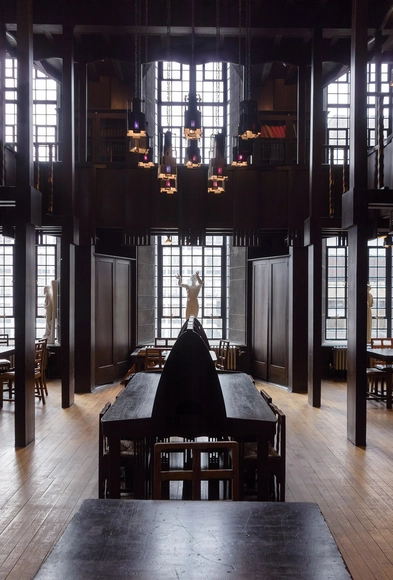
Following the unfortunate series of events that saw the Glasgow School of Art's (GSA) iconic Mackintosh Library devastated in a fire in May of last year, a leading Scottish architect has stated that he is "seriously against the idea of remaking the library" as a replica of Charles Rennie Mackintosh's original acclaimed design. Talking to the Scottish Herald, Professor Alan Dunlop has stated that "there is actually no way you can replace it as it was [as] there was 100 years of age and patina that you would have to replicate." Furthermore, he believes that it would not be something that "Mackintosh would do," citing the expansion of "his work in the years between each part of the Mackintosh Building being built [in 1899 and 1909]" as justification. It is his feeling that "the former library had essentially become a museum [and] not a viable working room for students and staff."
Videos
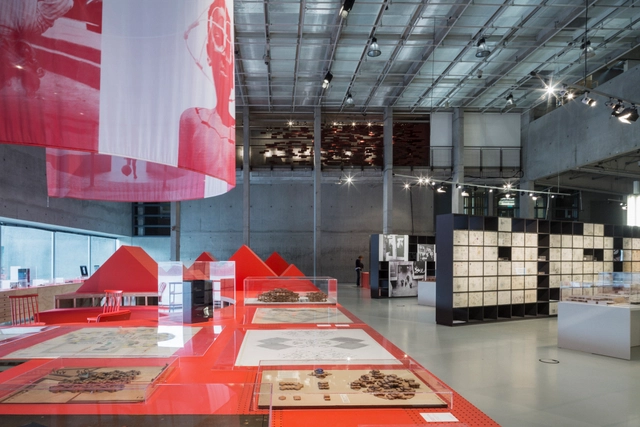
Structuralism: 'An Installation In Four Acts'. Image via Het Nieuwe Instituut
Great movements in architecture are usually set in motion by a dull societal ache or as a response to a sudden, unforeseen reorientation of a community at large. The Dutch city of Rotterdam - vast swathes of which were cast into oblivion during the blitz of May 1940 - has been at the forefront of many shifts in approach to the built environment. It is therefore fitting that the latest exhibition at the Nieuwe Instituut (formerly the NAi), simply titled Structuralism, is being held in the city that was recently named Europe’s best.
Furthermore, Dutch Structuralism is a timely subject for Dirk van den Heuvel and the Jaap Bakema Study Centre (JBSC) in Delft to tackle. With major civic buildings like OMA's extension to Rotterdam's City Hall taking shape, it appears that a resurgence of Structuralist formal thought is appearing in the contemporary city. The exhibition seeks to shine a new light on the movement by uncovering drawings, models and texts which profoundly shaped 20th century architectural thinking.
In a review of Rafael Viñoly Architects'20 Fenchurch Street, which is also known as the 'Walkie-Talkie' or 'Walkie Scorchie' after it emerged that its façade created a heat-focusing ray strong enough to melt cars, Rowan Moore questions London's preoccupation with iconic buildings and its money-driven planning schemes. Using 20 Fenchurch Street as a key example, Moore argues that not only does the building seem "to bear no meaningful relationship to its surroundings," but its Sky Garden - a terrace at the top of the building which claims to be "the UK’s tallest public park" - is a symbol of a bewilderingly unbalanced economy.
Videos
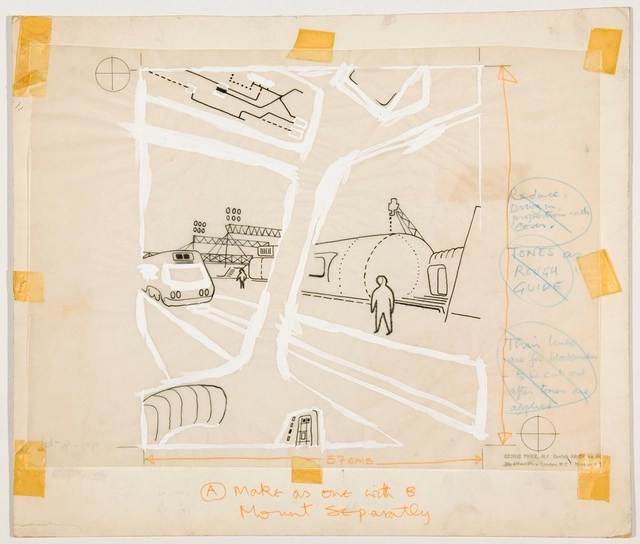
Cedric Price. Potteries Thinkbelt. Cedric Price fonds, Canadian Centre for Architecture, Montréal. Image Courtesy of CCA
A new exhibition and accompanying digital documentary on Cedric Price, a British architect, writer and educator who had a formative influence on architects such as Renzo Piano, Richard Rogers, and Bernard Tschumi, is open in The Netherlands. The exhibition, curated by members of Bureau Europa, introduces the work of Price by "presenting a cross-section of the elements of his inventive and singular practice" through sketches, project drawings, recorded talks, and first-hand accounts by staff, colleagues and friends. In addition, a series of selected projects present his "innovative models for industry, education, government, tourism, ecology and the house."