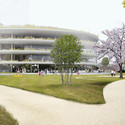
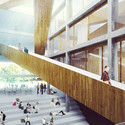
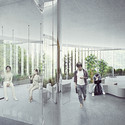
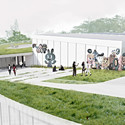
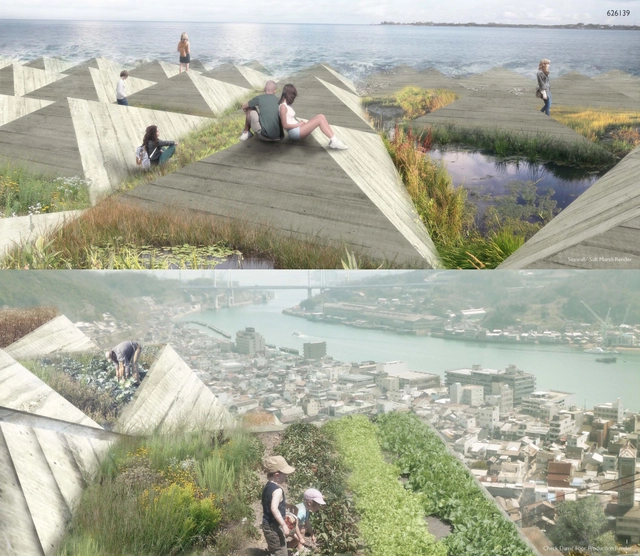
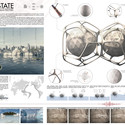
"Modular Landscapes" was designed in response to the 2011 Japanese earthquake. Image Courtesy of Architecture for Humanity Vancouver Chapter
Architecture for HumanityVancouver Chapter has unveiled the winners of "NEXT BIG ONE," an open call for design solutions to high-magnitude earthquake and tsunami events that plague cities around the world. Project teams were challenged to propose a solution that "can mitigate natural disasters while simultaneously providing community permanence."
A jury comprised of leading architects and professionals from Architecture Research Office (Stephen Cassell), Perkins + Will (Susan Gushe), Bing Thom Architects (Eileen Keenan), Scott & Scott Architects (David Scott), and the City of Vancouver (Doug Smith) evaluated the projects. Entries were evaluated based on three key criteria: the exemplification of innovation in disaster design, promotion of community resiliency before and after disasters, and compliance with multi-hazard parameters for worst-case disaster scenarios.
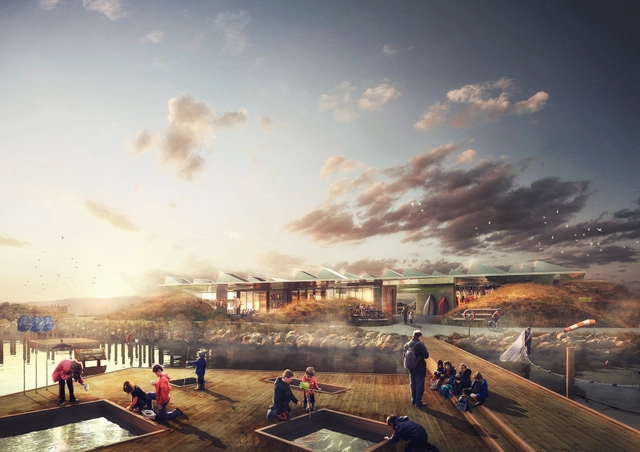
NORD Architects has released designs for a new Marine Education Centre in Malmö, Sweden. The Copenhagen-based practice, awarded the commission through an invited competition, hopes to “blur the distinction between architecture and landscape” with a facility that helps users gain a “deeper understanding of marine life.”
“With the changing climate, rising oceans and increased severity of cloudbursts, there is a need more than ever to understand the profound influence that marine life and the oceans have on our lives”, says Johannes Molander Pedersen, partner at NORD Architects.
OSPA Architecture and Urbanism has won a national competition for the new UFCSPA (Federal University of Health Sciences of Porto Alegre) Campus Igara in Canoas, Brazil. The goal of the sports campus is to integrate itself within the community so it may serve as both a public institution and a public space. You can learn more about the winning scheme, after the break.
Stockholm-based Kjellander + Sjöberg Architects (K + S) has won first prize in a competition to design the “Skärvet” urban neighborhood in Växjö, Sweden. A starting point for Bäckaslöv, a long term vision for a sustainable community by developer Skanska, the new neighborhood will take shape along the railway line connecting Växjö to Norra Bergundasjon.
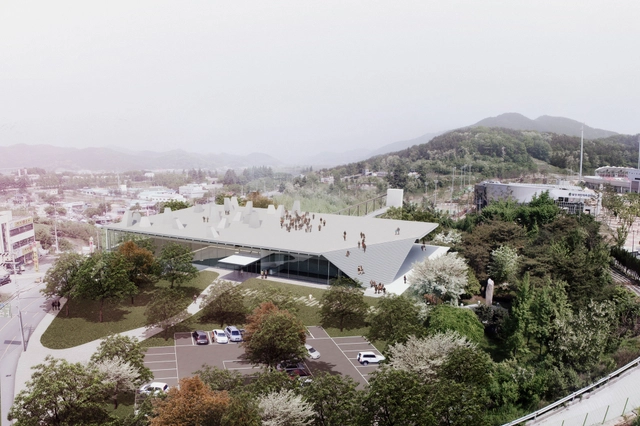
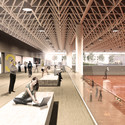
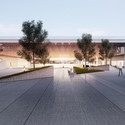
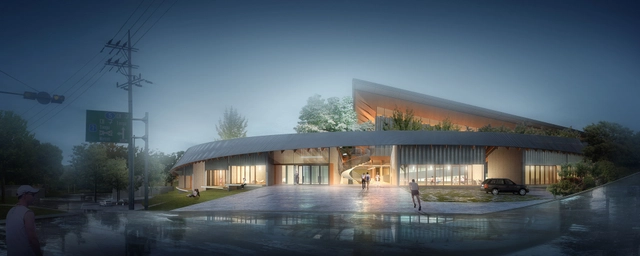
Nomad Office Architects (NOA) has shared with us their proposal for the Dalseong Citizen’s Gymnasium open ideas competition, which was awarded honorable mention. As part of the district’s centennial anniversary, the competition aimed to replace an existing, outdated sports hall with a new gymnasium complex for the local residents of Hyeonpung-myeon neighborhood within the Daegu district of Dalseong-gun.
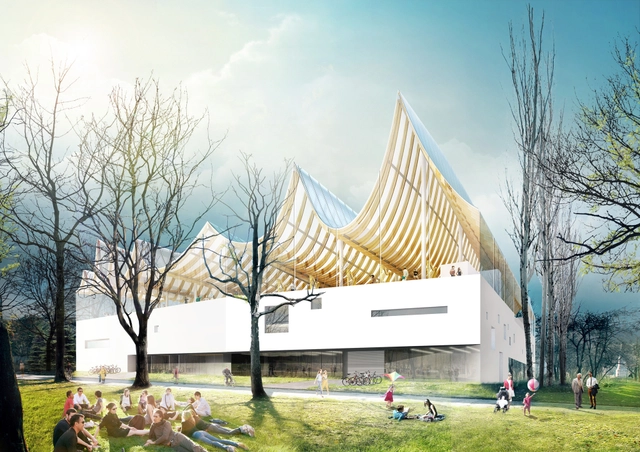
Fundamentalhas shared with us their vision for the House of Hungarian Music, as part of the Liget Budapest Competition. Inspired by the Neo-Baroque and Neo-Gothic spires of the park’s monuments which surrounding it, the modest house features a folded, white canopy rooftop which illuminates its surroundings and provides natural light deep into its interiors.
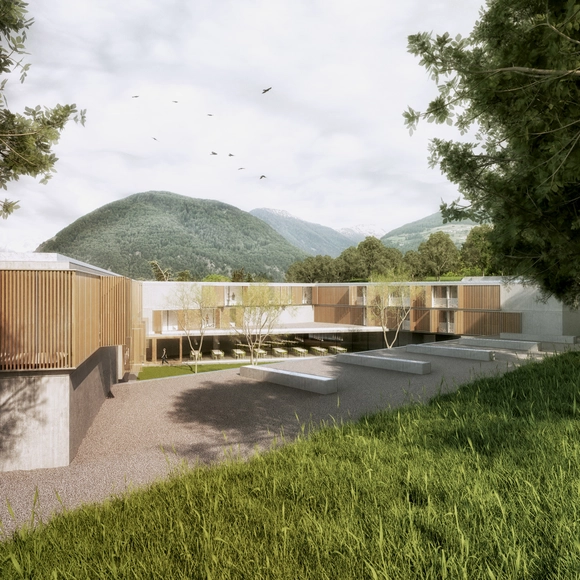
AM3 Architetti Associatihas been awarded first prize in a competition to design a new boarding school in Malles (Bozen, Italy). The proposed building takes full advantage of the landscape, opening onto views towards Mount Stelvio and the Mustair Valley. Drawing inspiration from this unique context, AM3 crafts a design that integrates opportunities for active participation between building and land, and student with nature.
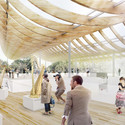
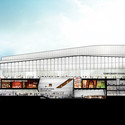
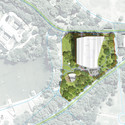
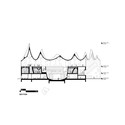
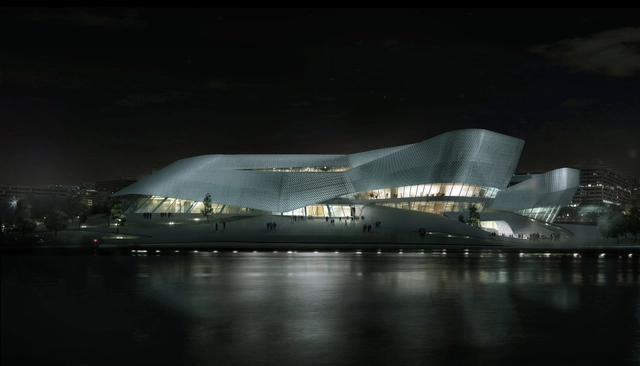
playze and Schmidhuber have been selected as winners of an invited competition to design the Urban Planning Exhibition Center in Ningbo, China. Inspired by the ancient artform of the Chinese ribbon dance, the exhibition center aims to “blur the lines” between citizens and decision makers in a way that grants the public “rare access into the inner-workings of the city” in an effort to strengthen the relationship between local government and community.
The idea of the Chinese “Urban Planning Museums” is the nation’s response to the rapid urban growth occurring in many of its major cities. The museums are intended to communicate city planning and development issues to the public. You can learn more about playze and Schmidhuber’s design, after the break.
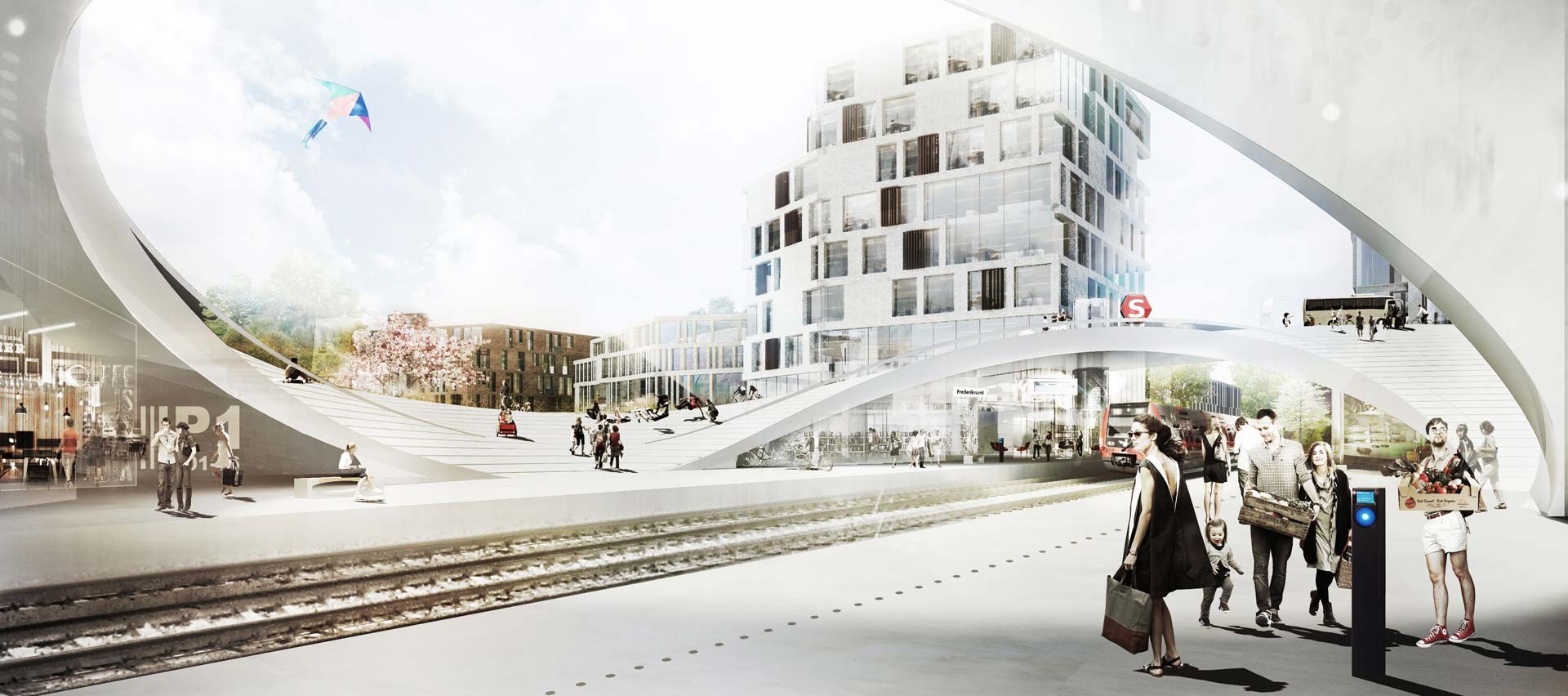
Henning Larsen Architects, in collaboration with an international team consisting of Tredje Natur, MOE and Railway Procurement Agency, has won Frederikssund municipality’s architecture competition to design a regional train station and new quarter in the future town of Vinge. While primarily serving to connect Vinge to the regional public transit system, the undulating, circular urban hub is designed to prevent the railway from dividing the town in two halves.
“The proposal best connects the train station, nature and town structure as one united whole,” lauded the selection committee regarding Henning Larsen’s winning scheme.
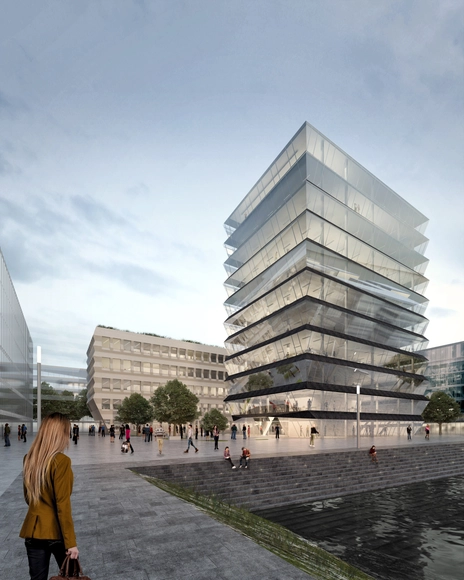
MVRDV, together with Munich-based morePlatz, have been selected among seven teams in an international competition to design two office buildings in Mainz, Germany. The five- and eleven-story “Hafenspitze” structures are expected to spearhead the transformation of the former Zollhafen industrial harbor, which plans to become a new mixed-use city quarter over the coming decades.
OYO - Open Y Office, together with Arch&Teco, has received second prize among nine participants in an invited competition for a new Howest campus building in Kortrijk.
“We envision this new campus as an interactive field where we catch the classrooms in the middle; conceived as areas of focus. This field contains lecture rooms, informal meeting spaces, restaurant, bar, shop and lounge areas and wraps around the area of focus; connecting the park all the way up to the roof garden where students, teachers, alumni, companies and neighbors are invited to shop and exchange knowledge.”
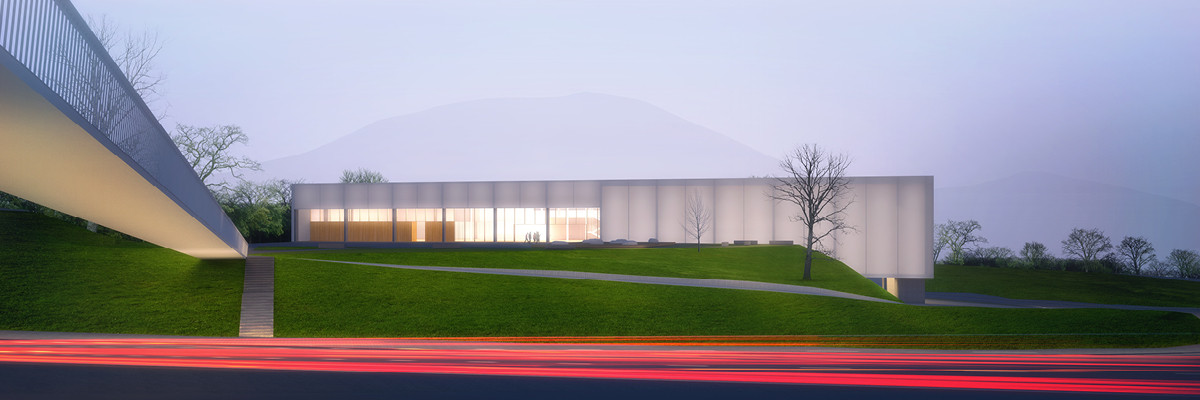
Pedro Livni and Fernando De Rossa have shared with us their proposal for the Dalseong Citizen’s Gymnasium open ideas competition, which was awarded honorable mention. As part of the district’s centennial anniversary, the competition aimed to replace an existing, outdated sports hall with a new gymnasium complex for the local residents of Hyeonpung-myeon neighborhood within the Daegu district of Dalseong-gun.
Ukrainian practice drozdov&partners has been announced as winners of an open ideas competition for the Dalseong Citizen’s Gymnasium. As part of the district’s centennial anniversary, the competition aims to replace an existing, outdated sports hall with a new gymnasium complex for the local residents of Hyeonpung-myeon, a neighborhood within the Daegu district of Dalseong-gun.
The winning design favors a minimalist approach, integrating a “simple volume” within the hillside site that reactivates an existing public plaza and sports hall, while strengthens its connection to the surrounding neighborhoods, schools and city transit.
Construction is expected to begin in 2015. More project information and images, after the break.
Enric Miralles Benedetta Tagliabue (EMBT) and Bordas+Peiro have been announced as winner among five proposals of a two-stage competition to design the future Clichy - Montfermeil metro station in Paris. The competition, organized by the Société du Grand París, is part of the ambitious Grand Paris Express project which seeks to modernize the existing transport network and create an automatic metro that will connect new neighborhoods to the city.
In addition to the station's design, EMBT’s proposal will provide a new public square for the renewed neighborhood of Clichy-sous-bois that will serve as a symbol of change following the violent riots of 2005. “We want to transform this grey and abandoned area into a vivid and colorful plaza, that will inspire joy and optimism,” stated EMBT.
Studio Ricatti has revealed their design for a new university in the Arcispedale San'Anna in Cona-Ferrara Italy. In a competition hosted by the University of Ferrara, the firm was awarded second place for the proposal, which was characterized by clarity of form, efficient flow, and a balance between intimate and social spaces.
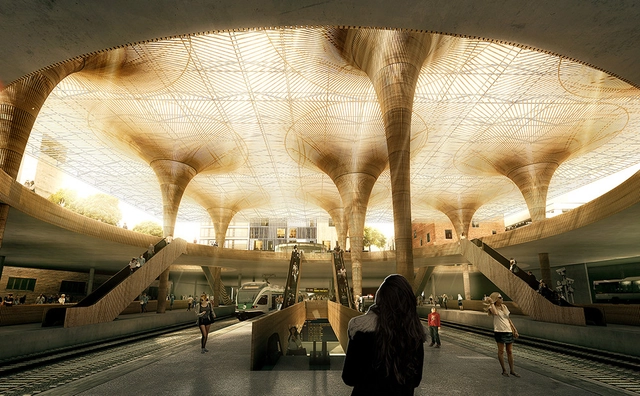
The Mayor of Tampere has announced Danish architects COBE and FinnishLundén Architectureas winners of an international competition for the Tampere Travel and Service Centre. The winning scheme, “Reconnecting Tampere” will join two disparate districts in the heart of Finland’s second largest city and establish a “new urban living room” beneath an expansive steel canopy.
”Tampere’s new Travel and Service Centre has not only the potential to become a gateway to Tampere and the rest of Finland, but also the potential of becoming a generator for the future development of the urban center of Tampere,” says Dan Stubbergaard, Founder and Creative Director of COBE.
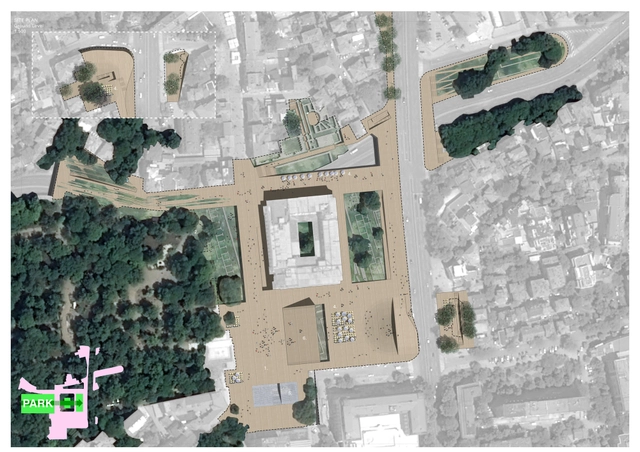
FORA has been announced as winner of a competition for revitalization and renovation of the central square in Plovdiv, Bulgaria's second largest city, built upon the remains of the ancient roman Forum of Philippopolis. The intervention spans an area of 57,000 square meters and exposes the intersection of several architectural and historical layers, from antiquity until the Socialist State.
Competitions results for the first stage of the Moscow Metro Station for Solntsevo and Novoperedelkino have been announced. Aiming to revive the tradition of unique designs for Moscow metro stations since the 1930s-50s, this is the first time in the recent expansion of Moscow's Metro system that a competition has been used to find an architect.
The jury at the Committee for Architecture and Urban Planning of Moscow has chosen 10 finalists out of approximately 100 entries who will continue to work on the architectural design concepts of the stations until November. See images of all ten proposals after the break.















.jpg?1413387013 "© Henning Larsen Architects")