Thinking broadly of architecture, the masterpieces of the past inevitably come to mind; buildings constructed to withstand the passage of time, that have found an ally in age, cementing themselves in the history of humanity. Permanence, however, is a hefty weight to bear and architecture that is, due to its program, ephemeral should not be cast aside as "lesser-than."
When looking back on the rich history of Japanese architecture, some of the things that immediately come to mind are complex wood joinery, hipped roofs and intimate experiences with water. Today, Japan is on the cutting edge of architectural innovation in many different buildling types—skyscrapers, office buildings and micro-housing to name a few. However, this Instagram account chooses to highlight an extremely unappreciated building type—public restrooms.
Cheekily named @toilets_a_go_go, the account promises its followers the "discovery of Japanese toilets," covering everything from bathroom pavilions inspired by traditional Japanese architecture to metabolist-like toilet pods—with a few novelty structures thrown in for good measure. If the name of the account did not already reveal the identity of the structures, one might even mistake many of them for something else. We typically overlook public restrooms or even see them in a negative light, but this account showcases the power of architecture to improve a neglected building type, showing that even a trip to the toilet can (and should) be beautiful.
The Scottish liberal economist and philosopher Adam Smith once argued: “To feel much for others and little for ourselves, to restrain our selfishness and exercise our benevolent affections, constitute the perfection of human nature.” While we may have come some way since the 1700s, selfishness is still viewed by many as one of humanity’s ugliest traits.
Yet with the rise of mindfulness and the burgeoning self-help and life-coach industry, the view towards selfishness—more palatably referred to as "self-care"—is changing, which isn’t necessarily a bad thing.
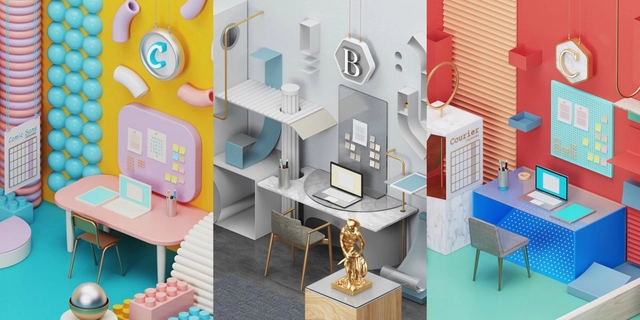
As many architects know, fonts have their own personality - so to use them as inspiration for office decors isn’t as crazy as you might think. Typography has the ability to instantly tell a narrative to the reader before needing to read the words, hence why we can take the decision-making behind which font to use in a project or scheme very seriously. They can hold the utmost importance in graphic design and architecture, as we often find ourselves displeased if the font is inefficient or disproportionate (take comic sans for example).
Seven unique, iconic fonts have been used as a base for each of the interior design projects below. Using their heritage, connotations, and style of the typography, HomeAdvisor have stylised each of the rooms to embody their identities and make us question their character.
Fans of absurd architecture, over-the-top action, and wrestling-stars-turned-beloved-actors are in for a treat this summer thanks to the recently-announced film Skyscraper. The movie’s central character is “The Pearl,” an imagined 1,067-meter-tall skyscraper in Hong Kong—although apparently some guy named “Dwayne ‘The Rock’ Johnson” also plays a pretty big role with his character Will Sawyer, a former FBI Hostage Rescue operative who lost a leg in the line of duty and now reviews building security for a living.
The plot, as revealed in the trailer and a single-paragraph synopsis on the official website, sees Will Sawyer criticizing the security of the “vertical city” billed as the tallest, most advanced, and safest building in the world. His concerns are immediately shown to be well-founded, as a group of (what are presumably) terrorists set fire to the 96th floor of the building, trapping Sawyer’s family and somehow framing Sawyer for the whole thing. As a result, Sawyer must save his family while running from the law, with the trailer showing a climactic leap from an adjacent crane (we can only assume that Dwayne Johnson doesn’t fit into a ventilation duct). The film has come in for some good-natured ribbing already, with internet jokesters questioning how a 260-pound amputee makes a 15-meter jump off the end of a crane. But of course, closer inspection reveals that these concerns are just the start of the entertaining wackiness of this movie.
2018 should prove to be a pivotal moment in how the design community uses virtual reality to deliver work. With leading firms exploring the introduction of mult capabilities, the technology will experience a breakthrough shift from purely enabling new modes of consumption to one that empowers design.
Today, VR essentially allows designers, clients, and stakeholders to consume models in dynamic new virtual environments. One by one, individuals can put on VR goggles and experience spaces that only exist digitally as others watch, listen to their reactions, and wait their turn. This implementation of VR technology has already strengthened design outcomes by enhancing strong communication throughout the design process, translating to less risk and stronger confidence in the eventual built product for clients.
The tenth Case Study House wasn’t actually intended for the Arts & Architecture programme. It was added on its completion in 1947, to fill out the roster, as many houses remained unbuilt. Clearly, the Nomland design earned its place on the list, having many features in common with other Case Study homes and, most importantly, meeting the stated aims of economy, simplicity, new materials and techniques, and indoor/outdoor integration. The different departure point, however, can be seen in the layout. Whereas Case Study homes were designed primarily for families, this plan is for “a family of adults”—which is to say, a childless couple.
When your firm adopts project accounting—the practice of accounting on a project-by-project basis—you’ll get insights that’ll change the way you do business. You’ll understand your projects, employees, clients, and firm on a deeper level, and you’ll be able to make changes that will dramatically increase efficiency and profits.
Before this happens, though, you need to lay the groundwork. With the right tools, logging and making sense of the data you need is convenient and easy. You just have to be consistent.
Architecture is a collaborative discipline, where a day’s work often involves sharing files, emails, and information in the process of completing a project. Whether you are entering competitions, applying for jobs or getting your work published, being tech-savvy when sharing files is a crucial skill to have—while failing to be tech-savvy can lead to frustrated colleagues, wasted time, and even missed career opportunities.
To help you ensure you're not making any mistakes, we’ve put together a few pointers you can use to share work online more efficiently and effectively.
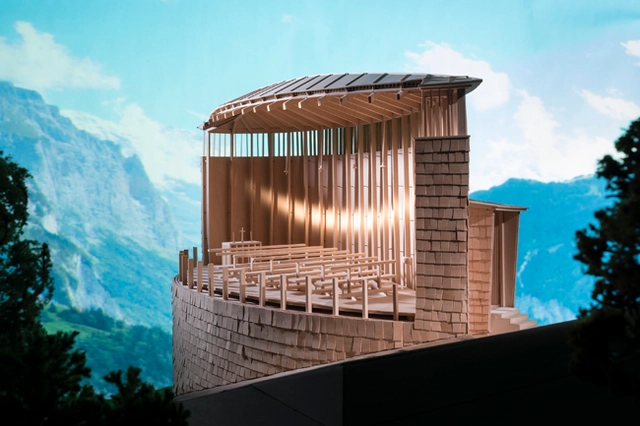
For a lot of architects, models hold a special place in our hearts. Whereas a building can take years to construct and usually can't be drastically altered as it nears completion, a model provides architects with the immediacy and flexibility we crave as designers while also allowing us to feel like we're really making something—a feeling that digital modeling software can rarely provide.
Models have even played decisive roles in the careers of many world-famous architects. Peter Zumthor, for example, is known to prefer the tactility of models over other forms of representation, while early in his career Steven Hollgained recognition for his visionary "Bridge of Houses" proposal for the Highline in New York, presented through a series of provocative models. And, physical models have even been key in some of the great advancements of the profession: In the 1990s, Frank Gehry's pioneering work in digital design involved tracing the forms of his digital models into CATIA software, whereas Frei Otto's models using soap films from the 1960s were key in his research into tensile structures.
https://www.archdaily.com/888340/show-us-your-best-architectural-model-photosAD Editorial Team
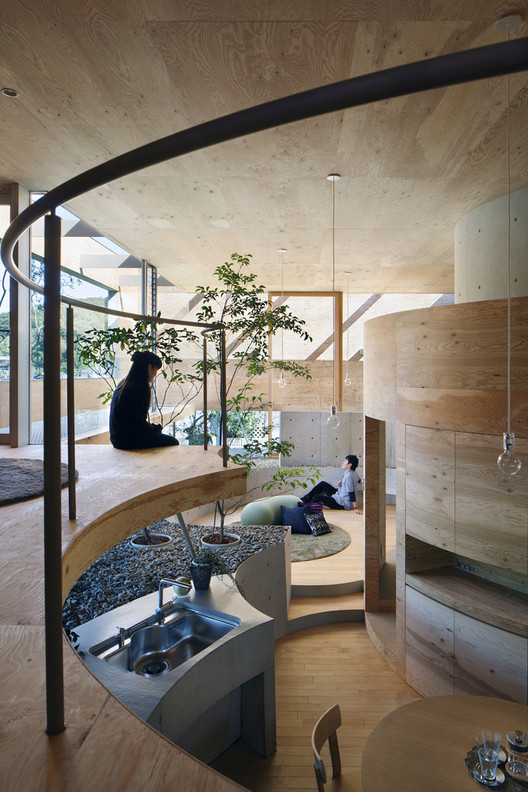
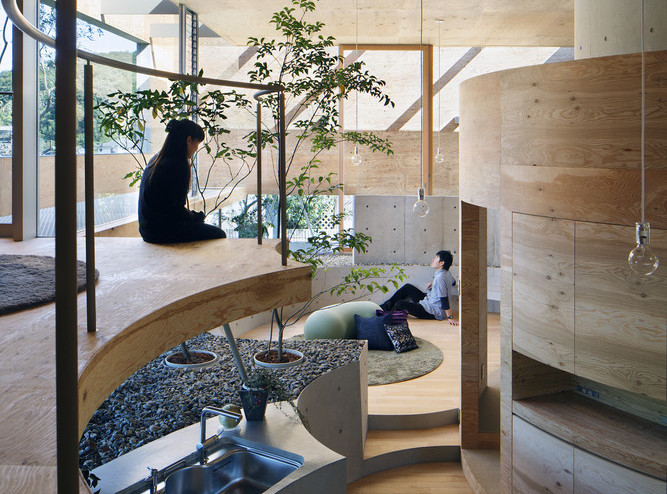
The private dwelling is a particularly favorable place in which to enjoy double-height spaces. This design strategy not only allows vertical spaces to be connected, but also enriches the functional and aesthetic possibilities of a building; often used in living rooms and kitchens, these spaces are designed to generate encounters between occupants. In this Photos of the Week selection, we present images by renowned photographers such as Kim Zwarts, Rena Lorenz, and Shigeo Ogawa.
There is something incredibly satisfying about 3D maps that make you want to follow the streets and rivers with your fingers, navigating your way through the urban landscape. Almost like contours, the CityWood’s minimalist maps are built up through plywood layers, laser cut with precision to one-hundredth of a millimeter and hand assembled for high-quality craftsmanship.
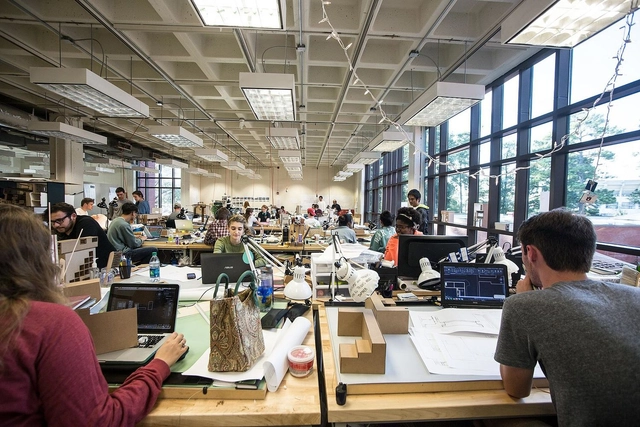
The issue of how we educate our architects of the future is a divisive one. With the capabilities of our technology advancing rapidly, new mediums of Virtual Reality, robotics, and artificial intelligence are all changing the architectural profession at a fundamental level. This creates the question of whether architectural pedagogy is keeping up with the times and educating students to be ready for both professional practice and an uncertain future.
On the 4th of February, Minneapolis will host the New England Patriots and the Philadelphia Eagles for the 52nd Super Bowl. With over 100 million people expected to watch the game this Sunday, all eyes will be on the city of Minneapolis—a city known for not allowing the harsh climate get in the way of their celebrations—and the brand new US Bank Stadium, where a huge permanent roof will ensure that, come rain, shine, or snow, Minneapolitans will have a space to gather and enjoy themselves.
HKS Architects took on the challenge of designing the stadium to replace the Minnesota Viking’s previous home, the Metrodome, which was known as "Minneapolis’s living room" for the strong relationship it had with the population as both a civic hub and a stadium. Unlike past stadiums the Dallas-based architects have designed, the US Bank Stadium required a different outlook, with a focus on designing a catalyst for public infrastructure and a communal space that provokes interaction with the community. So how did they achieve a structure that can both host the Super Bowl yet remain a prominent part of the city for years to come? We spoke to the lead architect on the US Bank Stadium, Lance Evans, about how to design and construct the centerpiece for one of the biggest sports events of the year.
The gas station does not usually catch one’s fancy. It is a ubiquitous building, one built primarily for function instead of for pleasure or community. We see them all the time but barely give them a second glance unless the need arises – and then, we get our fuel, and we are out of the station in minutes.
With the smell of gasoline and the usual convenience store spread, these service stations do not exude any particular sense of wellness. Neither have their flat, perennial structures captured the imagination of architects – until now.
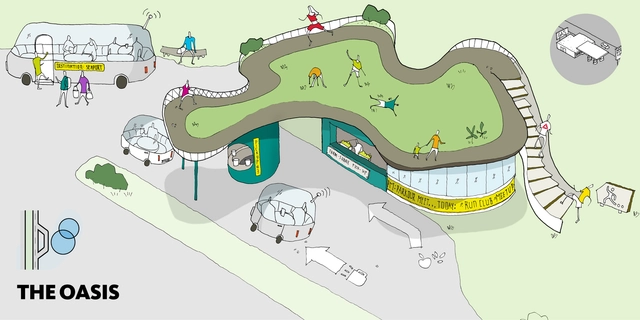
Reebok and Gensler are the first to catch on to the enormous potential of the common gas station. These buildings sit on prime real-estate all over the country, from highways to local streets. In their new collaborative project, “Get Pumped,” the global architecture firm and the fitness brand are coming up with a plan to re-do the gas station as we know it.
Why does a film garner critical acclaim? Is it captivating performances from its actors? Stunning tableaus and cinematic moments? Or, could it be the intricate sets where tales of drama, laughter, love, and loss play out?
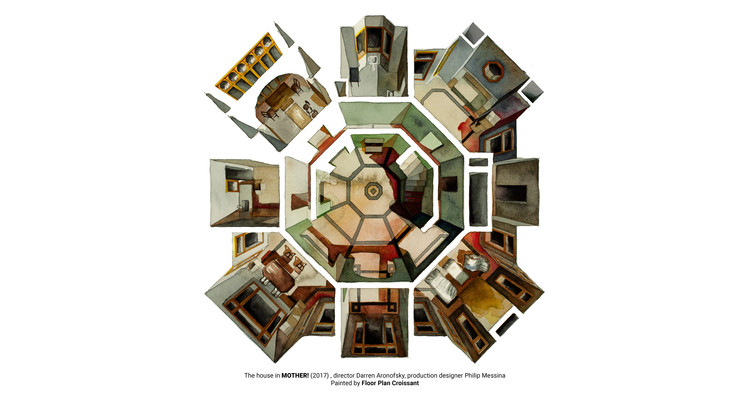
Following her stunning watercolor prints of last year’s Oscar nominees and the Netflix sensation Stranger Things, architect and illustrator Boryana Ilieva provides a glimpse into the elaborate sets of 6 stand-out films from 2017. With the Golden Globes broadcasted earlier this month and the Academy Awards only a few weeks away, the homes in these award-winning motion pictures deserve as many accolades as the Hollywood stars who inhabit them.
How much do you wish you knew about carpentry, solar energy or masonry? Leonardo Da Vinci said, "the noblest pleasure is the joy of understanding." Those who are open to learning and expanding their horizons are more likely improve their approach to design. If you've always wanted to understand more about construction processes, structures or materials, this list of online courses is for you.
We scoured MOOC platforms and databases to highlight a series of online courses related to construction and building materials. Many of the courses are permanently available and can be taken immediately; we've also provided information so that you may contact the universities or instructors to inquire about start dates, certificates, costs, course language and other relevant details.
Where does creativity live? Can the highest level of cultural production come from down the street? What does it mean to be a good neighbor, a good steward? How does that look when there are so many forces at work keeping people isolated? How do you see value in what others discard? Can we learn to talk about moments of success in our struggling neighborhoods, not as random and magical, but as sophisticated flexibility? What is civic empathy?
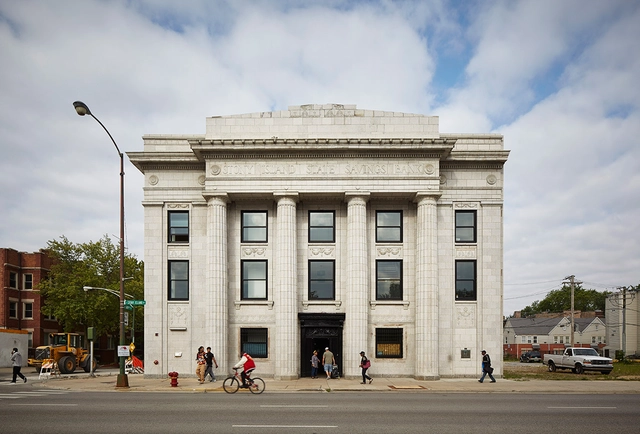
These are some of the questions Place Lab, a University of Chicago partnership between Arts + Public Life and the Harris School for Public Policy, explored in an exercise last year conducted with the support of the John S. and James L. Knight Foundation: it’s the articulation of a set of nine principles collectively called Ethical Redevelopment.