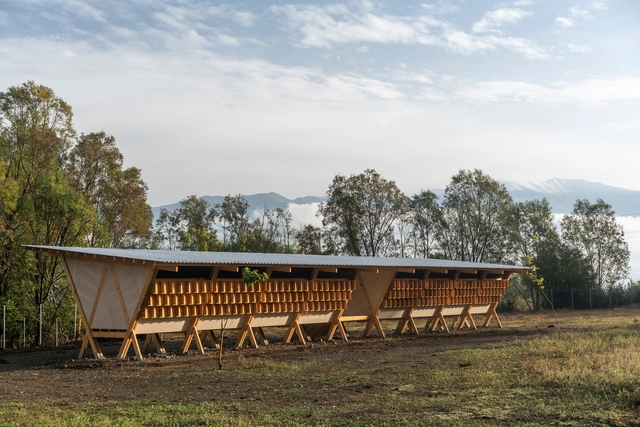
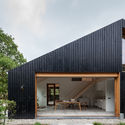
House of Chickens / SO? Architecture and Ideas. Image Alí Taptik
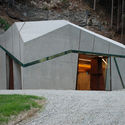
The barnyard typology is an endearing staple of rural architecture. Simple in construction, and traditionally shaped from necessity rather than aesthetic, barns have nonetheless continued to spark the imaginations of those seeking a contrast to the fast-paced, dense, globalized reality of urban life. They also spark the intrigue of designers. Whether it is refurbishing historic farms for modern use, or constructing an entirely new addition to the countryside, architects have drawn inspiration from the industrial origins of traditional barnyards to reinterpret elements such as modularity, timber expression, and refined ornamentation.
With December and January nearly behind us, many of us will have been producing reports. There is an increasing number of tools for reporting PR value sold to companies as ways to justify their worth. There is no doubt that it’s useful to regularly take stock of past and upcoming initiatives and producing a report can even be pleasurable when adding to a sense of accomplishment and direction. The bad thing is that this heavily-report-reliant culture leads to management style PR that focuses more on how something will look on paper as stats, graphs, and pics, than what is actually accomplished.
For instance, The Architecture Foundation in London is highlighting growing Biennale fatigue in its forthcoming “Bored of Biennales” event in March. One can well imagine how all-too-often such events are best experienced not in situ, but instead, through carefully-edited reports or via media coverage as suggested by the Foundation.
Unfortunately, we've probably all experienced the unfortunate surprise of finding mold at home. These undesirable black and greenish spots, usually seen in dark, damp corners, may seem harmless at first, but they pose a major problem for buildings and occupants. Because the tendency of mold is to continuously spread, it gradually contaminates other materials and surfaces, causing a characteristic smell and contaminating the air. But how is it possible to control it and, mainly, to prevent it from occurring through architectural design?
Coming from the Byzantine Era, originally used for decorating floors and walls, the hydraulic tile is a material still widely used for the coating of architectural surfaces. With versatility in patterns, composition, colors, it is water-resistant and can be installed onto various surfaces, like countertops, panels, and furniture. Going beyond thoу commonly used ones, this material still shows excellent results in projects, both residential and commercial. With that in mind, we have compiled a selection to inspire you for your next works. Check it out below:
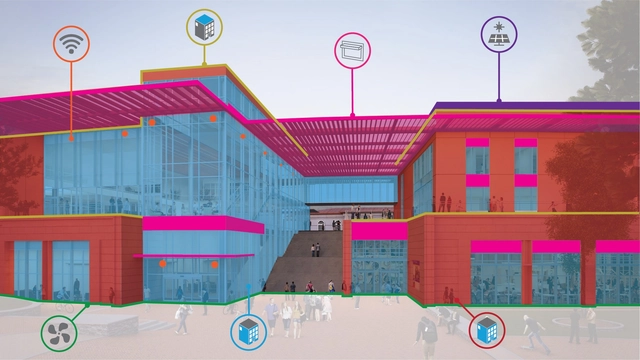
With the amount of information and technology we currently have, whether from academic research or from the manufacturers of construction products themselves, there is very little room for empiricism and experimentation when we design on the most diverse scales. Even worse is when design specification misconceptions can pose huge costs and headaches. However, long before construction and occupancy of the building, it is possible to clearly understand how the construction will function thermally, its photovoltaic power generation capacity, and even how much power will be required to cool and/or heat it. There are software, tools and applications that allow you to quantify all these design decisions to avoid errors, extra costs, unnecessary waste generation, and ensure the efficiency of all materials applied.
In the last few weeks, a number of reactionary architectural commentators have come out of the woodwork to denounce what they see as the currently negative direction of contemporary architecture. They claim that architecture needs to be “rebuilt” or that it is “imploding.” From their indications, architecture is on life-support, taking its last breath. The critique they offer is that contemporary architecture has become (or always was?) insensitive to users, to site conditions, to history—hardly a novel view. Every few years, this kind of frontal assault on the value of contemporary architecture is launched, but the criticisms this time seem especially shallow and misplaced. Surveying the contemporary global architecture scene, I actually feel that we’re in a surprisingly healthy place, if you look beyond the obvious showpieces. We’ve escaped from the overt dogmas of the past, we’ve renewed our focus on issues of the environment and social agency, we’re more concerned than ever with tectonics and how to build with quality. But the perennial critics of contemporary architecture appear not to have examined that deeply, nor that thoughtfully either. And unfortunately the various rebuttals to their critiques, ostensibly in support of modern and experimental architecture, have been ham-handed and poorly argued.
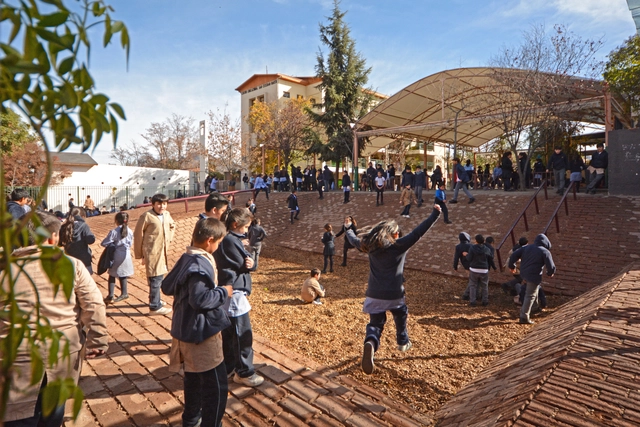
The Patio Vivo Foundation seeks to promote active free play, positive and healthy relationships, wellbeing and contact with nature by articulating space, community and the culture of kindergarten and school playgrounds. In the following article, they describe their working methodology in their own words.
Architects of today face a common task that defies intuition – how to balance building performance and strict carbon targets against cost. Sustainability in design is certainly a worthy and necessary goal, but the amount of options can be overwhelming and the costs prohibitive, especially in the eyes of owners. How can designers best convince their clients to integrate sustainability into a project? Keeping costs low and backing up decisions with fact-based analysis are solid first steps.
Imagine that you are in a cubicle located in the middle of the office floor plate. Your office has a glazed front, but you are looking into another open office. You have no real window or view to the outside, so you can't tell if it's raining outside or sunny. If you are lucky, and you do have a window, it's fixed, and you are looking into an office in the neighbouring building that is five metres away.
The fluorescent lighting that you sit under for eight hours has thrown out your body's natural circadian rhythm. The ventilation is alright, but you start to feel droopy at around 3pm because the carbon dioxide levels in your shoebox have risen. It might even feel a bit stuffy, regardless of the door being open or closed. As you don't have an operable window, you have been breathing in recycled air all day. When you get outside and take a breath, you will instantly notice that the air outside is fresh.
Now multiply that by five days a week, 48 weeks a year. Maybe you will get a pot plant in a few weeks.
https://www.archdaily.com/932530/biophilic-design-in-prisonsRachel Hur
Open More Doors is a section by ArchDaily and the MINI Clubman that takes you behind the scenes of the world’s most innovative offices through exciting video interviews and an exclusive photo gallery featuring each studio’s workspace.
In this installment of the series, we talked with Kai-Uwe Bergmann, a partner at Bjarke Ingels Group (BIG). Despite the size and fame of the firm – BIG has around 500 employees and maintains offices in Copenhagen, New York, Barcelona, and London – he emphasized camaraderie and connection as the most defining characteristics of the company. These traits are doubly emphasized in the open, nonhierarchical layouts of their offices.
https://www.archdaily.com/932400/open-more-doors-bjarke-ingels-groupLilly Cao
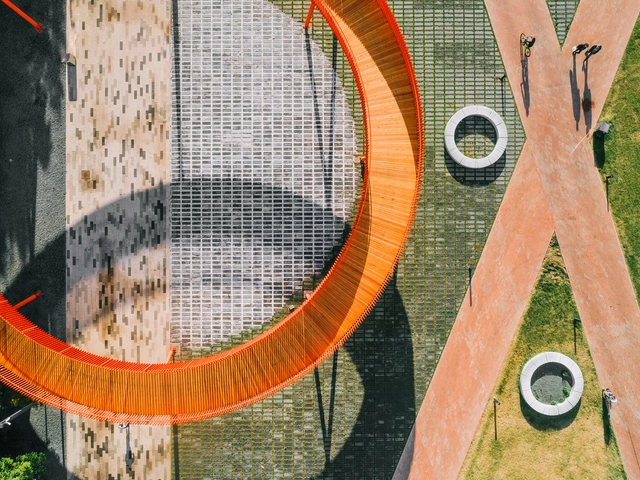
Currently, there are a multitude of pavements in the market, each with different characteristics. When designing a public space, it is essential to ask the right questions regarding requirements and functions to determine the right material for the job. To begin: Where will the pavement be installed? (Will it be protected, exposed, wet, or damp?). What level of traffic will it experience? (Light, moderate, or high?). What type of traffic will it experience? (Pedestrians, bicycles, light vehicles, or heavy vehicles?). What other factors should be considered based on preexisting conditions?
From these questions, it is possible to draw a more precise and effective profile of the "abrasion resistance" of the pavement, an important factor to guarantee the durability and efficiency of the material. Then, the aesthetic, functional, economic, and sustainable factors may be added.
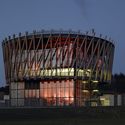
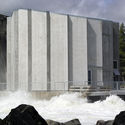
Energy infrastructure has historically been met with a “Not in My Back Yard” response from policymakers and the public alike. Aside from the clear human health implications of coal plants and natural gas stations, the architecture of energy infrastructure has traditionally been driven by raw economy and feasibility, with isolated locations creating little need for architectural beauty. However, modern ideological and urban shifts are powering a new approach.
For decades, scientists have been warning us about global warming, and the consequences of human actions on the planet in the form of environmental disasters. The construction sector is today one of the major contributors to global warming and the climate crisis. According to data of the United Nations (UN), currently, 36% of the global energy is dedicated to buildings and 8% of all pollutant emissions are caused by the production of concrete alone.
In the mid-aughts, after acquiring an abandoned tech campus in Mountain View, California, Google tapped Clive Wilkinson Architects to fashion a new corporate campus—Googleplex 1.0—out of it.Courtesy Benny Chan/Fotoworks
The energy already embodied in the built environment is a precious unnatural resource. It’s time to start treating it like one.
At its Googleplex headquarters in Mountain View, California, Google has what is arguably one of the most sustainable corporate campuses in America. It has a new million-square-foot complex on a 42-acre landscape, featuring monumental futuristic buildings from Danish architect Bjarke Ingels and British designer Thomas Heatherwick. But these places are not the same place. Although the new campus has no doubt been developed with a sense of environmental duty, the radically sustainable campus is the one next door, which Google has been using since 2003. Foreseeably—and fortunately—they’ll go on using it. Built in 1994, it was once the corporate home of an earlier Palo Alto technology firm, Silicon Graphics.
https://www.archdaily.com/932528/a-new-idea-in-architecture-no-new-buildingsThomas de Monchaux
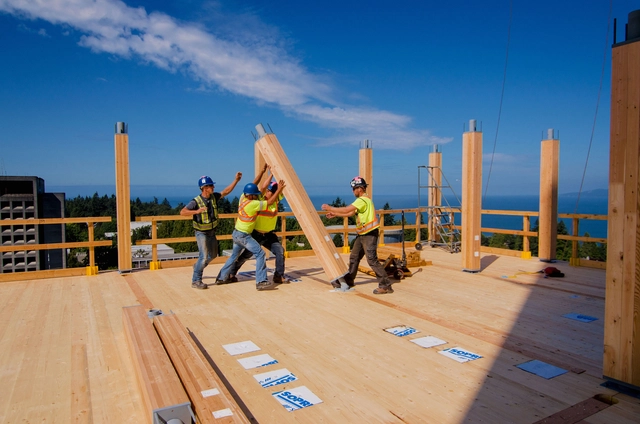
The history of timber construction stretches back as far as the Neolithic period, or potentially even earlier, when humans first began using wood to build shelters from the elements. The appearance of the first polished stone tools, such as knives and axes, then made wood handling more efficient and precise, increasing the thickness of wood sections and their resistance. Over the decades, the rustic appearance of these early constructions became increasingly orthogonal and clean, as a result of standardization, mass production, and the emergence of new styles and aesthetics.
Today we are experiencing another seminal moment within the evolution of timber. Nourished and strengthened by technological advances, new prefabrication systems, and a series of processes that increase its sustainability, safety, and efficiency, timber structures are popping up in the skylines of cities and in turn, is reconnecting our interior spaces with nature through the warmth, texture, and beauty of wood. Where will this path lead us? Below, we review 7 trends that suggest this progress is only set to continue, increasing both the capabilities and height of timber buildings in the years to come.
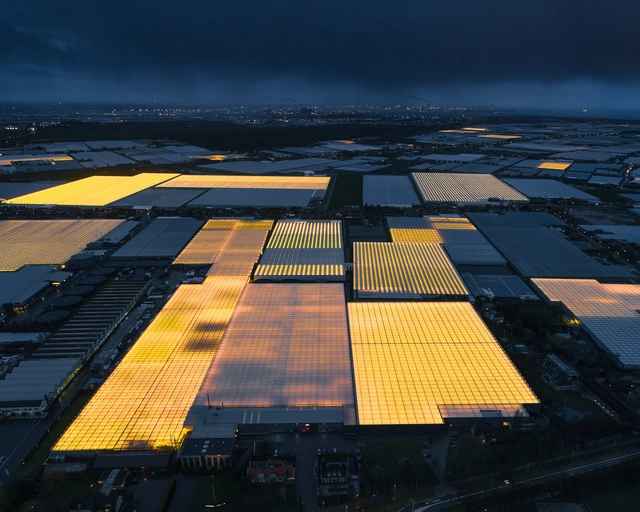
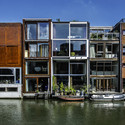
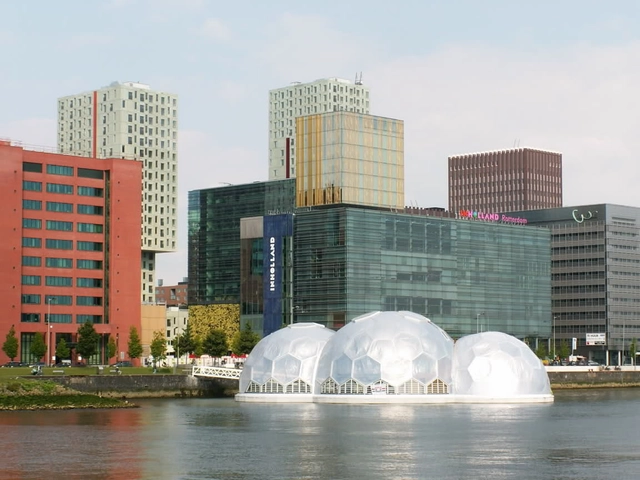
The Netherlands is the world’s second-biggest exporter of agricultural products. This is remarkable when one considers that the only country which tops the Netherlands, the United States, is 237 times bigger in land area. Nevertheless, the Netherlands exported almost $100 billion in agricultural goods in 2017 alone, as well as $10 billion in agriculture-related products. The secret to the Netherlands’ success lies in the use of architectural innovation to reimagine what an agricultural landscape can look like.
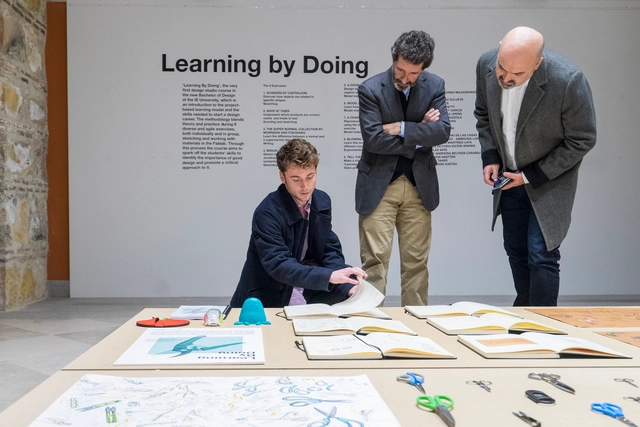
The School of Architecture and Design at IE University expands the boundaries of architecture and design to provide sustainable responses for a changing world. Located in Madrid and Segovia, Spain, this innovative school is one to watch.











_9372.jpg?1579675860&format=webp&width=640&height=580)
_9441.jpg?1579675926 "© Laurian Ghinitoiu")
_9439.jpg?1579675907 "© Laurian Ghinitoiu")
_9550.jpg?1579676083 "© Laurian Ghinitoiu")
_9372.jpg?1579675860 "© Laurian Ghinitoiu")
_9372.jpg?1579675860)
.jpg?1579288049 "© Clément Guillaume. ImageEntrada de Chatenay Malabry / Ateliers 2/3/4/")

.jpg?1580062329&format=webp&width=640&height=580)
.jpg?1580062329)
.jpg?1579877914&format=webp&width=640&height=580)