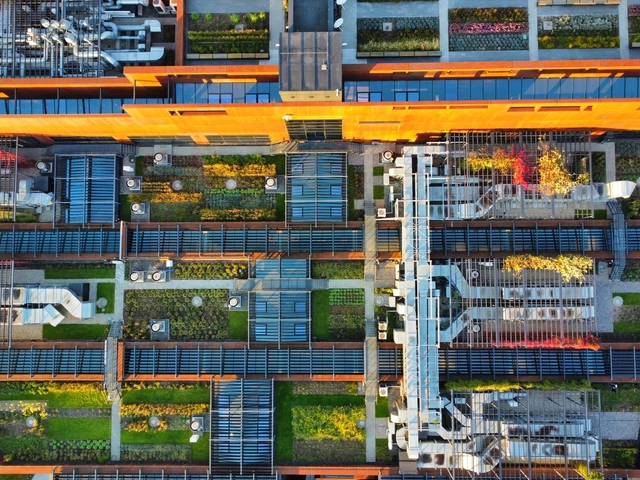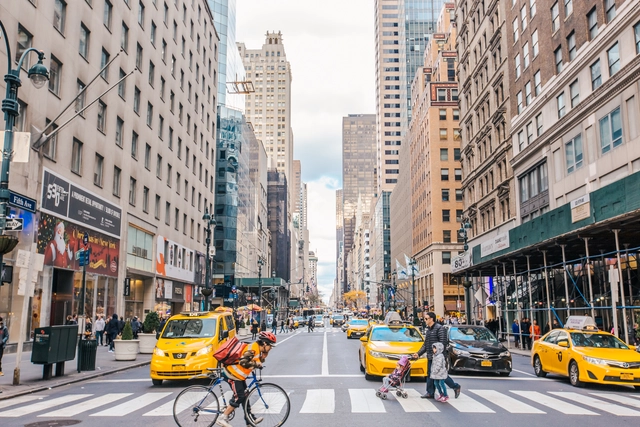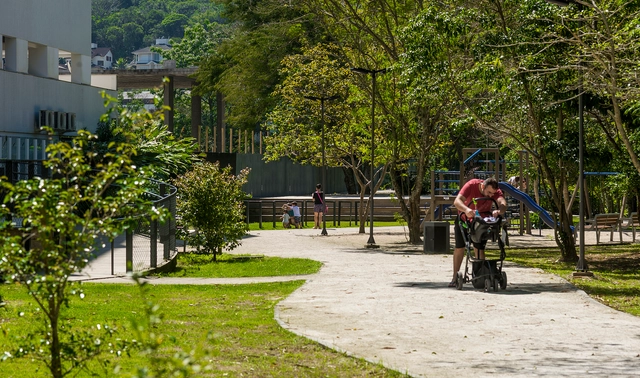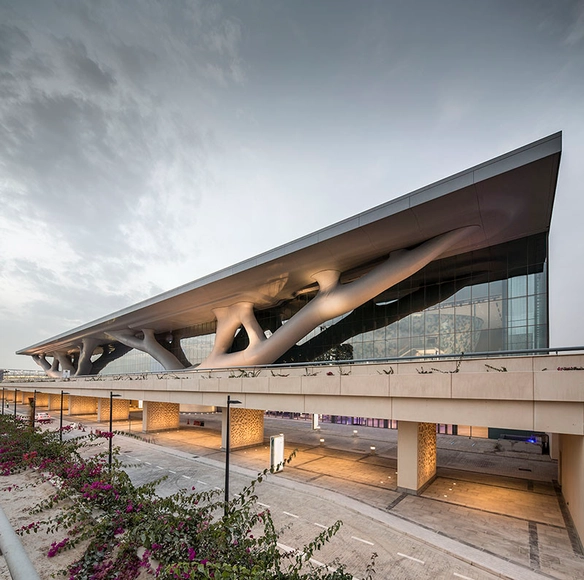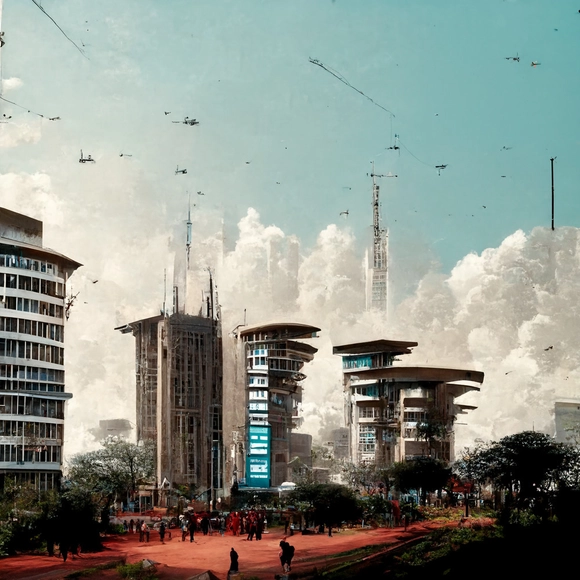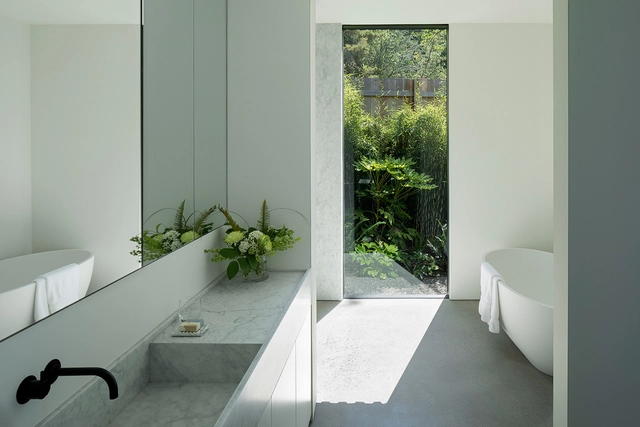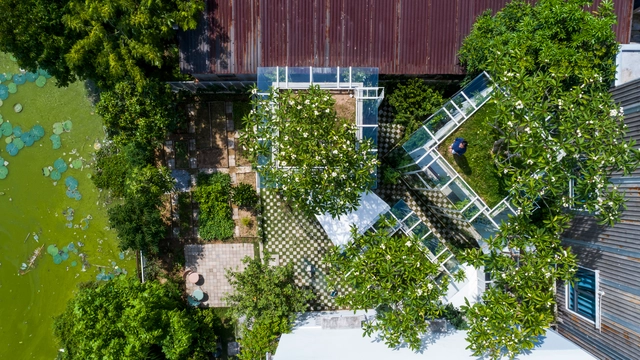
Climate change is becoming more and more real every day: all over the world, we are witnessing a clear increase in climate disasters. Moreover, the latest IPCC report warns us of possible “tipping points” from which the climate transition could become not gradual, but sudden and irrevocable.
The relationship between architecture and nature is complex. If, on the one hand, we enjoy framing nature as art in our homes; on the other hand, we try at all costs to avoid the presence of obstructive "real" nature in our walls and structures, which can be damaged by roots and leaves. At the same time, we use green roofs, vertical gardens and flower boxes to bring cities closer to nature and improve people's wellbeing; but we also construct buildings with materials that are completely dissociated from fauna and flora. Although the advancement of biomaterials and new technologies is gradually changing this, we should nevertheless ask ourselves whether the structures and buildings we occupy need to be separated from the nature that surrounds them. This was the question that led researchers at the University of Virginia (UVA) to develop geometrically complex 3D-printed soil structures on which plants could grow freely.
Günther Domineg’s Steinhaus . Image Courtesy of GERALD ZUGMANN
Domenig was one of Austria’s most radical architects and a major influence on many of architecture’s leading lights but remains widely unknown. A new exhibition aims to change that.
Hospitality is an industry made of people being hospitable to people, and our interaction with places is its foundation. If the zeitgeist of our era lies in the perpetual dance of shock and awareness of how we treat each other and the planet we live on, what considerations should we pose to inform and shape what’s next for hotels? If there’s ever been a moment to think about the future of hospitality, this is it.
Architecture is not simply building. Over 2,000 years ago, Roman architect Marcus Vitruvius Pollio defined two base realities in building: “Firmness” (Safety) and “Commodity” (Use) and then offered what turns building into architecture: “Delight” (Beauty).
“Firmness” has been recoined in this century as “Resilience”. After being unscathed in five hurricanes over thirty years, does this building have “Delight” beyond its “Firmness”? The property of “Commodity” is found in any design’s usefulness and fit: is this archive, in constant use, have “Delight” beyond its “Commodity”?
Sanctuary House / Tai Ikegami. Image Cortesia de Western Window Systems
Interior courtyards can be found in various types of traditional architectures around the world, especially in warmer climates. They can be classified as introverted, safe, and even sacred spaces in some cultures. They can also be gathering places and, above all, provide greater contact with nature while providing light and ventilation to home interiors. To properly design these spaces and create a functional relationship between the inside of a house and its courtyard, it is important to use appropriate doors and openings. In this article we highlight 5 projects that use sliding glass doors for the seamless integration of both spaces.

You may have heard about the use of bamboo in the temporary shelters created in humanitarian aid efforts after an earthquake, but bamboo can actually be very valuable in the construction of buildings that can withstand earthquakes. Why should we look towards bamboo as a temporary solution after a disaster when we could save lives by building with it in the first place? Bamboo is a great option for building homes and shelters in earthquake-prone regions, given that the structures are well designed, constructed, and maintained. From old traditional structures to modern builds, several examples from across the globe have proven themselves against the very forces of nature that have brought down concrete and brick buildings.
https://www.archdaily.com/988992/is-bamboo-a-safe-construction-material-in-natural-disasters-like-earthquakesLayane Al Madani
Future planning methods for sidewalks and public transit space. Image via Global Designing Cities Initiative
Whether you live in an urban, suburban, or rural area, there’s a good chance that using a sidewalk, in some capacity, is part of your everyday routine. Whether crossing over a sidewalk to get to your car in a parking lot or walking several blocks on your commute to your office downtown, sidewalks are critical for creating safe places for pedestrians away from the streets. But what happens when cities don’t take ownership over sidewalk maintenance, and they’re left to be protected by the people who just use them?
“We should admit nature as an immense multitude of forms, including each part of us, who are part of everything”, says Ailton Krenak, renowned indigenous leader, in his book Ideas to Postpone the End of the World. The culture of native peoples does not understand humanity and the environment as things that are separate or superior to each other, but rather as parts of a whole. Through this particular understanding of the universe, these peoples are led to a sensitive appropriation of the territory, with structuring beliefs that are also reflected in their architecture, raising the very concept of sustainability to another level, since nature is not seen as a resource to be used, it is thought of as part of the community.
Have you ever thought that practically all the cities in the world, since the dawn of humanity, were and continue to be created and designed by men? From urban design to building projects, from public transport to chairs – women have not been part of the process of creating everything around us.
Hearing – one of the human body’s five senses – enables our interaction with sound, a crucial factor for daily communication and much more. One commonly hears people say a place is noisy, but what exactly is the definition of noisy? Known as situations with unwanted sounds that interfere with daily activities, noisy places also have the potential to negatively interfere in society’s development.
Sound is measured in decibels (dB), and humans are able to resist a maximum average noise level of 85 dB without risking hearing damage. While a conversation usually ranges between 60 and 70 dB, according to the Federal Occupational Safety and Health Administration, workers at a construction site are exposed to an average of 90 dB during eight-hour periods.
Acoustical Surfaces, a company specializing in noise control, has developed a product guide for minimizing the transmission of sound, thus promoting healthier lifestyles.
As a response to global challenges such as climate change, discrimination, and physical vulnerability, designers and engineers from across the world have developed innovative construction materials that put the human wellbeing first in urban, architecture, and interior projects.
Villa Domy by LUCY LAGO's studio. Image Courtesy of LUCY LAGO's studio
This week’s curated selection of Best Unbuilt Architecture highlights private villas submitted by the ArchDaily community. From a Mediterranean retreat in Greece to a one-person residence in Iran, this round up of unbuilt projects showcases how architects design private villas that combine contextuality and functionality in structures that promote comfort, privacy, and connection to nature. The article includes projects from Indonesia, Greece, Iran, and Jordan.
Josh and Matt's apartment embodies their "curated maximalism" style. Image Courtesy of Josh and Matt Design
With the onset of the 2020s, Gen Z is noticeably claiming their place in the world with bold perspectives and even bolder aesthetics. Gen Z proudly experiments with their identities, having grown up on an opinionated internet and through confusing lockdowns. They're bringing in a culture shift with organic shapes, colorful elements, and clashing patterns dominating art, media, fashion, and interior design. The trend is pushing away once-reigning minimalism, shouting Venturi's Less is a Bore.
The Breadbox ADU . Image Courtesy of Los Angeles Department of Building and Safety and WELCOME PROJECTS
In a time where housing prices are unattainable and residents are looking to downsize their homes more than ever, enter the concept of Accessory Dwelling Units (ADUs). These small and highly customizable homes are taking backyards across the United States by storm, enabling homeowners to build homes on their land, and rent them out to tenants.
Flexibility within a space emerges as an architectural concept that follows society’s transformations. As the American architect Frank Lloyd Wright said, “Architecture is life, or at least as it was lived in the world yesterday, as it is lived today or ever will be lived.” In that sense, changing a kitchen’s layout goes further than its aesthetic adjustments; it reflects the way people are living. Opening the traditional closed kitchen creates a more flexible space in which different activities share a visual connection without structural barriers.
The withdrawal of kitchen walls allows for increased interaction within areas and gives way to fluidity throughout the space. The design of an open kitchen involves using specific types of products - each with their own material, style and use - that adapt to a home’s dimensions and needs. In this article, we provide a selection of products which can be found in Architonic’s ‘Kitchen’ category.
The tiny home trend has been hard to ignore over the last several years. There's an increasingly saturated market of TV shows and Pinterest pictures dedicated to the topic of exploring micro-dwellings where your home is reduced to the size of a walk-in closet and each room takes on a triple-duty programmatic role has only increased its popularity. What looks enticing on reality TV is often much less desirable in real life, and as people continue to long for a lifestyle that frees them of material goods and the ability to travel, what does this mean for the actuality of tiny home construction? Is it just a wanderlust fantasy that no one actually lives and was there ever any promise to its realization in the mainstream world?