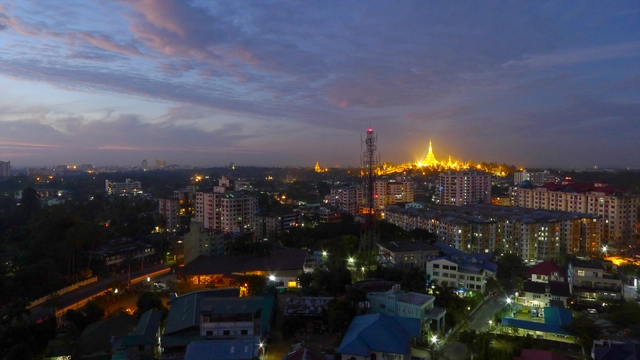
Preservationists are in a race to document and preserve some of Yangon’s most admired cultural icons. Myanmar’s largest city, Yangon is experiencing an all to familiar story: rapid development taking precedence over preservation. As the National Geographic reports, “Hulking monoliths of concrete and blue-plated glass are replacing fine old residential and government buildings…Although much has already been lost, many architecturally or esthetically significant structures have hung on. The question now is how long they will last.” Read the complete story, here.
This electron backscatter diffraction image shows variations in crystallographic orientation in a nickel-based component, achieved by controlling the 3-D printing process at the microscale. Image Courtesy of ORNL
3D printing technology continues to advance, developing new applications which are particularly promising for the world of architecture. Now, researchers at the Department of Energy’s Oak Ridge National Laboratory (ORNL) have demonstrated a new manufacturing process that can create 3D printed metal components with an unprecedented degree of precision. For architecture, this could mean greater control over the customization of the smallest components in buildings, as well as more carefully engineered properties of the larger ones.
The new technique involves an additive process in which successive layers of material are laid down with computer control and fused to create an object of almost any shape. As technology has progressed, printers have been able to progressively increase their resolution, enabling the creation of smaller parts with smoother surfaces. ORNL has developed a process that precisely manages the solidification of metal parts in each layer on a microscopic scale. This enables them to better control local material properties, which can have a profound impact on the strength, weight, and function of 3D printed metal components.
Read on to learn more about how this manufacturing process could shape the future of 3D printing.
Videos
Vision of the masterplan (commissioned in 2007). Image Courtesy of Bristol Temple Quarter
Five practices have been shortlisted to put forward designs for the Bristol Arena, a cultural and sporting hub which is set to have a 12,000 seating capacity and is due to open towards the end of 2017. The city's Mayor, George Ferguson (who is himself an architect-turned-politician), has said that "we now have five very capable and talented design teams with a wealth of experience between them drawing up proposals" that will contribute to the regeneration of the city's Temple Quarter Enterprise Zone (a site close to Temple Meads Station). The five shortlisted multi-disciplinary design teams are consortiums experienced in delivering major cultural venues in the UK or overseas. A team led by Populous, who completed the London 2012 Olympic Stadium, are running in collaboration with Feilden Clegg Bradley, who were shortlisted for the 2014 RIBA Stirling Prize. They are competing against teams led by Grimshaw and Wilkinson Eyre, who recently installed a cable-car across London's Millennium Dome.
By now, when the design competition for the Guggenheim Helsinki is mentioned, one number probably comes to mind: 1,715, the record-breaking number of submissions which the competition received. But how can this number be put into perspective? Why, with more numbers of course. Take 5,769 for example, which is the total height in meters of all the A1 presentation boards arranged vertically. Or take 18,336,780, the estimated value in Euros of all the work submitted.
If ever architects needed a little vindication in their work, this might just be it: a team of neuroscientists have found evidence that good architecture can positively affect the human brain. Testing a highly susceptible group of subjects (i.e. architects), the team demonstrated that so-called "contemplative architecture" can have similar effects to meditation - except with much less effort on the part of the person experiencing it. This article in the Atlantic discusses the team's work at length, delving into the science behind the discovery, but also uncovering an interesting oddity in the world of architectural neuroscience: it seems not much is being done because "it’s difficult to suggest that people are dying from it." In the case of the current study, the team "totally loaded the deck" by only selecting architects as their subjects, apparently not aiming to prove anything but simply to secure further funding. Read the full article here for more on the latest in architectural neuroscience.
Karim Rashid, internationally renowned for his work in industrial design, has recently shifted his focus towards real estate. Alongside his team of nine architects, the New York-based designer is currently working on 11 buildings worldwide, including four in New York. With extensive knowledge in product design and no formal architectural education, Rashid believes designing architecture isn’t out of his realm:
Masterplan. Image Courtesy of Battersea Power Station
BIG is set to make its UK debut. As reported by the Architect’s Journal, the Danish practice has been selected from an international shortlist to design a public square for Battersea Power Station. Though no formal announcement has been made, the “Malaysia Square” scheme will be a key element in the Wilkinson Eyre-designed masterplan, serving as the development’s “front door.” It will connect the masterplan’s first three phases, just south of the listed landmark, which include Frank Gehry and Foster + Partners’ proposed “Electric Boulevard.”
Resiliency has become a keyword when it comes to city planning and development, so much so that former AIA president, Clark Manus, declared last year that “resilience is the new Green.” To address resiliency on a global level and help cities around the world become more resilient to social, economic and physical challenges, The Rockefeller Foundation kicked off its 100 Resilient Cities Challenge in 2013. Under the initiative,100 cities will be selected to be part of the challenge, where they will receive help and funding to hire a Chief Resilience Officer and assistance in developing and implementing a resilience strategy.
So far 33 cities have been selected and last week the first-ever Chief Resilience Officer summit was held in New Orleans. To learn more about the summit in New Orleans, the overall initiative, and how cities can become more resilient, we spoke with President of 100 Resilient Cities, Michael Berkowitz, who said: "When you think about what makes a resilient city, you have to think in holistic terms. The reality is that resilience building is a multi-sector, multi-level kind of enterprise."
Read the full interview with Berkowitz after the break
In this 2000 Berlage Institute lecture, titled "Neutra's Architecture and Modernism in California," American architectural photographer Julius Shulman outlines a twofold mission: to introduce his two new books, Modernism Rediscovered, and Neutra: Complete Works, and to speak to architectural students and educators who are responsible for the future of the field. Highly jovial and personable, Shulman starts off on a playful tone, inviting audience members to sit on the floor next to him and insisting on the informality of his lecture; he begins by describing how he met Richard Neutra, purely by chance, and made history with the iconic photograph of the Kaufman House, solely through a rebellious desire to pursue a beautiful sunset.
Shulman speaks of Neutra both affectionately and critically. He advises, "Those of you who hope to be architects, please be human about how people live in your house. Don't wipe it clean and empty the way Neutra used to do it, because he was more interested in the image of a house - pure architecture, without furniture." The lecture introduces Shulman's photographs of Modernist homes in California, including Frank Gehry's first house, Shulman's own house and studio by Raphael Soriano, and works by Frank Lloyd Wright and Buckminster Fuller, before moving on to briefly introduce projects from his vast archives. Pierluigi Serraino joins him halfway through the lecture to discuss the process of writing their publication, Modernism Rediscovered, and the responsibilities of an architectural photographer.
The lecture demonstrates the incredible breadth of Shulman's portfolio, his fascinating thought process, and an indefatigable spirit. When describing the moment when he broke away from Neutra's admonishment in order to photograph the exquisite sky above the Kaufman House, the iconic photographer enthuses,"Don't ever hesitate. If you want to do something, whether it's to design a house or kiss a beautiful woman, or whatever you want to do, do it! No one's going to stop you."
UPDATE:The Jury has selected Jeremy Jacinth and Luliana Teodora Amza as the winners of the £600 scholarship to participate in the GIPpy workshop at the AA Visiting School in Santiago, Chile.
What does Soviet Union architecture have to do with Chilean astronomy? A lot more than many realize. In the 1960s, the Soviet Union manufactured three Grand Passage Instrument telescopes (GIPpy), and their accompanying domes in Saint Petersburg. Unfortunately, they fell into ruin after the Soviet astronomical mission’s departure from Chile following the 1973 military coup d-etat. Now, however, the Architectural Association Visiting School in Santiago, Chile, in partnership with the Pontifical Catholic University, will host a 10-day workshop in January on the GIPpy telescopes. The workshop is organized by the team that was recently awarded the Silver Lion at the 14th Venice Architecture Biennale for their work on Soviet prefabricated housing in Chile, and we’ve teamed up with the Architectural Association Visiting School to give away two £600 scholarships to attend the workshop!
For more information on the workshop and to find out how to enter to win a scholarship read on after the break…
https://www.archdaily.com/566685/win-a-scholarship-for-the-aa-visiting-school-in-santiagoAD Editorial Team
View from Guy's Hospital Quad. Image Courtesy of RPBW
Renzo Piano Building Workshop has been awarded planning approval for Feilden House, a 26-storey residential building at London Bridge Quarter, directly adjacent to the Shard. Designed to complement the Shard and Place Buildings, the third piece of Piano's London Bridge Developments will add "generous public realm amenities" to the area at ground level.
The Observer'sRowan Moore "accidentally got swept into a tide of humanity at the weekend, or to put it another way, couldn’t move for crowds." In memorial of the start of the centenary of World War One, of which today marks the anniversary of the armistice (11.11.1918), the Tower of London have installed a sea of 888,246 ceramic poppies in the former moat. The artwork, created by Paul Cummins and Tom Piper, and entitled Blood Swept Lands and Seas of Red, "has caught the national imagination." For Moore, however, "it is deeply disturbing that a hundred years on from 1914, [the UK] can only mark this terrible war as a national tragedy." He argues that "the spectacle of all these red poppies is emptier than that. [...] It is a deeply aestheticised, prettified and toothless war memorial." Read the article in full here.
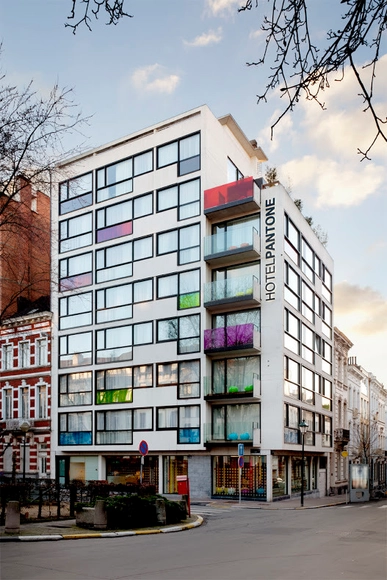
The Pantone Hotel, a seven-story hotel in Brussels with decor inspired by the famous Pantone color system, opened for business in 2010, but these candy-colored images of its multi-hued rooms were new to us. Designed by interior designer Michel Penneman and architect Olivier Hannaert, and photographed by Sven Laurent, the Pantone Hotel serves up 59 rooms in a wide variety of color schemes, perfected by Pantone's authoritative color matching system. It is the apotheosis of the company's transition into manufacturing lifestyle products, with the "Pantone Universe" range containing everything from mugs to cufflinks, all colored to an exact specification with their identifying code.
Federico Babina is back, this time bringing some cinematic life to the world's most well known modernist interiors with ARCHILIFE. "I have never liked the lack of life in the architectural representations that are often aseptic, clean and neutral," explains Babina. "I often enjoy imagining what life would be like in these static images."
The images show history's most famous film stars living out their daily routines in some of our favorite homes, bringing "the banality of everyday life" to these myths of both Architecture and Cinema. "We are used to perceiving and reading architecture as a set of almost metaphysical spaces. In a similar way we see the actors as characters and not as people," he says. "I wanted to try to reverse these patterns: to transform the interior into 'houses' and the actors into 'people'."
From Marilyn and Mies to Caine and Kahn, the stars get a home to match their temperament, in which to relax, watch TV, meditate - and yes, to clean and tidy too.
With the rising success of electric cars and the highly anticipated introduction of self-driving cars, it is beginning to look like the 'end of the automobile age' which many predicted just a few years ago may never come. This was the sentiment presented by Audi CEO Rupert Stadler at the presentation of the Audi Urban Future Award last night: "The car has to be seen once again as a desirable object of progress," he demanded. "To achieve this, we have to tear down the walls between infrastructure, public transportation and individual traffic." Audi's New Urban Agenda therefore sets its sights on "solutions in which individual transportation makes a positive contribution in an overall system of different forms of mobility."
"All I Own House is a project that materializes the interior of a house through its inhabitant's personal belongings," say PKMN Architectures about their All I Own House, a small customizable home and studio for client Yolanda Pila of ERREPILA Design Studio. Built in a small neighborhood in northern Madrid, the single-storey house belonged to the client's grandmother. Now, it serves all the functions required of Yolanda's dynamic living and working style.
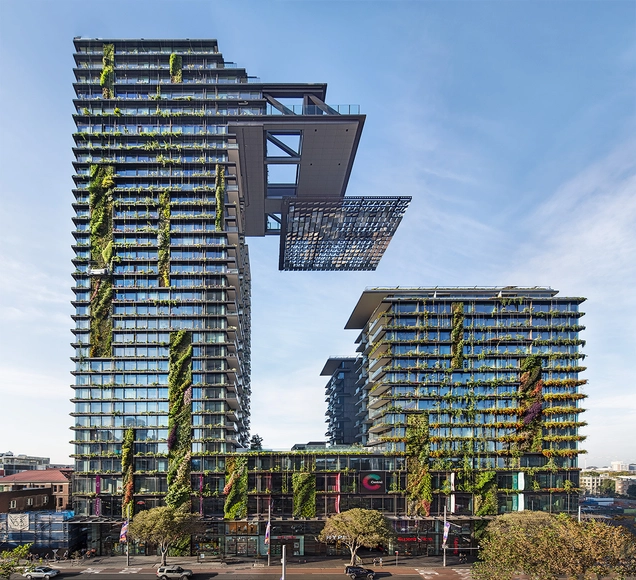
This year’s title of “Best Tall Building Worldwide” has been awarded to One Central Park, in Sydney, Australia. The award, presented by the Council on Tall Buildings and Urban Habitat (CTBUH), was chosen after a year long selection process across 88 entries in four regions. Senior representatives of each of these four winners presented at the CTBUHAwards Symposium on November 6th at the Illinois Institute of Technology, Chicago, and the winner was announced at the Awards Dinner following the Symposium. Read on after the break to learn more about the winning building.
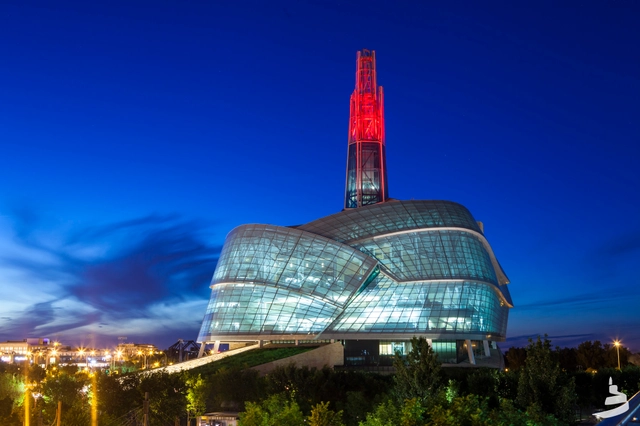
In an article for The Walrus, Adele Weder examines Antoine Predock's (who was recently made a National Academy Academician) Canadian Museum for Human Rights: a "colossal, twelve-storey mountain of concrete and stone, 120,000 square feet of tempered glass, and 260,000 square feet of floor space." Early advocates of the museum "felt that Winnipeg was ripe for such a statement piece," just as Bilbao had been for the Guggenheim. Welder's explorations are clear and concise, finding all sorts "of paradoxes swirling around the Museum for Human Rights." Noting that "it’s definitely a kick-ass building, with its aggressive outer form, jagged paths inside, big black slabs of basalt, thick sheets of glass, and the huge metal girders that hold it all together," Weder argues that it's position as a "failed memorial and white elephant" may be it's eventual undoing.
The inaugural Chicago Architecture Biennial now has an official name, with co-directors Joseph Grima and Sarah Herda announcing "The State of the Art of Architecture" as the biennial's theme last week. Taking its name from a 1977 conference organized in Chicago by Stanley Tigerman, which focused on the state of architecture in the US, next year's Chicago Architecture Biennial will aim to expand that conversation into the "international and intergenerational" arena.
In addition to the new name, the Biennial also announced its first major project, a photo essay of Chicago by Iwan Baan, which will contextualize the many landmarks of the Chicago skyline within the wider cityscape and within the day-to-day life of the city.
Read on for more about the biennial theme and more images from Iwan Baan.
David Chipperfield Architects. Image Courtesy of Beethoven Festspielhaus
In 2020, the world will celebrate the 250th birthday of Beethoven, and soon after the anniversary of his death. In light of this, a new “world-class” concert hall, a “Festspielhaus”, is being planned for the banks of Beethoven’s beloved Rhine River in his hometown of Bonn, Germany. More than 50 practices were considered in the pulmonary selection process, following a shortlist of ten, and now three final proposals by David Chipperfield Architects, kadawittfeldarchitektur and Valentiny hvp architects have been selected to move on to the competition’s final round.
“The new Festspielhaus will not only bring Beethoven’s music to life, it will serve as an international “house of music” that brings together diverse genres – from classical to crossover to pop – and attracts music lover of all ages,” stated the competition organizer.
The privately-funded “Beethovenhalle” is planned for completion in 2019. You can review the top three final designs after the break, alongside the seven other shortlisted proposals - by Zaha Hadid, UNStudio, Snøhetta, and more - they were selected over.
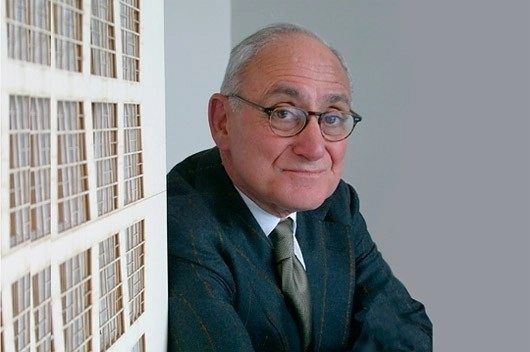
After serving as dean at the Yale School of Architecture for nearly two decades, Robert A.M. Stern is reportedly stepping down. According to Yale Daily News, faculty and administrative staff members have indicated that Stern will be retiring when his term as dean concludes in Spring 2016. “[Stern] took [the school] from a place where people were not paying attention to it many years ago — he has brought incredible international attention to the school,” Professor Michelle Addington stated in regards to Stern's widespread influence as dean. “He has given me the opportunity to rethink my subject, and that doesn’t happen at too many places.” More information, here.
"The Dean of Parsons: Design Education Must Change" (click image for article). Image Courtesy of Metropolis Magazine
The National Council of Architectural Registration Boards (NCARB) has awarded Parsons The New School for Design and Clemson University the 2014 NCARB Award to aid the development of innovative programs that merge practice and education.
"The award honors innovative ways for weaving practice and academy together to address real-world architecture challenges," says NCARB CEO Michael J. Armstrong. "The winning proposals for 2014 explore new paradigms of practice and move students from the theoretical to applied practices working with licensed practitioners."
One of the most important Islamic architectural monuments, the Great Mosque of Samarra in Iraq is one of many priceless monuments that has been “lost in conflict.” Paying homage to the architectural masterpieces that have been victims of war, CNN has put together a list of 19 of the world’s “greatest buildings you’ll never see.” View them all, here.
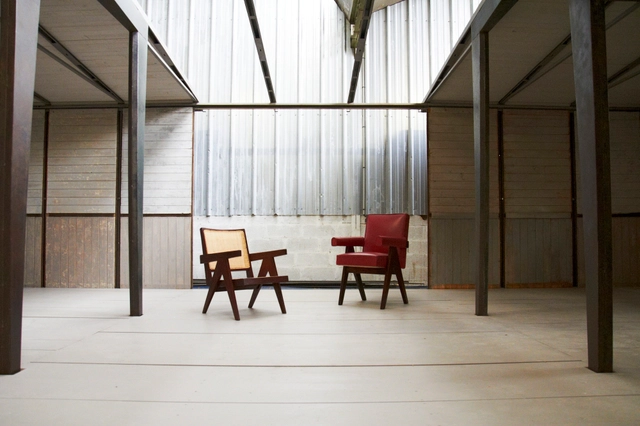
Prouve House with Easy Armchair Chair and Committee Chair by Jeanneret. Image Courtesy of Forward
Marking the second edition of Design Shanghai, this year’s exhibition will take place March 2015 and will include over 300 exhibitors across three halls; Contemporary Design, Classic Design, and Collectible Design. Featured among the confirmed installations is Jean Prouvé’s Demountable House, a rare early example of prefabricated housing.
French architect Jean Prouvé is regarded as one of the twentieth century’s most influential designers, and is known for combining bold elegance with economy of means in a socially conscious manner. He is also recognized for his manufacturing firm, Les Ateliers Jean Prouvé, where he designed and produced lightweight metal furniture in collaboration with some of the most well known designers of the time. One such designer was Pierre Jeanneret, a Swiss architect and furniture designer who often worked with his more famous cousin, Le Corbusier.
Read on after the break to learn more about this year’s featured exhibition.