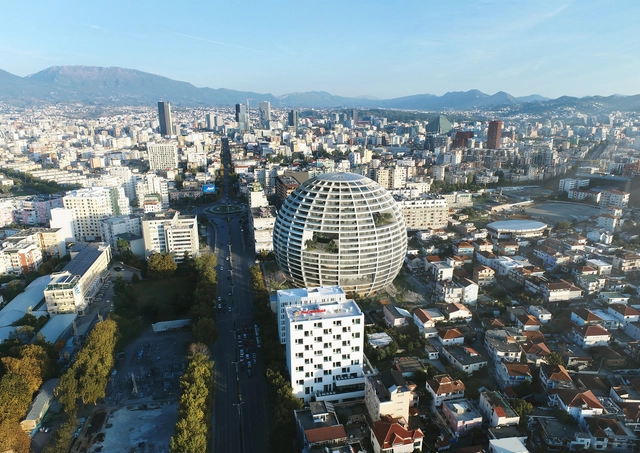
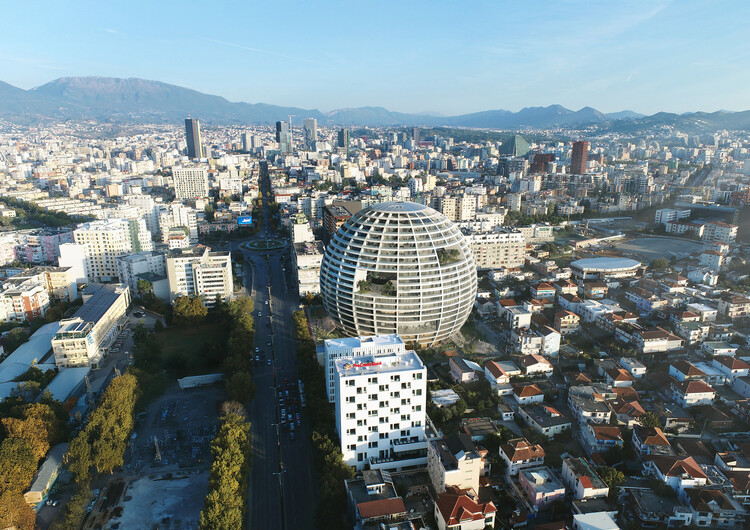
"The Grand Ballroom" Asllan Rusi sports palace project in Tirana, Albania by MVRDV. Image Courtesy of MVRDV
This week's architecture news highlights a diverse global landscape of design innovation, cultural investment, and adaptive reuse. Across continents, new museums and cultural venues are opening to foster dialogue around art, design, and community engagement. At the same time, major recognitions and project announcements underscore the growing importance of sustainable, socially conscious practices in shaping contemporary architecture. From adaptive transformations in New York, Tainan, and Milan, including preparations for the Milano Cortina 2026 Winter Games, to new cultural landmarks in Ghana and Qatar, this week's overview features projects by leading firms such as Herzog & de Meuron, Snøhetta, and Mecanoo, alongside initiatives from emerging practices like Limbo Accra in West Africa.
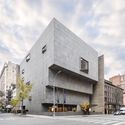
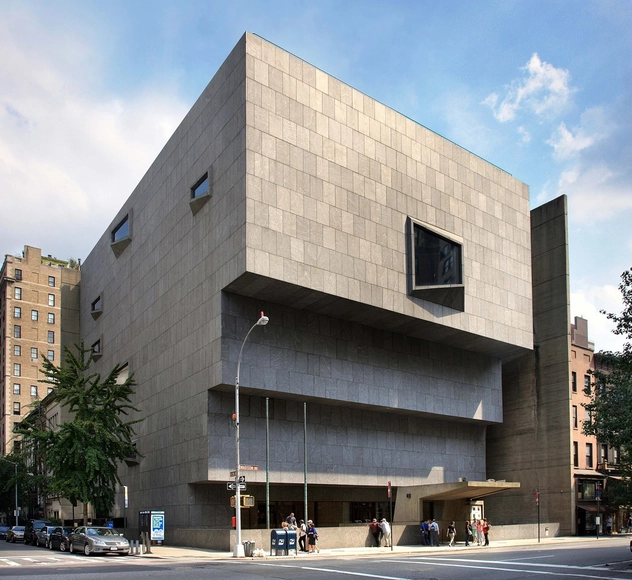
The Metropolitan Museum of Art has released a 360° video of the recently renovated Met Breuer, the former home of the Whitney Museum designed by Marcel Breuer in 1966 that now houses sections of the Met’s modern and contemporary collections. The video takes you through several areas of the building including the entry, the lobby and the sunken garden courtyard. Orbit around the video to check out the unique apertures of the landmark facade and the finely detailed interiors, featuring the building’s iconic ceiling.
Now, thanks to a restoration led by New York City firm Beyer Blinder Belle, the iconic building has been transformed into the Met Breuer—the bold new showcase for the Metropolitan Museum of Art's renewed embrace of modernist and contemporary art. It will open to the public on March 18, 2016, and as the crowds ready to descend, the curators and architects are no doubt anxious to see whether, by faithfully adhering to Breuer's original vision, the restored building will succeed in both delighting museum-goers and helping redefine the Met's public image.
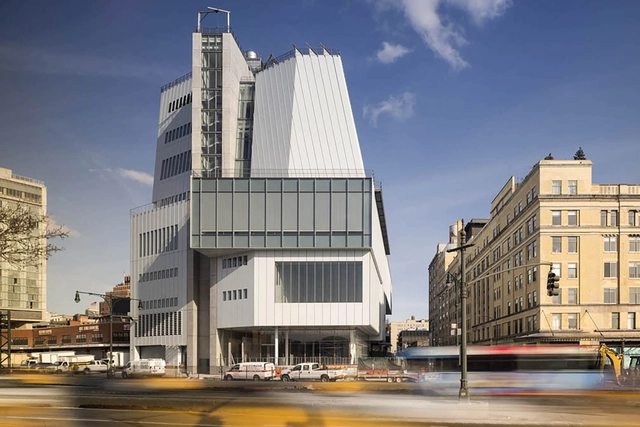
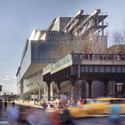
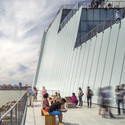
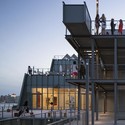
Throughout his career, Renzo Piano has designed dozens of museum buildings becoming the most prolific museum designer of our time. Yet, it has been some time since one of his designs has been as widely discussed and analyzed as his latest, the Whitney Museum in New York. In this interview, originally published on The Value of Architecture as "A House for Freedom: an Interview with Renzo Piano," David Plick speaks with Piano about the many inspirations of the Whitney Museum, from the previous Whitney Museum by Marcel Breuer to the neighboring High Line, the city on one side and the river on the other.
Renzo Piano is the great champion of public space. Whether the visitors and citizens of the city are aware of it or not, he improves their quality of life by sharing with them a living space designed specifically for the cultivation and dispersion of ideas and the enrichment of civic life. He’s the architect who cares about the individual’s experience of a building, who cares about how people interact with the space, and how the space then interacts with the world. At the Whitney Museum of American Art, much like the Centre Pompidou, or Beaubourg as he would say, he showed this by including a large area in front—a “piazza” he calls it—for people to meet, congregate, chat, and even loiter. He’s somehow simultaneously innovative and selfless. And because of this, he can masterfully fuse form and function, creating beauty for himself because he loves it and thinks it will save people, yet it all means nothing to him if he can’t share in this emotion with others.
Said to be the most long-awaited museum of the 21st century, the new Whitney Museum of American Art by Renzo Piano officially opened its doors in New York this May after a 30 year endeavor to expand its capacity. An unusual scenario, Charlie Rose sat down with Piano and the museum's director Adam Weinberg to discuss the "remarkable story" behind the expansion and how its design incorporates, what Piano believes to be, seven elements that represent the essence of architecture: social life, urbanity, invention, construction, technology, poetry and light.
We've provided a clip of the talk above. Watch the full 30-minute discussion, after the break.
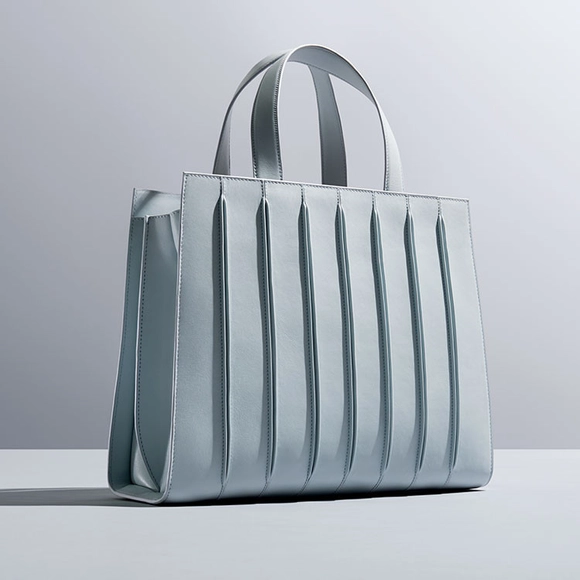
Renzo Piano has designed a limited-edition handbag for the Italian fashion brand Max Mara to match his newly completed Whitney Museum of American Art in New York. The leather, top-handle bag, inspired by the "pure design and sophisticated materials" of the Whitney, features distinct ribbing inspired by the museum's facade.
"Our aim was to apply one of the most characteristic elements of the museum project - the facade - to the bag: hence the idea of the modular strips enveloping the exterior," said Piano in an interview with Max Mara. "We tried to maintain a simple, pure design, working only on the details by applying a creative use of technology and placing the accent on respect for the materials."
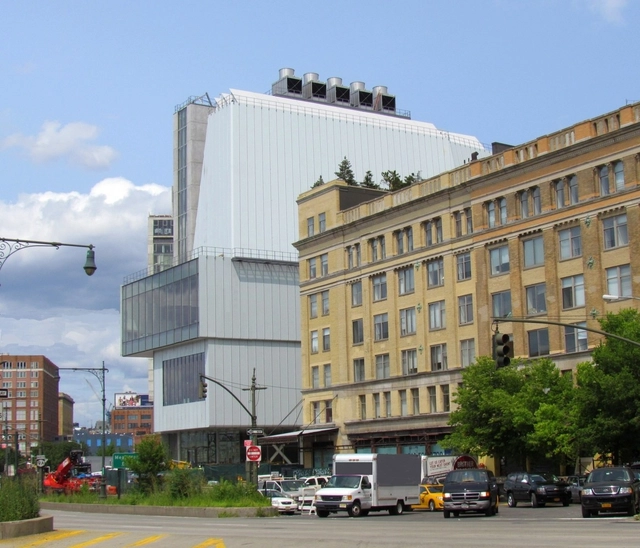
Depending on how you measure it, Renzo Piano's new building for the Whitney Museum of American Art in New York (designed in collaboration with New York practice Cooper Robertson) could be the most long-awaited museum of the 21st century. At just a fraction under seven years since the first designs of the building were released, the incubation period has been long enough on its own - but in fact the project has its roots in a scrapped 1981 design by Michael Graves, when the Whitney was instead planning an extension to their previous home in Marcel Breuer's 1966 masterpiece on Madison Avenue. With such a highly anticipated building, the Whitney could hardly have a better man for the job; Piano is one of the most prodigious museum builders of our time. Yet despite this, since construction began in 2011 the design has been beset by criticism for its ungainly external appearance.
Ahead of the Whitney's grand opening on May 1st, this past Sunday saw a slew of reviews from New York's many reputable art and architecture critics, who attempted to make sense of the institution's long-overdue move from their idiosyncratic but endearing former home. We've rounded up some of the best of them, after the break.
In honor of Renzo Piano’s 75th (gasp!) birthday, we offer an update on his latest projects. The septuagenarian has several large-scale works in various stages of construction scattered across the world, and has celebrated the opening of others within this past year. While we have been continuously following the conceptualization, construction and completion of the Shard, Renzo’s talent is sweeping across major cities both in the States and Europe, including: a satellite museum in New York; a cultural hub for Athens; an urban cultural catalyst for Santander, Spain; an interior renovation for Los Angeles; a recently completed museum wing for Boston; plus, a redeveloped brownfield site turned science center for Trento, Italy. No matter the project location, scale, or program, Piano’s ability to craft an architecture with a sense of lightness, strong attention to detail and overall aesthetic elegance sets him in a very particular category of the profession.
So, here’s to a happy 75th and 75 more years of great architecture, Renzo!