Architecture researchers in Edinburgh have completed a breakthrough study on brain activity recorded in situ by using mobile electroencephalography (EEG) technology, which records live neural impressions of subjects moving through a city. Excitingly, this technology could help us define how different urban environments affect us, a discovery that could have provocative implications for architecture. Read the full story on Salon. Also, check out this article from Fast Company about how a similar mobile technology could show us the effects of urban design - not on our brains, but on our bodies.
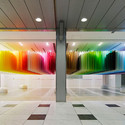
Shikiri, meaning "to divide space using colors," is a made-up term the French architect has embraced in her art and architecture. She aims to "use colors as three-dimensional elements, like layers, in order to create spaces, not as a finishing touch applied to surfaces."
Looking for something to do this week? If you are in the greater Los Angeles area, come check out the U.S. Department of Energy’s (DOE) sixth Solar Decathlon at the Orange County Great Park in Irvine. Currently on view through October 13, this (free!) event showcases nineteen student-built, solar-powered homes that claim to be exemplars of sustainable housing. After being closely monitored by the DOE throughout the length of the competition, one team will be crowned as winner for successfully blending affordability, consumer appeal, and design excellence with optimal energy production and maximum efficiency.
Catch a glimpse of each project, ranked in order of the current standings, after the break.
Picture this: self-assembling blocks that, when given a task, have the ability to reorganize themselves into new geometries.
This is precisely what research scientist, John Romanishin, at MIT's Computer Science and Artificial Intelligence Laboratory (CSAIL) has long envisioned for a near future — robotic modules known as M-Blocks. Romanishin has teamed with his professor, Daniela Rus, and colleague, postdoc Kyle Gilpin, to prototype robotic cubes with no external moving parts, able to climb over, around and even leap onto each other.
Till now, robots have depended on arms or attachments to move themselves. "We wanted a simpler approach," says Romanishin, that uses fewer moving parts. Inside each M-Block is a flywheel that spins at 20,000 revolutions per minute, creating enough angular momentum when it brakes that the blocks assemble themselves in new configurations. On each face and edge of the cubes are magnets, naturally connecting the cubes when spurred by the flywheel.
Learn more after the break...
https://www.archdaily.com/435250/mit-researchers-propose-self-assembling-robots-as-future-of-constructionJose Luis Gabriel Cruz
In a recent article for the Financial Times, Edwin Heathcote explores the 'Skyscraper Index', an informal term that suggests a correlation between the construction of a big company's ambitious headquarters and subsequent financial crisis: "Think of the Empire State Building opening into the Wall Street crash of 1929, the Twin Towers being completed as New York City was flirting with bankruptcy or the Petronas Towers in Kuala Lumpur taking the mantle of the world’s tallest building and presaging the Asian financial crisis." Heathcote goes on to describe the latest generation of headquarters being constructed for our current, tech-oriented goliaths - like Apple's monolithic "donut", by Foster + Partners, and Facebook's Gehry-designed Menlo Park campus - and wonders: "if skyscrapers can tell us something about the temperature of an overheating economy, what do these groundscraping new HQs say?" Read the full article here.
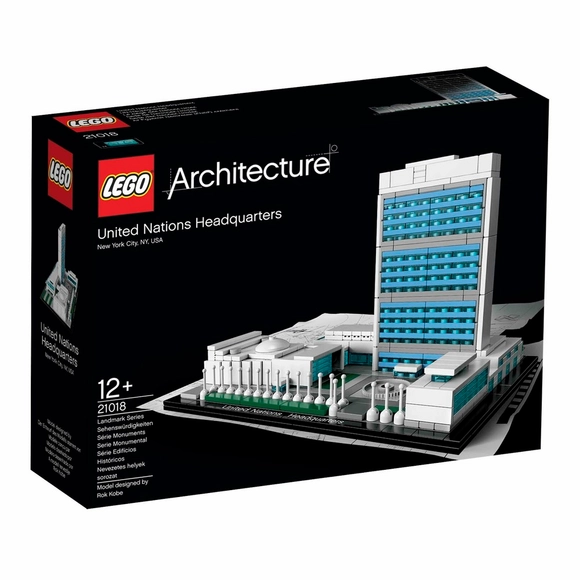
LEGO® has officially announced the next addition to their architecture-inspired products: The United Nations Headquarters. Standing alongside New York City’s East River, the United Nations Headquarters is a beacon of modernism and international collaboration, designed by a team of multinational architects including Le Corbusier and Oscar Niemeyer. Scaling 5 inches high x 8 inches wide x 6 inches deep, this representation of the UN Headquarters costs $49.99.
Check out more about the building and its history here.
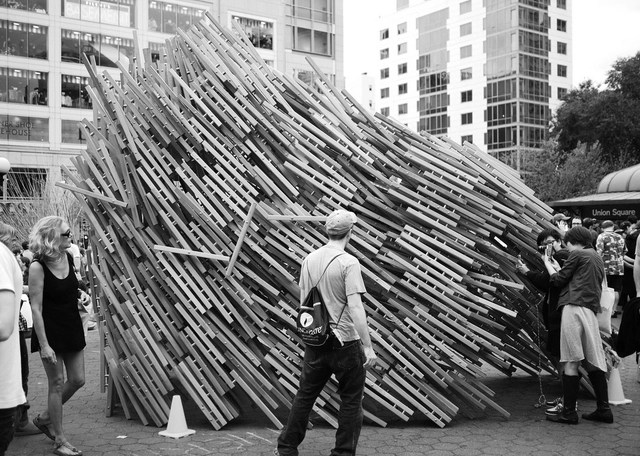
Each year, Joshua Foer, author of the bestseller Moonwalking with Einstein, would celebrate sukkot (a traditional Jewish holiday) with his family by building a sukkah, a small temporary shelter that acts as a reminder of the Jews' plight after being expelled from Egypt. Years later, he co-founded a competition to challenge architects to consider the holiday from a designer's point of view. Sukkah City, a documentary on the competition, follows a couple projects through their inspiration and construction. Read more about it here.
https://www.archdaily.com/433671/sukkah-city-an-architectural-take-on-an-old-traditionKatherine Allen
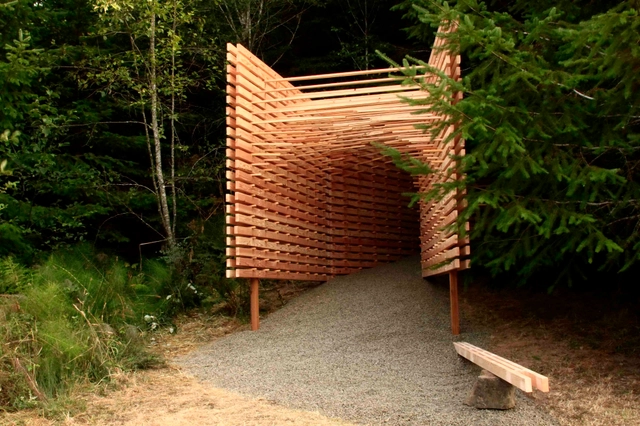
Courtesy of Stewart Dodd and the Architectural Association
Marking the Forest, now in its second year, is a ten-day summer course by the Architectural Association. Set in a managed forest in central Oregon, it aims to engage students with the forest through thoughtful architectural intervention.
https://www.archdaily.com/435108/aa-students-amplify-the-forestKatherine Allen
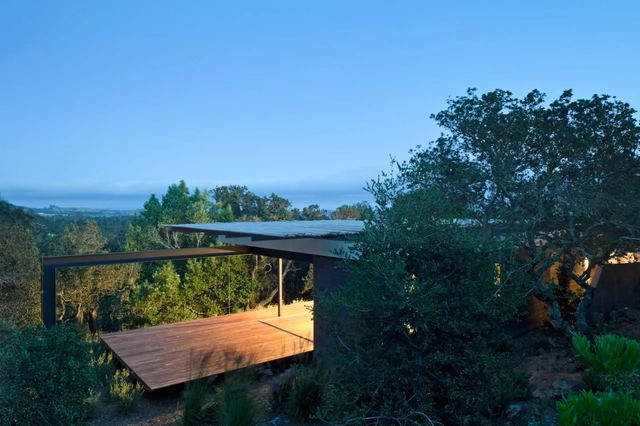
Sonoma Spa Retreat. Image Courtesy of Aidlin Darling Design
San Francisco-based Aidlin Darling Design has received the 2013 Professional Award for residential design from the American Society of Landscape Architects (ASLA) for their work on the Sonoma Spa Retreat in Northern California’s wine country. The project started with reclaiming an overgrown hillside, revitalizing it with a series of paths that preserved its natural features, and then integrating an outdoor kitchen, solar heated pool and recreational areas. For more information on the project and the award, which evaluates context, design value and sustainability, click here.
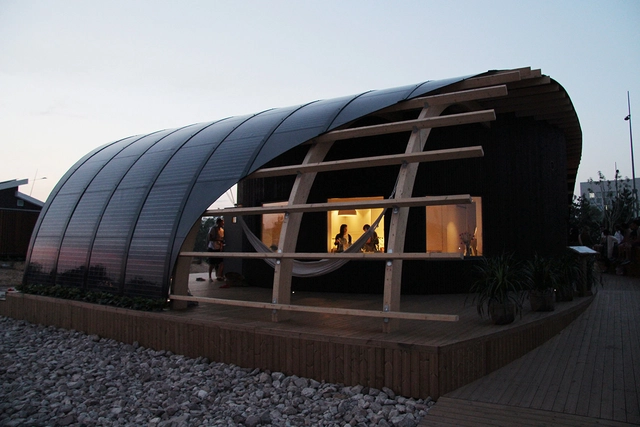
Designed and built by 25 students from Chalmers University in Sweden, HALO is a socially sustainable home for four students, running on renewable energy from the sun. HALO was designed using one underlying concept: shared space is double space.
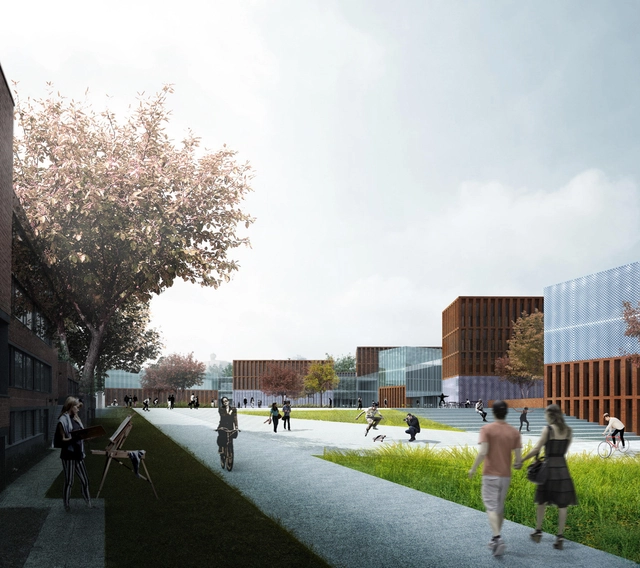
Helsinki-based Verstas Architectshave recently been announced as the winners of a competition to design a new central campus for the Aalto Universityin Espoo, Finland. The new core of the university will sit alongside the campus's original Main Building and Library designed by Alvar Aalto.
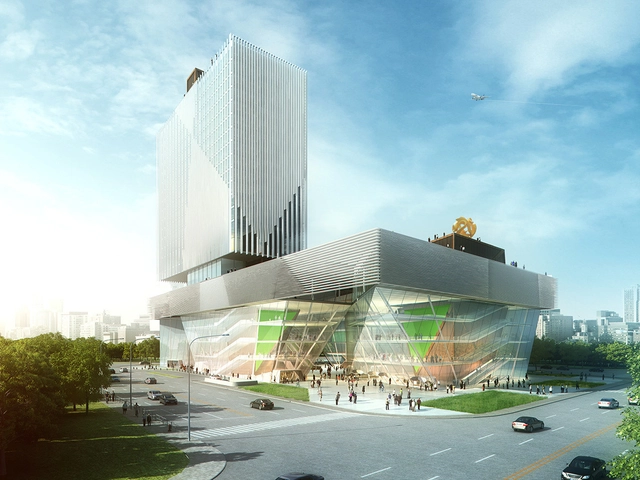
Their 80,000 square meter winning proposal for the new Kunshan Phoenix Cultural Mall divides a large urban block into four 'cultural cores,' each five stories high and respectively housing a theater, fitness club, education center, and exhibition halls. The podium, which sits upon the glass-clad cores, spirals the length of the perimeter (comprised of stores, restaurants and cafes) and ultimately plateaus at an open park where the public and Phoenix employees would share a common space.
https://www.archdaily.com/434690/american-architects-win-international-competition-for-cultural-mall-in-chinaJose Luis Gabriel Cruz
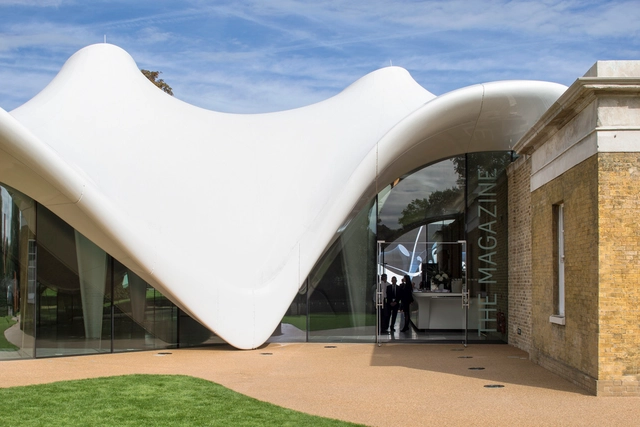
A couple of days ago we featured Zaha Hadid's Serpentine Sackler Gallery, her recent conversion of a classical 19th century brick structure. Today, photographer Danica Kus shared with us some more photos on this project. Enjoy them all after the break.
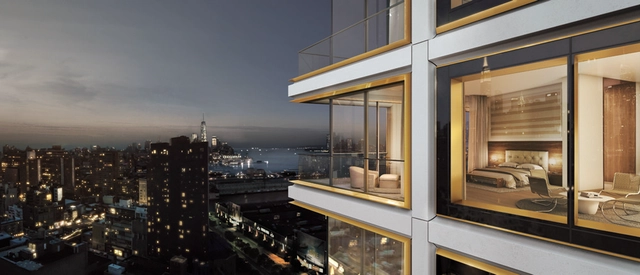
Foster + Partners have just revealed a new design for a 19-story luxury condominium building at 551 West 21st Street, on the western side of Manhattan. The design features a cast concrete frame surrounding windows with a warmly colored metal trim that cover the full 11-foot floor to ceiling height.
Parramatta City Council is delighted to invite you to participate in an exciting architectural design competition, Architectural Concept Competition for Stages 5 and 6 of the Parramatta Square Precinct development, Sydney.Council is inviting architects to submit visionary ideas for two large commercial towers in the heart of Parramatta City Centre.
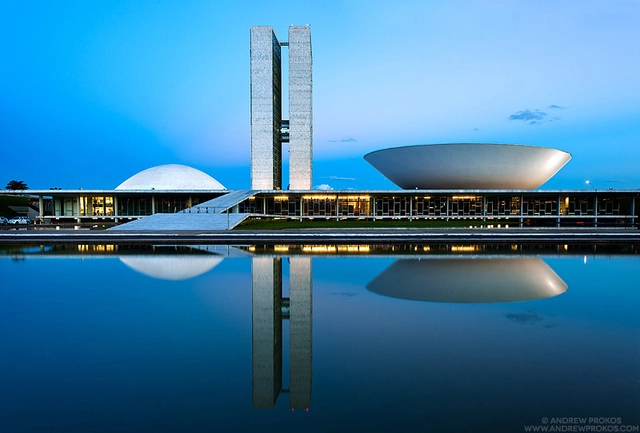
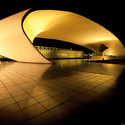
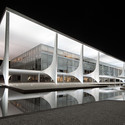
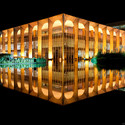
Night photographs of the Brazilian capital created by architectural photographer Andrew Prokos are among this year’s winners at the International Photography Awards competition. Entitled “Niemeyer’s Brasilia” the series of photographs capture the surreal architecture of Oscar Niemeyer, who shaped the Brazilian capital for over 50 years.
More fantastic photographs and information on the awards after the break.
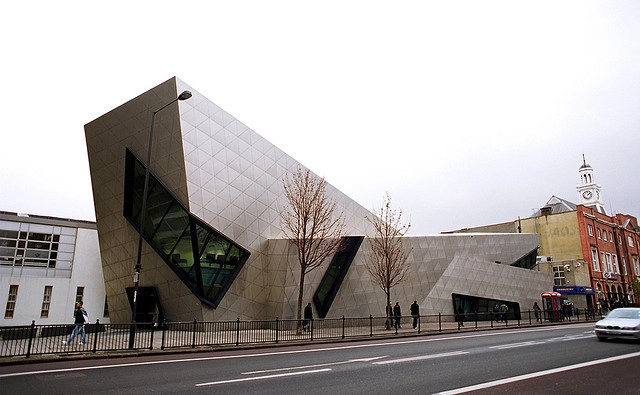
Following the news in 2010 that Daniel Libeskind was to design a "landmark" building for the UK's University of Essex, it has been announced that the plans have been abandoned. What was known as the Institute for Democracy and Conflict Resolution (IDCR) "was intended to become the ‘anchor’ to a new Knowledge Gateway research park at the university’s Colchester Wivenhoe Campus".
National Centre for Contemporary Arts. Image Courtesy of Calvert Journal
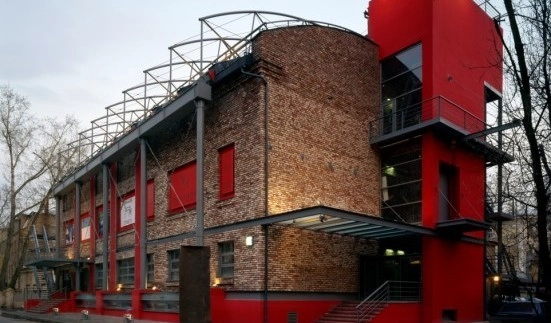
The Russian Ministry of Culture has announced the shortlist of 10 architecture firms who will compete to design the museum and exhibition complex of Moscow's new National Centre for Contemporary Arts (NCCA). The NCCA, currently housed in a former factory in central Moscow, will be moved to Khoydynskoye Pole, a former airfield in northeast Moscow, as part of a larger urban planning project to develop the area.
Ten firms were selected to advance to the second stage of the competition: five on the merit of their experience and portfolio; five on the merit of the preliminary architecture concepts submitted to the jury. See the shortlist, after the break...
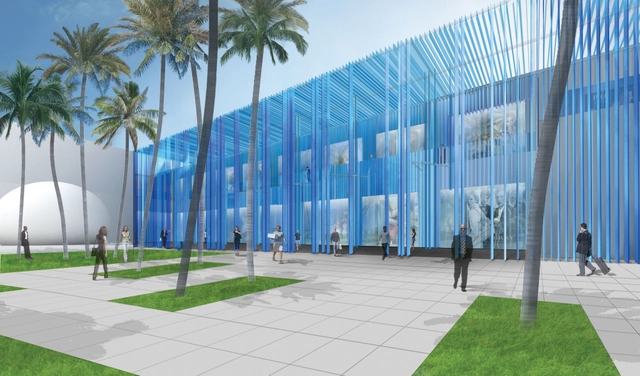
The Miami Design District, an 18 square-block neighborhood between Miami’s downtown and South Beach, has announced that the facade of its new mixed-use retail building will be designed by Sou Fujimoto. The two-floor, 17,000 square foot structure, which will feature "an elongated series of glass fins extending from the rooftop down to the open courtyard," will create unique pedestrian arcades covered by a "structural waterfall."
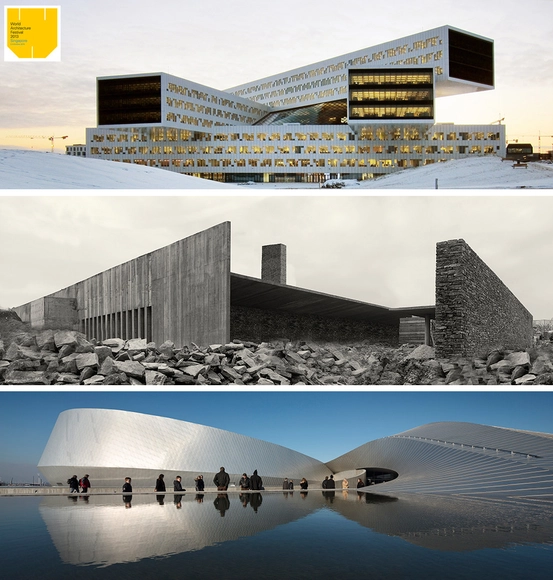
The first two days of the World Architecture Festival 2013 have been intense. Keynotes by Charles Jencks and Dietmer Eberle, and several other lectures, have filled the auditorium and the festival hall stage, while hundreds of architects watch the live "crits," where firms present their projects in front of the jury and the audience. As a jury for the Health and Future Education categories, I've seen architects from firms from all ranges, sizes and trajectories present their shortlisted projects, a very strong selection of buildings.
After these two days the winners of each category have been announced, and today the super jury will choose the World Building of the Year, followed by a lecture by Sou Fujimoto. Stay tuned for updates via Twitter!
"From the subtle to the spectacular, from a four room house to an 80 storey tower, the sheer quality and diversity reflected in the array of projects shortlisted today demonstrates the increasingly global nature of the event. All eyes are now on the festival’s venue, the Marina Bay Sands in Singapore, where the architects will battle to win their individual categories, with the victorious projects competing for the coveted World Building of the Year award" - Paul Finch, Director of the WAF.
Check out the full list of winners, highly commended entries and the jury's comments:
In this article, which originally appeared on the AIArchitect, Sara Fernández Cendón discusses the opportunities and challenges for US architects who are taking advantage of Brazil's infrastructure development boom, particularly in the wake of the 2014 FIFA World Cup and in preparation for the 2016 Summer Olympics.
Until Brazil was selected to host the FIFA World Cup in 2014 and the Summer Olympic Games in 2016, only three countries had hosted both events back-to-back. Successful bids for either event are usually equal parts proof that the country already has what it takes and a promise that it will do whatever else necessary to make things run smoothly.
In Brazil’s case, the “promise” part has generated a handful of projects for architectural firms around the world; Populous is responsible for conceptual design a stadium in the city of Natal, for example. And some observers believe that World Cup building delays could generate a rush of last-minute opportunities for foreign construction professionals. But even if these two headline-grabbing events haven’t been fully planned and designed by foreigners new to Brazil, the country is evolving into an emerging market for American architects, built on its intense thirst for upgraded commercial and transit infrastructure.
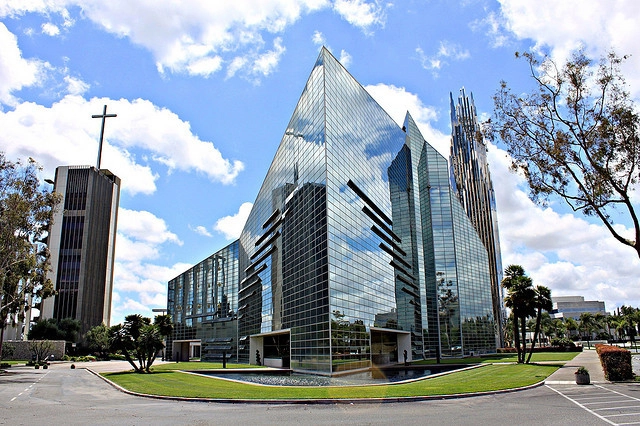
Johnson Fain and Rios Clementi Hale Studios have been selected to transform Philip Johnson's 1981 Crystal Cathedral, originally a Protestant mega-church, to make it more in keeping with its new, Catholic identity.
The Cathedral, which had filed for bankruptcy in October 2010, was bought in early 2012 by the Roman Catholic Diocese of Orange. Earlier this month, the architects were chosen for the renovation: Johnson Fain will focus on the interior, while Rios Clementi Hale Studios will oversee the masterplan of its 34-acre campus.
Favela Painting: Rio Cruzeiro, realized in 2008. Image Courtesy of Favela Painting's Kickstarter Page
Dutch duo Haas and Hahn gained fame in 2005 for painting a few houses of Rio Janeiro’s favelas in a palate of bright hues. Now they’re back again, this time with a Kickstarter Campaign to raise the funds to paint the rest of the favela in the hopes of further transforming this crime-ridden community.