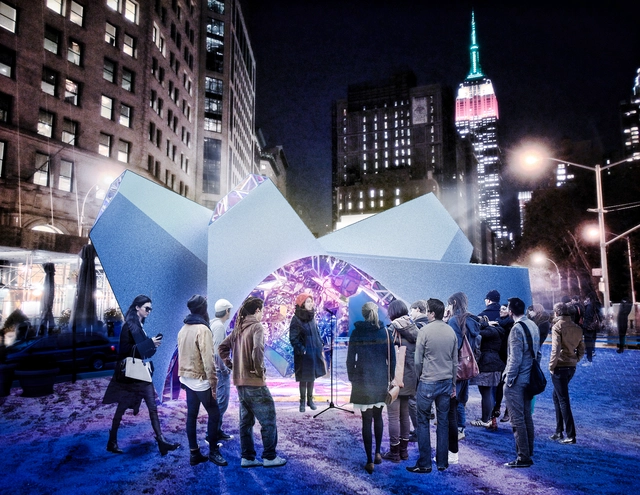
SOFTlab has been chosen as the second annual winner of the Flatiron Public Plaza design competition in New York. Their winning proposal, Nova will open to the public next month on Wednesday, November 18th. Its "crystalline" structure aims to intrigue the passer-by, welcoming them inside for framed views of the Flatiron Building and surrounding landmarks, including the Met Life Tower and Empire State Building.
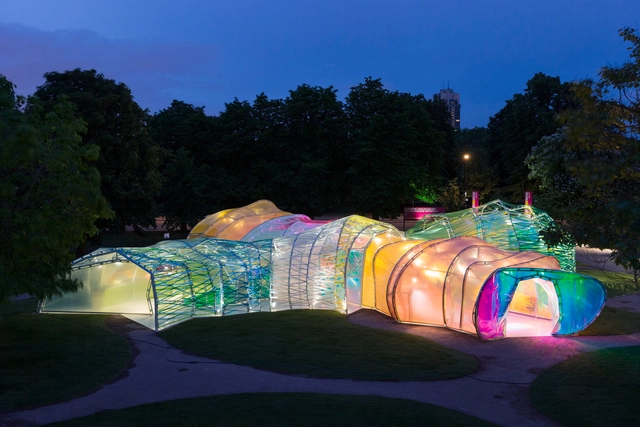
"There is never a good time to leave an institution but I wanted to leave the Serpentine at a time of strength and success," said Peyton-Jones, as reported by the Architects' Journal.
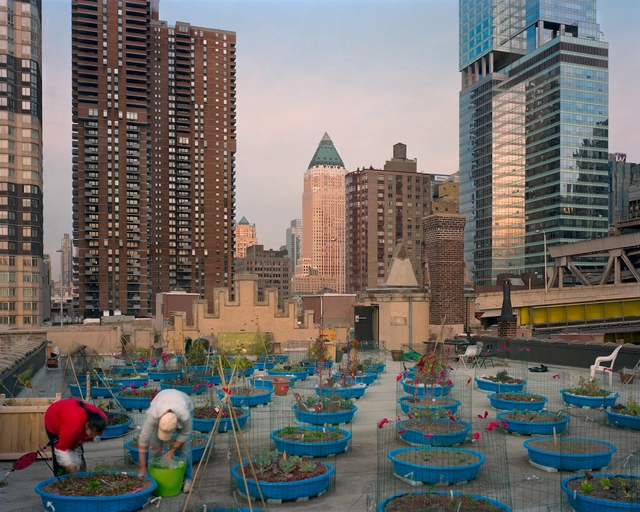
The Design Trust for Public Space and Farming Concrete have released the Farming Concrete Data Collection Toolkit: the first public platform for gathering, tracking and understanding urban agriculture production and the benefits of community gardens, urban farms and school gardens. The result of a six-year initiative, Five Borough Farm, the Toolkit features a user-friendly manual with simple methods of generating and collecting data at each garden and farm, with accompanying instructional videos; Barn, an online portal for farmers and gardeners to input and track their production; and Mill, a public database providing access to numbers, reports for practitioners, researchers, policymakers, funders and anyone with interest in urban agriculture.
Sofoklis Giannakopoulos, a researcher at the Institute for Advanced Architecture of Catalonia (IAAC), has designed Pylos, a 3D printer that utilizes a natural, biodegradable, cheap, recyclable and local material that everyone is familiar with: the earth.
In an effort to make 3D printing a “large scale construction approach” even in years of economic and environmental turmoil, Pylos explores the structural potential of soil, a material that has been widely used in vernacular architecture around the world, and particularly in the Global South.
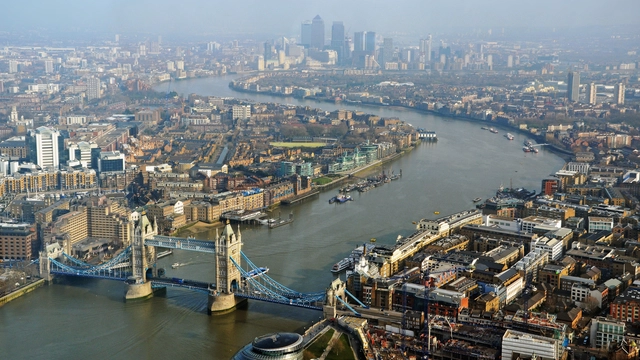
River Thames, London. Image Courtesy of Monocle 24
For this edition of The Urbanist, Monocle 24's weekly "guide to making better cities," the team report from the two-day CityLab summit, which "gathered the world’s top mayors and urban leaders for a series of chats on how to to make our cities a better place." They explore the vision for London’s transport infrastructure, discover how Rio de Janeiro is gearing up its digital strategy ahead of the 2016 Olympic Games, and find out how to create a smart city through data. On top of that, they chat to millennials in Washington and "sit down for a very honest chat with the mayor of Athens."
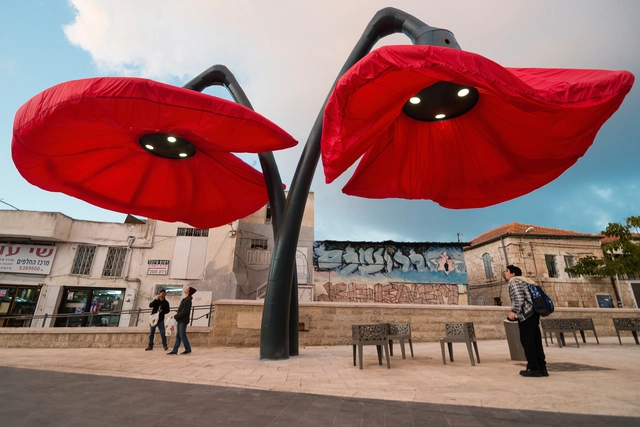
Shade isn't hard to find in Jerusalem's Vallero Square, thanks to these giant urban flowers designed by HQ Architects that bloom in the presence of pedestrians. "Warde," as the installation is called, is a set of four inflatable flowers at the entrance of the city's market square and adjacent tram station that "open up" whenever pedestrians walk by or the tram is approaching.
The Chicago City Council has voted to approve zoning for George Lucas' controversial, MAD-designed Lucas Museum of Narrative Art. Planned for a lakefront site on Chicago's Museum Campus park, near the Shedd Aquarium and Field Museum, the "mountainous" design faced opposition from environmentalists who claim the building is a "confiscation of public land." Despite this, and according to reports on NBC News, the Star Wars director won the Council's approval by promising more parking and tailgating space to Chicago Bears fans.
“The Lucas Museum of Narrative Art will be an incredible addition to Chicago’s Museum Campus,” said Mayor Emanuel in an official statement. “The Lucas Museum will join the 56 other museums in Chicago to provide new cultural and educational benefits for generations to come. And the new parkland will add more open greenspace that will be enjoyed by residents across the city.”
Constructivist architecture is most often remembered in writing and on paper. The movement’s two most radical and recognized structures, Vladimir Tatlin’s “Monument to the Third International” and El Lissitzky’s “Lenin Tribune,” were never built at scales larger than models. Taking hold in the wake of the Russian Revolution of 1917, Constructivism was the result of Cubo-Futurist artists marrying their kineticism and abstraction to the social concerns of the Bolsheviks, in the hopes of using art as a platform to motivate changes in society. Viewing the museum establishment as a “mauseoleum of art,” in 1918 the new broadsheet Art of the Commune affirmed: “The proletariat will create new houses, new streets, new objects of everyday life...Art of the proletariat is not a holy shrine where things are lazily regarded, but work, a factory which produces new artistic things.”[1]
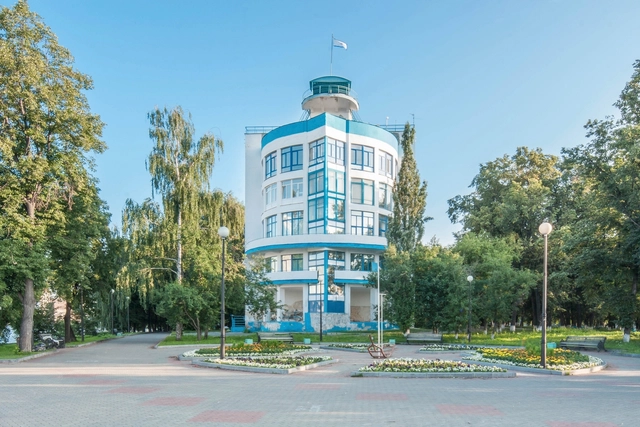
In spite of the predominance of "paper architecture" in the history of Constructivism, there is one city that experienced the fruit of this movement to an unrivaled degree. Yekaterinburg is Russia’s fourth-largest city, home to nearly 1.5 million people. It is also the largest concentration of Constructivist architecture anywhere in the world, with approximately 140 structures. To celebrate the importance of Yekaterinburg in the history of architecture, photographer Denis Esakov has shared his images of the city's architecture with ArchDaily.
In 1994, after the death of its main investor and a national banking crisis that left Venezuela's economy stagnated, the construction of Caracas' Centro Financiero Confinanzas - known popularly as the Tower of David - was paralyzed, leaving the building completely abandoned and on 70 percent complete.
Neglected for more than a decade, the 45-story, 190-meter-tall skyscraper became the makeshift home for a community of more than 800 families, becoming the world's tallest "vertically organized favela," with basic services to the 22nd floor and including even barber shops, kindergartens and dentists.
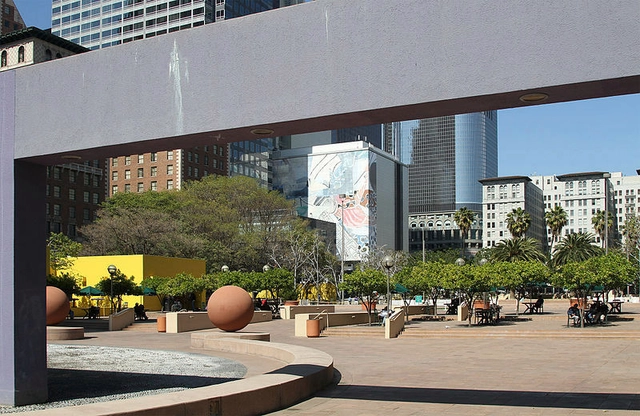
Ten practices from around the world have been shortlisted in a competition that aims to transform Los Angeles' Pershing Square one of Southern California's top destinations. Located on a five-acre plot in the city's downtown, Pershing Square is Los Angeles' oldest park. Each semi-finalist has been challenged to develop proposals based off of experiences. A small selection of finalists will be selected in December to move on to the competition's final phase.
James Corner Field Operations has been chosen to design the National Building Museum's 2016 Summer Block Party installation. Just like its predecessors, including Snarkitecture's popular BEACH and BIG's massive Labyrinth, the installation will take over the Museum's Great Hall. With the design in its preliminary stages, little has been revealed. However, its mission is to "present innovative, interactive experiences that experiment with new ways of seeing and understanding the built environment."
“We are very excited about this opportunity to once again transform the Great Hall for summer spectacle and pleasure,” said James Corner, adding that “it will be a great challenge to surpass the genius of previous installations, but also an opportunity to explore something new and unexpected.”
Videos
Courtesy of Laboratory for Creative Design and Beijing Design Week
Guinness World Records has awarded the title of "largest 3D printed structure" to VULCAN, a temporary pavilion designed by the Beijing-based Laboratory for Creative Design (LCD). Made up of 1023 individually printed segments, the structure was 9.08 meters long and 2.88 meters tall, and took 30 days to print and a further 12 days to assemble. The pavilion was on display earlier this month at Beijing Design Week, located in Beijing's Parkview Green retail center.
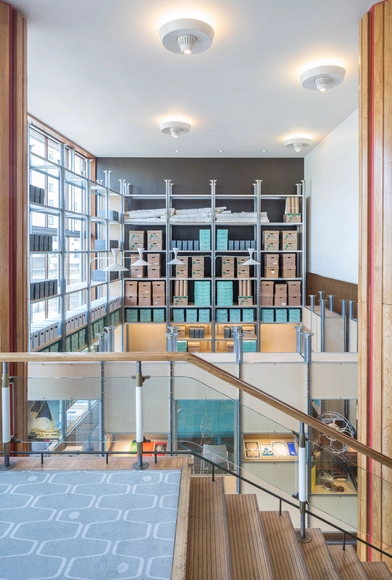
The Southbank Centre—a large complex of Grade One listed, Modernist cultural venues on the banks of the River Thames—are poised to refurbish three of their most loved spaces: the Queen Elizabeth Hall, the Purcell Room and the Hayward Gallery. As part of this transformation, London-based practice Jonathan Tuckey Design (JTD) have been commissioned to create a new 'Archive Studio' set within the foyer of the Royal Festival Hall, all part and parcel of the Southbank Centre’s desire to open up access to their collections and archives. JTD's free-standing, self-supporting structure is "an open framework which makes the scale the archival process apparent to visitors, held together by polished brass nuts and bolts and clad in perforated hardboard."
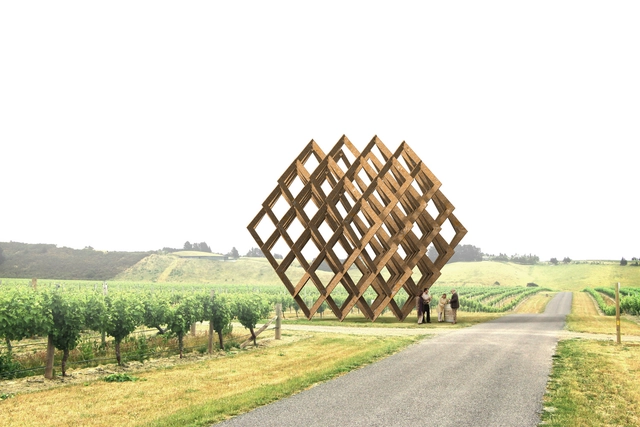
Studio Dror has been commissioned by Brancott Estate in New Zealand to design a steel sculpture inspired by the winery's history. The result, "a flat matrix of CorTen steel" that "stretches open to become a nine-meter-tall volume of aggregated triangulations." Named "Under/standing," the installation was inspired by the winemaking process. It will be built in 2016.
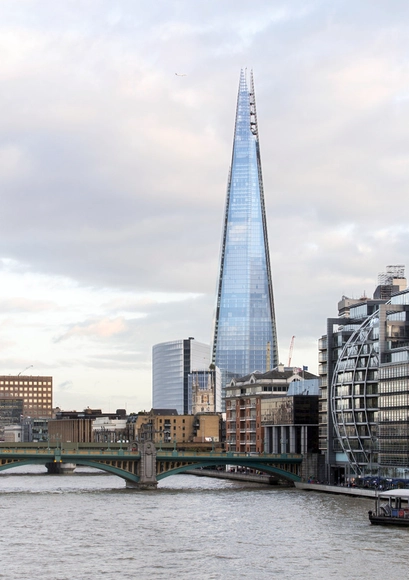
"Cities face a choice of building up or building out," says Renzo Piano, according to a recent article on the Daily Mail. Responding to backlash led by the Skyline Campaign, a campaign spearheaded by architect Barbara Weiss that "aims to stop the devastation of London by badly designed and poorly placed tall buildings," Piano is defending London's controversial skyscraper boom by saying it's giving the one thing the city needs most: "space on the ground."
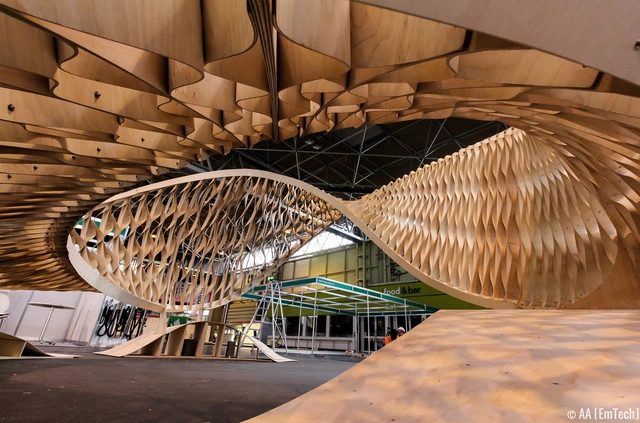
Emergent Technologies and Design Programme (EmTech) at the Architectural Association School of Architecture in London has recently exhibited their project, The TWIST at the Timber Expo in Birmingham. The project is an experimentation in the properties of milled plywood, developed throughout 1:1 tests. Through these experiments, The TWIST seeks to gain full control of the material properties, developing articulated surfaces with the variable orientation of its elements. Read more about the project after the break.
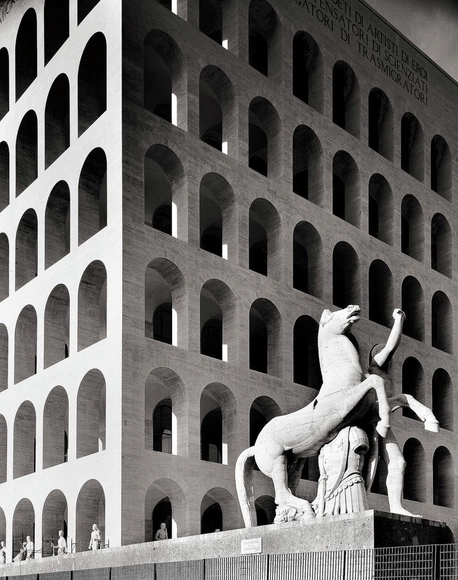
Palazzo della Civiltà Italiana (the Colosseo Quadrato). Image via Foter
The Palazzo della Civiltà Italiana (also known as the 'Square Colosseum') is perhaps the most emblematic architectural project realised during Benito Mussolini's Fascist dictatorship, which governed Italy between 1922 and 1943. Now, sixty years later and having never been used, Italian fashion house Fendi and architect Marco Costanzi have—amid controversy—renovated the historically charged building into their headquarters, with office space to accommodate around 450 employees. Having reportedly signed a fifteen year lease with the municipality of Rome, the haute fashion house will be paying around €240,000 ($265,000) in annual rent.
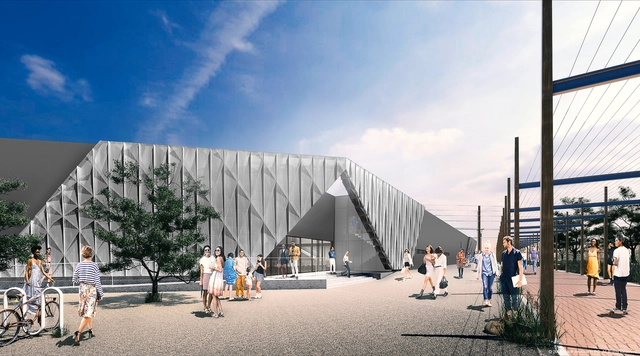
SHoP Architects have unveiled plans to expand SITE Santa Fe, a contemporary arts venue in the city of Santa Fe. With a mission to serve as a "dynamic cultural hub" within the heart of Santa Fe Railyard (one of America's six Great Public Spaces according to the American Planning Association), the new design "draws inspiration from traditional Navajo patternmaking" and will be anchored in the "distinctive material qualities" of its historic site.
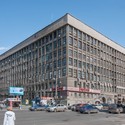
A consortium led by Sergey Skuratov Architects (SSA) was selected over Steven Holl Architects and Miralles Tagliabue EMBT to develop a concept for a multi use complex on Moscow's Sofiyskaya Embankment. Planned for a historic area on the Moscow-river bank, opposite Kremlin, the winning concept calls for three "longitudinal units with roofs of different types and heights" that produce a "picturesque outline" and offers a "gentle transition" from the "old buildings to new."
Read on for a glimpse of the winning and two runner-up proposals.
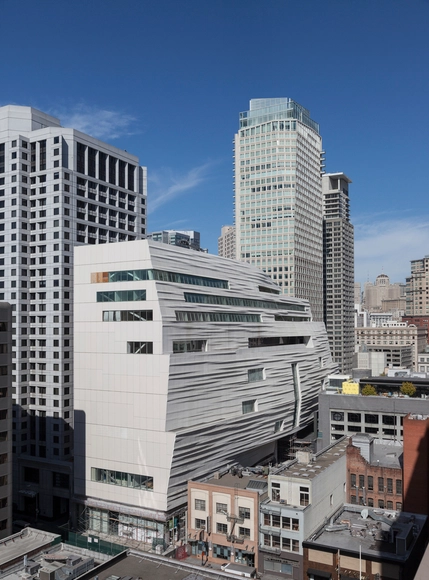
Snøhetta's 10-story expansion of the San Francisco Museum of Modern Art (SFMOMA) is nearing completion. As announced by SFMOMA, the "transformed" museum will reopen to the public on Saturday, May 14, 2016. Its new 235,000-square-foot addition (that nearly tripled SFMOMA's gallery space) was designed by Snøhetta to "weave" into the city and connect "seamlessly" to the museum's existing 225,000-square-foot building designed by Mario Botta.
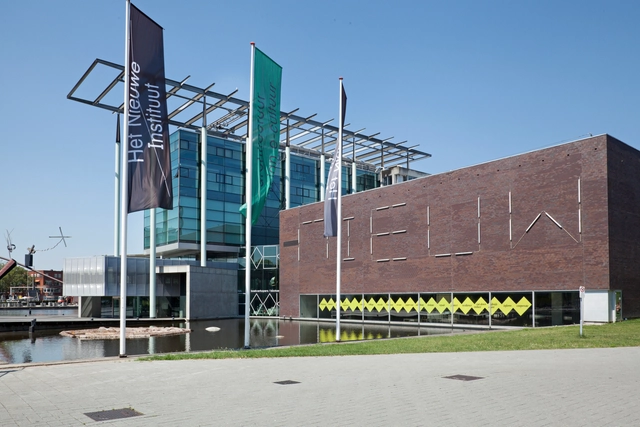
The New Institute (formerly the NAi). Image Courtesy of Het Nieuwe Instituut
Rotterdam-based practice MVRDV have begun a transfer of their early work, spanning fifteen years from 1993 to 2008, to Het Nieuwe Instituut — the central architecture archive of The Netherlands. This collection, which will eventually be made available to the public, will be in the institute's first primarily digital donation (approximately eight terabytes of data) and consisting of material from 400 of the practice's 680 total projects, including the Villa VPRO, the Silodam in Amsterdam, and the Markthal Rotterdam, as well as unrealised projects such as Meta City Datatown, Pig City, and 3D City Cube.
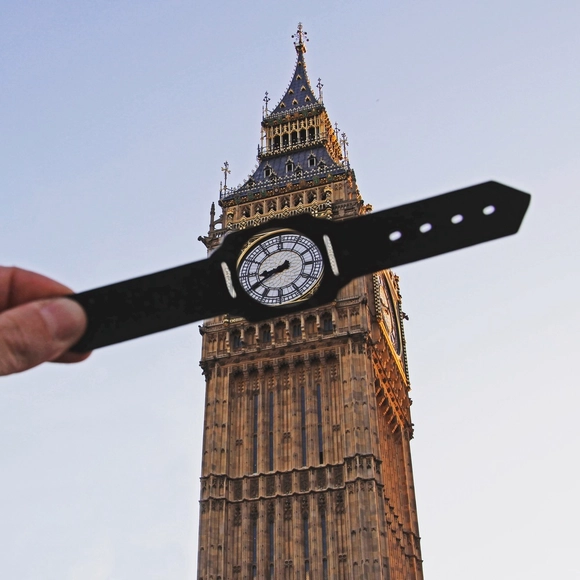
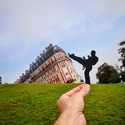
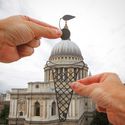
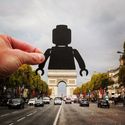
For the past few months, Rich McCor has been traveling around the world reimagining famous landmarks with paper cutouts.
Starting with some research on the locations he visits, McCor shifts between finding instant inspiration and letting his subconscious drive his creations: “After doing the first few cut-outs, I think my brain learned to look for quirky shapes and ideas in architecture and everyday objects; it’s a pretty good mental exercise.”
WELL-line by Chetwoods. Image Courtesy of London Royal Academy of Arts
The Royal Academy of Arts in London has announced the four shortlisted proposals in their Urban Jigsaw competition, which aims to generate ideas for the renewal of Brownfield sites in London. After appraisal of many high-quality entries, four finalists have been selected to move onto the next stage of the project. See the finalist proposals after the break.
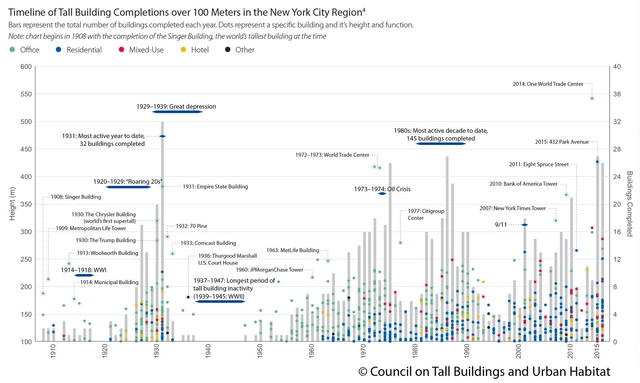
The Council on Tall Buildings and Urban Habitat has released a new research study called New York: The Ultimate Skyscraper Laboratory, which utilizes data to “develop graphic features showing the progression of tall building development in New York City.”
The Timeline of Skyscrapers in New York City Region 1906-2018 graphic illustrates “how skyscraper construction aligned with social or political events in history” in the context of key events, for example, building inactivity around the period of World War II.







.jpg?1446048045&format=webp&width=640&height=580)
__VULCAN__Parkview_Green__Beijing_Design_Week_2015._Courtesy_LCD_and_BJDW-25.jpg?1446041084&format=webp&width=640&height=580)

__VULCAN__Parkview_Green__Beijing_Design_Week_2015._Courtesy_LCD_and_BJDW-25.jpg?1446041084 "Courtesy of Laboratory for Creative Design and Beijing Design Week")
__VULCAN__Parkview_Green__Beijing_Design_Week_2015._Courtesy_LCD_and_BJDW-17.jpg?1446040651 "Courtesy of Laboratory for Creative Design and Beijing Design Week")
__VULCAN__Parkview_Green__Beijing_Design_Week_2015._Courtesy_LCD_and_BJDW-19.jpg?1446040758 "Courtesy of Laboratory for Creative Design and Beijing Design Week")
__VULCAN__Parkview_Green__Beijing_Design_Week_2015._Courtesy_LCD_and_BJDW-20.jpg?1446040824 "Courtesy of Laboratory for Creative Design and Beijing Design Week")
__VULCAN__Parkview_Green__Beijing_Design_Week_2015._Courtesy_LCD_and_BJDW-25.jpg?1446041084)




_by_Chetwoods.jpg?1445476730&format=webp&width=640&height=580)