Bricks are an iconic element of Solano Benítez’s studio. An ancestral material, forged by man using an ancient technique of modeling and baking. Bricks are very versatile, cheap and easy to manufacture – even marginalized areas of the world can afford to build houses with brick. Benítez feels the poetry of brick and has experimented with its versatility, relying solely on bricks as the main construction material. [1]
Gabinete de Arquitectura's exhibition, designed by Solano Benítez, Gloria Cabral and Solanito Benítez, was awarded the Golden Lion for Best Participant in the International Exhibition, Reporting From the Front, for “harnessing simple materials, structural ingenuity and unskilled labour to bring architecture to underserved communities.”
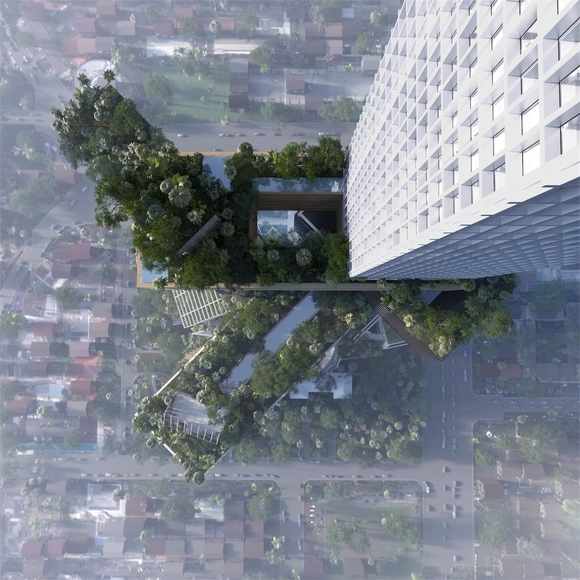
Peruri 88, a 400-meter proposal by MVRDV for Jakarta. Image Courtesy of RSI-Studio
Are tree covered buildings really in tune with ecological and sustainable principles, or are they just a form of greenwashing? This is the question posed by Kurt Kohlstedt in his essay, Renderings vs. Reality: The Improbable Rise of Tree-Covered Skyscrapers, for 99% Invisible. The author notes that vegetated designs come about for myriad reasons – the appearance of sustainability, better air and views, investment intrigue – but that most of these concepts will never leave the realm of paper or virtual architecture. For as many reasons that these buildings have become popular, there are detractors for why they simply cannot be built, including daunting construction hurdles (extra concrete and steel), vast irrigation systems, added wind load complexities, and the trees themselves having difficulty adapting to their vertiginous conditions.
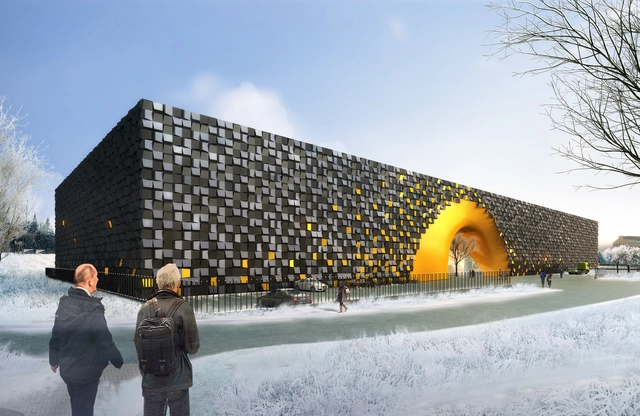
LIAG Architects has unveiled their design for a new art storage building. Commissioned by the Rijksmuseum in Amsterdam, the aim of the project was to create a large open space, while simultaneously meeting other needs such as protecting art that can't be exposed to daylight, controlling the temperature in certain zones, and using minimum amounts of energy to operate the building.
As part of ArchDaily's coverage of the 2016 Venice Biennale, we are presenting a series of articles written by the curators of the exhibitions and installations on show.
After the collapse of the Soviet Union, and increasingly since 9/11 and the “War on Terror” that followed, warfare has moved into the city.
While the wars of the 20th century were waged largely between nations, over territorial sovereignty and along disputed borders, the wars of the 21st century are internal and borderless. They are fought between large multinational coalitions and insurgent networks.
https://www.archdaily.com/788422/blue-architecture-of-un-peacekeeping-missions-inside-the-netherlands-pavilion-at-the-2016-venice-biennaleAD Editorial Team
As part of ArchDaily's coverage of the 2016 Venice Biennale, we are presenting a series of articles written by the curators of the exhibitions and installations on show.
You are part of another’s shadow. —Sverre Fehn in conversation with Per Olaf Fjeld
A central impetus for this exhibition is to acknowledge the presence of the ‘ghosts’ of Nordic architecture – those architects, theorists and educators—the most famous of which are often described as ‘Modern Masters’—who continue to exert influence on contemporary practice and pedagogy. Indeed, one of the most prominent of these gures, the Norwegian Sverre Fehn, designed the Nordic Pavilion. This exhibition addresses a common challenge faced by Finns, Norwegians and Swedes today: how can a building (or an exhibition, in this instance) exist in a dialogue with its setting when that setting is so charged? For us, this ties into a broader question: how can architecture occupy a legacy while still making progress?
As part of ArchDaily's coverage of the 2016 Venice Biennale, we are presenting a series of articles written by the curators of the exhibitions and installations on show.
Of the few dozen articles on architecture and urbanism I have contributed to the Korea Joongang Daily, it was the one entitled “The FAR Game” that received the biggest response from readers. While FAR (Floor Area Ratio) appears to be technical jargon for professionals, it seems that almost every Korean either knows what it is, or has heard about it. If you type yong-jeong-nyul (용적률, the Korean word for FAR) on Korean search engines, an endless stream of news, articles, and commentary pops up. The word speaks to the hunger for living space in a hyper-dense environment, as well as the desire to satisfy that hunger by any means possible, whether by proper planning and tactics or through trickery and obfuscation. It touches both the rich and the poor, the white-collar and the blue-collar, as they navigate their lives together in and around the urban fabric. Upon reading that article, where I had stated that without a doubt it is FAR that drives the architectural character of Korean cities, a renowned urban researcher told me I had hit the nail right on the head.
https://www.archdaily.com/787866/why-the-far-floor-area-ratio-game-inside-koreas-pavilion-at-the-2016-venice-biennaleSung Hong KIM
As part of ArchDaily's coverage of the 2016 Venice Biennale, we are presenting a series of articles written by the curators of the exhibitions and installations on show.
The Romanian Pavilion at the 15th International Architecture Exhibition — La Biennale di Venezia showcases “Selfie Automaton”, an exhibition by Tiberiu Bucșa, Gál Orsolya, Stathis Markopoulos, Adrian Aramă, Oana Matei, Andrei Durloi. The exhibition consists of 7 mechanical automata, featuring 42 built in marionetes — 37 human and 5 creatures. Three of the automata will be placed in the Romanian Pavilion in Giardini, another three in the New Gallery of the Romanian Institute of Culture and Humanistic Research, and one nomad that will wander through the streets of Venice.
Have you ever had a conflict with a client over being paid for a file? Have you also been out of free space on your dedicated FTP? The dispute scenario often leads to architects being shortchanged for their work. But, a new cloud sharing platform might mean the end of an era of intractable conflicts. Fileship.io promises a system that leaves the architects and other members of the creative economy in control. The simple idea behind the website is that a client’s files are locked behind a paywall, meaning that in order to gain access designers must be compensated. The platform also doesn’t rely on predetermined limits to server space, a scenario that often makes architects err on the side of leniency in order to load newer work on their FTP. Put simply by fileship.io, “You get paid. They get their file.”
As part of ArchDaily's coverage of the 2016 Venice Biennale, we are presenting a series of articles written by the curators of the exhibitions and installations on show.
The Architectural Imagination presents twelve new speculative architecture projects designed for specific sites in Detroit but with far-reaching applications for cities around the world.
As the home of the automobile industry, the free-span concrete factory, Motown, and techno, Detroit was once a center of American imagination, not only for the products it made but also for its modern architecture and modern lifestyle, which captivated audiences worldwide.
Today, like many post-industrial cities, it is coping with the effects of a declining population and an urban landscape pockmarked with blight. Nonetheless, having emerged from bankruptcy, there is new excitement in Detroit to imagine the city's possible futures, both in the downtown core and in its many neighborhoods.
https://www.archdaily.com/788413/the-architectural-imagination-inside-the-us-pavilion-for-the-2016-venice-biennaleCynthia Davidson & Monica Ponce de Leon
As part of ArchDaily's coverage of the 2016 Venice Biennale, we are presenting a series of articles written by the curators of the exhibitions and installations on show.
As an architectural device the pool represents a physical edge but it also expresses a social and personal frontier. This is explored through the narratives broadcast in the exhibition space for which we have selected eight storytellers: Olympians Shane Gould and Ian Thorpe; authors Anna Funder and Christos Tsiolkas; musician Paul Kelly; environmentalist Tim Flannery; fashion designers Anna Plunkett and Luke Sales from Romance Was Born; and Indigenous art curator Hetti Perkins. Their interviews reveal stories of fulfillment and accomplishment, of segregation and inclusion, of learning from the past and reflecting for the future, all through the lens of the pool.
The American Institute of Architects has launched the second annual I Look Up Film Challenge, which invites architects to produce short documentaries about the impact of architecture. The 2016 Challenge kicked off with a short film on Auburn University’s design-build program known as Rural Studio. The documentary shows how the small town of Newbern, Alabama has been impacted through the program’s design and construction of a new library and fire station. Through a series of short interviews, the film shows the team's design process from early schematic design discussions through the end of construction.
As part of ArchDaily's coverage of the 2016 Venice Biennale, we are presenting a series of articles written by the curators of the exhibitions and installations on show.
At a scale of 1:1 billion, the geological map of the world reveals planetary scales of operation for the largest resource extraction nation on the planet whose foreign policy is borne from legacies as colony, as confederation, country, and now, as global resource empire. In its divine, legal power to separate surface rights from mineral rights, the royal domain of the government—the Crown—exercises supreme authority over 95% of its territory making it the biggest landlord in the world. Not surprisingly, its coat-of-arms, commonwealth, constitution, even its parliament building look practically the same, it shares the same Head of State—Queen Elizabeth II. As the last remaining royal monarchy in the Americas, Canada is the brainchild of Queen Victoria II, the most powerful woman in history, who grew the British Empire to unprecedented magnitude in late 19th century.
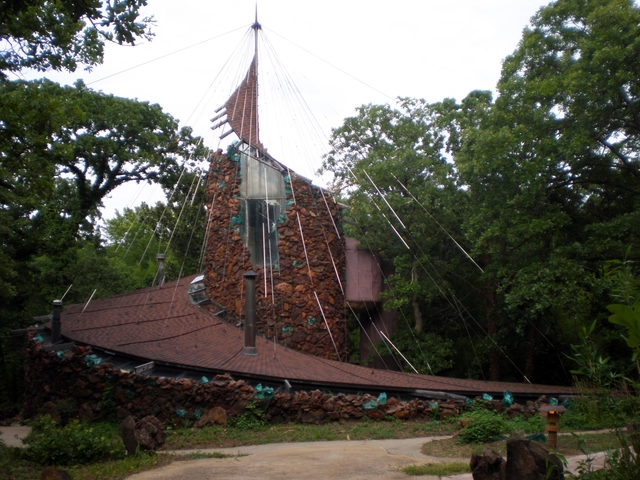
The Bavinger House is considered by many to be the crowning achievement of Bruce Goff, an esteemed architect who was once referred to by his mentor Frank Lloyd Wright as one of the few creative American architects. Its spiraling form and integration with the landscape was one of the first instances of modernist bio-mimicry.
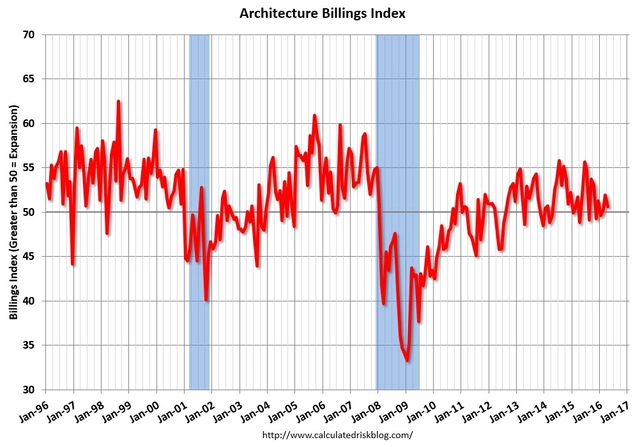
Although the year began with a decline, the Architecture Billings Index (ABI) has shown three consecutive months of increasing demand for design activity at architecture firms. The American Institute of Architects (AIA) reported the April ABI score was 50.6. Although down from March's score of 51.9, this score still reflects an increase in design services (any score above 50 indicates an increase in billings). The new projects inquiry index was 56.9, down from 58.1 in the previous month.
New York-based architecture firm Leong Leong has created an installation for the third annual Sight Unseen OFFSITE exhibition as a part of the citywide NYCxDESIGN festival.
Titled TOPO, the installation was a scaleless environment composed of more than one thousand foam rollers. Collectively, they form a landscape “that is both an intimate sanctuary and an expansive horizon.” The installation was situated in a room of mirrors, giving the effect that it extends indefinitely.
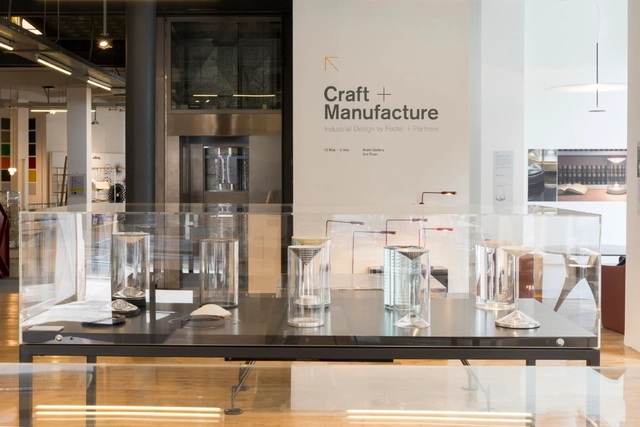
Foster + Partners' Craft + Manufacture: Industrial Design exhibition is currently on display at The Aram Gallery in London. It is the firm’s first exhibition dedicated to the industrial design work they have created over the past fifty years. It shows how “the science, art, and craft of making things” has been the foundation of the firm, and how the “collaborative nature of the design team pioneered by Norman Foster” has been translated into their architectural practice.
As part of ArchDaily's coverage of the 2016 Venice Biennale, we are presenting a series of articles written by the curators of the exhibitions and installations on show.
Spain is one of the countries where the practice of architecture has been most affected by the economic crisis. There are few places on earth where such large numbers of buildings were built in such a short period of time. The lack of reflection over whether these projects were necessary or valid resulted in the subsequent abandonment of many buildings when their completion or maintenance was discovered not to be economically viable. Their appearance throughout Spanish territories has generated a collection of unfinished buildings where the factor of time was eliminated from the formula for making architecture.
Alejandro Aravena and the jury for the 15th International Architecture Exhibition at La Biennale di Venezia have just announced the winning participations.
The Golden Lion for Best National Participation went to Spain for UNFINISHED. The jury cited Carlos Quintáns & Iñaqui Carnicero's "concisely curated selection of emerging architects whose work shows how creativity and commitment can transcend material constraints."
Videos
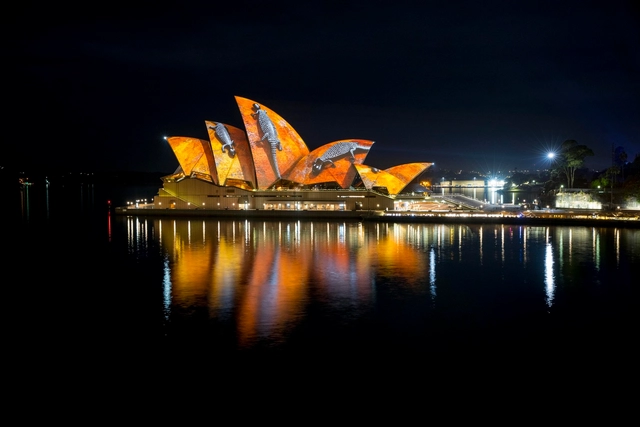
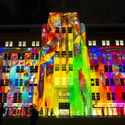
Opera House Songlines. Image Courtesy of Destination New South Wales
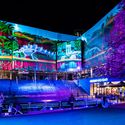
Vivid Sydney, the Australian city's annual festival of lights, began today with colorful installations that reinvent icons like the Sydney Harbour Bridge and Jørn Utzon’s renowned Opera House. The event is host to over 90 light installations devised by more than 150 artists from 23 countries, appearing in eight precincts across the city.
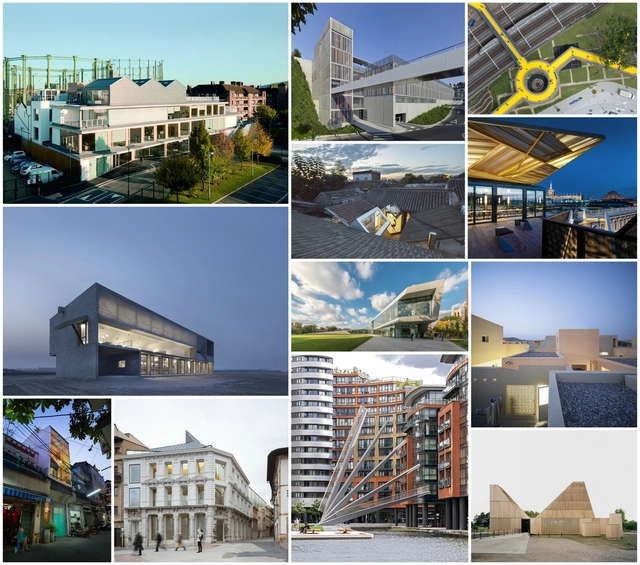
After a three-day event attracting over 1,000 visitors, the 2016 ARCHMARATHON came to a close, with the presentation of its annual awards. Now in its 3rd year, the Milan-based exchange awarded projects in ten different categories, as well as an overall winner, and a “crowd award” based on voting on the event’s website. The 42 presented projects were judged by the international jury, chaired by Luca Molinari and composed of internationally famous architects and critics such as Lucy Bullivant, William Menking, Wassim Naghi, Li Brian Zhang and Elie Haddad. See all 12 awarded projects after the break.
You don’t get to pick your parents, and you don’t get to pick your project managers. If you’re lucky, you’ll work with a project manager who will help you learn the things that schools don’t teach. If you’re not lucky -- and based on the comments we get on our Facebook page and on our site, most of us aren’t -- all you will get is fodder for complaining about your job.
SHoP Architects has just broken ground on their first project in Mexico, a mixed-use development in Tijuana. The complex, which will be know as BAJALTA, explores new ideas about open-space and mixed-use developments, yielding a better quality of life for residents and visitors.
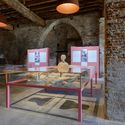
The Victoria & Albert Museum (V&A) has collaborated with La Biennale di Venezia on the Special Project Applied Arts Pavilion with an exhibition called A World of Fragile Parts. The project will examine threats faced by global heritage sites and how copies can act as an aid in the preservation of cultural artifacts.
“Climate change, natural disasters, urbanisation, mass tourism and neglect, as well as recent violent attacks have brought the risks faced by many heritage sites and cultural artefacts into public conversation," states the A World of Fragile Parts press release, outlining the concerns of the project. "Artists, activists and educational institutions are beginning to respond to the urgent need to preserve by exploring opportunities provided by digital scanning and new fabrication technologies. Several key questions emerge: What do we copy and how? What is the relationship between the copy and the original in a society that values authenticity? And how can such an effort be properly coordinated at a truly global and inclusive scale?”
"Architecture is about giving form to the places where we live. It is not more complicated than that, but also not easier than that." - Alejandro Aravena
On the first day of the vernissage 15th International Architecture Exhibition at La Biennale di Venezia, ArchDaily is pleased to show you a preview of the exhibitions and installations that were hand selected by Alejandro Aravena and his firm Elemental. Separate from (but in dialogue with) the National Pavilions, "Reporting From the Front" celebrates work that "address[es] a problem that matters and for which quality architecture made a difference."
In an exhibition whose aim is to share the "success stories" where architecture is making a difference, Alejandro Aravena has convened offices and practitioners from across the globe to show—"in the simplest possible terms (without trivializing)"—projects that demonstrate innovation, resolve and quality problem-solving abilities.


.jpg?1464646111&format=webp&width=640&height=580)
.jpg?1464646117 "© Laurian Ghinitoiu")
.jpg?1464646160 "© Laurian Ghinitoiu")
.jpg?1464646167 "© Laurian Ghinitoiu")
.jpg?1464646152 "© Laurian Ghinitoiu")
.jpg?1464646111)

.jpg?1464426433 "BLUE: Architecture of Peacekeeping Missions. Image © Laurian Ghinitoiu")
.jpg?1464426519 "BLUE: Architecture of Peacekeeping Missions. Image © Laurian Ghinitoiu")
.jpg?1464426543 "BLUE: Architecture of Peacekeeping Missions. Image © Laurian Ghinitoiu")
.jpg?1464426508 "BLUE: Architecture of Peacekeeping Missions. Image © Laurian Ghinitoiu")
.jpg?1464426374)
.jpg?1464397199&format=webp&width=640&height=580)
.jpg?1464398167 "The pyramid, built from Swedish pine, represents an inhabitable installation – an urban artefact in a very public pavilion. Image © Laurian Ghinitoiu")
.jpg?1464398454 "Intimate \"Rooms Without Walls\" sit next to the main installation. Image © Laurian Ghinitoiu")
.jpg?1464398583 "The pyramid is a \"discourse machine,\" designed to allow people to critically discuss the issues at the heart of the exhibition in an open air environment. Image © Laurian Ghinitoiu")
.jpg?1464398159 "The pyramid exists in dialogue with the building. Here, it's relationship with the existing staircase is made apparent. Image © Laurian Ghinitoiu")
.jpg?1464397199)
.jpg?1464648970&format=webp&width=640&height=580)
.jpg?1464648978 "SELFIE AUTOMATON / curated by Tiberiu Bucșa, Gál Orsolya, Stathis Markopoulos, Adrian Aramă, Oana Matei, Andrei Durloi. Romanian Pavilion at the 2016 Venice Biennale. Image © Laurian Ghinitoiu")
.jpg?1464649006 "SELFIE AUTOMATON / curated by Tiberiu Bucșa, Gál Orsolya, Stathis Markopoulos, Adrian Aramă, Oana Matei, Andrei Durloi. Romanian Pavilion at the 2016 Venice Biennale. Image © Laurian Ghinitoiu")
.jpg?1464648985 "SELFIE AUTOMATON / curated by Tiberiu Bucșa, Gál Orsolya, Stathis Markopoulos, Adrian Aramă, Oana Matei, Andrei Durloi. Romanian Pavilion at the 2016 Venice Biennale. Image © Laurian Ghinitoiu")
.jpg?1464649086 "SELFIE AUTOMATON / curated by Tiberiu Bucșa, Gál Orsolya, Stathis Markopoulos, Adrian Aramă, Oana Matei, Andrei Durloi. Romanian Pavilion at the 2016 Venice Biennale. Image © Laurian Ghinitoiu")
.jpg?1464648970)

.jpg?1464533643)
.jpg?1464533675 "The Architectural Imagination / curated by Cynthia Davidson and Monica Ponce de Leon. The US Pavilion at the 2016 Venice Biennale. Image © Laurian Ghinitoiu")
.jpg?1464533629 "The Architectural Imagination / curated by Cynthia Davidson and Monica Ponce de Leon. The US Pavilion at the 2016 Venice Biennale. Image © Laurian Ghinitoiu")
.jpg?1464533621 "The Architectural Imagination / curated by Cynthia Davidson and Monica Ponce de Leon. The US Pavilion at the 2016 Venice Biennale. Image © Laurian Ghinitoiu")
.jpg?1464533667 "The Architectural Imagination / curated by Cynthia Davidson and Monica Ponce de Leon. The US Pavilion at the 2016 Venice Biennale. Image © Laurian Ghinitoiu")
.jpg?1464533643)
.jpg?1464398906)
.jpg?1464398906 "Opening ceremony of EXTRACTION / curated by Pierre Bélanger, OPSYS. Friday, May 27th, 2016. Image © Laurian Ghinitoiu")
.jpg?1464398821 "Opening ceremony of EXTRACTION / curated by Pierre Bélanger, OPSYS. Friday, May 27th, 2016. Image © Laurian Ghinitoiu")
.jpg?1464398880 "Opening ceremony of EXTRACTION / curated by Pierre Bélanger, OPSYS. Friday, May 27th, 2016. Image © Laurian Ghinitoiu")
.jpg?1464398990 "EXTRACTION / curated by Pierre Bélanger, OPSYS. Image © Laurian Ghinitoiu")
.jpg?1464398906)

.jpg?1464435141 "UNFINISHED / curated by Iñaqui Carnicero & Carlos Quintáns. Spanish Pavilion at the 2016 Venice Biennale. Image © Laurian Ghinitoiu")
.jpg?1464435180 "UNFINISHED / curated by Iñaqui Carnicero & Carlos Quintáns. Spanish Pavilion at the 2016 Venice Biennale. Image © Laurian Ghinitoiu")
.jpg?1464435102 "UNFINISHED / curated by Iñaqui Carnicero & Carlos Quintáns. Spanish Pavilion at the 2016 Venice Biennale. Image © Laurian Ghinitoiu")
.jpg?1464435069 "UNFINISHED / curated by Iñaqui Carnicero & Carlos Quintáns. Spanish Pavilion at the 2016 Venice Biennale. Image © Laurian Ghinitoiu")
.jpg?1464435092)
.jpg?1464428401&format=webp&width=640&height=580)


.jpg?1464428401)



_2.jpg?1464297802&format=webp&width=640&height=580)
_4.jpg?1464297954 "Courtesy of SHoP Architects")
_3.jpg?1464297872 "Courtesy of SHoP Architects")
.jpg?1464298030 "Courtesy of SHoP Architects")
_1.jpg?1464297731 "Courtesy of SHoP Architects")
_2.jpg?1464297802)



.jpg?1464273616 "© Laurian Ghinitoiu")
.jpg?1464273639 "© Laurian Ghinitoiu")
.jpg?1464273508 "© Laurian Ghinitoiu")
.jpg?1464273743 "© Laurian Ghinitoiu")
.jpg?1464273296)


