

Produce personalized presentation boards that distill complex concepts into simple visual representations with a few helpful tools and effects.
Architecture News
How to Create Architectural Presentation Boards
| Sponsored Content
https://www.archdaily.comhttps://www.archdaily.com/catalog/us/products/37234/how-to-create-architectural-presentation-boards-lumion
Beatriz Colomina on the Correlation Between Playboy and Architecture
Beatriz Colomina, Professor of Architecture at Princeton, recently gave an interview to Architect Magazine on the current exhibition of her thesis—“Playboy Architecture 1953-1979”—at the Elmhurst Museum in Chicago. Her interest in the correlation between Playboy and architecture began nearly thirty years ago with her exploration on the role of gender and architecture in the work of Adolf Loos and Le Corbusier. From there, she began to observe numerous parallels between Playboy and the world of design.
https://www.archdaily.com/788525/beatriz-colomina-on-the-correlation-between-playboy-and-architectureKaley Overstreet
Alejandro Aravena's Downloadable Housing Plans and the Real Meaning of "Open-Source Urbanism"
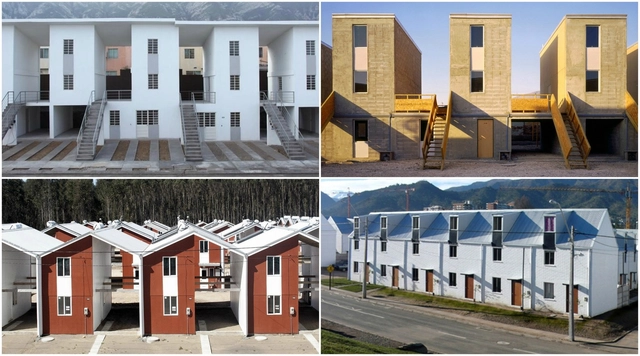
Earlier this year, we reported that 2016 Pritzker Prize winner Alejandro Aravena announced that his practice, ELEMENTAL, released four of their social housing designs available to the public for open source use. A recent article published by Urbanisms in beta discusses what exactly “open source use” means to the architecture world, and how we may see these designs applied to projects in the future.
https://www.archdaily.com/788524/alejandro-aravenas-downloadable-housing-plans-and-the-real-meaning-of-open-source-urbanismKaley Overstreet
AD Interviews: Golden Lion Winners Iñaqui Carnicero & Carlos Quintáns / 2016 Venice Biennale
At the opening of the 2016 Venice Biennale, ArchDaily and PLANE—SITE had the unique opportunity to interview Carlos Quintáns & Iñaqui Carnicero and ask them about "UNFINISHED"—an exhibition that uncovers design strategies that take an optimistic view of the built environment. This idea of exhibiting architecture that revels in the patina acquired through the passage of time and that shows how architects have learned from Spain's recent economic crisis earned the Pavilion the Golden Lion for Best National Participation. The jury cited Quintáns & Carnicero's "concisely curated selection of emerging architects whose work shows how creativity and commitment can transcend material constraints."
To see the video with subtitles, make sure that the "CC" button is selected.
.jpg?1464971221 "© Laurian Ghinitoiu")
.jpg?1464971291 "© Laurian Ghinitoiu")
.jpg?1464971243 "© Laurian Ghinitoiu")
.jpg?1464971274 "© Laurian Ghinitoiu")
.jpg?1464971221)
https://www.archdaily.com/788826/ad-interviews-golden-lion-winners-inaqui-carnicero-and-carlos-quintans-2016-venice-biennaleAD Editorial Team
Sabri Pasayigit Design Office Releases Master Plan for Turkish Municipality

Architecture and planning firm Sabri Pasayigit Design Office has released its new master plan for the Municipality of Kayseri in the Sahabiye neighborhood of Kayseri, Turkey.
The project balances historic and modern architecture elements, with a focus on the historic castle of Kayseri as the city center point. Cultural and public buildings will be placed near this historic center, with taller buildings set farther out of the city.
https://www.archdaily.com/788677/sabri-pasayigit-design-office-releases-master-plan-for-turkish-municipalitySabrina Santos
Cut Maps Adds Contemporary Precision to Cartographic Objects
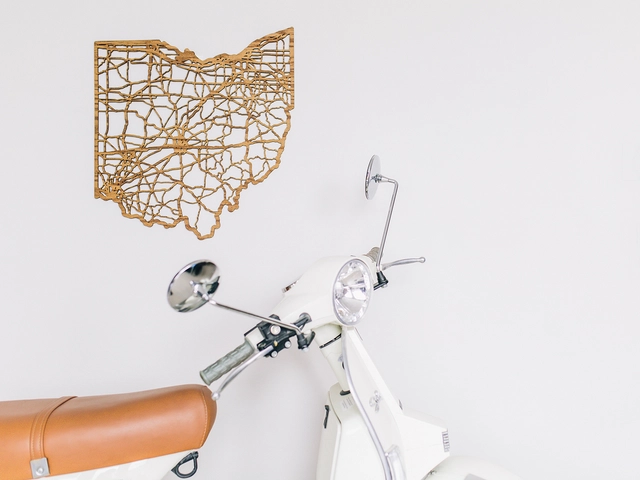
Have you ever wanted to decorate your walls with old-style maps but been discouraged because they don't fit your minimal and contemporary aesthetic? Enter Cut Maps, the Virginia-based company that creates cartographic representations of cities and states using laser technologies to precisely define borders and streets. The resultant maps offer the illusion of their paper precedents, but with an otherworldly precision only possible in the digital age.
https://www.archdaily.com/788828/cut-maps-adds-contemporary-precision-to-cartographic-objectsVladimir Gintoff
CityLab Article Details da Vinci's Technically Astounding Map of Imola
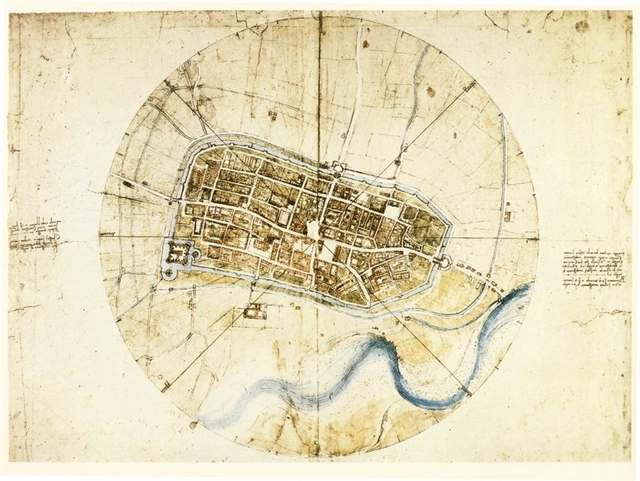
CityLab has recently published an article outlining Leonardo da Vinci's Town Plan of Imola, an "ichnographic" map from 1502, and the earliest of its kind in existence. Rather than utilizing elevations or oblique mapping methods like most other Renaissance mappers, da Vinci developed his own technique -- possibly using special hodometer and magnetic compass technologies that he invented -- to draw the city "as if viewed from an infinite number of viewpoints."
https://www.archdaily.com/788253/citylab-article-details-da-vincis-technically-astounding-map-of-imolaSabrina Santos
Federico Babina's ARCHIWRITER Illustrations Visualize the "Architecture of a Text"

“Immersed in reading a book it feels like [being] inside an architecture, a metaphysical space surrounded by the words,” says Federico Babina, discussing his latest series of illustrations, ARCHIWRITER. In the new series of 27 drawings, the illustrator has created “portraits” of authors by personifying their writing styles, periods, and locations as built environments made from architectural elements and words. Heightening this sense of individuality, Babina states that the resultant portraits can be “fluctuating, vernacular, itinerant, ephemeral, concentric, labyrinthine, surrealist, oneiric, and futuristic.”
https://www.archdaily.com/788737/federico-babinas-archiwriter-illustrations-visualize-the-architecture-of-a-textVladimir Gintoff
Tetrarc Architects Unveils Design Proposal for the Rennes Conservatory
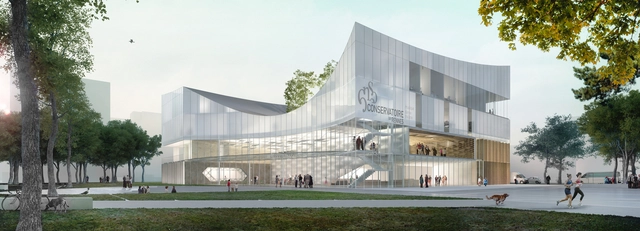
France-based Tetrarc Architects has revealed their design for the new Conservatory of Rennes in France. Intended to be the cornerstone of a new urban project, the fifty-meter long cubic volume is intersected by “cuts and curves that give it an elegant, sculptural presence.” This cultural facility will bring five programs under one roof, including spaces for musical activities, an auditorium, dance theaters, administration spaces, and an area for the Pont Supérieur Music Department.
https://www.archdaily.com/788341/tetrarc-architects-unveils-design-proposal-for-the-conservatory-of-rennesKaley Overstreet
Gabinete de Arquitectura’s “Breaking the Siege” – Winner of the Golden Lion at the 2016 Venice Biennale
.jpg?1464646111&format=webp&width=640&height=580)
Bricks are an iconic element of Solano Benítez’s studio. An ancestral material, forged by man using an ancient technique of modeling and baking. Bricks are very versatile, cheap and easy to manufacture – even marginalized areas of the world can afford to build houses with brick. Benítez feels the poetry of brick and has experimented with its versatility, relying solely on bricks as the main construction material. [1]
Gabinete de Arquitectura's exhibition, designed by Solano Benítez, Gloria Cabral and Solanito Benítez, was awarded the Golden Lion for Best Participant in the International Exhibition, Reporting From the Front, for “harnessing simple materials, structural ingenuity and unskilled labour to bring architecture to underserved communities.”
.jpg?1464646117 "© Laurian Ghinitoiu")
.jpg?1464646160 "© Laurian Ghinitoiu")
.jpg?1464646167 "© Laurian Ghinitoiu")
.jpg?1464646152 "© Laurian Ghinitoiu")
.jpg?1464646111)
https://www.archdaily.com/788589/gabinete-de-arquitecturas-breaking-the-siege-nil-winner-of-the-golden-lion-at-the-2016-venice-biennaleArchDaily Team
Are Tree-Covered Skyscrapers Really All They Set Out to Be?
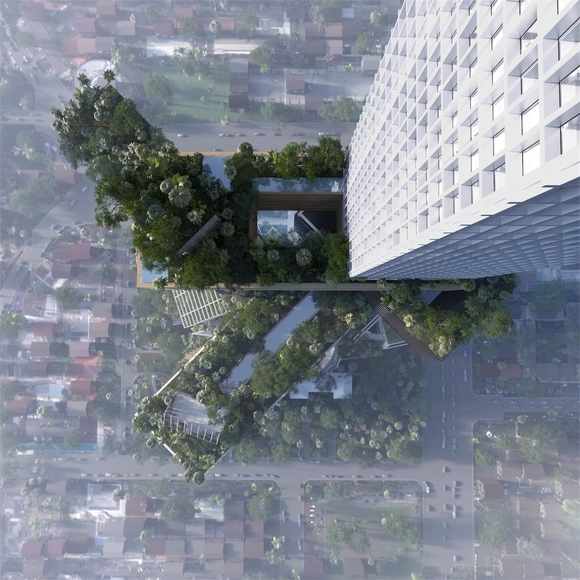
Are tree covered buildings really in tune with ecological and sustainable principles, or are they just a form of greenwashing? This is the question posed by Kurt Kohlstedt in his essay, Renderings vs. Reality: The Improbable Rise of Tree-Covered Skyscrapers, for 99% Invisible. The author notes that vegetated designs come about for myriad reasons – the appearance of sustainability, better air and views, investment intrigue – but that most of these concepts will never leave the realm of paper or virtual architecture. For as many reasons that these buildings have become popular, there are detractors for why they simply cannot be built, including daunting construction hurdles (extra concrete and steel), vast irrigation systems, added wind load complexities, and the trees themselves having difficulty adapting to their vertiginous conditions.
https://www.archdaily.com/788584/are-tree-covered-skyscrapers-really-all-they-set-out-to-beVladimir Gintoff
LIAG Architects Design Energy Saving Art Storage Facility
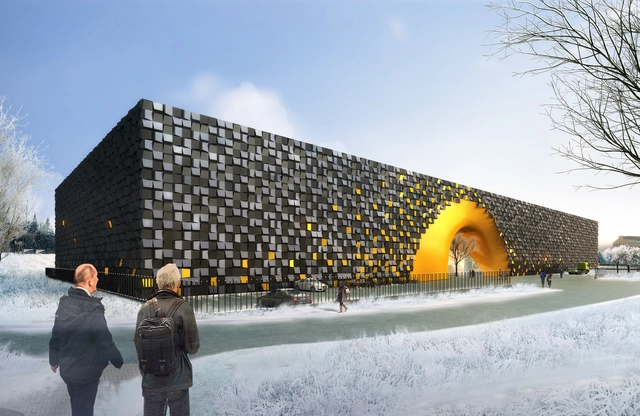
LIAG Architects has unveiled their design for a new art storage building. Commissioned by the Rijksmuseum in Amsterdam, the aim of the project was to create a large open space, while simultaneously meeting other needs such as protecting art that can't be exposed to daylight, controlling the temperature in certain zones, and using minimum amounts of energy to operate the building.
https://www.archdaily.com/787493/liag-architects-design-energy-saving-art-storage-facilityKaley Overstreet

BLUE: Architecture of UN Peacekeeping Missions: Inside the Netherlands' Pavilion at the 2016 Venice Biennale
As part of ArchDaily's coverage of the 2016 Venice Biennale, we are presenting a series of articles written by the curators of the exhibitions and installations on show.
After the collapse of the Soviet Union, and increasingly since 9/11 and the “War on Terror” that followed, warfare has moved into the city.
While the wars of the 20th century were waged largely between nations, over territorial sovereignty and along disputed borders, the wars of the 21st century are internal and borderless. They are fought between large multinational coalitions and insurgent networks.
.jpg?1464426433 "BLUE: Architecture of Peacekeeping Missions. Image © Laurian Ghinitoiu")
.jpg?1464426519 "BLUE: Architecture of Peacekeeping Missions. Image © Laurian Ghinitoiu")
.jpg?1464426543 "BLUE: Architecture of Peacekeeping Missions. Image © Laurian Ghinitoiu")
.jpg?1464426508 "BLUE: Architecture of Peacekeeping Missions. Image © Laurian Ghinitoiu")
.jpg?1464426374)
https://www.archdaily.com/788422/blue-architecture-of-un-peacekeeping-missions-inside-the-netherlands-pavilion-at-the-2016-venice-biennaleAD Editorial Team
In Therapy: Inside the Nordic Pavilion at the 2016 Venice Biennale
.jpg?1464397199&format=webp&width=640&height=580)
As part of ArchDaily's coverage of the 2016 Venice Biennale, we are presenting a series of articles written by the curators of the exhibitions and installations on show.
You are part of another’s shadow.
—Sverre Fehn in conversation with Per Olaf Fjeld
A central impetus for this exhibition is to acknowledge the presence of the ‘ghosts’ of Nordic architecture – those architects, theorists and educators—the most famous of which are often described as ‘Modern Masters’—who continue to exert influence on contemporary practice and pedagogy. Indeed, one of the most prominent of these gures, the Norwegian Sverre Fehn, designed the Nordic Pavilion. This exhibition addresses a common challenge faced by Finns, Norwegians and Swedes today: how can a building (or an exhibition, in this instance) exist in a dialogue with its setting when that setting is so charged? For us, this ties into a broader question: how can architecture occupy a legacy while still making progress?
.jpg?1464398167 "The pyramid, built from Swedish pine, represents an inhabitable installation – an urban artefact in a very public pavilion. Image © Laurian Ghinitoiu")
.jpg?1464398454 "Intimate \"Rooms Without Walls\" sit next to the main installation. Image © Laurian Ghinitoiu")
.jpg?1464398583 "The pyramid is a \"discourse machine,\" designed to allow people to critically discuss the issues at the heart of the exhibition in an open air environment. Image © Laurian Ghinitoiu")
.jpg?1464398159 "The pyramid exists in dialogue with the building. Here, it's relationship with the existing staircase is made apparent. Image © Laurian Ghinitoiu")
.jpg?1464397199)
https://www.archdaily.com/788407/in-therapy-inside-the-nordic-pavilion-at-the-2016-venice-biennaleDavid Basulto & James Taylor-Foster
Why the FAR (Floor Area Ratio) Game?: Inside Korea’s Pavilion at the 2016 Venice Biennale
As part of ArchDaily's coverage of the 2016 Venice Biennale, we are presenting a series of articles written by the curators of the exhibitions and installations on show.
Of the few dozen articles on architecture and urbanism I have contributed to the Korea Joongang Daily, it was the one entitled “The FAR Game” that received the biggest response from readers. While FAR (Floor Area Ratio) appears to be technical jargon for professionals, it seems that almost every Korean either knows what it is, or has heard about it. If you type yong-jeong-nyul (용적률, the Korean word for FAR) on Korean search engines, an endless stream of news, articles, and commentary pops up. The word speaks to the hunger for living space in a hyper-dense environment, as well as the desire to satisfy that hunger by any means possible, whether by proper planning and tactics or through trickery and obfuscation. It touches both the rich and the poor, the white-collar and the blue-collar, as they navigate their lives together in and around the urban fabric. Upon reading that article, where I had stated that without a doubt it is FAR that drives the architectural character of Korean cities, a renowned urban researcher told me I had hit the nail right on the head.
https://www.archdaily.com/787866/why-the-far-floor-area-ratio-game-inside-koreas-pavilion-at-the-2016-venice-biennaleSung Hong KIM
Selfie Automaton: Inside Romania's Pavilion at the 2016 Venice Biennale
.jpg?1464648970&format=webp&width=640&height=580)
As part of ArchDaily's coverage of the 2016 Venice Biennale, we are presenting a series of articles written by the curators of the exhibitions and installations on show.
The Romanian Pavilion at the 15th International Architecture Exhibition — La Biennale di Venezia showcases “Selfie Automaton”, an exhibition by Tiberiu Bucșa, Gál Orsolya, Stathis Markopoulos, Adrian Aramă, Oana Matei, Andrei Durloi. The exhibition consists of 7 mechanical automata, featuring 42 built in marionetes — 37 human and 5 creatures. Three of the automata will be placed in the Romanian Pavilion in Giardini, another three in the New Gallery of the Romanian Institute of Culture and Humanistic Research, and one nomad that will wander through the streets of Venice.
.jpg?1464648978 "SELFIE AUTOMATON / curated by Tiberiu Bucșa, Gál Orsolya, Stathis Markopoulos, Adrian Aramă, Oana Matei, Andrei Durloi. Romanian Pavilion at the 2016 Venice Biennale. Image © Laurian Ghinitoiu")
.jpg?1464649006 "SELFIE AUTOMATON / curated by Tiberiu Bucșa, Gál Orsolya, Stathis Markopoulos, Adrian Aramă, Oana Matei, Andrei Durloi. Romanian Pavilion at the 2016 Venice Biennale. Image © Laurian Ghinitoiu")
.jpg?1464648985 "SELFIE AUTOMATON / curated by Tiberiu Bucșa, Gál Orsolya, Stathis Markopoulos, Adrian Aramă, Oana Matei, Andrei Durloi. Romanian Pavilion at the 2016 Venice Biennale. Image © Laurian Ghinitoiu")
.jpg?1464649086 "SELFIE AUTOMATON / curated by Tiberiu Bucșa, Gál Orsolya, Stathis Markopoulos, Adrian Aramă, Oana Matei, Andrei Durloi. Romanian Pavilion at the 2016 Venice Biennale. Image © Laurian Ghinitoiu")
.jpg?1464648970)
https://www.archdaily.com/788539/selfie-automaton-inside-romanias-pavilion-at-the-2016-venice-biennaleAD Editorial Team
This New Website Promises to End Payment Disputes Over Design Services

Have you ever had a conflict with a client over being paid for a file? Have you also been out of free space on your dedicated FTP? The dispute scenario often leads to architects being shortchanged for their work. But, a new cloud sharing platform might mean the end of an era of intractable conflicts. Fileship.io promises a system that leaves the architects and other members of the creative economy in control. The simple idea behind the website is that a client’s files are locked behind a paywall, meaning that in order to gain access designers must be compensated. The platform also doesn’t rely on predetermined limits to server space, a scenario that often makes architects err on the side of leniency in order to load newer work on their FTP. Put simply by fileship.io, “You get paid. They get their file.”
https://www.archdaily.com/788522/this-new-website-promises-to-end-payment-disputes-over-design-servicesVladimir Gintoff
The Architectural Imagination: Inside the US Pavilion for the 2016 Venice Biennale
.jpg?1464533643)
As part of ArchDaily's coverage of the 2016 Venice Biennale, we are presenting a series of articles written by the curators of the exhibitions and installations on show.
The Architectural Imagination presents twelve new speculative architecture projects designed for specific sites in Detroit but with far-reaching applications for cities around the world.
As the home of the automobile industry, the free-span concrete factory, Motown, and techno, Detroit was once a center of American imagination, not only for the products it made but also for its modern architecture and modern lifestyle, which captivated audiences worldwide.
Today, like many post-industrial cities, it is coping with the effects of a declining population and an urban landscape pockmarked with blight. Nonetheless, having emerged from bankruptcy, there is new excitement in Detroit to imagine the city's possible futures, both in the downtown core and in its many neighborhoods.
.jpg?1464533675 "The Architectural Imagination / curated by Cynthia Davidson and Monica Ponce de Leon. The US Pavilion at the 2016 Venice Biennale. Image © Laurian Ghinitoiu")
.jpg?1464533629 "The Architectural Imagination / curated by Cynthia Davidson and Monica Ponce de Leon. The US Pavilion at the 2016 Venice Biennale. Image © Laurian Ghinitoiu")
.jpg?1464533621 "The Architectural Imagination / curated by Cynthia Davidson and Monica Ponce de Leon. The US Pavilion at the 2016 Venice Biennale. Image © Laurian Ghinitoiu")
.jpg?1464533667 "The Architectural Imagination / curated by Cynthia Davidson and Monica Ponce de Leon. The US Pavilion at the 2016 Venice Biennale. Image © Laurian Ghinitoiu")
.jpg?1464533643)
https://www.archdaily.com/788413/the-architectural-imagination-inside-the-us-pavilion-for-the-2016-venice-biennaleCynthia Davidson & Monica Ponce de Leon
The Pool: Inside Australia's Pavilion at the 2016 Venice Biennale
As part of ArchDaily's coverage of the 2016 Venice Biennale, we are presenting a series of articles written by the curators of the exhibitions and installations on show.
As an architectural device the pool represents a physical edge but it also expresses a social and personal frontier. This is explored through the narratives broadcast in the exhibition space for which we have selected eight storytellers: Olympians Shane Gould and Ian Thorpe; authors Anna Funder and Christos Tsiolkas; musician Paul Kelly; environmentalist Tim Flannery; fashion designers Anna Plunkett and Luke Sales from Romance Was Born; and Indigenous art curator Hetti Perkins. Their interviews reveal stories of fulfillment and accomplishment, of segregation and inclusion, of learning from the past and reflecting for the future, all through the lens of the pool.
https://www.archdaily.com/788471/the-pool-inside-australias-pavilion-at-the-2016-venice-biennaleAmelia Holliday, Isabelle Toland & Michelle Tabet
The AIA Releases Documentary on Rural Studio to Kick Off 2016 "I Look Up" Film Challenge
The American Institute of Architects has launched the second annual I Look Up Film Challenge, which invites architects to produce short documentaries about the impact of architecture. The 2016 Challenge kicked off with a short film on Auburn University’s design-build program known as Rural Studio. The documentary shows how the small town of Newbern, Alabama has been impacted through the program’s design and construction of a new library and fire station. Through a series of short interviews, the film shows the team's design process from early schematic design discussions through the end of construction.
https://www.archdaily.com/788284/the-aia-releases-documentary-on-rural-studio-to-kick-off-2016-i-look-up-film-challengeKaley Overstreet
@1to1Billion: Inside Canada’s Contribution to the 2016 Venice Biennale
.jpg?1464398906)
As part of ArchDaily's coverage of the 2016 Venice Biennale, we are presenting a series of articles written by the curators of the exhibitions and installations on show.
At a scale of 1:1 billion, the geological map of the world reveals planetary scales of operation for the largest resource extraction nation on the planet whose foreign policy is borne from legacies as colony, as confederation, country, and now, as global resource empire. In its divine, legal power to separate surface rights from mineral rights, the royal domain of the government—the Crown—exercises supreme authority over 95% of its territory making it the biggest landlord in the world. Not surprisingly, its coat-of-arms, commonwealth, constitution, even its parliament building look practically the same, it shares the same Head of State—Queen Elizabeth II. As the last remaining royal monarchy in the Americas, Canada is the brainchild of Queen Victoria II, the most powerful woman in history, who grew the British Empire to unprecedented magnitude in late 19th century.
.jpg?1464398906 "Opening ceremony of EXTRACTION / curated by Pierre Bélanger, OPSYS. Friday, May 27th, 2016. Image © Laurian Ghinitoiu")
.jpg?1464398821 "Opening ceremony of EXTRACTION / curated by Pierre Bélanger, OPSYS. Friday, May 27th, 2016. Image © Laurian Ghinitoiu")
.jpg?1464398880 "Opening ceremony of EXTRACTION / curated by Pierre Bélanger, OPSYS. Friday, May 27th, 2016. Image © Laurian Ghinitoiu")
.jpg?1464398990 "EXTRACTION / curated by Pierre Bélanger, OPSYS. Image © Laurian Ghinitoiu")
.jpg?1464398906)
https://www.archdaily.com/787864/at-1to1billion-inside-canadas-contribution-to-the-2016-venice-biennalePierre Bélanger
Bruce Goff’s Bavinger House Demolished with Little Warning
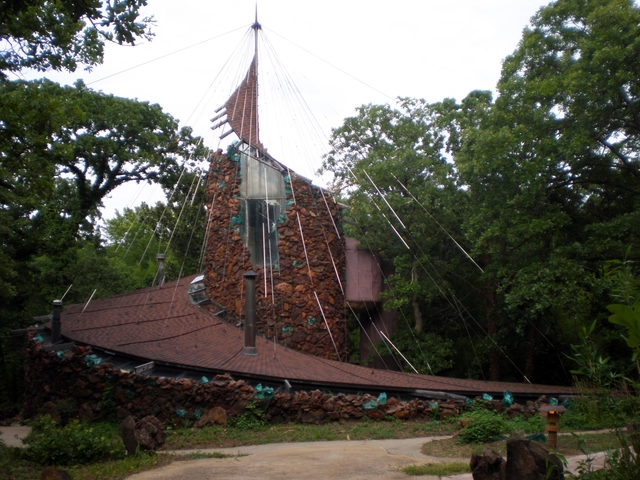
The Bavinger House, by famous US architect Bruce Goff, has been demolished, leaving no trace of its prior existence but an empty clearing amid Blackjack trees, reports Hyperallergic.
The Bavinger House is considered by many to be the crowning achievement of Bruce Goff, an esteemed architect who was once referred to by his mentor Frank Lloyd Wright as one of the few creative American architects. Its spiraling form and integration with the landscape was one of the first instances of modernist bio-mimicry.
https://www.archdaily.com/788189/bruce-goffs-bavinger-house-demolished-with-little-warningEric Oh
April ABI Marks Continued Increase of Positive Conditions in All Regions
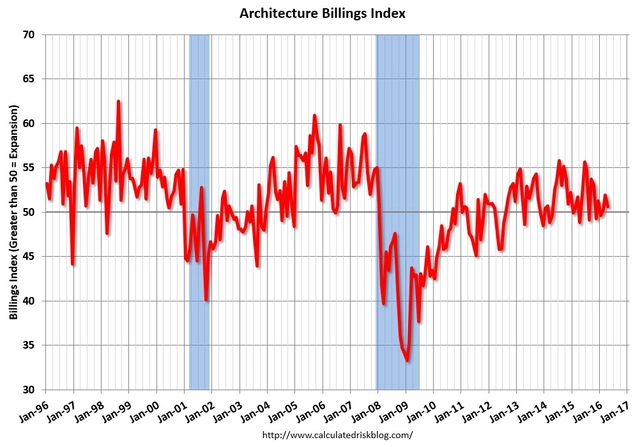
Although the year began with a decline, the Architecture Billings Index (ABI) has shown three consecutive months of increasing demand for design activity at architecture firms. The American Institute of Architects (AIA) reported the April ABI score was 50.6. Although down from March's score of 51.9, this score still reflects an increase in design services (any score above 50 indicates an increase in billings). The new projects inquiry index was 56.9, down from 58.1 in the previous month.
https://www.archdaily.com/787958/april-abi-marks-continued-increase-of-positive-conditions-in-all-regionsEric Oh
Leong Leong Creates Installation for Sight Unseen OFFSITE 2016

New York-based architecture firm Leong Leong has created an installation for the third annual Sight Unseen OFFSITE exhibition as a part of the citywide NYCxDESIGN festival.
Titled TOPO, the installation was a scaleless environment composed of more than one thousand foam rollers. Collectively, they form a landscape “that is both an intimate sanctuary and an expansive horizon.” The installation was situated in a room of mirrors, giving the effect that it extends indefinitely.
https://www.archdaily.com/787990/leong-leong-creates-ford-inspired-installation-for-sight-unseen-offsite-2016Kaley Overstreet
Foster + Partners Open Exhibition in London Highlighting Their Industrial Design Work
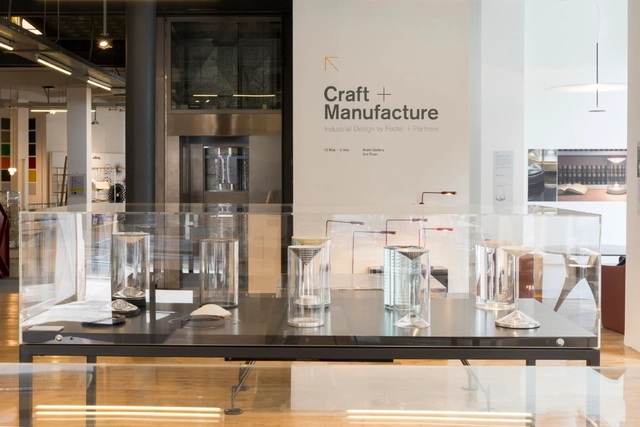
Foster + Partners' Craft + Manufacture: Industrial Design exhibition is currently on display at The Aram Gallery in London. It is the firm’s first exhibition dedicated to the industrial design work they have created over the past fifty years. It shows how “the science, art, and craft of making things” has been the foundation of the firm, and how the “collaborative nature of the design team pioneered by Norman Foster” has been translated into their architectural practice.
https://www.archdaily.com/788254/foster-plus-partners-open-exhibition-in-london-highlighting-their-industrial-design-workKaley Overstreet


