Produce personalized presentation boards that distill complex concepts into simple visual representations with a few helpful tools and effects.


Produce personalized presentation boards that distill complex concepts into simple visual representations with a few helpful tools and effects.
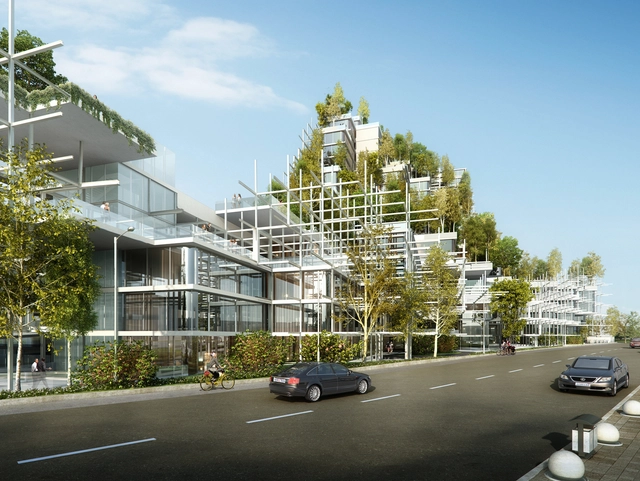
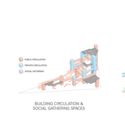
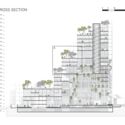
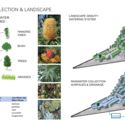
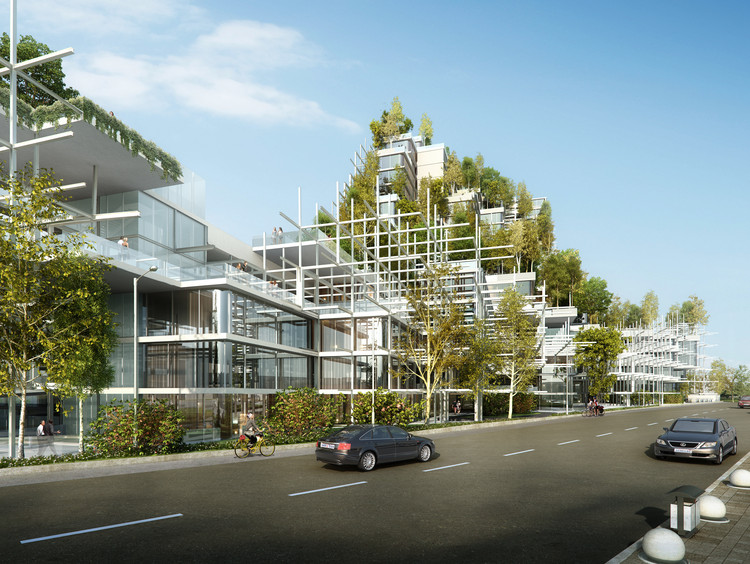
New-York-based studio Architensions has released the design for its shortlisted project, Rising Ryde, for the Ryde Civic Center in Sydney, Australia. In an effort to embrace local communities and contexts, the project is conceived as a hill-shaped building covered in local vegetation and it aims to prioritize people through its complex system of social connections and interactions with nature.
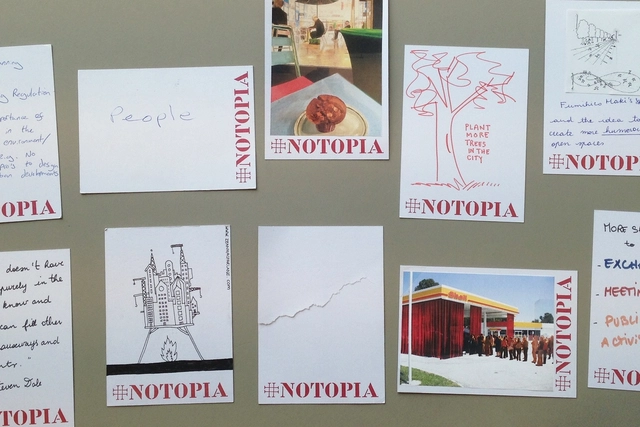
In its recent issues, The Architectural Review has been on a mission, highlighting a phenomenon that they have named "Notopia." Characterized by a "loss of identity and cultural vibrancy" and "a global pandemic of generic buildings," Notopia is - in overly simplistic terms - a consequence of the cold logic of market forces combined with a disinterested populace. The AR's campaign therefore aims to analyze this "thing of terror" and push back by raising public awareness and by proposing alternatives. And they need your help.
Students and architects from over 30 countries have constructed a “village” of 14 wooden structures at Hello Wood’s Project Village 2016. Founded in 2010 as an art camp for students in architecture, art and design disciplines, Hello Wood has since grown into an award-winning interior summer school program focused on creating design through collaborative methods and bringing together the principles of architecture, art, innovation and social impact. The Project Village, conceived just last year, pushes these ideals to their limit by challenging students, teachers and designers to work together to create a new architecture of community at Hello Wood’s rural campus in Csoromfolde, Hungary.
Continue reading to see all 14 projects with descriptions from the designers.
Following the success of last year’s virtual tour of Selgascano’s 2015 Serpentine Pavilion, Photographer Nikhilesh Haval of nikreations has shared with us his virtual tour of BIG’s 2016 Pavilion entry. Hosted this year on Google Street View, the tour allows you to move through and around the “unzipped wall” design, giving you the ability to perceive how sunlight interacts with the structure. Check out how visitors are using the pavilion as an escape from the sunny park or sipping on drinks ordered at the pavilion bar – and don’t forget to look up, where it’s easy to get lost in the sea of interlocking fiberglass bricks.
The recent trend in timber-framed architecture may just be beginning.
SOM’s Timber Tower Research Project has passed a major milestone as the structural system has successfully completed strength testing that validate initial calculations. Launched in 2013, The Timber Tower Research project was established with the goal of developing a new structural system for skyscrapers that uses timber as its primary material. Using these techniques, the research team estimates that the embodied carbon footprint of buildings can be reduced by 60 to 75 percent when compared to a benchmark concrete building.
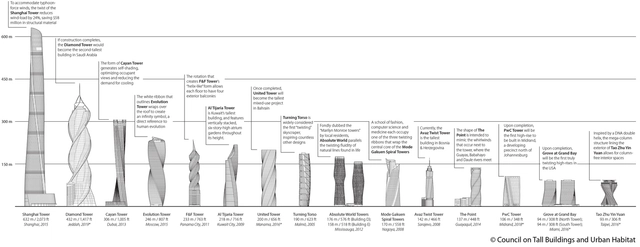
The past ten years have seen a new twist in tall building design: buildings that rotate as they rise, either for engineering or purely aesthetic purposes. Inspired by this recent trend, the Council on Tall Buildings and Urban Habitat (CTBUH) has produced a new graphic entitled Tall Buildings in Numbers “Twisting Tall Buildings” to analyze the “recent proliferation of twisting towers creating a new generation of iconic buildings throughout the world.”
The infographic compares the buildings by height, along with the tightness and total degrees of their rotation. Continue after the break for the full graphic and links to the projects on ArchDaily.
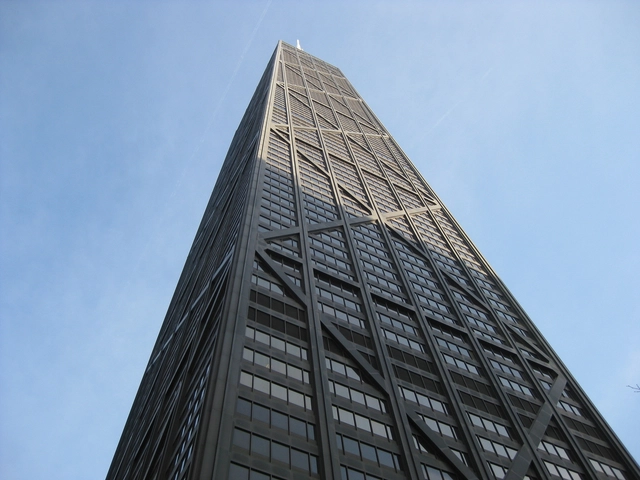
When it comes to skyscraper architects, the first name that comes to mind is often Skidmore, Owings & Merrill. No firm has completed more supertall buildings than SOM, and to this day, they remain a leader in the field, designing both the western hemisphere’s and the world’s tallest buildings in One World Trade Center and the Burj Khalifa. Yet, arguably, the height of their powers came in the 1970s, directly following a lull in skyscraper construction that allowed the Empire State Building to retain the status of world’s tallest building for nearly 40 years.
It was then that Falzur Khan, a SOM architect and structural engineer, came up with the structural innovation that revolutionized the skyscraper industry, leaving lasting impacts on the construction methods of supertall buildings today.
Drawing from a recent story published by Mental Floss on the designer, we’ve come up with a list of facts about his life and role in the world of architecture.
Continue reading for the 8 things you should know about Falzur Khan.
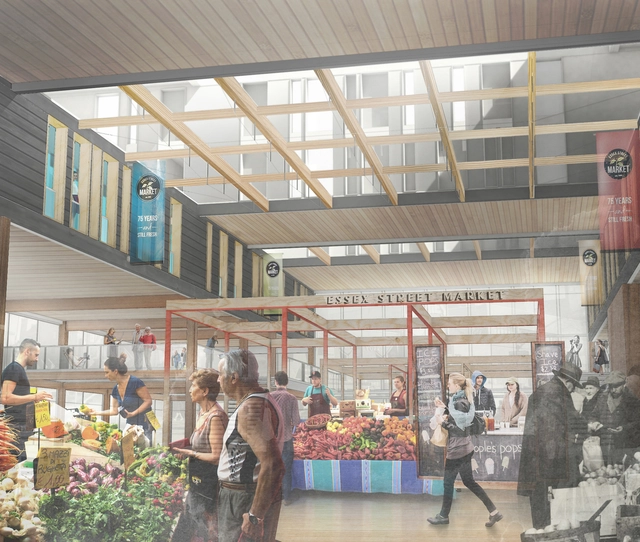
The Association of Collegiate Schools of Architecture (ACSA) has announced the winners of the Timber in the City: Urban Habitats Competition, a student competition exploring wood as an innovative building material. Out of more than 850 architectural student entries, three winners have been selected, along with two honorable mentions, with prizes totaling $40,000.
The competition focused on a site in the Lower East Side of Manhattan, and asked for designs for inhabitation, repose, recreation, and local small-scale commercial exchange, all while embracing the possibilities of wood and a variety of wood technologies.
Today, timber is being used in new, innovative ways to help address the economic and environmental challenges of the build environment,” said Cees de Jager, executive director of BSLC. “This competition brought to life the way the design community is recognizing the benefits of wood–from reduced economic and environmental impact to enhanced aesthetic value and structural performance–to design buildings and communities of the future.
The winners of the Timber in the City: Urban Habitats Competition are:
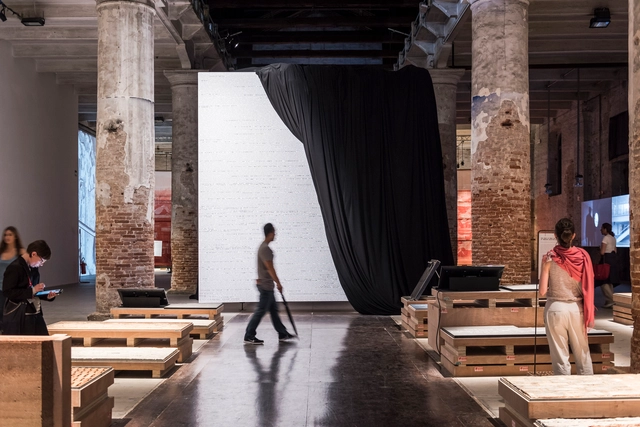
The appointment of Chilean architect Alejandro Aravena as the curator of the 2016 Venice Biennale (La Biennale di Venezia) has seen the exhibition take a more vested interest in social responsibility. In harmony with this theme, German architect Werner Sobek has presented a large cube with a sobering social and environmental message. Entitled "Beyond Form," Sobek's intention mirrors Aravena's; it forces the viewer to look beyond the formal elements of architecture to the unavoidable issues facing it in the near future.
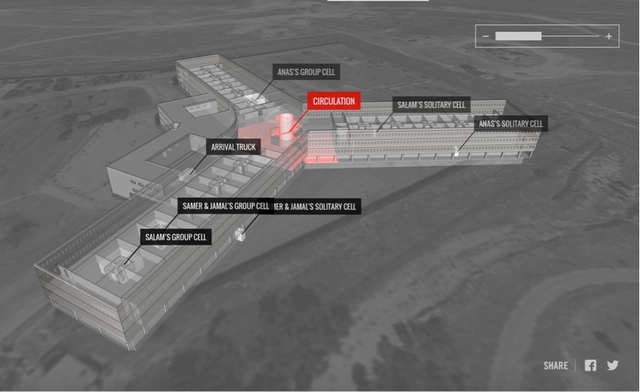
Forensic Architecture, a research agency based at the University of London, in collaboration with Amnesty International, has created a 3D model of Saydnaya, a Syrian torture prison, using architectural and acoustic modeling. The project, which was commissioned in 2016, reconstructs the architecture of the secret detention center from the memory of several survivors, who are now refugees in Turkey.
Since the beginnings of the Syrian crisis in 2011, tens of thousands of Syrians have been taken into a secret network of prisons and detention centers run by the Assad government for a variety of alleged crimes opposing the regime. After passing through a series of interrogations and centers, many prisoners are taken to Saydnaya, a notoriously brutal “final destination,” where torture is used not to obtain information, but rather only to terrorize and often kill detainees.
Located about 25 kilometers north of Damascus, Saydnaya stands in a German-designed building dating from the 1970s. In recent years, no meaningful visits from independent journalists or monitoring groups have been permitted, so no recent photographs or other accounts exist of its interior space, except for the memories of Saydnaya survivors.
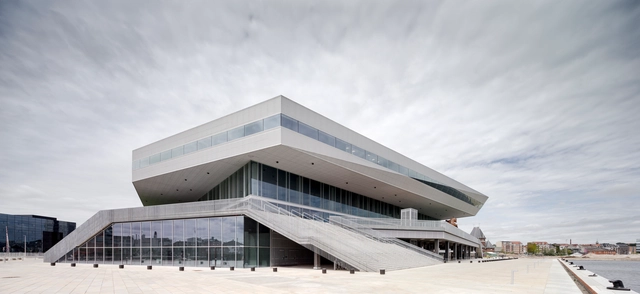
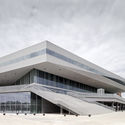
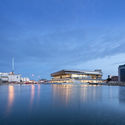
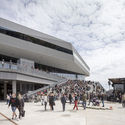
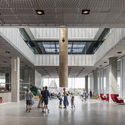
The International Federation of Library Associations and Institutions (IFLA) has named Schmidt Hammer Lassen's Dokk1 Library in Aarhus, Denmark as the winner of the Public Library of the Year Award 2016.
By beating out the SOM-designed Chinatown branch of the Chicago Public Libary; the Geelong Library & Heritage Centre in Geelong, Australia, designed by ARM architecture; and the Success Public Library by Bollig Design Group; Dokk1 became the first Danish library to win the award.

In anticipation of the 100th anniversary of the founding of the Bauhaus school in 2019, Harvard Art Museums has released an online catalogue of their 32,000-piece Bauhaus Collection, containing rarely seen drawings and photographs from attendees and instructors of the revolutionary German design school.
The collection features work from the likes of Mies van der Rohe, Bertrand Goldberg, Marcel Breuer, and Bauhaus-founder Walter Gropius himself, and can be navigated through a search bar and an easy-to-use set of filters, allowing you to categorize work by topic, medium, date or artist.

Janet Echelman has completed her most recent aerial net sculpture in downtown Greensboro, North Carolina. Made up of over 35 miles of technical twine woven into 242,800 knots, the sculptures adds a new ephemeral presence to the sky above the city’s new LeBauer Park. Entitled “Where We Met,” the sculpture’s form and composition were inspired by Greensboro’s history as a railroad and textile hub.




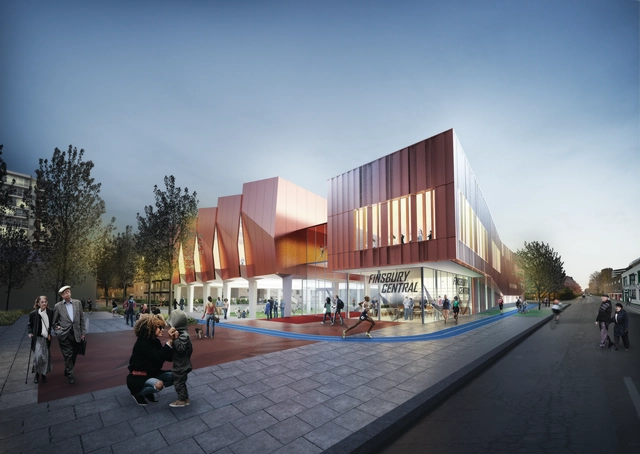
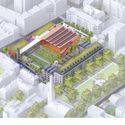
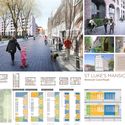
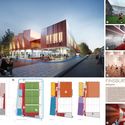
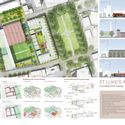
The Royal Institute of British Architects’ (RIBA) Competitions division and Islington Council have announced that Pollard Thomas Edwards Architects has been selected as the winners of a design competition for the new Finsbury Leisure Centre at St Luke's Area in South Islington, London. The winning proposal, chosen from a shortlist featuring 5 top architects including Rogers Stirk Harbour + Partners and Grimshaw Architects, will reinvigorate the site with new council homes, improved public space and a new civic building that will house recreation, childcare, healthcare and energy facilities all under one roof.
In this video, Ben Uyeda of HomeMade Modern demonstrates how to build a sleek, contemporary spiral staircase using just a standard schedule steel post, plywood and a CNC router (along with a healthy amount of wood and construction glue). To build the staircase, Uyeda uses the CNC to cut out 12 shapes of incremental size from a plywood sheet, which he then stacks and fits around the post to secure into place.
HomeMade Modern has also made the CAD files available for free, so handy woodworking types can attempt the construction themselves.
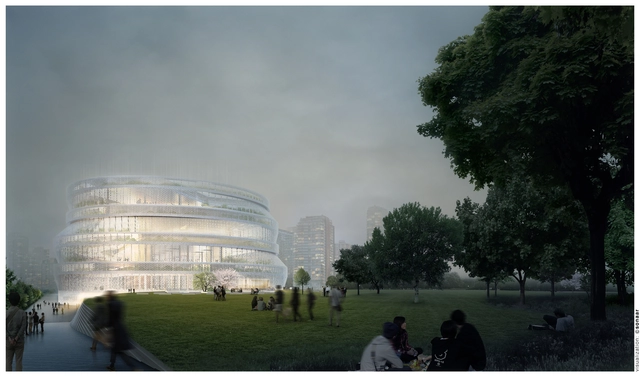
nArchitects’ Library as Home has won first place in the 2016 International Young Architects Design Competition for the 110,000 square meter Shanghai Library East Hall in China. Hosted by the Shanghai Pudong New Area People’s Government, the competition sought out designs that enhance Shanghai’s distinct cultural influence and promote community life.
Library as Home reflects these goals in its design as “a large house for all, with a rich variety of environments that Shanghai’s citizens could appropriate as their own.”
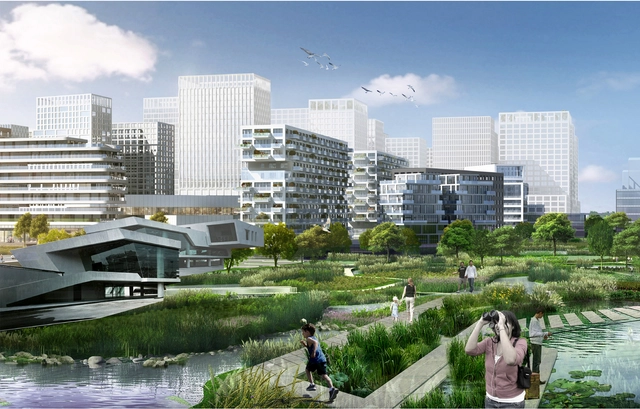
Foreign leading firm MLA+ and local leading firm the China Academy of Urban Planning and Design, in collaboration with Felixx Landscape Architects & Planners and the Shenzhen Municipal Design & Research Institute, have won first prize in the urban design competition for the regeneration of an area along the G107 highway in the Bao’an district of Shenzhen, China.
Located on both aspects of the G107, the one- to two-kilometer piece of land forms a 53-square-kilometer area for the new plan, which will redevelop a fragmented industrial landscape created by the highway and Shenzhen’s identity as a former “Factory of the World” city.
.jpg?1471338590&format=webp&width=640&height=580)
Following the burgeoning success of the 7th New York Architecture and Design Film Festival (ADFF), this year's incarnation—which will run September 28 through October 2 2016 at Cinépolis Chelsea—appears set to maintain its position as the nation's and most popular largest subject-focused film event. Over 30 feature-length and short films, curated by Festival Director Kyle Bergman, will be presented, including Eero Saarinen: The Architect Who Saw the Future, a film that examines the life of the eponymous modernist architect.

In the late 20th century, restricted by an a small landmass and extreme terrain, the Hong Kong urban area grew to become one of the densest and most vertical places on the planet, with more buildings taller than 500 feet than any other city in the world. But instead of the steel or aluminum structures used as scaffolding in Europe and the Western Hemisphere, the majority of skyscrapers built in Hong Kong and much of Asia used scaffolding systems constructed out of bamboo.
To create the structures, the high strength, lightweight material is strapped together with plastic ties by construction crews, who also use the structure as a ladder for scaling the building. Despite using few safety restraints, crews are able to construct up to 1,000 square feet of bamboo scaffolding in just one day. To protect the structure, nylon gauze is sometimes draped along the outside.
Check out a series of GIFs and images showing how it works after the break. And if you're interested in learning more about bamboo construction materials, check out our Materials catalog.
#firstsevenjobs
— Vishaan Chakrabarti (@VishaanNYC) August 10, 2016
photography sales
pot washer
bartender
urban planner
professor
author
architect
Last week, the latest craze to hit the Twittersphere was #FirstSevenJobs. An interesting mix of nostalgia and self-congratulatory posturing, the hashtag had seemingly everybody on the social media site sharing how they took their first seven steps to where they are now. For architects though, whose path to their ideal job is often long and torturous, the hashtag may have offered a little solace: with notable and successful architects, educators and critics sharing how they took their first tentative steps into the profession, those still working towards their goals can be reassured that, no matter where they are now, success could be on the horizon.
With that in mind, we wanted to extend the hashtag to our users: what were your first seven jobs, and what did you learn while doing them? What was your experience like in getting to where you are now? And do the jobs that many architects have in their early years reveal anything about the architecture profession?

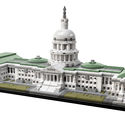
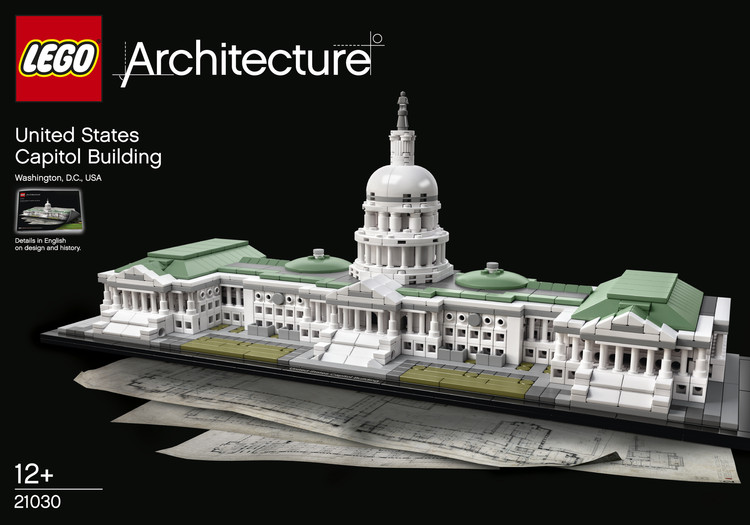
LEGO® has unveiled the newest kit in their Architecture series: The U.S. Capitol Building in Washington, D.C. Originally designed by architect William Thornton in 1793, the building has gone through several iterations, including the addition of its iconic white, cast-iron, neoclassical dome in 1866. The 1,032 piece LEGO® set portrays the building in its current form, with its “striking white, columned façade with its famous steps and lawns.” The kit also features a removable dome, which, when lifted off, reveals “a detailed interior depicting the famous National Statuary Hall, complete with columns, statues and tiled floor.”
This October, reThink Wood is heading to Los Angeles for Greenbuild – the world's largest conference and expo dedicated to green building. If you haven’t registered already, this is your chance to win a free pass to the conference and hear from dozens of inspiring speakers about the latest advancements in the green building movement.
To celebrate, reThink Wood is offering a full pre-paid conference pass ($1,050+ value) to one lucky ArchDaily reader. The winner will be invited to learn more about why building with wood is sustainable and to meet with experts onsite who are passionate about sustainable design with wood in a variety of structure types.
Enter to win by answering the following question in the comments section before August 26 at 12:00PM ET.:
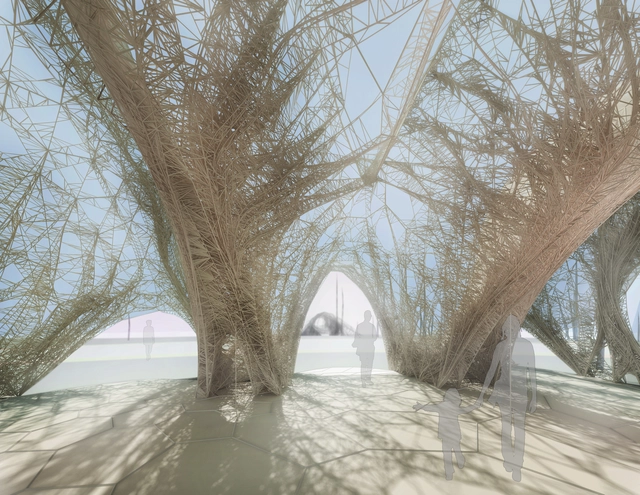
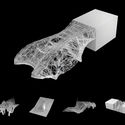
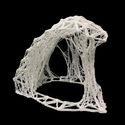
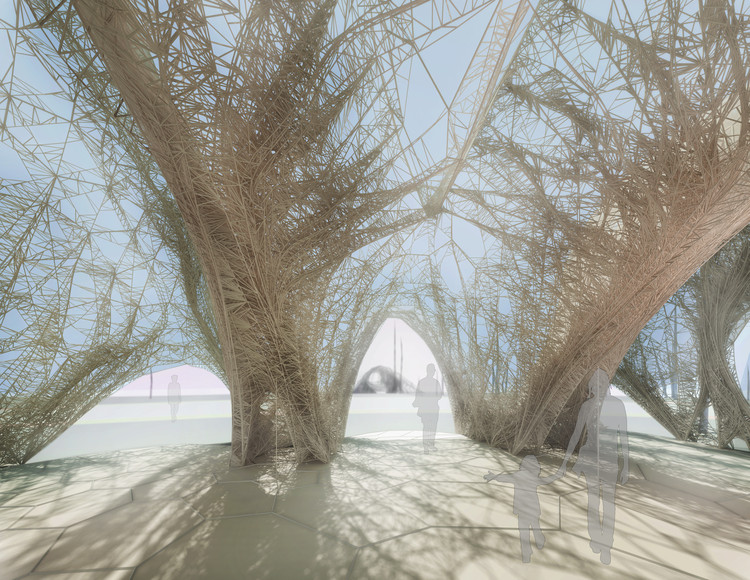
The AA School of Architecture’s DRL Masters Program has developed a thesis project, entitled Growing Systems, which explores adaptable building systems using methods of robotic fabrication and generative special printing within the context of housing.
Centered on a new method of structural 3D vertical extrusion, the project combines the precision of prefabricated elements with the adaptability of on-site fabrication, in response to the flux and dynamism of cities. The method becomes a system of elasticity that can accommodate site parameters, as well as future adjustments.
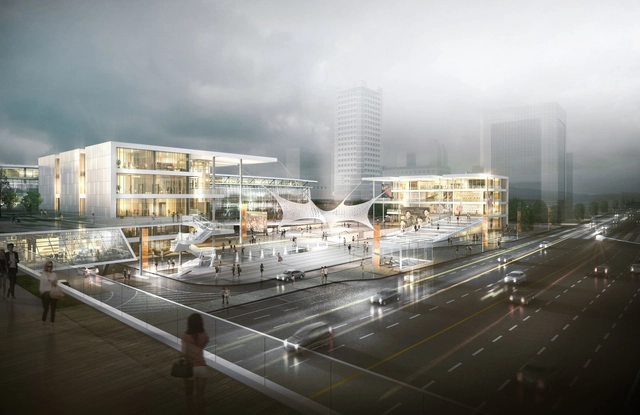
The collaboration of Seiyong Kim, Yongwon Kwon, Sungyeon Hwang and Wonyang Architecture has won second place in the International Ideas Competition for Establishing Busan Station as The Cub of Creative Economy in Busan, Korea. The competition sought out proposals to revitalize the original downtown area, Busan Station is the starting point for a larger Busan North Port redevelopment project.