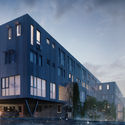
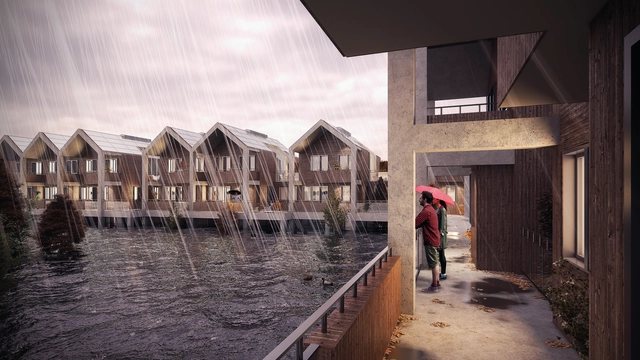
The Sunday Times British Homes Awards has selected the recipient for its Resilient Home for the Future Award: "A Home for All Seasons" by JTP Architects and environmental design specialist Ed Barsley. JTP and Ed Barsley's proposal was chosen from four other entries by means of a public vote. Competition requirements asked for designs to respond to potential flooding and overheating — two of climate change's impending variables.
Floor plans of favourite television shows tell an interesting story, offering the viewer an extra dimension of a world they are already familiar with. A new series of poster-ready plans from Homes.com continues this with some of the most followed television shows both old and new—featuring Gilmore Girls, Buffy the Vampire Slayer, Arrested Development, Breaking Bad, Mr Robot, It's Always Sunny in Philadelphia, Sherlock and Stranger Things, there's something in this set for TV viewers of all tastes.
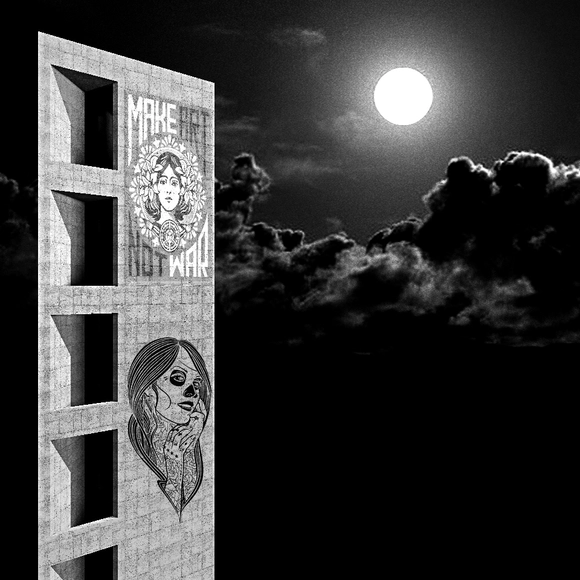
Architectural competition organizer Bee Breeders has announced the winners of the international Melbourne Tattoo Academy competition, which sought to “recollect and [postulate] principles of architectural humanism in contemporary culture,” asking entrants to consider disciplinary introspection into spatial and material issues concerning culture, society, and individuality.
Successful entries to the competition thus challenged personal and social conceptions of the tattoo as an art form, as well as the cultural and philosophical implications of tattoos in architecture.
Notable among the relationships and juxtapositions established include: critiques on permanence and longevity; the irreversible transformation of flesh and nature; correlation between graphic and retinal expression, graffiti and street art, the scenographic and decorated shed; lastly, body art as boutique parlor fashion, and high couture - noted the compatition organisers.
The winners of the Melbourne Tattoo Academy competition are:
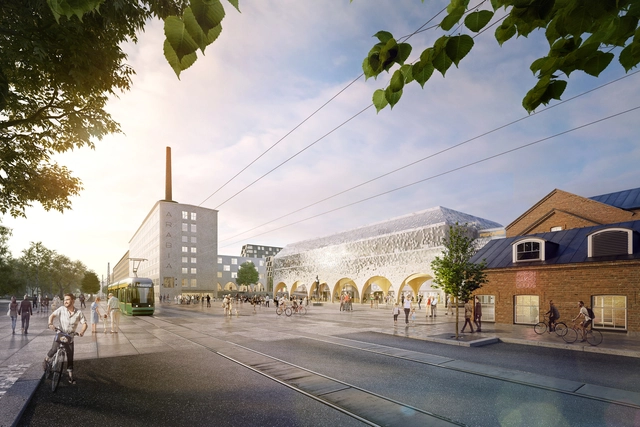
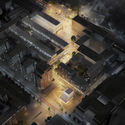
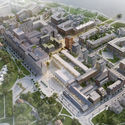
The future development of the Arabia Historic District in Helsinki has culminated in the second round of a two-stage competition.
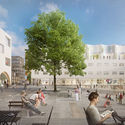
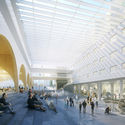
Arabiazza(s) — one of the four proposals selected for the second stage — was developed by team leader Anssi Lassila and comprised of OOPEAA working in collaboration with Lunden Architecture and Gehl Architects acting as a consultant in urban public space. Through a sequential flow of spaces in the form of public squares, Arabiazza(s) fundamentally aims to encourage public interaction. The intent to engage a broad range of people — from students to tourists to workers — inspired the creation of multiple sheltered inner courtyards.
The winners of the 2016 INTBAUWorld Congress Excellence Awards have recently been announced. Categories for this year’s competition were Community Engagement, New Building, Urban Design, and Emerging Talent. The awards were given during the INTBAU World Congress 2016, a biennial forum that brings together international participants to debate the most pressing global issues facing building, architecture, and urbanism.
"I join my jurors in applauding the considerable depth and breadth of this year's award submissions," said Anne Fairfax, President a Fairfax & Sammons Architects and jury chair of the Excellence Awards. "We found the projects to be thoughtful in leading by example in the use of traditional design but we were also pleased to see the positive social activism and environmental responsibility that characterized many of the projects, reaching deep into the values of the INTBAU mission."
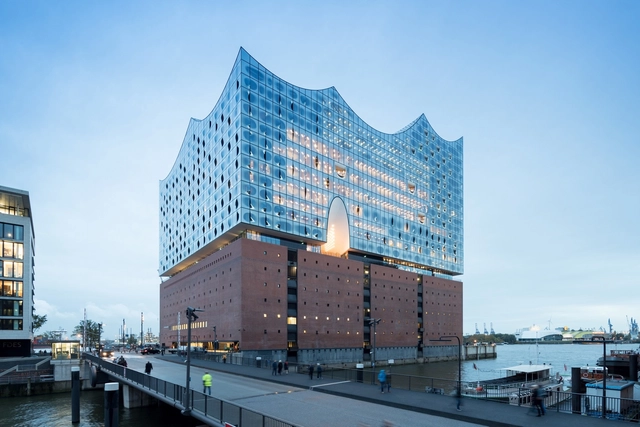
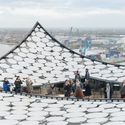
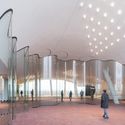
The Plaza of Herzog & de Meuron’s Elbphilharmonie has opened to the public. The concert hall’s observation deck, located 37 meters (121 feet) above ground level, is designed around a public square concept and is accessed via a 82 meter (269 foot) long, curving escalator, providing visitors to panoramic views of the city and harbor.
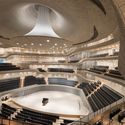
To mark the event, the Elbphilharmonie has released a new set of photographs by Iwan Baan, showing off the newly completed interior spaces. The full building is set to officially open to the public on January 11 and 12, 2017.
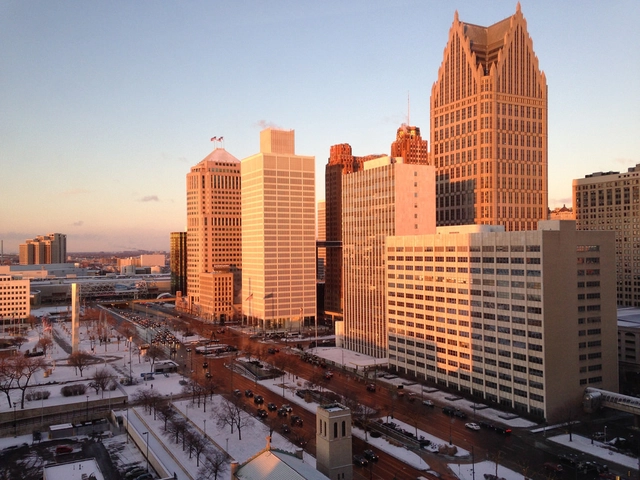
The "Rust Belt," a region of north central United States, is well known as an area where once thriving industrial cities have declined in economic health and population. As a result, many of the region's cities have been subject to grand proposals that aim to fix these city's problems--but could such schemes also provide a way to intervene in other serious global issues? In a recent article, Metropolis Magazine’s Web Editor and former ArchDaily Managing Editor Vanessa Quirk argues that refugees could reinvigorate such cities, describing how refugees are “boosting American’s legacy cities,” but simultaneously “encountering resistance from residents.”
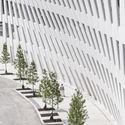
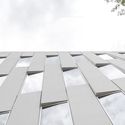
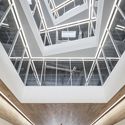
The Council on Tall Buildings and Urban Habitat (CTBUH) has named Gensler’s Shanghai Tower as the 2016 Best Tall Building Worldwide, citing its “innovative design scheme in traditional Shanghainese architectural traditions.” The building was selected from among four regional winners, which included BIG’s VIA 57 West (Americas), Jean Nouvel’s The White Walls (Europe) and Orange Architects’ The Cube (Africa).
In October 1997, the unforgettable swooping metal panels of Frank Gehry’s Guggenheim Bilbao made their debut, drawing the attention of art and architecture lovers around the world. Images of the building quickly circulated through the infant world wide web, turning the museum into an instant icon that permanently elevated and transformed the international perception of the city of Bilbao.
Cities all over the world saw the potential in creating their own “Bilbao Effect,” and soon, a slew of new eye-catching, sculptural buildings had be built. This phenomenon persisted through the 2000s, manifesting itself in works by Gehry, Zaha Hadid, and many others. But recently, notable figures both inside and outside architecture have began to distance themselves from the icon, notably in the design philosophies of OMA and alumni such as Jeanne Gang and Matthias Sauerbruch.
In a new opinion piece for the Guardian, photographer Stuart Franklin extends this sentiment not just to architecture, but to all images in general. Franklin explains the history of the “iconic image” and the reasons why it may no longer exist.
The Library of Congress has announced the winners of the 2016 Holland Prize, which recognizes the best single-sheet, measured drawing of a historic building, site, or structure, completed to the standards of the Historic American Building Survey (HABS), Historic American Engineering Record (HAER), or the Historic American Landscapes Survey (HALS).
The prize is awarded annually to “increase awareness, knowledge, and appreciation of historic resources throughout the United States while adding to the permanent HABS, HAER, and HALS collection at the LOC, and to encourage the submission of drawings among professionals and students. By requiring only a single sheet, the competition challenges the delineator to capture the essence of the site through the presentation of key features that reflect its significance.”
Young tech team (Bar Smith, Hannah Teagle, and Tom Beckett) has launched a Kickstarter campaign for Maslow, a four-by-eight-foot at home CNC cutting machine made to assist construction efforts by cutting user-specified shapes out of wood or any other flat material. Designed to be affordable—at under $500—easy to use, inclusive, and powerful, the project aims to share designs digitally so that you can build on the work of others or create your own from scratch.
Based on the design of the hanging plotter, Maslow “uses gear-reduced DC motors with encoders and a closed-loop feedback system to achieve high accuracy and high torque.”
For this edition of Section D, Monocle 24's weekly review of design, architecture and craft, the team turn their attention to the crossroads where design and architecture meet film. From a documentary about Pruitt-Igoe, the St. Louis housing project, to a new reading of the title sequence of Superman, this episode investigates the role of architecture in film – and visa versa.
https://www.archdaily.com/798683/monocle-24-pays-homage-to-the-role-of-architecture-in-filmAD Editorial Team
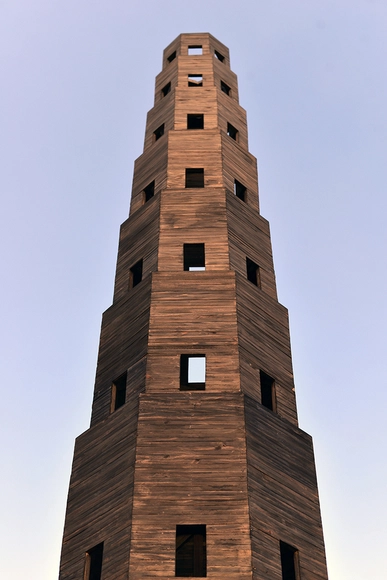
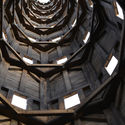
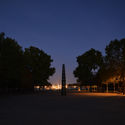
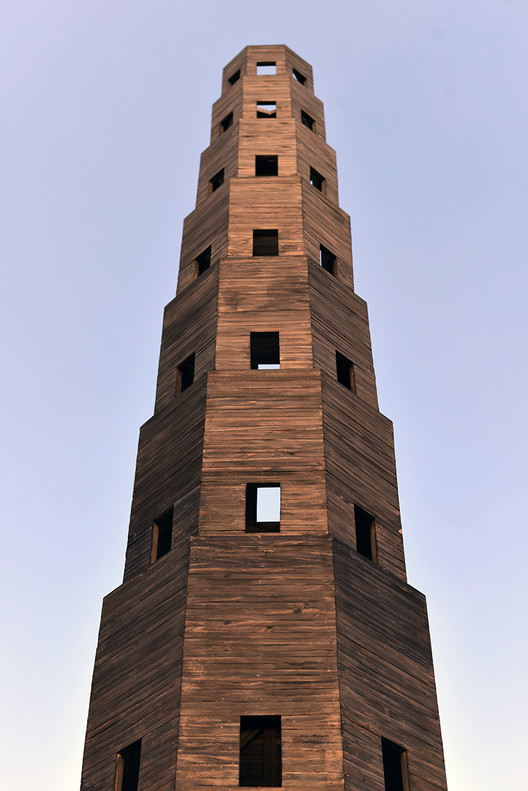
Chilean studio Pezo von Ellrichshausen has erected a temporary wooden tower of “an ambiguous” scale in the Jardin des Tuileries in Paris. Named the “Deci Pavilion,” the structure is made up of ten stacked octagonal wooden drums of decreasing size. While in reality only large enough to hold one visitor at a time, the column’s form and relationship to its surroundings give it the presence of a much larger structure.
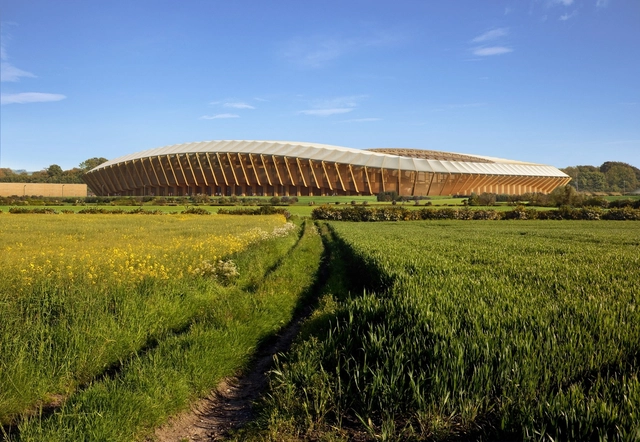
Zaha Hadid Architects has been announced as the winner of an international competition to design a new football stadium for the Forest Green Rovers in Stroud, UK. Following a seven month competition featuring over 50 entries from around the world, ZHA was selected over finalist Glenn Howells Architects for their all-wood proposal. When finished, the stadium will be the first in the world to be built entirely out of wood.
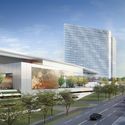
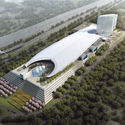
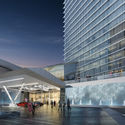
The hotel is slated as one of the "20 Most Anticipated Hotel Openings of 2016" (Forbes.com). In addition to suites, the hotel has a casino, two-story conservatory with horticulture and entertainment, and a dining and shopping complex.
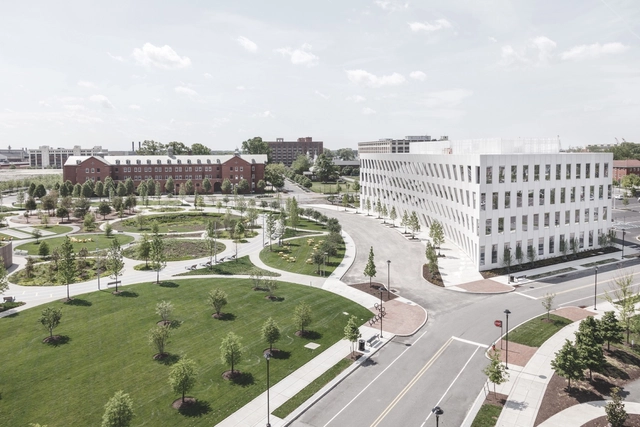
BIG has completed their second building on U.S. soil, a 92,000-square-foot office building at 1200 Intrepid Avenue in Philadelphia, Pennsylvania that also marks the firm’s first realized office building design. Located within the revitalized Philadelphia Navy Yard master plan (designed by Robert Stern), the four-story building features a bowing, double-curved facade and a supersized “periscope” inspired by the historic battleships docked a few blocks away.
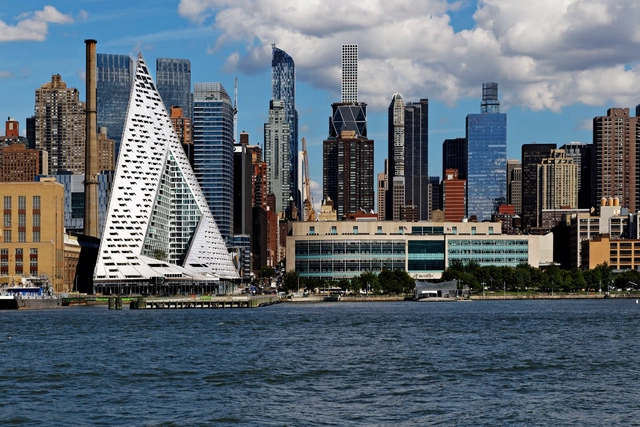
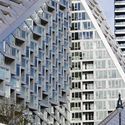
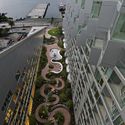
BIG’s VIA 57 West has been unanimously chosen as the winner of the 2016 International Highrise Award (IHA) for the world’s most innovative highrise.
One of the world’s most important architectural prizes for tall buildings, the award is presented by Deutsches Architekturmuseum (DAM) every two years to the project that best exemplifies the criteria of future-oriented design, functionality, innovative building technology, integration into urban development schemes, sustainability, and cost-effectiveness.
As a way to obtain a sample of participatory architecture from all over Mexico, last October, the Mexican Fine Arts Institute (INBA) published an open call for entries. Works by 31 teams—out of more than 200 registered—were selected to be part of Mexico’s Pavilion in the Venice Biennale, which was curated by Pablo Landa.
Among the teams selected are Arquitectos Artesanos and RootStudio, both based in the city of Oaxaca. Works by these offices stand out because they recover and adapt traditional building techniques for new contexts, and because they are often realized through the collaboration of architects and organized communities.
https://www.archdaily.com/798540/architecture-from-oaxaca-in-the-venice-biennaleComité Técnico del Pabellón de México
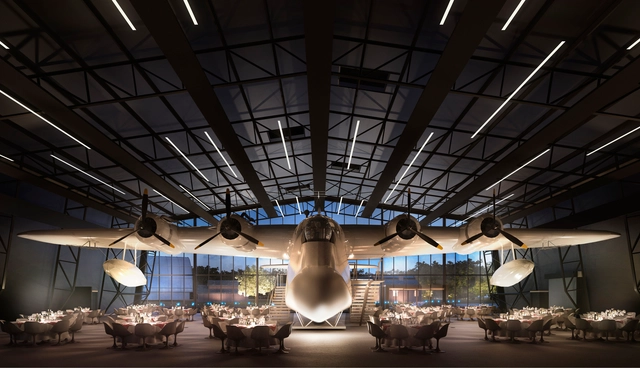
London-based firm Nex—Architecture has unveiled its plans for a new Royal Air Force (RAF) Museum as a part of the RAF’s 2018 Centenary Program. The new project will revitalize an existing RAF museum in North London that was created in 1972, transforming it into a visitor facility and promoting the airfield heritage of the museum’s location.
The new scheme will put emphasis on improving visitor experience by “establishing a clear route through the exhibition spaces.” A prominent new 40-meter-long entrance and visitor center will be placed inside the Hangar 1 building, acting as a welcome and orientation point.
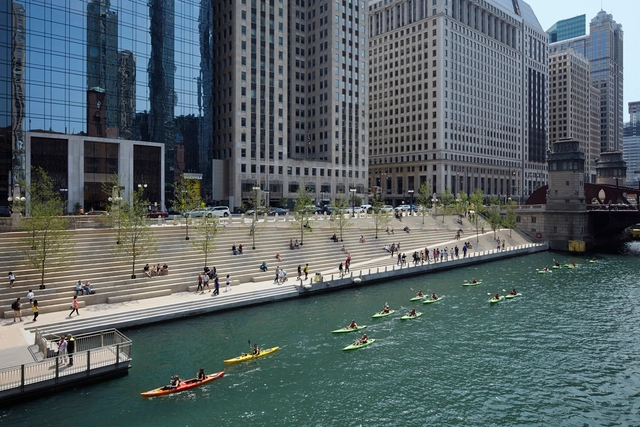
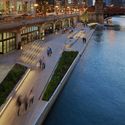
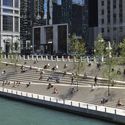
The third and final phase of the ChicagoRiverwalk is officially open to the public. Designed by Sasaki and Ross Barney Architects, the 1.5 mile long promenade revitalizes an underutilized industrial area into an active public space featuring restaurants, cultural activities and amenities while reconnecting the Chicago River to the urban fabric of the city.
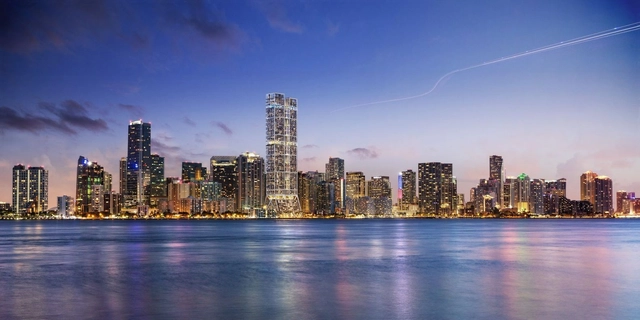
Foster + Partners has released plans for a connected pair of skyscrapers that will provide 660 new luxury condos in the Miami’s Brickell neighborhood. Taking advantage of updated height limit regulations, "The Towers" will top out at 1,049 feet (320 meters), becoming one of 5 new buildings that will share the title of Miami's tallest tower.
Historically, building heights in Miami have been restricted due to proximity to the Miami International Airport.
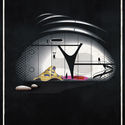
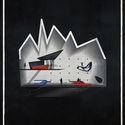
In this latest set of illustrations from Federico Babina, the artist envisions set designs in the styles of 27 of history's greatest architects, using signature elements from some of their most notable works to "stage [architecture] as if it were an architectural play."
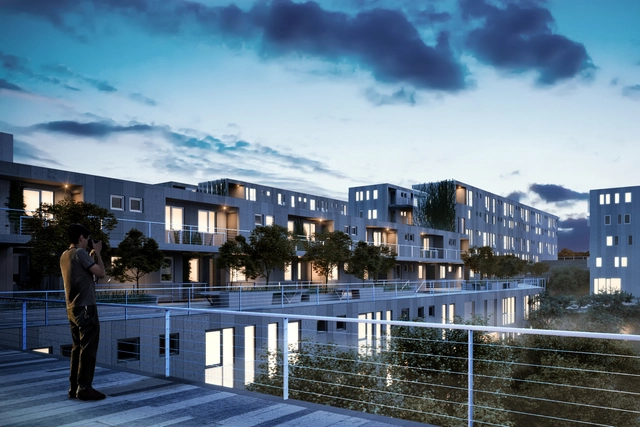
Somatic Collaborative has unveiled its design for Neapolitan Housing and Co-working Complex, a new urban block typology located in Gravatai, Brazil, that contrasts the traditional landscape of repetitive housing types that dominate the urban peripheries of Latin American cities. Like a Neapolitan ice cream, the project’s buildings will be layered, housing a variety of residential units and co-working space.
In a drastic shift from typical low-rise residential enclaves, gates, and walled compounds, the project will create high-density urban blocks “that engage the street as a source of urban life” through porous borders that encourage new city centralities. A semi-porous perimeter block with retail and commercial space will allow the project to better interact with its surroundings while designating the distinction between public, semipublic, and private space through the buildings’ masses.





_(6).jpg?1477973514&format=webp&width=640&height=580)


Connie_Zhou.jpg?1478289537)